Review · TOURS
Beirut Full Day Walking Tour
Beirut rewards curious walkers. This six-hour tour makes sense of a city where Roman ruins, Ottoman buildings, modern towers, churches, mosques, and Civil War scars sit close together. I especially like the east-to-west route and the guide’s focus on Beirut’s difficult recent past, not just its postcard sights. The included lahmadjun or falafel, coffee, and beer add a welcome local break.
I also like the small-group limit of 15, which matters when the guide is explaining politics or pointing out details in crowded streets. The trade-off is physical: you will walk for most of the day, and the tour does not offer a gluten-free street food option. Conditions in Beirut can also change, so some stops may be affected by access or weather.
In This Review
- Five things that make this Beirut walk different
- Why this six-hour walk helps you understand Beirut
- Martyrs’ Square begins the story
- Churches, archaeology, and the city center
- Downtown redevelopment at Beirut Souks and Zaytouna Bay
- The Holiday Inn and the city’s Civil War scars
- Zokak el-Blat brings the walk down to street level
- Antique shops, Bachoura, and Khadak el-Ghamik
- The Mohammad al-Amin Mosque and Saifi Village
- Sursock, Gemmayzeh, and the return to Martyrs’ Square
- How demanding is the walking?
- What kind of guide should you expect?
- Is $41.03 good value?
- Who should book this Beirut walking tour?
- FAQ
- Where does the Beirut walking tour begin?
- Where does the tour end?
- How long does the tour last?
- How large is the group?
- What food is included?
- Is there a gluten-free food option?
- What happens if the weather is poor?
- Should you book it?
Five things that make this Beirut walk different
- It connects ancient Beirut with the Civil War: Roman Baths, archaeological remains, the Green Line, and the Holiday Inn all form one continuous story.
- The route includes overlooked neighborhoods: Zokak el-Blat, Bachoura, Khadak el-Ghamik, and the antique district give you more than the standard downtown circuit.
- Guide George brings a personal, political voice: Past participants describe him as funny, reflective, and deeply engaged with the city’s history.
- Lunch is part of the experience: You get lahmadjun from Ishkhanian Bakery or falafel sandwiches, plus coffee and beer.
- The group stays manageable: A maximum of 15 people makes discussion easier than on a large coach tour.
- You finish where you started: The walk begins and ends at Martyrs’ Square, near public transportation.
Why this six-hour walk helps you understand Beirut
Beirut is not a city that explains itself quickly. Street names can be inconsistent, modern construction often covers older remains, and different districts reflect different religious, political, and economic forces. A guide helps you read those layers as you walk.
This is not mainly a museum tour. It is an outdoor history lesson, with short stops at monuments, streets, damaged buildings, religious sites, and redevelopment projects. You move from Martyrs’ Square toward the western waterfront, then loop through central Beirut and eastern neighborhoods before returning to the starting point.
The route is especially strong on the period from the Ottoman and French eras through the Lebanese Civil War and the post-2005 political crisis. If you want only polished facades and famous landmarks, parts of the walk may feel confronting. If you want to understand why Beirut looks the way it does, that honesty is the point.
The tour is priced at $41.03 per person. For six hours of guiding, a meal, coffee, beer, and a route that reaches places you might not find alone, I consider that fair value. You are paying less for admission tickets, since most stops are free, and more for the guide’s interpretation and the local food stop.
Other guided walks through Beirut:
- PRIVATE Beirut Historical Walking Half Day Tour
★ 5.0 · 27 reviews - Beirut: Private Walking Tour With A Guide (Private tour)
★ 4.9 · 9 reviews - Beirut Walking Tour – Discover Beirut by foot
★ 5.0 · 2 reviews
Martyrs’ Square begins the story
The meeting point is Martyrs’ Square at 9:30 a.m. This is a practical place to start because the square sits at the center of Beirut’s modern political and architectural story. You see the famous statue, the remains of Le Petit Serail, and the former Ciné Opéra.
The first stop lasts about 15 minutes, enough for an introduction rather than a full lecture. I like beginning here because the square helps you see how Beirut has repeatedly been reshaped by power, conflict, and redevelopment.
From there, the walk continues to Samir Kassir Square and its statue. The guide uses this stop to explain the Civil War and the assassinations that followed the events of 2005. This gives the morning a serious tone early on. You are not being asked to admire a monument without context.
At Place de l’Etoile, you learn about Lebanon’s political system, Ottoman and French city planning, the Al Abed Clock Tower, and the parliament. The square is a useful place to pause and look at how imported planning ideas were adapted to Beirut. The stop is short, around 15 minutes, so listen closely and ask questions while the group is gathered.
Churches, archaeology, and the city center
The Greek Orthodox Cathedral of Saint George receives only about five minutes, but it adds an important religious layer to the route. The walk then reaches the Garden of Forgiveness Archaeological Area, where ancient remains sit near the Mohammad al-Amin Mosque and the Maronite Saint George Cathedral.
This close grouping is one of Beirut’s most telling scenes. Religious buildings and archaeological traces share a small area, yet the city’s recent divisions remain part of the explanation. You are seeing more than old stone. You are seeing how Beirut’s communities, memories, and public spaces overlap.
The Roman Baths are another compact stop, lasting about 10 minutes. You can also see the Grand Serail and the former Ottoman military hospital from this part of the route. The remains are not presented as an isolated Roman attraction. Instead, they become one layer in a city that kept building over itself.
That approach is a strength. You get a better sense of Beirut as a living city than you would from a visit to one protected archaeological site. The drawback is that several stops are brief. If you enjoy detailed archaeology, you may want extra time later to explore specific sites independently.
Downtown redevelopment at Beirut Souks and Zaytouna Bay
The Beirut Souks stop shifts the subject from ancient history to modern urban change. You see the L’Orient building and a Zaha Hadid building, giving the guide a chance to discuss architecture and the rebuilding of central Beirut.
The tour then reaches Zaytouna Bay and the Beirut Yacht Club. This part of the walk gives you a change of pace after the political and archaeological stops. It also lets you see the city’s more polished waterfront side.
I find this contrast useful. Beirut is not one fixed experience. It includes damaged buildings, luxury redevelopment, archaeological remains, religious landmarks, and ordinary residential streets within the same walking day.
At Saint George’s Maronite Cathedral, the discussion turns to the Saint Georges and Solidere real estate battle. This is a good example of the tour’s style. Instead of treating the cathedral as a quick photo stop, the guide links it to a larger argument about land, redevelopment, identity, and who gets to shape central Beirut.
A few more trips out of Beirut worth a look
- Guided Private Full Day Tour to Baalbek, Anjar and Chateau Ksara
★ 5.0 · 60 reviews - Jeita Grotto, Byblos and Harissa Full-Day Tour from Beirut
★ 5.0 · 23 reviews - Full-Day Private Tour to Jeita Grotto, Harissa and Byblos
★ 5.0 · 20 reviews - Guided Full-Day Private Trip to Cedars, Baalbek and Chateau Ksara
★ 5.0 · 10 reviews
The Holiday Inn and the city’s Civil War scars
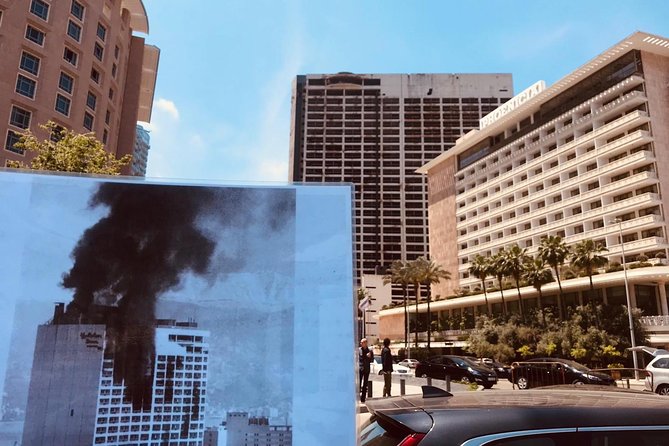
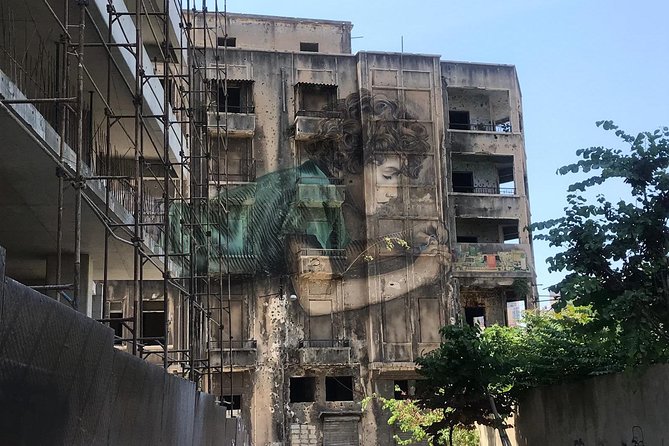
The old Holiday Inn is one of the most striking stops. The building remains associated with the Battle of the Hotels, which began in 1975, and with the Qantari front during the Civil War. The stop lasts about 15 minutes.
You do not need an interest in military history to find this useful. The building turns a distant political conflict into something visible and physical. Damage, unfinished repair, and altered urban space can be easier to understand when a guide explains how they fit into the fighting.
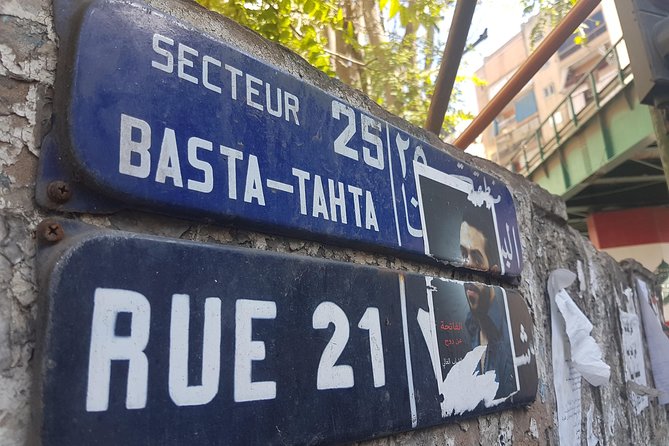
The Green Line is another major point on the route. This was the separation line between Christian and Muslim areas during the Civil War. The walk passes through the area after moving by BDD, and the guide explains how the line divided Beirut.
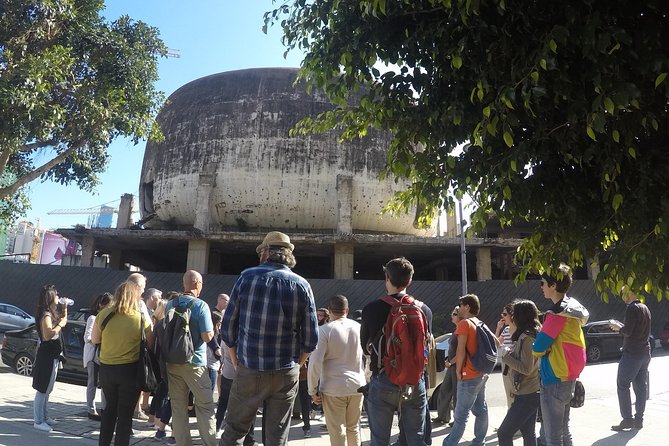
The tour also stops at the Egg, the former Metropole Cinema. During the Civil War, the cinema was transformed into a bunker. You will not enter the building, but the group stops for about 20 minutes to discuss the different phases of the war.
These are among the most valuable parts of the day, but they are not light sightseeing. You will hear about division, assassination, destruction, and political conflict. George, the guide most often praised in the supplied feedback, is described as humorous but also thoughtful and direct when presenting these subjects. That mix seems well suited to Beirut, where humor and hardship often sit side by side.
Zokak el-Blat brings the walk down to street level
At the Zekak Al Blat Public School, the route enters the Zokak el-Blat district. The guide discusses 19th-century Beirut, then stops for lahmadjun, a thin dough topped with minced meat. A vegetarian option is available, and the food comes from the well-known Ishkhanian Bakery.
This is more than a scheduled lunch break. It moves the tour away from monuments and into the daily texture of a neighborhood. You can choose falafel sandwiches instead, and coffee and beer are included.
The food arrangement is worth checking before you book. There is no street food option for people who are gluten intolerant. You also should not expect a long restaurant meal. The point is a simple local bite that keeps the walking day moving.
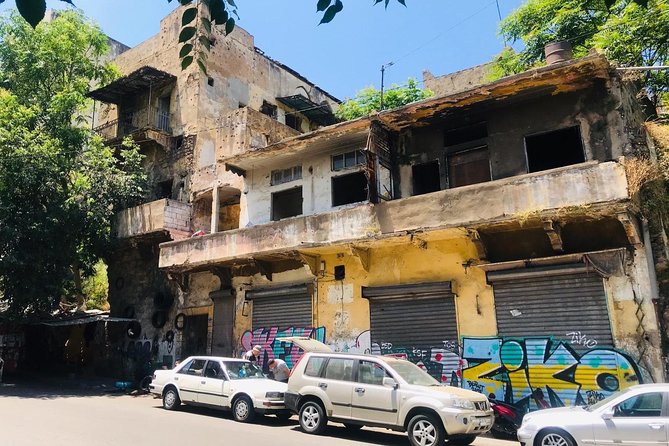
Zokak el-Blat may be one of the most rewarding districts on the route because it is less polished than the main downtown areas. You get a better sense of older Beirut and its residential fabric. The stop lasts about 30 minutes, giving you more time than several of the landmark visits.
Antique shops, Bachoura, and Khadak el-Ghamik
After lunch, the group walks through Beirut’s antique district. The shops will be closed during the tour, so this is not a shopping stop. Instead, you pass through the area and continue toward Khadak el-Ghamik Street.
That detail matters if you are expecting to browse antiques or buy something. You are there to see the district and understand its place in the city, not to shop.
This part of the route adds variety. The morning focuses on the formal center, major religious buildings, redevelopment, and war sites. The afternoon moves through smaller streets and areas that are easier to miss when you explore only the main avenues.
The tour’s structure works because each district changes the question. At Martyrs’ Square, you think about public memory. At the Roman Baths, you think about the ancient city. At the Holiday Inn and Green Line, you think about conflict. In Zokak el-Blat and the antique district, you look at how people live with the city’s past in ordinary streets.
The Mohammad al-Amin Mosque and Saifi Village
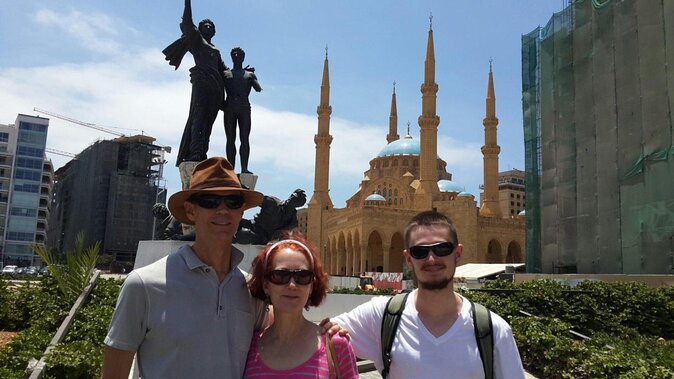
The Mohammad al-Amin Mosque is one of the largest mosques in Beirut. The visit lasts around 15 minutes, and the guide connects the mosque with the assassination of former prime minister Rafic Hariri.
The mosque is visually prominent, but the political context gives the stop its real weight. You are not simply viewing a religious building. You are learning how a major site became linked to a defining moment in modern Lebanese politics.
The walk continues through Saifi Village, a Solidere project where the guide discusses Beirut’s architectural styles. This is another place where the tour asks you to compare the city’s different ideas of renewal.
Saifi Village can feel more orderly and restored than some of the neighborhoods earlier in the day. That contrast is useful, though you may find the discussion of redevelopment more interesting than the streets themselves. The stop lasts about 15 minutes.
Sursock, Gemmayzeh, and the return to Martyrs’ Square
Near the Nicolas Sursock Museum, the guide talks about the old statue of the Martyrs and the Sursock family. The stop is short, about five minutes, and the museum itself is not listed as an interior visit.
The final section follows Gouraud Street through Gemmayzeh and returns to Martyrs’ Square. You spend about 20 minutes walking along Gemmayzeh Street, which gives the day a relaxed closing stretch after the heavier Civil War discussions.
Because the walk ends back at the starting point, you do not need to arrange a pickup from another part of Beirut. The route is also near public transportation, which is helpful if you are using the tour to get your bearings on your first day.
How demanding is the walking?
You should have a strong level of physical fitness for this experience. The published duration is approximately six hours, and the itinerary includes many stops spread across central Beirut and its surrounding neighborhoods.
The stop durations add up to a substantial day on foot, even though the route includes pauses for explanations and food. Wear comfortable shoes, carry water, and prepare for weather changes. The tour requires good weather, and heavy rain or poor conditions can lead to a different date or a full refund.
The group can have up to 15 people. That is small enough for a guide to speak with the group rather than a crowd, but it is not a private tour. The supplied feedback includes an occasion when cancellations left George guiding one person alone, but you should not count on that happening.
What kind of guide should you expect?
The strongest praise centers on George, also referred to as Georges in some comments. He is described as a geophysicist with archaeological training, and his approach combines history, politics, humor, and personal insight.
I would choose this tour mainly for that guiding style. The route itself includes important places, but several stops are short and many have no admission ticket. The value comes from connecting them into a clear story and answering questions as you go.
George’s style may suit you if you enjoy candid discussion. The supplied feedback describes him as friendly, funny, politically engaged, and willing to show both Beirut’s beauty and its problems. If you prefer a quiet guide who sticks to dates and avoids current affairs, this may feel too opinionated.
The 4.9 rating from 14 reviews and 93 percent recommendation figure suggest strong satisfaction, but the sample is small. I would treat those numbers as encouraging evidence, not a promise that every group or weather condition will produce the same day.
Is $41.03 good value?
At $41.03, the tour includes guiding, taxes and fees, one lahmadjun or falafel sandwich, coffee, and beer. You do not pay separate entry fees at the listed stops because they are free admission sites.
The price is reasonable if you want help interpreting Beirut rather than simply walking between landmarks. You are also getting food and a route that includes neighborhoods you might struggle to locate independently because of the city’s confusing street names.
The value is weaker if you mainly want time inside museums or churches. The Greek Orthodox Cathedral, Roman Baths, and Sursock Museum area receive short visits, and the Egg is viewed from outside. This is a city walk, not a series of extended indoor tours.
Private transportation is not included, but the tour begins and ends at Martyrs’ Square. You will need to make your own way to the meeting point and cover personal extras.
Who should book this Beirut walking tour?
I would recommend it to you if you want a serious first introduction to Beirut, especially one that links ancient remains to the Civil War and postwar redevelopment. It suits solo visitors, couples, and small groups who like asking questions and walking through ordinary neighborhoods.
It is also a good choice if you want a local food stop without committing to a separate food tour. The lahmadjun at Ishkhanian Bakery gives you a specific taste of Beirut while keeping the schedule practical.
I would hesitate if you have limited mobility, dislike long walks, need gluten-free food, or want a relaxed sightseeing pace. I would also check current conditions before booking, since the experience depends on good weather and the city’s access situation can change.
FAQ
Where does the Beirut walking tour begin?
The tour begins at Martyrs’ Square, Beirut, at 9:30 a.m.
Where does the tour end?
The activity ends back at the meeting point in Martyrs’ Square.
How long does the tour last?
The tour lasts approximately six hours.
How large is the group?
The group has a maximum of 15 people.
What food is included?
You receive one lahmadjun from Ishkhanian Bakery or falafel sandwiches, along with coffee and beer.
Is there a gluten-free food option?
No street food option is available for gluten-intolerant participants.
What happens if the weather is poor?
The tour requires good weather. If it is canceled because of poor weather, you are offered another date or a full refund.
Should you book it?
Book this tour if you want Beirut explained through its streets, scars, neighborhoods, and food. The best parts are the Green Line, Holiday Inn, Egg, Roman Baths, and Zokak el-Blat, where the city’s past becomes something you can see around you.
Skip it if you want a short, gentle highlights tour or extended indoor visits. For a fit walker who values a lively local guide and an honest look at Beirut’s contradictions, $41.03 buys a useful and memorable introduction.
Newest Beirut reviews
- Wine Tasting Tour★ 5.0 · 2 reviews
- Journey Through Time: Half-Day Private Tour to Baalbek★ 5.0 · 3 reviews
- Lebanon’s Treasures: Jeita Grotto and Harissa Private Tour★ 5.0 · 2 reviews
- Traveling Spoon Lebanese Mezze Private Online Cooking Class★ 5.0 · 4 reviews
- Wine Tasting and Culture★ 5.0 · 3 reviews
- Small Group Tour to Baalbek, Anjar & Ksara with Hotel pickup★ 5.0 · 2 reviews
- Small Group Tours to Jeita Grotto and Byblos with tickets★ 5.0 · 3 reviews
- Small-Group Tour with Lunch to Baalbek, Anjar and Ksara★ 5.0 · 3 reviews
Tours, compared.

Guided Small-Group Tour to Baalbek, Anjar and Ksara with Lunch
Read our review →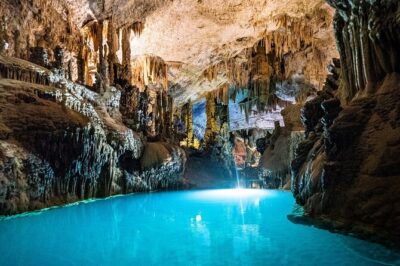
Guided Small-Group Tour to Jeita, Harissa, Byblos with Lunch
Read our review →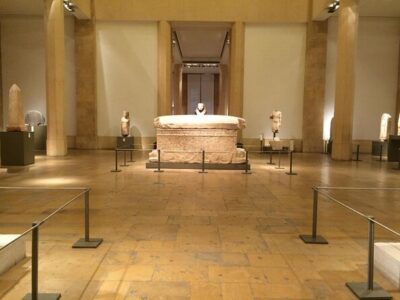
Private Anjar and Baalbek Tour from Beirut with Departure Ticket
Read our review →
Guided Private Full Day Tour to Baalbek, Anjar and Chateau Ksara
Read our review →
Semi-Private Tour to Jeita Grotto, Harissa & Byblos with Lunch
Read our review →
PRIVATE city Tour of authentic Tripoli and vibrant Batroun
Read our review →