
Review · BAALBEK & BEKAA VALLEY TOURS
Small Group Tour to Baalbek, Anjar & Ksara with Hotel pickup
Roman giants await beyond Beirut. This small-group day trip links Baalbek’s colossal Roman temples, Anjar’s Umayyad city, and Château Ksara wine country in about eight hours. I like the clear mix of archaeology and local wine, and I like that hotel pickup, drop-off, air-conditioned transport, and a tour leader are included.
The $10 price is remarkably low for a full day out, especially with a group limited to 15 people. The main catch is that entrance fees and lunch are extra, and the cancellation policy is strict. Still, with an English-speaking driver such as Kasem and a passionate local guide at Baalbek, this is a strong value for a first look at Lebanon’s Bekaa Valley.
In This Review
- Key points to know before you book
- Why Baalbek makes this Beirut day trip worthwhile
- The temples need more than a quick photograph
- The Stone of the Pregnant Woman in 15 minutes
- Anjar changes the story from Roman to Umayyad
- Château Ksara adds a taste of modern Lebanon
- What the $10 price really covers
- Hotel pickup and the small-group setup
- Rain, walking, and the pace of the day
- Who should choose this excursion
- Should you book the Baalbek, Anjar, and Ksara tour?
- FAQ
- What time does the tour start?
- How long does the tour last?
- Is hotel pickup and drop-off included?
- What is the maximum group size?
- Is lunch included?
- Are entrance fees and wine tasting included?
Key points to know before you book
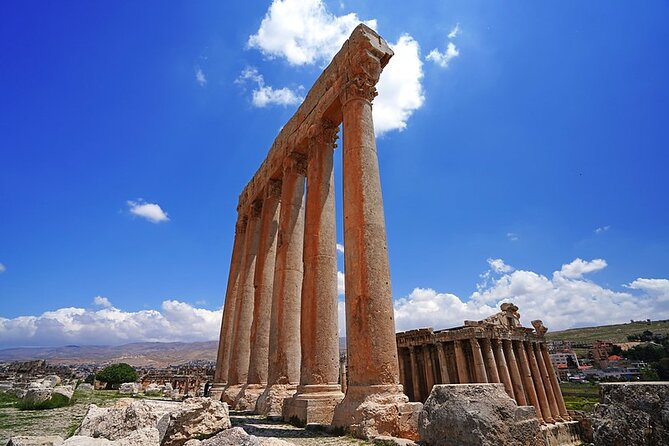
- Baalbek is the main event: You see the Temple of Jupiter and Temple of Bacchus in one of the finest surviving examples of Imperial Roman architecture.
- The Stone of the Pregnant Woman is a quick but striking stop: This enormous carved block shows how extreme Roman building projects could be.
- Anjar adds a different period: Its Umayyad palace, mosque, baths, and arcades give the day a clear change of pace.
- Château Ksara brings wine into the itinerary: The historic winery includes a tasting stop, though the tasting fee is not included.
- Small-group transport keeps the day manageable: The maximum group size is 15, with hotel pickup and return included.
- Bring money for extras: Lunch and admission charges are not covered by the tour price.
Why Baalbek makes this Beirut day trip worthwhile
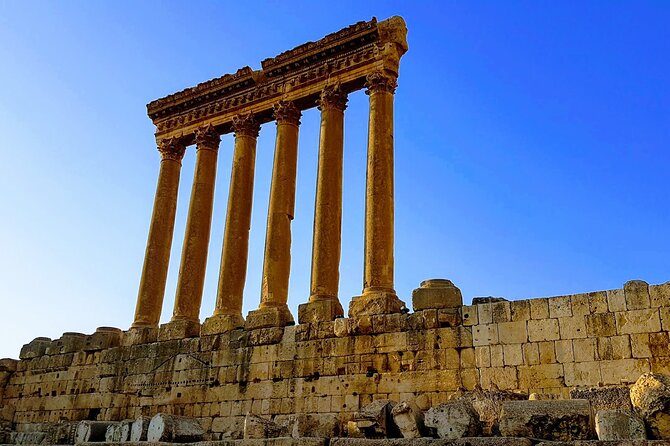
Baalbek is the reason to book this outing. The site was known as Heliopolis during the Hellenistic period and later became one of the Roman world’s great religious centers. Its sanctuary honored a Romanized version of a Phoenician religious triad: Jupiter, Venus, and Bacchus.
You will spend roughly three hours around Baalbek, including the main ruins and the nearby Stone of the Pregnant Woman. That is a useful amount of time because the site is too large for a quick photo stop. You need time to look up at the surviving columns, walk through the temple courts, and understand how much stone was moved and fitted here.
The Temple of Bacchus is often the more immediately impressive building. Its walls and columns remain remarkably substantial, and its scale helps you picture the sanctuary as a working religious center rather than a pile of old stones. The Temple of Jupiter is famous for its huge columns and massive platform, which give the complex its grand, almost outsized character.
Baalbek sits at about 1,150 meters at the foot of the Anti-Lebanon range, beside the fertile Bekaa Valley. That setting matters. You are not looking at an isolated ruin in a museum-like enclosure. The site occupies a broad mountain-side position, and its scale makes sense only when you see how much open space surrounds it.
The tour includes a brief explanation at each location, plus a local guide at Baalbek. That distinction is useful. A tour leader can keep the day moving, but a guide on site can explain the temples, the Roman cult, and the building program in a way that turns impressive stonework into a readable place. The guide was described as passionate and professional, which is exactly what you want at Baalbek.
More runs out to the Bekaa and its Roman temples:
- Guided Small-Group Tour to Baalbek, Anjar and Ksara with Lunch
★ 5.0 · 511 reviews - Anjar, Baalbek & Ksara Day Trip – With Lunch (4G on Board)
★ 4.5 · 181 reviews - Baalbek – Anjar – Ksara Trip From Beirut
★ 4.5 · 80 reviews
The temples need more than a quick photograph
The Baalbek stop is listed as about 90 minutes, with another 90 minutes for the temple complex. In practice, these descriptions point to the archaeological heart of the same visit, not two unrelated destinations. You should expect the bulk of your sightseeing time to center on the sanctuary.
The Roman builders worked here for more than two centuries. The result is not a single monument but a chain of courts, platforms, columns, and temples. I like this arrangement because you can watch the site unfold as you move through it. Each section gives you a fresh sense of proportion.
The complex is also valuable for the way it blends cultures. The religious roots were Phoenician, the city gained importance in Hellenistic times, and Roman architects gave the sanctuary its enormous imperial form. You do not need a specialist background to appreciate it, but the short explanations help you see that Baalbek was not simply a Roman copy of somewhere else.
Admission to the temple complex is not included. That is one of the few points that weakens the otherwise striking $10 value. Keep this cost in mind before you set out, since the low headline price does not cover every expense during the day.
The Stone of the Pregnant Woman in 15 minutes
The Stone of the Pregnant Woman is a short stop, usually around 15 minutes, but it earns its place. This worked Roman monolith is one of two enormous ancient blocks in the area, and both were likely intended for the nearby temple complex.
You will not need a long visit here. The point is to see the raw material behind Baalbek’s giant architecture. The stone gives you a direct sense of the quarrying and construction challenge. The Romans were not only placing tall columns and carving elaborate details. They were also cutting and moving blocks on a scale that still seems hard to explain.
This stop is free according to the tour details, so it adds visual interest without another admission charge. Expect a focused photo and explanation rather than a major second archaeological visit.
Anjar changes the story from Roman to Umayyad
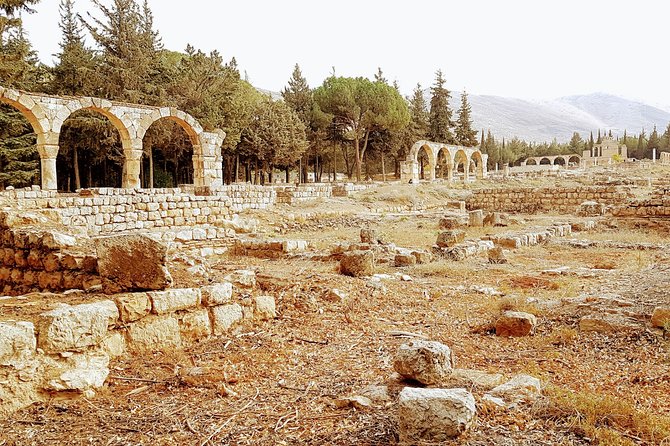
After Baalbek, the tour moves to the Umayyad Ruins of Anjar for about 45 minutes. Anjar is a useful counterpoint because it belongs to a much later period and reflects a different kind of city.
The site was an inland commercial center at the meeting point of routes linking Beirut with Damascus and the Bekaa Valley with Homs and Tiberiade. Its location explains why this city mattered. It was not built only as a ceremonial place. Trade and movement shaped its role.
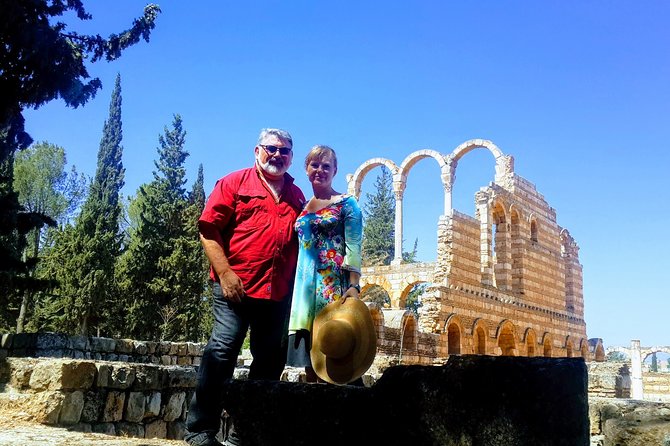
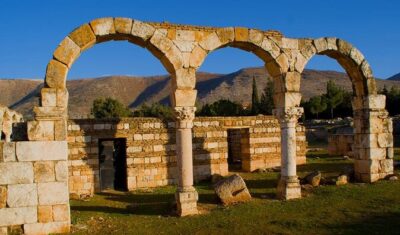
The ruins include the Umayyad palace, harems, mosque, the caliph’s great palace, thermal baths, and rows of pillars. Some Roman-style architectural elements appear here, but the city itself belongs to the Umayyad period. That mix gives you a useful visual lesson: later builders often worked with familiar forms while creating something new for their own society.
Anjar was only found by archaeologists in the late 1940s. That detail adds a certain thrill to the visit. The ruins are not a famous monument that has been continuously explained for centuries. They were hidden from modern view until relatively recently, and the surviving plan helps you imagine a once-active urban center.
Forty-five minutes is enough for a first visit, though it will feel brisk if you want to study every wall and column. I would treat Anjar as a focused introduction rather than a slow archaeological examination. Admission is extra, just as it is at Baalbek.
Other Lebanese wine estates worth the drive:
- Guided Private Full Day Tour to Baalbek, Anjar and Chateau Ksara
★ 5.0 · 60 reviews - Lebanon tour Baalbek ruins & Ksara w/pick-up, lunch,guide+entries
★ 5.0 · 35 reviews - Baalbek Temples & Ksara Caves w/pick-up,guide, entries+lunch
★ 4.9 · 34 reviews - Small Group Tours to Baalbek, Anjar & Chateau Ksara with lunch and Tickets
★ 5.0 · 29 reviews
Château Ksara adds a taste of modern Lebanon
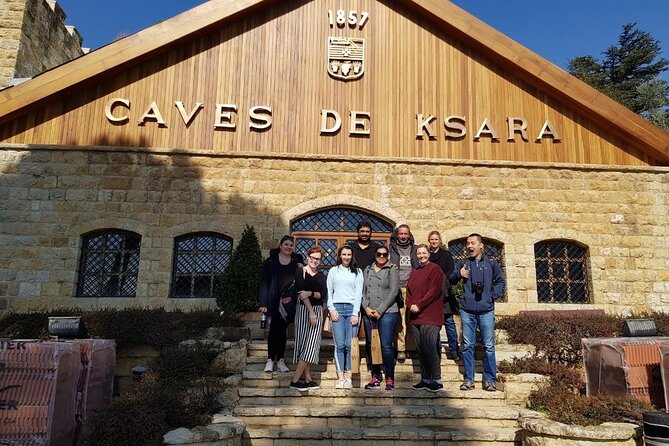
The final stop is Château Ksara, a winery in the Bekaa Valley founded in 1857 by Jesuit priests. The winery developed Lebanon’s first dry wine and now produces about three million bottles a year, with exports to more than 40 countries.
You get about an hour here, including a wine-tasting experience. This is a good ending after several hours of stone, temples, and ancient city plans. It gives you a chance to shift from archaeology to a living local product.
I like the contrast. Baalbek and Anjar show how earlier societies used the Bekaa region, while Château Ksara shows how the valley remains productive today. The stop also keeps the day from feeling like one long sequence of ruins.
The wine-tasting fee is not included, so check the cost before ordering or joining the tasting. If you do not drink wine, the stop may have less appeal than the archaeological sites, but it still provides a change of scenery and a look at an established Lebanese producer.
What the $10 price really covers
At $10 per person, this is an unusually inexpensive way to reach Baalbek and Anjar from Beirut. You are paying for a full-day route with hotel pickup and return, an air-conditioned vehicle, a tour leader, brief explanations, and a small group capped at 15 people.
The value comes from transport as much as sightseeing. Baalbek and Anjar are not Beirut walking stops, and arranging a private vehicle would normally cost far more than this shared excursion. You also avoid having to connect the sites yourself across the Bekaa Valley.
The price does not include lunch, Baalbek admission, Anjar admission, or the Château Ksara tasting fee. That does not make the tour poor value, but it means you should not treat $10 as the complete day’s budget.
I would bring enough cash or payment options for entrance fees, lunch, and wine tasting. The supplied details do not state the exact charges or lunch arrangement, so you should confirm current amounts before departure rather than assume every cost is bundled in.
Hotel pickup and the small-group setup
Pickup begins at 8:30 am, and hotel pickup and drop-off are included. This is one of the tour’s most practical features. You do not have to find a meeting point in Beirut first thing in the morning, and you can return to your hotel at the end of a long day.
The vehicle is air-conditioned, which matters on a route that includes outdoor archaeological sites. Baalbek and Anjar require walking around exposed ruins, so comfortable shoes, water, and sun protection are sensible choices. The tour details confirm the vehicle and transport arrangements, but they do not specify the exact pickup window or drive times.
A group maximum of 15 is small enough to feel more personal than a large coach trip. It also gives the guide a better chance to answer questions. The day still follows a fixed route, so you should not expect a private tour pace or unlimited time at each location.
The tour leader provides short explanations at each stop. At Baalbek, the local guide adds a more focused site explanation. One reported outing was handled by Kasem, who spoke fluent English and kept the day running well despite rain in the morning. That is a useful sign for anyone concerned about weather or communication, although guide assignments can vary.
Rain, walking, and the pace of the day
The tour runs for approximately eight hours. That is a full day, but the itinerary has enough variety to keep it from becoming one-note. You move from the large Roman sanctuary to a shorter monolith stop, then to an Umayyad city and finally to a winery.
Rain does not automatically stop the experience. The route continued smoothly during a wet morning, with the driver keeping things organized. Still, weather can affect how comfortable the outdoor portions feel, so bring a light waterproof layer if conditions look uncertain.
You will walk around ancient ruins at Baalbek and Anjar. The information provided says most people can participate, but it does not give detailed accessibility information. If you have mobility concerns, ask the provider about surfaces, steps, and vehicle arrangements before paying.
The morning start gives you a reasonable amount of time for the route, but the schedule is not loose. Baalbek receives the longest attention, Anjar receives less, and the Stone of the Pregnant Woman is deliberately brief. I would not book this trip if your goal is to spend an entire day slowly studying one archaeological site.
Who should choose this excursion
I would recommend this tour to you if you are based in Beirut and want to see Lebanon’s most important Roman ruins without arranging your own long-distance transport. It is also a good fit if you enjoy having ancient sites explained rather than simply photographed.
History lovers will get the most from Baalbek’s Roman and Phoenician connections. Architecture fans will appreciate the huge blocks, temple platforms, and columns. Wine enthusiasts will like finishing at a Lebanese producer with a long operating history.
The tour also works well for first-time visitors who want a broad introduction to the Bekaa Valley. In one day, you see Roman religious architecture, an Umayyad trading city, and a modern winery. That range gives you more context than a single-site outing.
I would hesitate if you want a slow, private schedule, a guaranteed full lunch program, or all entrance fees included. I would also check the cancellation terms carefully before booking because the experience is non-refundable and cannot be changed once reserved.
Should you book the Baalbek, Anjar, and Ksara tour?
Book it if you want maximum coverage for a very low starting price and you value convenient hotel transport. Baalbek is the clear prize, while Anjar and Château Ksara make the day more varied and give you a wider view of Lebanon’s past and present.
Go in with the right expectations. You will pay extra for admissions, lunch, and wine tasting, and the schedule leaves limited time at Anjar and the stone quarry stop. But with air-conditioned transport, a group of no more than 15, an English-speaking driver such as Kasem on some departures, and strong guiding at Baalbek, the overall package offers impressive value.
FAQ
What time does the tour start?
The tour starts at 8:30 am.
How long does the tour last?
The experience lasts approximately eight hours.
Is hotel pickup and drop-off included?
Yes. Hotel pickup and drop-off in Beirut are included.
What is the maximum group size?
The tour has a maximum of 15 travelers.
Is lunch included?
No. Lunch is not included in the tour price.
Are entrance fees and wine tasting included?
No. Admission fees for the Baalbek temple complex and Anjar ruins are not included, and the Château Ksara tasting fee is also not included.
Newest Beirut reviews
- Wine Tasting Tour★ 5.0 · 2 reviews
- Journey Through Time: Half-Day Private Tour to Baalbek★ 5.0 · 3 reviews
- Lebanon’s Treasures: Jeita Grotto and Harissa Private Tour★ 5.0 · 2 reviews
- Traveling Spoon Lebanese Mezze Private Online Cooking Class★ 5.0 · 4 reviews
- Wine Tasting and Culture★ 5.0 · 3 reviews
- Small Group Tours to Jeita Grotto and Byblos with tickets★ 5.0 · 3 reviews
- Small-Group Tour with Lunch to Baalbek, Anjar and Ksara★ 5.0 · 3 reviews
- Small-Group Tour with Lunch to Sidon, Tyre & Maghdouche★ 5.0 · 2 reviews
Baalbek & Bekaa Valley Tours, compared.

Guided Small-Group Tour to Baalbek, Anjar and Ksara with Lunch
Read our review →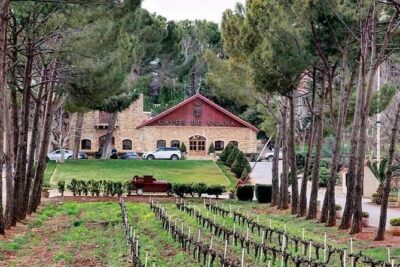
Anjar, Baalbek & Ksara Day Trip – With Lunch (4G on Board)
Read our review →
Private Anjar and Baalbek Tour from Beirut with Departure Ticket
Read our review →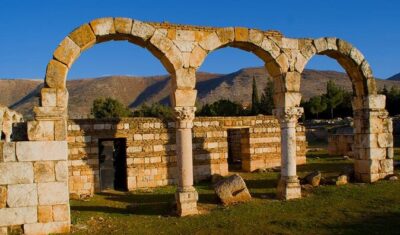
Guided Private Full Day Tour to Baalbek, Anjar and Chateau Ksara
Read our review →
Lebanon tour Baalbek ruins & Ksara w/pick-up, lunch,guide+entries
Read our review →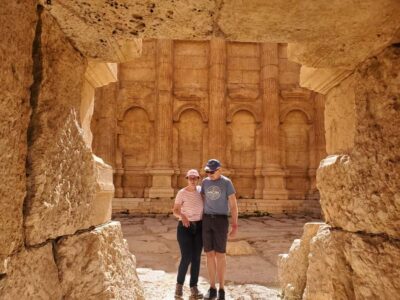
Baalbek Temples & Ksara Caves w/pick-up,guide, entries+lunch
Read our review →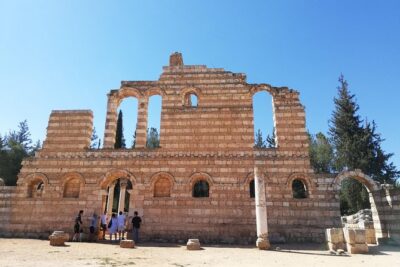
Small Group Tours to Baalbek, Anjar & Chateau Ksara with lunch and Tickets
Read our review →Browse the lists this tour appears in