
Review · HISTORICAL TOURS
PRIVATE Beirut Historical Walking Half Day Tour
Beirut rewards curious eyes. This private half-day tour connects the city’s ancient remains, civil-war scars, religious landmarks, and seafront views in one well-planned outing. I especially like the door-to-door transport, which saves you from sorting out Beirut traffic, and the chance to learn from guide David, whose personal experience of the city gives the history a human voice. The main drawback is pace: several major sights are packed into roughly three to four hours, so you will get an excellent introduction rather than a slow, museum-heavy visit.
I also like the mix of indoor and outdoor stops. The National Museum gives you a solid historical base, while the walk through downtown brings that story into the streets. You should be ready for walking, changing subjects quickly, and a serious dose of Lebanon’s difficult modern past.
In This Review
- What makes this Beirut tour worth your time
- A history lesson before the city walk
- The National Museum of Beirut, ancient Lebanon under one roof
- Solidere and the rebuilt center of Beirut
- Place des Martyrs and Beirut’s religious landmarks
- Beirut Souks, commerce after wartime destruction
- Pigeon Rocks in Raouche, Beirut’s signature view
- The Corniche and a final coastal pause
- Why the private format matters
- Is $93.34 a fair price?
- Practical advice before you go
- Who should book the Beirut Historical Walking Half Day Tour?
- FAQ
- Where does the tour take place?
- What time does the tour start?
- How long does the experience last?
- Is hotel pickup included?
- Is this a private tour?
- What is included in the price?
- Is lunch included?
- Can I cancel for a full refund?
What makes this Beirut tour worth your time
- A personal introduction from David: His talks cover Lebanese history, politics, local life, and his own memories of growing up in Beirut.
- The National Museum first: Ancient objects make more sense after the city’s history has been explained.
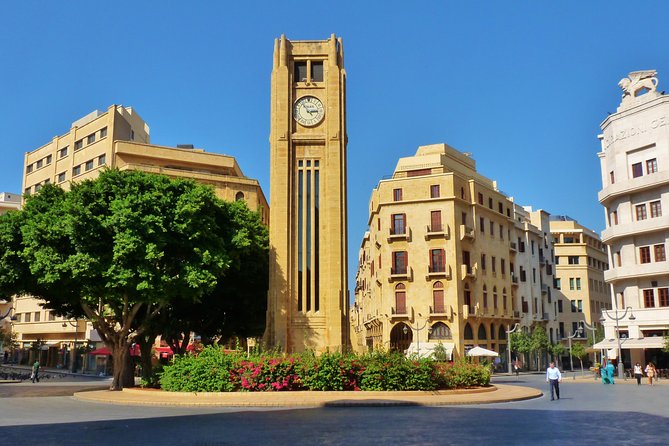
- A compact downtown walk: You see Place des Martyrs, the Mohammad Al-Amin Mosque, St. George’s Maronite Cathedral, Roman baths, Star Square, and the Beirut Souks.
- History you can see: Downtown’s rebuilt streets and restored buildings reveal how badly Beirut was damaged during the civil war.
- Pigeon Rocks and the Corniche: The tour ends with two of Beirut’s most recognizable coastal sights.
- Private transport included: Hotel pickup and drop-off make this useful for a short stay or a busy travel day.
A history lesson before the city walk
The tour begins at 9:00 a.m. with pickup in Beirut, using an air-conditioned vehicle. Before entering the museum, David may provide a city briefing, a map-based introduction, and an audio presentation about Beirut and Lebanon. That opening matters because Beirut can be confusing at first glance. Its streets, religious communities, political history, and rebuilt districts make more sense once you have a basic timeline.
The city has been destroyed and rebuilt many times, with natural disasters accounting for earlier destruction and the Lebanese Civil War causing severe damage from 1975 to 1990. This is not a tour that treats history as a list of old dates. The subject is still visible in the city, and David’s own experience helps connect national events with ordinary life.
Several people particularly valued his clear explanations and first-hand memories. He is praised for being flexible, polite, well organized, and willing to answer questions. That is important on a private tour because you can steer the discussion toward architecture, politics, archaeology, religion, or daily life instead of following a fixed script.
Other guided walks through Beirut:
- Beirut Full Day Walking Tour
★ 5.0 · 14 reviews - Beirut: Private Walking Tour With A Guide (Private tour)
★ 4.9 · 9 reviews - Beirut Walking Tour – Discover Beirut by foot
★ 5.0 · 2 reviews
The National Museum of Beirut, ancient Lebanon under one roof
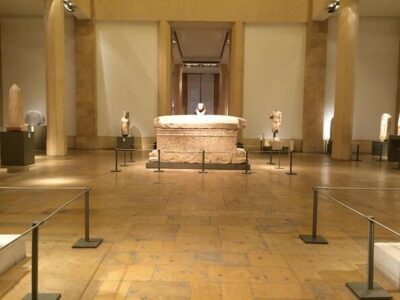
The first major stop is the National Museum of Beirut, located on the eastern side of the city. The museum was built in the 1940s, badly affected during the war years, and revived in the 1990s. It offers the objects and setting needed to understand Lebanon’s long story.
You can expect a collection that reaches far beyond modern Beirut. The visit places Lebanon within the wider history of the eastern Mediterranean, where different peoples, faiths, and empires shaped the region over many centuries. The exact time spent inside can vary, since the whole experience is designed as a short half-day tour.
One useful detail from the tour format is the audio introduction before the museum visit. It gives you a framework before you start looking at objects, which can be helpful if you do not already know the major periods of Lebanese history. I like that order: first get the map and the broad story, then see the evidence.
The museum is also important because its own history reflects Beirut’s experience. It was not simply a quiet cultural institution waiting for visitors. It survived a period when the city itself was split and damaged, then reopened as part of Beirut’s rebuilding. That gives the museum more weight than a standard archaeological stop.
If you want to study every display carefully, this tour may feel too short. If you want a clear introduction before exploring more of Lebanon, the museum works very well.
Solidere and the rebuilt center of Beirut
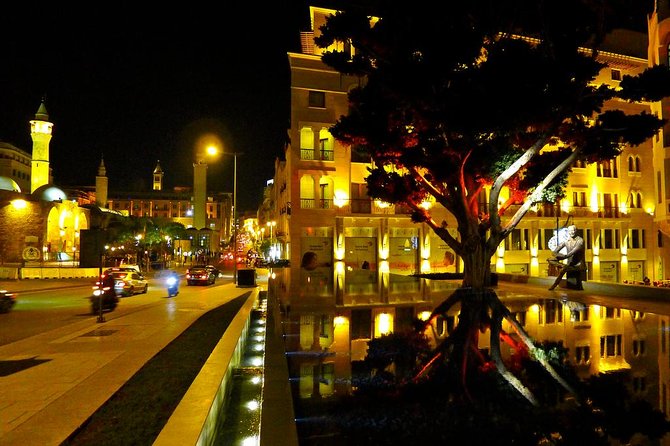
After the museum, the tour moves toward downtown Beirut and the Solidere area. This district was badly damaged during the civil war and restored during the 1990s. The result is a central zone where polished reconstruction sits close to reminders of conflict and older layers of the city.
The contrast is the point. You may see grand civic buildings, open squares, restored religious sites, modern shops, and archaeological remains within a relatively compact area. David’s explanations help you read those changes instead of seeing downtown as just another shopping district.
The tour includes the Parliament building and the Government Palace, along with other central landmarks. These are not merely photo stops. They help explain how Beirut functions as Lebanon’s political and symbolic center, even as the city continues to carry the marks of division and rebuilding.
The downtown section involves walking on city streets and between separate sights. Wear comfortable shoes and expect some time outdoors. The tour description gives three hours for the broader downtown and museum portion, followed by additional listed stops, but the overall experience is advertised at roughly three to four hours. In practice, you should treat the schedule as approximate.
Place des Martyrs and Beirut’s religious landmarks
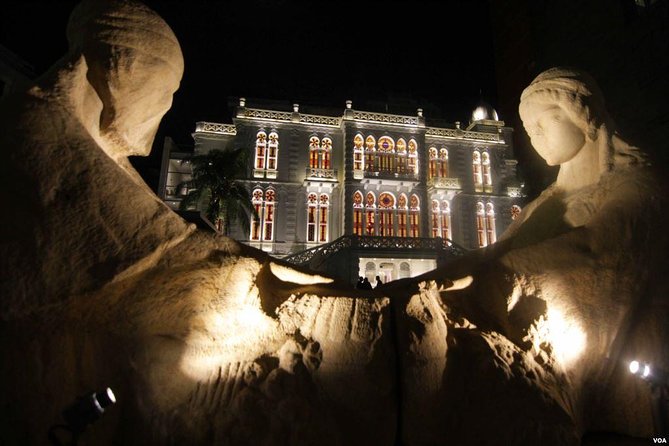
Place des Martyrs is one of the most meaningful stops in central Beirut. The square is tied to the city’s political memory and provides a natural starting point for several nearby landmarks.
From here, the route includes the Mohammad Al-Amin Mosque, St. George’s Maronite Cathedral, the Roman baths, and Star Square. This is a remarkable cluster because it places Islamic, Christian, Roman, political, and commercial history within the same walking section.
The Mohammad Al-Amin Mosque is one of the most visually prominent buildings in downtown Beirut. St. George’s Cathedral adds another layer, representing the city’s Maronite Christian tradition. Seeing both in one short walk gives you a direct sense of Beirut’s religious diversity without needing a long drive across the city.
The Roman baths are a reminder that Beirut’s story did not begin in the modern era. They are especially valuable on a guided walk because remains in an urban setting can be easy to overlook without context. The guide can explain what you are seeing and how it fits into the city around you.
Star Square provides another shift in atmosphere, with central streets and civic architecture arranged around a recognizable urban focal point. The point of this section is not one single monument. It is the relationship between the sites.
You should allow yourself to pause for photographs, but do not expect long, independent exploration at every landmark. This is a guided overview, and the private format gives you more room for questions than a large group would, but time remains limited.
More history-led days around Beirut:
- Historical Beirut Tour (AM) Half Day – (4G on Board)
★ 4.0 · 16 reviews - Temple of Eshmun – Mleeta Landmark – Beaufort Castle
★ 5.0 · 9 reviews - Guided Half-Day Private Beirut Historical Tour
★ 5.0 · 6 reviews - Sidon & Tyre Unesco Heritage w/pick-up, guide, entries+lunch
★ 4.9 · 6 reviews
Beirut Souks, commerce after wartime destruction
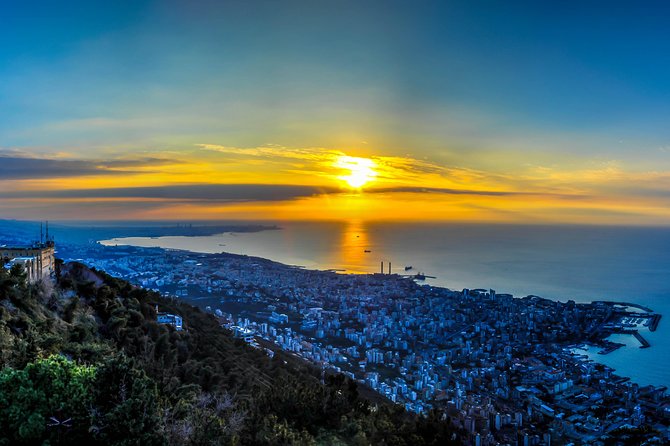
The Beirut Souks were completely demolished during Lebanon’s wars and later rebuilt and restored as an open-air shopping center in the central district. That makes the stop useful even if you have no interest in shopping.
I like the souks because they show another side of reconstruction. Downtown Beirut was not rebuilt only as a museum of ruins. It was also redesigned as a place for business, dining, shopping, and everyday city life. The modern commercial setting can feel polished and planned, but the story behind it is anything but simple.
Admission is free, and the stop is listed as about an hour. You might use that time for a look around, a coffee, photos, or a short break from the more serious historical material. Since lunch is not included, this is also a practical point to ask about food options if you need something afterward.
The trade-off is that the souks are more modern than traditional. If you expect a maze of old market lanes, you may find the rebuilt open-air mall less atmospheric than historic souks elsewhere in the region. Its value here is architectural and historical: it shows how Beirut tried to restore a commercial heart after war.
Pigeon Rocks in Raouche, Beirut’s signature view
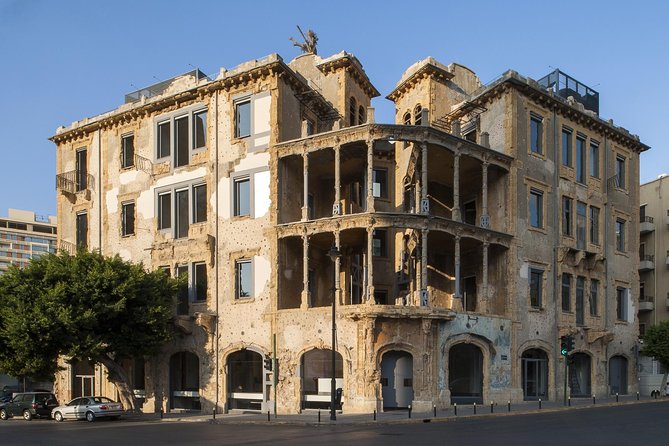
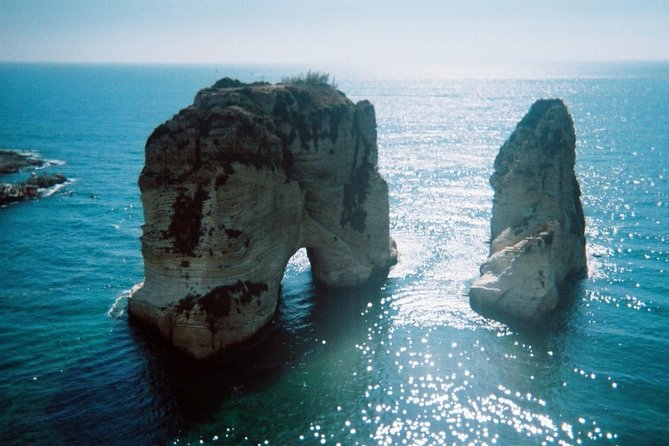
The route then leaves central Beirut by vehicle for Raouche and Pigeon Rocks. These offshore rock formations are widely treated as a symbol of the city, and the short stop gives you a chance to see Beirut from the Mediterranean edge.
The visit is listed at around 15 minutes, so plan for a quick scenic stop rather than a long coastal walk. That is enough for photographs and a look at the rocks, but not enough to linger through changing light or explore the neighborhood in depth.
This stop balances the heavy history of the morning. After museums, war damage, political landmarks, and religious buildings, the open sea gives you a different view of Beirut. The city is not only its past. It is also a coastal capital with a long relationship to the water.
The Corniche and a final coastal pause
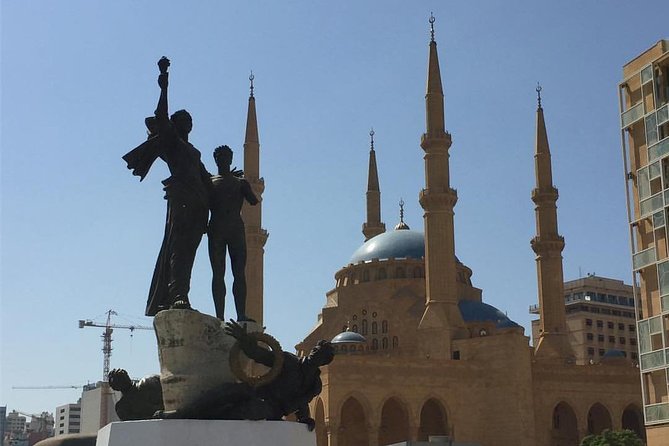
The final listed stop is the Corniche, also for about 15 minutes. The tour highlights the possibility of seeing the sunset, though the advertised start time is 9:00 a.m., so the exact light and timing may depend on the day’s schedule and how long earlier stops take.
The Corniche is best treated as a brief seafront pause. You can take in the coastal setting, enjoy a change of pace, and finish with one of Beirut’s most familiar public spaces.
The short timing is the clear limitation. If your main goal is a long waterfront walk or an extended sunset visit, you will want to return independently. As a final glance at the city’s shoreline, though, it rounds out the tour nicely.
Why the private format matters
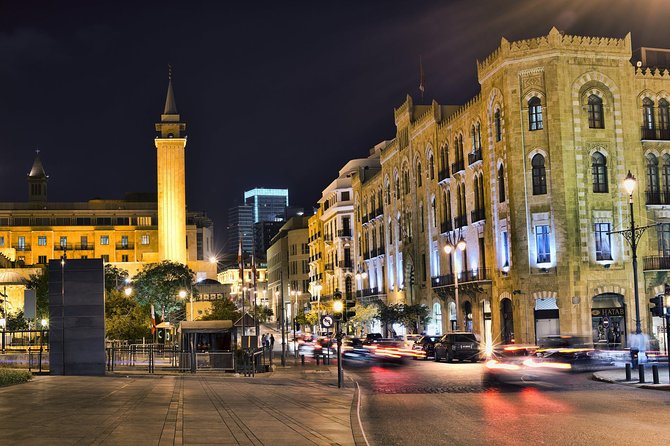
This is a private activity, so only your group participates. That changes the feel of the day. You can ask David to explain a confusing political reference, spend a little longer at a site that interests you, or move along when a stop has given you enough.
The available feedback repeatedly praises David’s organization, clear speaking style, flexibility, and broad command of Beirut’s past and present. Most important, he is described as engaging without making the history dull. That is a real advantage in a city where a simple monument can lead into difficult questions about war, sectarian politics, memory, and rebuilding.
Private does not mean leisurely. You still have to cover the museum, downtown, souks, Raouche, and the Corniche in a short period. The benefit is control and conversation, not unlimited time.
Is $93.34 a fair price?
At $93.34 per person, this is not the cheapest way to see Beirut. The price includes private guiding, an air-conditioned vehicle, pickup and drop-off within Beirut city, entrance fees, and taxes. Lunch is not included.
The value depends on how many people are in your group. For one or two people, the cost is fairly substantial for a half-day. For a small group, the private arrangement becomes more appealing because transportation and guiding are shared while the experience remains tailored to your party.
I think the strongest value comes from the combination of transport and interpretation. You are not paying only to be driven to Pigeon Rocks or shown a few central buildings. You are getting a structured introduction to a complicated city, with a guide who can connect ancient remains to modern Beirut.
If you already know the city well and prefer to wander alone, the price may be harder to justify. If you are visiting for the first time, have only half a day, or want history explained rather than simply photographed, the package makes better sense.
Practical advice before you go
Start with comfortable walking shoes. The downtown portion includes several landmarks and requires time on foot, while the vehicle handles the longer connections between the museum, central Beirut, and Raouche.
Keep your schedule flexible. The experience is advertised as three to four hours, but the individual stop lengths add up differently, and traffic or extended discussion can affect the timing. Avoid booking a tight appointment immediately afterward.
Bring water and plan around lunch. Food is not included, and the tour covers a lot of ground before returning you to your Beirut hotel.
This tour suits adults and older children who enjoy history, architecture, politics, and city life. The activity notes that most people can participate, but it does not provide detailed accessibility information, so you should ask the operator about mobility needs before booking.
The tour requires a minimum number of participants to operate, despite being private for your own group. Confirmation is normally provided at booking, although reservations made within 12 hours of departure are subject to availability.
Free cancellation is available if you cancel at least 24 hours before the 9:00 a.m. start. Changes or cancellations inside that window are not accepted for a refund.
Who should book the Beirut Historical Walking Half Day Tour?
Book it if you want a strong first look at Beirut and prefer an informed local guide to help you understand what you are seeing. It is especially useful for a short stay, since the route covers the National Museum, central landmarks, reconstructed souks, Pigeon Rocks, and the Corniche without requiring you to arrange separate taxis.
I would choose it for travelers who enjoy asking questions and want context about Lebanon’s modern history. David’s personal connection to Beirut is one of the tour’s biggest strengths.
Skip it if you want a slow archaeological museum visit, a full day of shopping, or a long coastal walk. The schedule is compact, and the downtown section is designed to give you a broad sense of the city rather than exhaustive time at each stop.
For most first-time visitors with only half a day, I think it is a sensible and worthwhile introduction. You leave with the city’s major sights in view, but also with a better understanding of why Beirut looks the way it does.
FAQ
Where does the tour take place?
The tour takes place in Beirut, Lebanon, with visits to the National Museum, downtown Beirut, the Beirut Souks, Raouche, Pigeon Rocks, and the Corniche.
What time does the tour start?
The scheduled start time is 9:00 a.m.
How long does the experience last?
The tour lasts approximately three to four hours.
Is hotel pickup included?
Yes. Pickup and drop-off are offered from hotels within Beirut city.
Is this a private tour?
Yes. Only your group participates in the activity.
What is included in the price?
The price includes an air-conditioned vehicle, a driver and guide, entrance fees, taxes, and Beirut city pickup and drop-off.
Is lunch included?
No. Lunch is not included.
Can I cancel for a full refund?
Yes, if you cancel at least 24 hours before the experience start time. Cancellations or changes made less than 24 hours before departure are not refunded.
Newest Beirut reviews
- Wine Tasting Tour★ 5.0 · 2 reviews
- Journey Through Time: Half-Day Private Tour to Baalbek★ 5.0 · 3 reviews
- Lebanon’s Treasures: Jeita Grotto and Harissa Private Tour★ 5.0 · 2 reviews
- Traveling Spoon Lebanese Mezze Private Online Cooking Class★ 5.0 · 4 reviews
- Wine Tasting and Culture★ 5.0 · 3 reviews
- Small Group Tour to Baalbek, Anjar & Ksara with Hotel pickup★ 5.0 · 2 reviews
- Small Group Tours to Jeita Grotto and Byblos with tickets★ 5.0 · 3 reviews
- Small-Group Tour with Lunch to Baalbek, Anjar and Ksara★ 5.0 · 3 reviews
Historical Tours, compared.
Historical Beirut Tour (AM) Half Day – (4G on Board)
Read our review →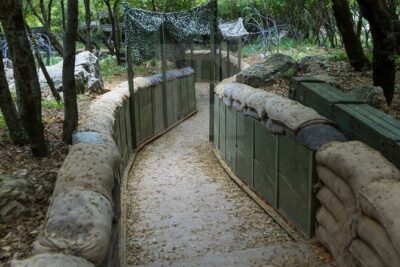
Temple of Eshmun – Mleeta Landmark – Beaufort Castle
Read our review →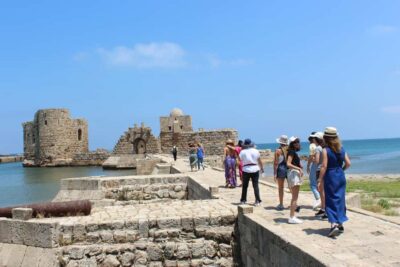
Sidon & Tyre Unesco Heritage w/pick-up, guide, entries+lunch
Read our review →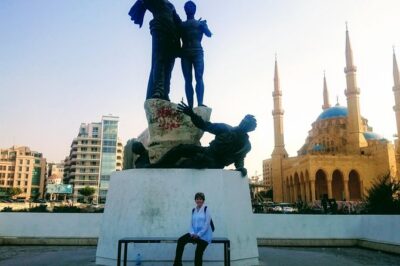
PRIVATE tour to Beirut history museum, Beiteddine & Deir elQamar
Read our review →
Baalbek, Anjar & Wine: A Journey Through Lebanon’s Heritage
Read our review →

Exploring Beirut’s Past: A Private Guided Historical Tour
Read our review →Browse the lists this tour appears in