
Review · CITY TOURS
City Sightseeing Beirut Hop-On Hop-Off Bus Tour
Beirut rewards a little orientation. This double-decker bus links the capital’s central sights, seaside views, museums, churches, mosques, and shopping districts in one easy circuit. I especially like the open-top view of Raouche Rock and the chance to cover widely separated parts of Beirut without arranging several taxis.
I also like the multilingual audio commentary and the included museum access, at least when the advertised inclusions are operating as described. The main caution is important: service may be reduced, and the bus may not run as a true hop-on hop-off service every day. Check the departure pattern before you set out.
In This Review
- Key points at a glance
- What this Beirut bus tour is really good for
- Start at Martyrs’ Square
- Churches, stairs, and Beirut’s eastern districts
- Beit Beirut and the National Museum
- The MIM Mineral Museum inclusion
- The western districts and Raouche Rock
- AUB Archaeological Museum and Zaytouna Bay
- Mosques, cathedrals, and the Roman baths
- How the hop-on hop-off system works in practice
- Timing, comfort, and commentary
- Is $23 a fair price?
- The optional Jeita, Byblos, and Harissa day trip
- Who should book this tour?
- FAQ
- How long does the Beirut hop-on hop-off tour take?
- What are the operating hours?
- Can I board at any stop?
- Is the National Museum of Beirut included?
- Are mobile tickets accepted?
- How long is my ticket valid?
- Can I cancel for a refund?
Key points at a glance
- Fifteen stops across central Beirut: The route connects Martyrs’ Square, the National Museum, Raouche, Zaytouna Bay, the Roman baths, and several major religious buildings.
- A useful first-day orientation: The full circuit helps you see how Beirut’s historic center, eastern districts, museums, and Mediterranean shore fit together.
- Raouche is the visual highlight: The open upper deck gives you a clear view of Pigeon’s Rock, also called Raouche Rock, rising just offshore.
- Museum value can be good: The tour information lists admission to the MIM Mineral Museum, while other details also describe National Museum entry as included. Confirm this before booking.
- Service requires planning: Buses are listed between 10:00 a.m. and 5:00 p.m., every 60 to 90 minutes, but departure times can change.
- A day-trip upgrade is available: You can add a full-day outing to Jeita Grotto, Byblos, and Harissa if you want to see more of Lebanon beyond Beirut.
What this Beirut bus tour is really good for
At about $23, this is not the cheapest way to move around Beirut. It can still be good value if you use it for orientation, make one or two stops, and visit a museum included with your ticket.
The route is most useful at the beginning of a Beirut stay. You can sit above the traffic, hear basic commentary in several languages, and decide which places deserve more time. That matters in a city where historic sites, modern shopping areas, museums, and the waterfront are spread across different districts.
The basic ticket is sold for 24 or 48 hours, giving you more flexibility than a one-way sightseeing ride. In theory, you can get off at a stop, explore on foot, and catch a later bus. In practice, you need to confirm that buses are making the full circuit on your chosen date.
The operator lists service from 10:00 a.m. to 5:00 p.m., with buses roughly every 60 to 90 minutes. That is not a frequent urban transit service. If you get off, allow plenty of time before the next bus. A missed departure could mean a long wait.
A few more trips out of Beirut worth a look
- Guided Small-Group Tour to Baalbek, Anjar and Ksara with Lunch
★ 5.0 · 511 reviews - Guided Small-Group Tour to Jeita, Harissa, Byblos with Lunch
★ 5.0 · 361 reviews - Paragliding Trip Over Lebanon – Jounieh Bay
★ 5.0 · 257 reviews
Start at Martyrs’ Square
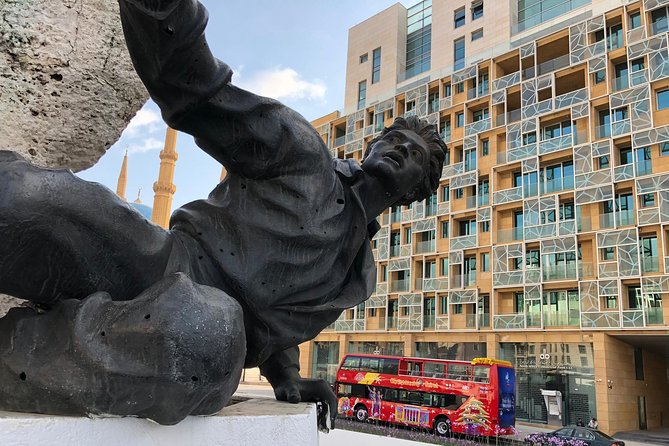
Martyrs’ Square is the natural place to begin because it puts you in the middle of Beirut’s central story. The square contains a monument and an opera house, and it gives you a quick sense of the capital’s public heart.
It is also a practical orientation point. From here, the tour begins linking religious buildings, museums, shopping areas, and the seafront. I would use the first circuit mainly to look and listen rather than trying to visit every stop.
The bus voucher can be redeemed at any stop, not only at a designated starting point. That is handy if you are already near another attraction. Still, because signage and bus visibility have been a problem for some passengers, call the listed number, +961 76 910165, on the day of your ride to confirm the departure location and timing.
Churches, stairs, and Beirut’s eastern districts
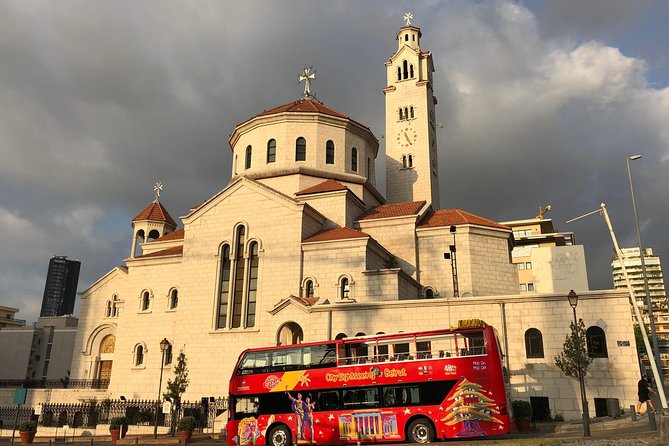
The second stop is Saint Elias and Saint Gregory the Illuminator Armenian Catholic Cathedral. Its inclusion gives the route a useful religious and cultural range. Beirut is home to several Christian traditions, and this stop helps show that the city cannot be understood through one faith or one historic period.
At St. Nicolas Stairs, you get a different kind of sightseeing experience. Stairs are part of Beirut’s street character, and this stop is better suited to a short walk and photographs than a quick glance from the bus.
The Villa Audi Mosaic Museum follows. Its mosaics offer a focused museum visit rather than a broad survey of Beirut. If you enjoy decorative arts, this is one of the stops worth planning around. If your schedule is tight, you may prefer to remain on the bus and save time for the National Museum or Raouche.
ABC Achrafieh brings you into a modern shopping district. This may sound less historic, but it gives the route balance. Beirut is not an open-air museum. Shopping centers, cafés, and everyday city life sit close to old churches and archaeological collections.
Beit Beirut and the National Museum
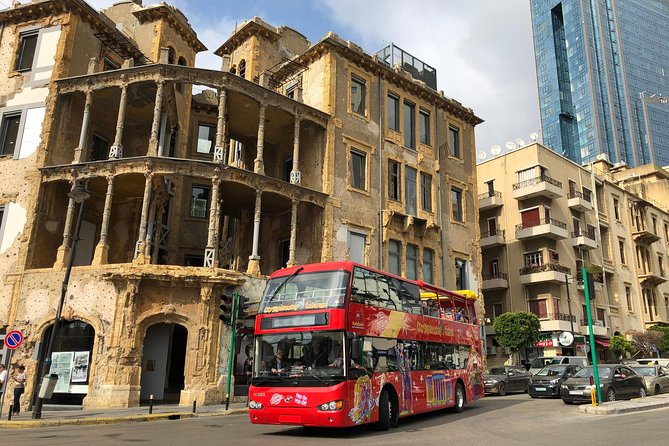
Beit Beirut, also called the Museum and Urban Cultural Center, is one of the more meaningful stops on the route. It connects the city’s past with its modern urban story, making it different from a traditional archaeological museum.
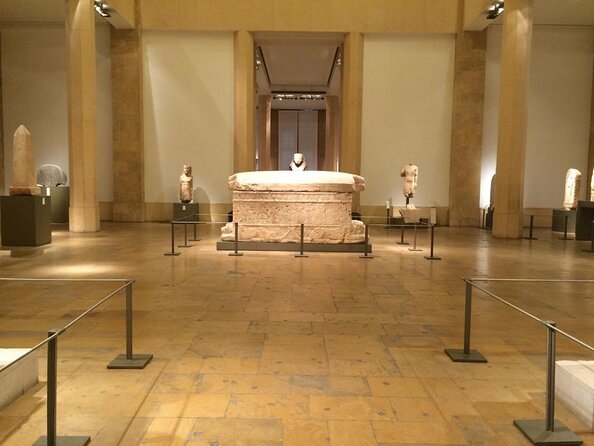
The National Museum of Beirut is the key cultural stop. It presents relics from Lebanon and the wider Middle East, with material covering about 5,000 years of history. If museum access is included on your ticket, this is the place where the admission benefit matters most.
There is an important detail to check before you pay. The tour information says National Museum entry is included in the highlights, but the inclusions also specifically list entry to the MIM Mineral Museum. A separate booking detail says attractions are not included unless specified. This is not clear enough to assume that both museums are covered.
I would contact the operator before departure and ask two direct questions: Is National Museum admission included on the selected ticket, and is MIM Mineral Museum admission included? One French-language complaint described arriving without the expected National Museum entry, so this check could save you an awkward surprise.
A different side of Lebanon altogether:
- First Paragliding Club in Lebanon – Since 1992
★ 5.0 · 193 reviews - Anjar, Baalbek & Ksara Day Trip – With Lunch (4G on Board)
★ 4.5 · 181 reviews - Jeita Grotto – Harissa – Byblos Trip
★ 5.0 · 169 reviews - Byblos, Jeita Grotto & Harissa Day Trip -With Lunch (4G on Board)
★ 4.5 · 145 reviews
The MIM Mineral Museum inclusion
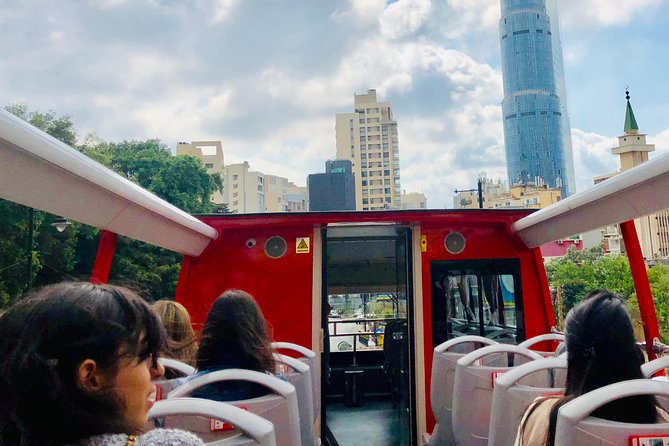
The MIM Mineral Museum is listed as an included benefit. Its presence adds a specialist subject to a city tour that otherwise focuses on archaeology, architecture, and urban sights.
You should not confuse this with the National Museum. They are separate attractions, and the supplied details do not clearly explain whether admission to both is included. If mineral collections interest you, confirm the exact arrangement before booking.
This is also a reminder to read the ticket wording carefully. At $23, museum admission can change the value calculation. Without included entry, you are mainly paying for transport and commentary. With one or two museum admissions included, the price becomes easier to justify.
The western districts and Raouche Rock
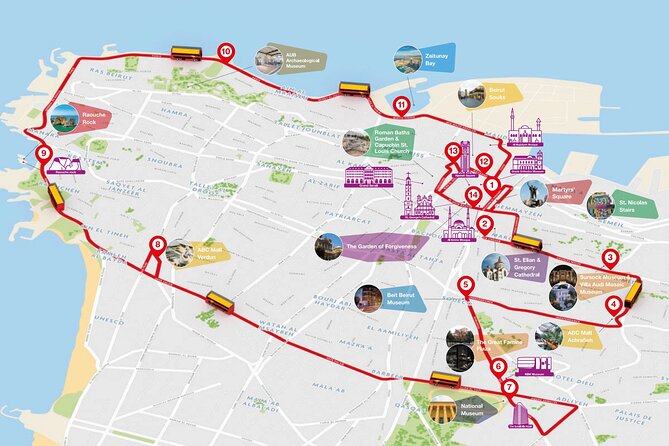
After the central and eastern stops, the route reaches ABC Verdun and then El Delie, Raouche. The Verdun stop shows another modern side of Beirut, while Raouche provides the strongest outdoor view on the circuit.
From the upper deck, you can look toward Pigeon’s Rock, the dramatic offshore formation also known as Raouche Rock. This is the stop I would prioritize if you have only one chance to leave the bus. The coastal setting gives you a break from streets and buildings, and the open-top position is useful for photographs.
Raouche is also one of the stops specifically identified as a place where passengers may be able to get off during reduced service. Current operating conditions can affect the normal hop-on hop-off pattern, so confirm this in advance rather than assuming every stop is active.
If the bus is running only a limited number of departures, Raouche becomes even more important. You may have to choose between a brief coastal stop and a museum visit. Plan the order before boarding.
AUB Archaeological Museum and Zaytouna Bay
The American University of Beirut Archaeological Museum adds another museum option, this time connected with the university. It is a good choice if you prefer compact archaeological displays and want a second cultural stop after the National Museum.
The route then moves toward Zaytouna Bay. This waterfront area gives you a modern contrast to the archaeological and religious sites earlier in the day. From the bus, you can take in the shoreline setting without arranging separate transport.
I would not try to visit every museum on a single short circuit. Choose one major museum, one smaller museum or church, and Raouche. That mix gives you culture, architecture, and open air without turning the day into a race against the timetable.
Mosques, cathedrals, and the Roman baths
Al Majidieh Mosque is another reminder of Beirut’s religious variety. The route does not ask you to pick one tradition over another. Instead, it places mosques, Armenian churches, Greek Orthodox buildings, and the city’s archaeological remains within the same sightseeing loop.
Saint George Greek Orthodox Cathedral is especially notable because part of the cathedral now functions as a museum. That makes it more than a passing architectural view. You can connect the building itself with the layers of history preserved inside.
The Roman Baths stop takes you into Beirut’s ancient center. The baths sit close to other major central landmarks, so this is a sensible place to combine the bus with walking. You may not need a long stop here, but it helps explain why the modern city has such a long archaeological timeline.
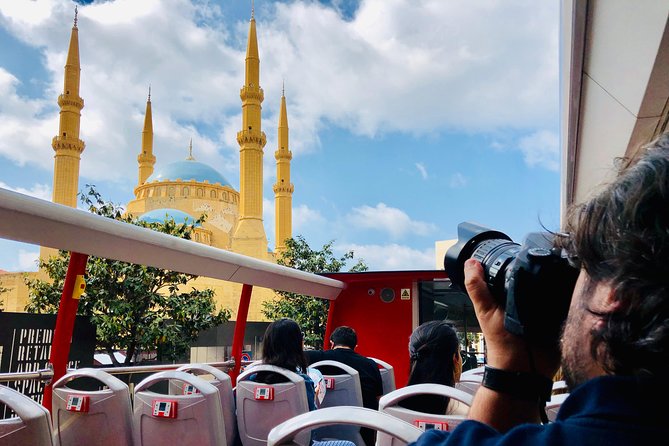
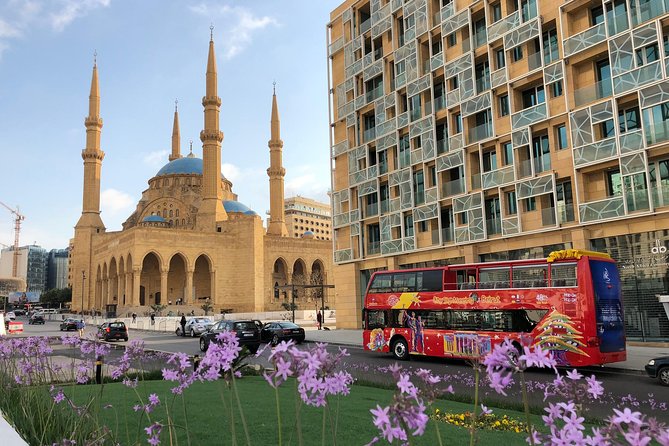
The final named stop is Mohammad Al Amin Mosque. Its prominent position makes it one of the easiest landmarks to recognize from the route. It also brings you back toward the central area, making it a practical point to finish your circuit or continue exploring on foot.
How the hop-on hop-off system works in practice
On paper, the system is simple. Buy a 24-hour or 48-hour ticket, show your mobile or paper voucher, board at any stop, and get off wherever you want. The voucher has flexible access for up to 12 months from the selected travel date, which may help if plans change and you return to Beirut.
The practical issue is frequency. A bus every 60 to 90 minutes requires a watch and a little patience. You should not treat this as a city bus that arrives whenever you reach a corner.
The tour is advertised as operating all year, but local conditions can change how the service works. One account described only two departures in a day, with boarding and exit limited to the MIM Mineral Museum and Raouche Rock. That means the standard route description may not reflect the exact service on your date.
Call +961 76 910165 before leaving your hotel. Ask:
- What time is the next bus?
- Which stops are active today?
- Is the full hop-on hop-off service operating?
- Where can you board?
- Is museum entry being honored?
This phone call is the single most useful piece of advice for this tour.
Timing, comfort, and commentary
The information gives two different duration figures: approximately one hour in the short tour summary and 120 minutes in the operating details. I would plan on roughly one to two hours for a complete circuit, depending on traffic and the day’s service pattern.
The open upper deck should provide the best views, especially around Raouche. It also leaves you more exposed to sun and weather, so bring suitable protection. The lower deck may be preferable if you want a calmer ride or if conditions are uncomfortable, though the available details do not specify seating arrangements.
A multilingual translation system is provided. That was singled out as useful, and it should help you follow the landmarks even if you do not speak Arabic, French, or English. A live guide may also be present. One guide named Simon was praised for making time for photographs and helping passengers get off at good places.
The quality of your ride may depend heavily on the staff assigned that day. The driver and guide have both received praise for being friendly, professional, patient, and accommodating. That is a real plus on a route where timing and directions matter.
Is $23 a fair price?
The price is reasonable if the bus gives you a functioning 24-hour or 48-hour service and at least the promised museum admission. You are paying for a guided orientation, transport between far-flung districts, and the ability to repeat part of the route.
It is less attractive if you receive only one or two departures and cannot use most stops. In that case, the ride becomes a short panoramic tour rather than a true hop-on hop-off ticket.
I would compare the price with your own plans. If you were already going to visit the National Museum, Raouche, the Roman baths, and central Beirut, the bus can save planning time. If you only want Martyrs’ Square and the waterfront, walking and local transport may be more flexible.
The 48-hour option makes more sense for a slower visit, but only if regular service is operating. A 24-hour ticket is enough for a first look and one or two planned stops.
The optional Jeita, Byblos, and Harissa day trip
You can upgrade the experience to include a day trip to Jeita Grotto, Byblos, and Harissa. This is a major change in scale, not simply an extra bus stop.
Jeita Grotto adds a natural attraction, Byblos takes you beyond Beirut to one of Lebanon’s major historic towns, and Harissa gives the outing a different setting from the capital. The upgrade suits you if you have limited time in Lebanon and want one organized day outside Beirut.
It may not suit you if you want a slow city visit. The Beirut circuit already needs careful timing, and a full-day outing leaves less room for museums, churches, the Roman baths, and the waterfront. Check exactly what the upgrade includes before booking, since the supplied details do not give its departure time, transport arrangements, meal policy, or entrance fees.
Who should book this tour?
I would recommend it most to first-time visitors who want a broad look at Beirut before choosing where to spend their limited hours. It also suits anyone who values a multilingual audio guide, prefers not to arrange several short rides, or wants an easy route to Raouche and the National Museum area.
It is less suitable for you if you need precise departures, frequent buses, or guaranteed access to every listed stop. Independent walkers may find the schedule restrictive, especially if the hop-on hop-off service is reduced.
Book only after confirming the operating pattern and museum inclusions. If the full service is running, $23 is a fair orientation tool with good sightseeing range. If only two departures are available, consider it a panoramic bus ride and adjust your expectations.
FAQ
How long does the Beirut hop-on hop-off tour take?
The supplied details give two estimates: approximately one hour and 120 minutes. Plan on roughly one to two hours for a complete circuit, depending on traffic and the day’s operating pattern.
What are the operating hours?
The bus is listed as operating from 10:00 a.m. to 5:00 p.m. Service is described as running every 60 to 90 minutes, but departure times can change.
Can I board at any stop?
Your voucher can be redeemed at any stop along the route. Because the service pattern may change, confirm the active boarding points by calling +961 76 910165 on the day of your tour.
Is the National Museum of Beirut included?
The tour details describe National Museum entry as included, but another inclusion specifically lists the MIM Mineral Museum. Since the information is inconsistent, confirm which museum admissions are included before booking.
Are mobile tickets accepted?
Yes. Mobile and paper vouchers are accepted.
How long is my ticket valid?
You can choose a 24-hour or 48-hour ticket. The voucher also allows flexible access for up to 12 months from the travel date selected at checkout.
Can I cancel for a refund?
You can cancel at least 24 hours before the experience start time for a full refund. Cancellations or changes made within 24 hours are not accepted for a refund.
Newest Beirut reviews
- Wine Tasting Tour★ 5.0 · 2 reviews
- Journey Through Time: Half-Day Private Tour to Baalbek★ 5.0 · 3 reviews
- Lebanon’s Treasures: Jeita Grotto and Harissa Private Tour★ 5.0 · 2 reviews
- Traveling Spoon Lebanese Mezze Private Online Cooking Class★ 5.0 · 4 reviews
- Wine Tasting and Culture★ 5.0 · 3 reviews
- Small Group Tour to Baalbek, Anjar & Ksara with Hotel pickup★ 5.0 · 2 reviews
- Small Group Tours to Jeita Grotto and Byblos with tickets★ 5.0 · 3 reviews
- Small-Group Tour with Lunch to Baalbek, Anjar and Ksara★ 5.0 · 3 reviews
City Tours, compared.
PRIVATE city Tour of authentic Tripoli and vibrant Batroun
Read our review →
PRIVATE tour to Jeita Grottos, Harissa Shrine & Byblos City
Read our review →
Private Beirut City Tour with Boat Ride at Raouche Rock
Read our review →
Browse the lists this tour appears in