
Review · JEITA GROTTO TOURS
Jeita Grotto, Byblos and Harissa Full-Day Tour from Beirut
Lebanon packs its best contrasts into one day. This private outing links Jeita Grotto’s limestone caves, the mountain shrine at Harissa, and the ancient port city of Byblos without asking you to sort out taxis, routes, or parking. I especially like the mix of natural beauty and major historical sites, plus the freedom of traveling with only your own group.
I also like that the day is flexible. Guide Rouba is repeatedly praised for her friendly manner, clear English, practical help, and willingness to adjust the plan. The main consideration is cost: at $100 per person, you still pay entrance fees, lunch, and gratuity separately, so your final bill will be higher.
In This Review
- Key points at a glance
- Why this north-of-Beirut day works so well
- Jeita Grotto: Lebanon’s underground showpiece
- The Telepherique to Harissa
- Our Lady of Lebanon and the view over Jounieh
- Byblos: ancient port, archaeological site, and castle
- Byblos Old Souk: a slower twenty minutes
- Byblos Castle and the ruins around it
- Memory of Time and its 100-million-year-old fossils
- Transport, timing, and the value of $100
- Rouba’s guiding style and private-tour advantages
- Who should book this day trip?
- Final verdict: a strong first day outside Beirut
- FAQ
- How long does the tour last?
- Is hotel pickup from Beirut included?
- Are entrance fees included in the $100 price?
- Is lunch included?
- Is this a group tour or a private tour?
- What is the cancellation policy?
Key points at a glance
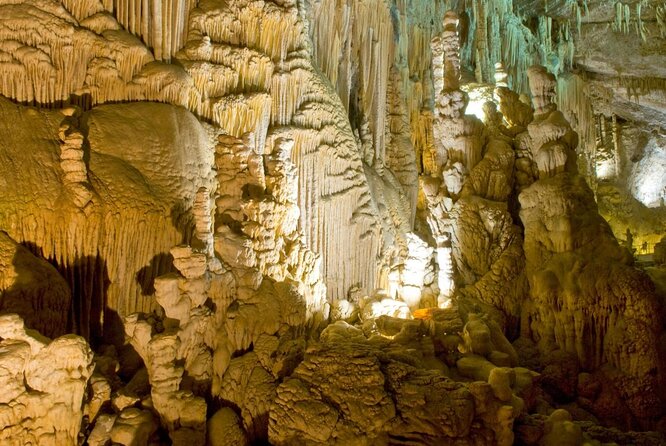
- Jeita Grotto combines a cave walk and short boat ride, giving you two ways to see its unusual limestone formations.
- The Harissa gondola climbs from Jounieh to 650 meters, with wide views over Jounieh Bay and the surrounding city.
- Byblos brings several eras together, from Phoenician archaeology and a Crusader castle to a cobbled old souk.
- Private touring means your pace matters, and Rouba has accommodated changes such as adding Tripoli when time and requests allowed.
- Transportation, fuel, and parking are covered, but attraction tickets, lunch, and gratuity are not.
- The full day lasts about eight hours, with approximately one and a half hours at Jeita and three hours around Byblos.
Why this north-of-Beirut day works so well
This is a strong choice if you have limited time in Beirut but want more than a city tour. The route gathers three very different experiences: an underground natural wonder, a mountain religious landmark, and one of the Mediterranean’s oldest inhabited cities.
You are not simply checking off monuments. At Jeita, the focus is geology and atmosphere. At Harissa, it is the view and the shrine. In Byblos, the focus shifts to Phoenician history, medieval fortifications, local shopping, and a small fossil collection.
The private format changes the feel of the day. You are not tied to the interests of a large group, and you can ask for more explanation at a site that catches your attention. Several people who toured with Rouba valued the relaxed pace and the lack of wasted time. One group even requested an extra stop in Tripoli, which Rouba added.
That flexibility has limits, of course. The schedule already contains several stops, and the listed eight-hour duration does not leave unlimited room for additions. If you want an especially slow visit to Byblos, a long lunch, or extra towns along the coast, discuss that before setting out.
Other ways to see the Jeita caves:
- Guided Small-Group Tour to Jeita, Harissa, Byblos with Lunch
★ 5.0 · 361 reviews - Jeita Grotto – Harissa – Byblos Trip
★ 5.0 · 169 reviews - Byblos, Jeita Grotto & Harissa Day Trip -With Lunch (4G on Board)
★ 4.5 · 145 reviews
Jeita Grotto: Lebanon’s underground showpiece
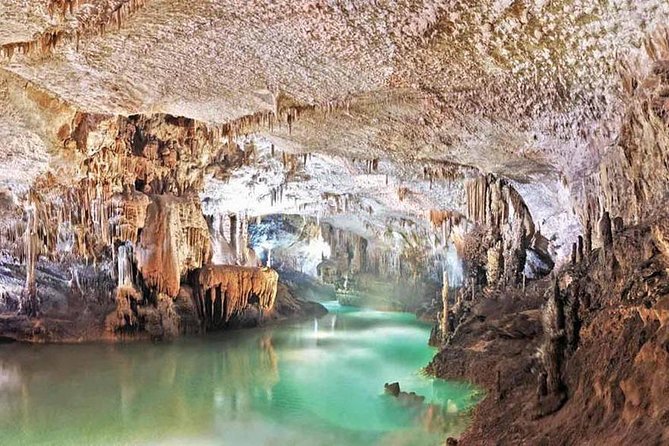
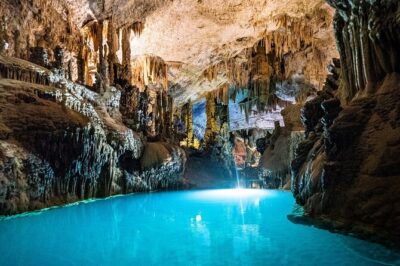
Jeita Grotto is the natural centerpiece of the day. The caves formed over millions of years as water dissolved the limestone, leaving behind chambers and formations that feel far removed from the busy roads outside.
You spend about one hour and 30 minutes here. The visit includes a walking portion and a short boat ride, a useful combination because the two sections reveal the caves in different ways. You can expect striking limestone shapes and a cool, enclosed setting that contrasts sharply with the sun and traffic above ground.
The guide adds value here by explaining how the grotto formed and what you are seeing. Without that context, it is easy to admire the shapes and move on. With some background, the slow work of water and stone becomes the main story.
The boat ride is short, so do not picture a long underground cruise. It is one part of a compact visit. Admission is not included in the $100 price, and the supplied details do not give the current ticket cost. Plan for that extra payment and confirm the operating arrangements when you book.
Jeita is a particularly good fit for families and first-time visitors to Lebanon. One family found the overall day manageable with a toddler, though you should still be comfortable walking through a cave site and moving between its different sections. If underground spaces are not your thing, this is the one stop most likely to test your comfort.
The Telepherique to Harissa
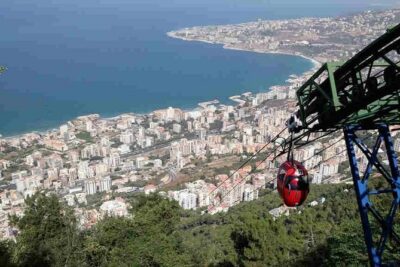
From the coastal city of Jounieh, the Telepherique du Liban carries you up toward Harissa. The ride takes about 20 minutes and reaches an altitude of roughly 650 meters.
This is not just transport between two points. The gondola offers the most memorable views of the day, looking across Jounieh Bay and the surrounding city. I would pay close attention during the ascent rather than treating it as a quick transfer. The changing view is a major reason this stop earns its place on the route.
The gondola ticket is not included. Since the tour description lists admission fees separately from transportation, you should budget for the ride in addition to the tour price.
The ride also creates a useful break after Jeita. Instead of staying in the vehicle all day, you get a short aerial journey and a fresh viewpoint before reaching the shrine. The tour allocates about 20 minutes to the Telepherique itself, followed by around 30 minutes at Our Lady of Lebanon.
Our Lady of Lebanon and the view over Jounieh
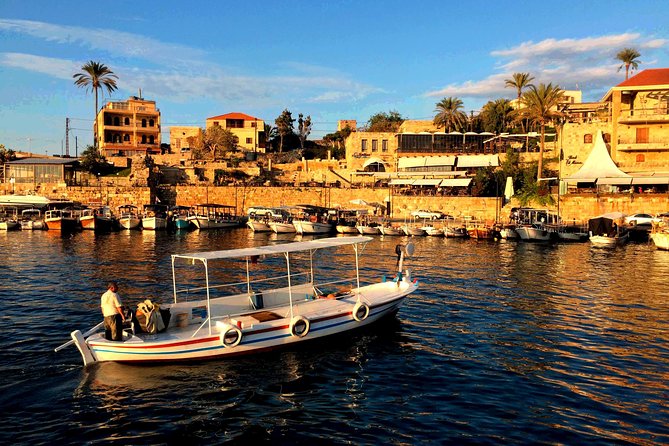
The Shrine of Our Lady of Lebanon is one of the world’s important shrines honoring the Virgin Mary. At the top, you can climb a spiral staircase to reach the white statue and look out over the bay below.
The shrine is free to enter, according to the supplied details. Its appeal is both spiritual and visual. You do not need to share the faith tradition to appreciate the setting, the statue, or the broad view from the mountain.
Thirty minutes is enough for a focused stop, especially if you want to see the statue, climb the stairs, and take in the view. It is not enough for a long religious visit or a leisurely exploration of every corner. That is one reason the private format helps: you can tell Rouba if you need a little more time here, then make up time elsewhere if practical.
Wear shoes you can walk in comfortably. The itinerary includes stairs at the statue, and the whole day involves several short walks rather than a single long stroll.
Other trips down to the old harbour at Byblos:
- Semi-Private Tour to Jeita Grotto, Harissa & Byblos with Lunch
★ 5.0 · 52 reviews - Small Group Tour to Jeita Grotto, Harisa & Byblos with Hotel pickup
★ 5.0 · 49 reviews - Private Guided Tour to Jeita Grotto through Harissa and Byblos
★ 5.0 · 48 reviews - New Guided Semi-Private Tour to Jeita Grotto, Harissa & Byblos
★ 5.0 · 47 reviews
Byblos: ancient port, archaeological site, and castle
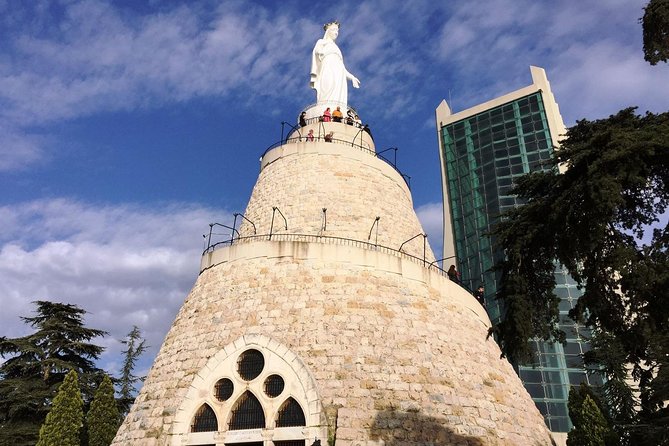
Byblos receives the largest block of time, about two hours before the separate souk, castle, and fossil museum stops. That allocation makes sense. This is not one monument you can understand in ten minutes. It is a layered place with links to Neolithic settlement, Phoenician culture, Mediterranean legends, and the spread of the Phoenician alphabet.
The city is one of the oldest Phoenician cities, and its importance comes from the way different periods remain close together. You can move from ancient archaeological remains to medieval stonework and then into a market street without needing another vehicle.
This is where a guide’s explanations matter most. The remains can look like scattered stones if you do not know what they represent. Rouba is praised for explaining the history and culture of each place in an engaging way, rather than simply pointing out buildings.
Do not expect Byblos to feel like a single polished museum complex. It is an open historical area, and the experience depends on walking, looking closely, and asking questions. The payoff is a sense of continuity that a quick photograph cannot provide.
Byblos Old Souk: a slower twenty minutes
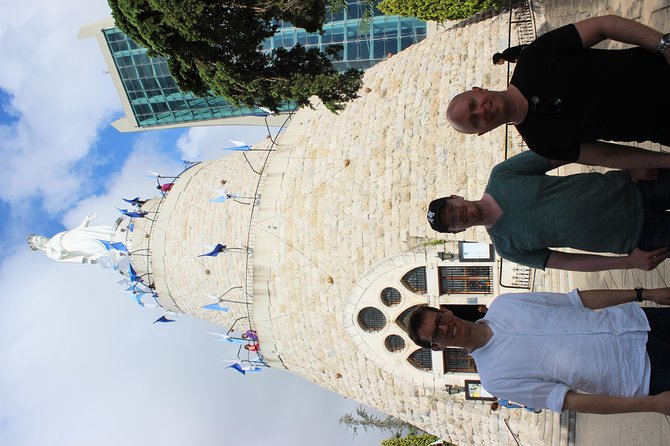
The old souk gives the day a more ordinary, local rhythm. Its cobbled lanes contain shops selling souvenirs and antiques, and the old architecture makes it pleasant even if you are not shopping.
The planned visit is about 20 minutes. That is enough for a short stroll and a quick look at the shopfronts, but not much time for serious browsing or bargaining. If you want to buy gifts, tell Rouba early so you can use the time well.
This stop also gives you a chance to reset before the castle. The day includes many facts and viewpoints, while the souk is simple: walk, browse, and enjoy the old streets. I like that the route makes room for this kind of unstructured pause.
Byblos Castle and the ruins around it
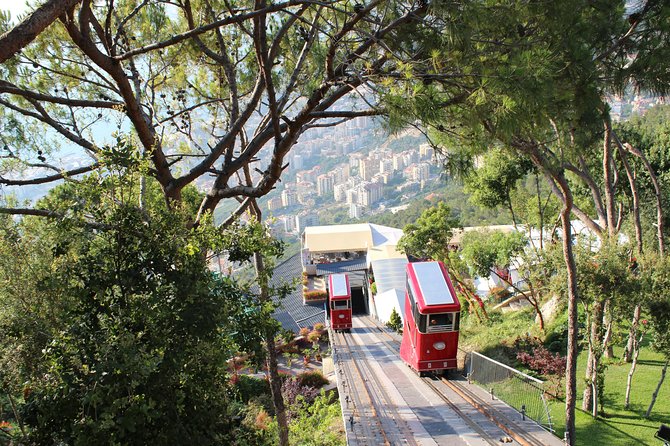
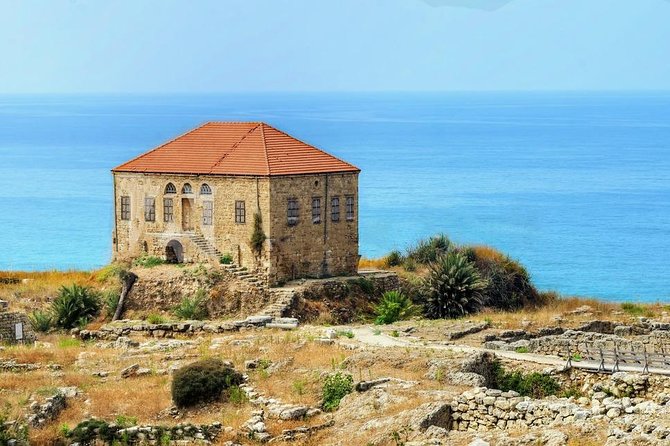
Byblos Castle was built by Crusaders in the 12th century. It sits beside the Phoenician archaeological area, near remains associated with the Temple of Baalat Gebal, the Temple of the Obelisks, a royal necropolis, and a Roman theater.
You have about one hour here, and admission is not included. The castle is not an isolated medieval building. Its real interest comes from the way it sits beside much older ruins, allowing you to compare several periods in one compact area.
A small museum inside the castle displays finds from prehistoric through medieval times. That helps connect the objects to the places you have just seen, although the available information does not specify the museum’s size or exact display contents.
I would use the hour for a steady circuit rather than rushing from one ruin to the next. Ask Rouba to explain how the castle relates to the Phoenician site. That connection is the point of the visit.
The main drawback is the extra cost. Byblos Castle is one of the attractions where you pay separately, along with Jeita Grotto and the gondola. If you are comparing this tour with a cheaper driving service, remember that those tickets are still part of your day’s expense.
Memory of Time and its 100-million-year-old fossils
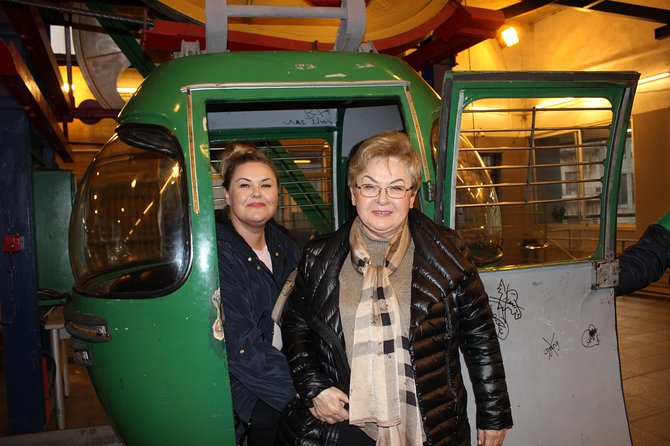
The final listed stop is the Memory of Time Fossil Museum, visited for about 15 minutes. Established in 1991, it displays fish fossils found at about 700 meters above sea level and dated to roughly 100 million years ago.
The collection includes fossils of shrimp, sharks, stingrays, turtles, octopus, and coelacanths. The museum also sells fossils, so this can be a quick educational stop or a chance to look for an unusual souvenir.
Fifteen minutes is a short visit, but that may be all you need for a small specialist collection. If fossils are a major interest, you may want to ask how much time is possible. For most people, the stop works as a final detail that adds another layer to Byblos.
Transport, timing, and the value of $100
The price is $100 per person for a private tour lasting about eight hours. Included are private transportation, an air-conditioned vehicle, fuel surcharge, and parking fees. Pickup is offered from your Beirut accommodation, which removes one of the day’s biggest practical headaches.
That price is easier to justify for a small group than for one person. You are paying not only for a vehicle, but also for a private guide, route planning, parking, and the ability to adjust the pace. For two people, the per-person cost may feel substantial. For a group sharing the private arrangement, the value improves.
You still need to pay for:
- Jeita Grotto admission
- Telepherique admission
- Byblos Castle admission
- Lunch
- Gratuity
The schedule is full but not absurd. Jeita takes 90 minutes, the gondola and shrine take about 50 minutes together, and the Byblos sections add several hours. Driving time, pickup, parking, and lunch must fit around those stops, so an early start is sensible even though the supplied opening hours are listed as Tuesday through Sunday, 8:00 a.m. to 4:00 p.m.
The operating information covers dates through June 18, 2026. Because opening hours and attraction access can change, confirm the start time and ticket arrangements before you go.
Rouba’s guiding style and private-tour advantages
The strongest personal thread in the feedback is Rouba. She is praised for being friendly, patient, well organized, and helpful from hotel pickup through the return. Her strength is not only explaining places, but also making the day feel easy.
That matters in Lebanon, where a full day across several sites involves more than following a map. You may need help with parking, entrances, timing, restaurant choices, and deciding where to spend a few extra minutes. A guide who pays attention to those small matters can make the difference between a smooth day and a tiring one.
The private setting also suits people who dislike fixed group schedules. You can ask questions, stop for photographs, and request reasonable changes. One couple described having Rouba as something closer to traveling with a helpful local friend than simply following a guide.
Still, private does not mean unlimited. The route is ambitious, and the eight-hour estimate is approximate. Adding places may mean shortening Byblos or taking less time at the caves. Agree on priorities at the start.
Who should book this day trip?
I would recommend this experience if you want a broad introduction to the area north of Beirut and prefer having transport and planning handled for you. It is especially suitable for:
- First-time visitors with only a few days in Lebanon
- Couples or families wanting a private schedule
- Small groups sharing the cost
- People interested in both nature and history
- Anyone who wants a guide to explain the sites rather than simply drive between them
It may be less suitable if you want a slow, highly specialized visit to one place. Jeita, Harissa, and Byblos each deserve more time than a single day can provide. You should also allow extra money for admissions, food, and gratuity.
The tour is available as a private activity, so only your group participates. Confirmation is received at booking, and the details state that most people can take part. Free cancellation is available if you cancel at least 24 hours before the start time. Within 24 hours, the amount paid is not refunded, and changes are not accepted.
Final verdict: a strong first day outside Beirut
I would book this tour if I wanted to see Lebanon’s northern highlights without wrestling with transport and timing. The combination is unusually efficient: caves in the morning, a gondola and mountain shrine, then the ancient streets and ruins of Byblos.
The best reasons to choose it are the private pace, the coverage of several important sites, and Rouba’s personal approach. The main caution is the final cost after entrance fees and lunch, along with the fact that the schedule can feel busy.
For a first taste of Lebanon beyond Beirut, this is a well-balanced day. Give Jeita your full attention, watch the views from the gondola, and save enough energy for Byblos. That order lets the day move from nature to faith to history without becoming a long list of disconnected stops.
FAQ
How long does the tour last?
The experience lasts approximately eight hours.
Is hotel pickup from Beirut included?
Round-trip transfers from your Beirut accommodation are offered, and private transportation is included.
Are entrance fees included in the $100 price?
No. Entrance fees are not included. You should budget separately for Jeita Grotto, the Telepherique, and Byblos Castle.
Is lunch included?
No. Lunch is not included in the tour price.
Is this a group tour or a private tour?
It is a private activity, so only your group participates.
What is the cancellation policy?
You can cancel at least 24 hours before the start time for a full refund. Cancellations or changes made within 24 hours are not accepted, and the amount paid is not refunded.
More Harissa Tours
- Lebanon Tour Jeita-Harissa & Byblos w/pickup,lunch,entries +guide
★ 5.0 · 27 reviews - Jeita Grotto – Harissa – Byblos Tour (All Inclusive)
★ 4.5 · 27 reviews - Full-Day Private Tour to Jeita Grotto, Harissa and Byblos
★ 5.0 · 20 reviews - PRIVATE tour to Jeita Grottos, Harissa Shrine & Byblos City
★ 5.0 · 12 reviews
Newest Beirut reviews
- Wine Tasting Tour★ 5.0 · 2 reviews
- Journey Through Time: Half-Day Private Tour to Baalbek★ 5.0 · 3 reviews
- Lebanon’s Treasures: Jeita Grotto and Harissa Private Tour★ 5.0 · 2 reviews
- Traveling Spoon Lebanese Mezze Private Online Cooking Class★ 5.0 · 4 reviews
- Wine Tasting and Culture★ 5.0 · 3 reviews
- Small Group Tour to Baalbek, Anjar & Ksara with Hotel pickup★ 5.0 · 2 reviews
- Small Group Tours to Jeita Grotto and Byblos with tickets★ 5.0 · 3 reviews
- Small-Group Tour with Lunch to Baalbek, Anjar and Ksara★ 5.0 · 3 reviews
Jeita Grotto Tours, compared.
Guided Small-Group Tour to Jeita, Harissa, Byblos with Lunch
Read our review →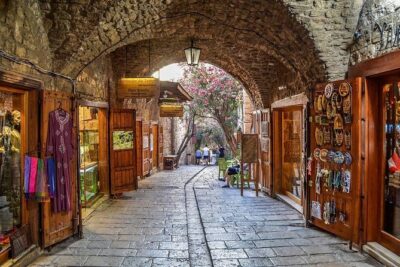
Byblos, Jeita Grotto & Harissa Day Trip -With Lunch (4G on Board)
Read our review →
Semi-Private Tour to Jeita Grotto, Harissa & Byblos with Lunch
Read our review →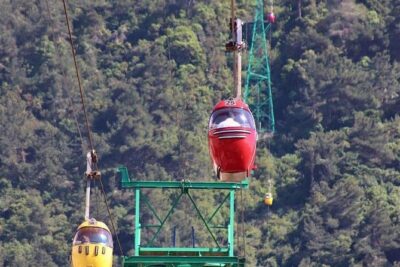
Small Group Tour to Jeita Grotto, Harisa & Byblos with Hotel pickup
Read our review →
Private Guided Tour to Jeita Grotto through Harissa and Byblos
Read our review →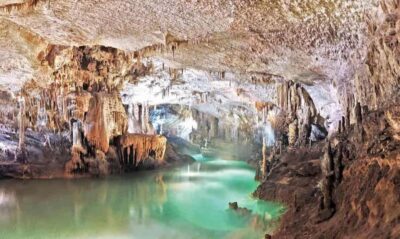
Jeita Grotto, Harissa & Byblos Private Day Tour
Read our review →
Jeita Grotto, Harissa, Byblos group tour & Guide
Read our review →Browse the lists this tour appears in