
Review · TRIPOLI TOURS
Guided Small-Group Tour to Tripoli and Batroun with Lunch
Lebanon’s north rewards curious day trippers. This eight-hour outing from Beirut pairs Tripoli’s medieval souks, mosques, hammams, and citadel with Batroun’s old Phoenician sea wall, giving you a broad look at northern Lebanon without the stress of driving. I like the door-to-door pickup and the small maximum group of 15, which should leave room for questions and conversation.
I also like that lunch is included at a local Lebanese restaurant rather than treating food as an afterthought. The strongest praise goes to the welcoming guide service, with Albert singled out by name in one five-star account for clear explanations and thoughtful conversation about Lebanon today. The main drawback is the pace: there are many stops in eight hours, and several are brief five-minute visits, so you should expect highlights rather than a slow, detailed exploration of every site.
In This Review
- Key Points at a Glance
- Why This Northern Lebanon Day Trip Makes Sense
- Tripoli’s Old City, Where Work and Worship Share the Streets
- The Citadel of Saint Gilles and Tripoli from Above
- Two Mosques Built Over Earlier Christian Structures
- Tripoli’s Souks and the Old Khans
- Soap, Sweets, and the Hammams of Tripoli
- The Oscar Niemeyer Fairground and Al Mina Port
- Lebanese Lunch as Part of the Day
- Batroun and the Phoenician Sea Wall
- What the Guide and Vehicle Add
- Who Should Book This Tour
- Should You Book It?
- FAQ
- What is included in the $65 tour price?
- How long does the experience last?
- How large is the group?
- Does the tour pick me up at my Beirut hotel?
- Is admission to the Citadel included?
- Which cities does the tour visit?
- Is lunch included?
- Can I cancel for a full refund?
Key Points at a Glance
- Tripoli is the main event: Plan on the longest stretch of the day among old souks, Mamluke mosques, khans, hammams, and the Citadel of Saint Gilles.
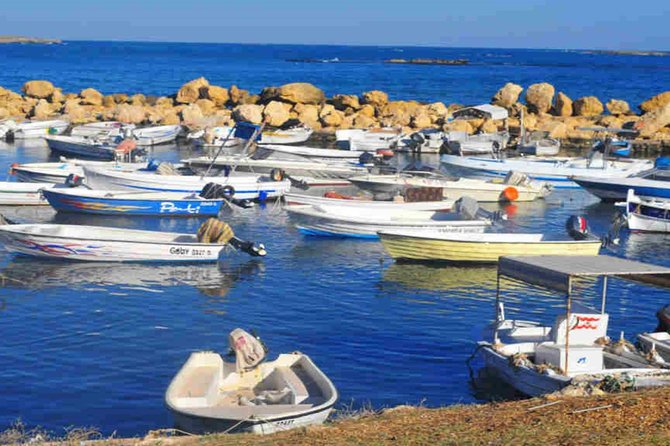
- Batroun provides a coastal finish: The Phoenician sea wall offers a short, focused look at one of the country’s oldest cities.
- Small groups matter here: With a maximum of 15 people, you have a better chance to hear the guide and ask about architecture, daily life, and current events.
- Lunch is built into the price: The included Lebanese meal makes the $65 cost easier to judge, especially with transport and hotel transfers covered.
- Expect a busy schedule: Some sites receive only five minutes, so this suits you if you want a wide introduction rather than long museum visits.
- The tour removes driving headaches: Air-conditioned transport and hotel pickup from Beirut save time and avoid the need to rent a car.
Why This Northern Lebanon Day Trip Makes Sense
Self-driving in Lebanon can be tiring and unpredictable, particularly when you are trying to combine cities, old quarters, coastal roads, and a full day of sightseeing. This tour handles the transport from your Beirut hotel, then takes you north in an air-conditioned vehicle with a guide. That simple arrangement is one of the experience’s biggest strengths.
The price is $65 per person. For that amount, you receive hotel pickup and drop-off, transportation, guide service, a small-group setting, and lunch. The admission costs listed for most stops are free, while the Citadel ticket is not included. Since the tour covers two cities and a meal, the price is fair for visitors who value convenience and do not want to organize several separate rides.
The group size is capped at 15. That is not a private tour, but it is far more manageable than a large coach. You should be able to stay close to the guide in the narrow souks, hear explanations at the mosques, and ask questions without having to fight for attention.
The published start time is 8:30 am, and the experience lasts about eight hours. You will need to accept a full day with a steady rhythm. Tripoli receives most of the cultural attention, while Batroun is a shorter coastal stop.
More trips north to Tripoli:
- PRIVATE city Tour of authentic Tripoli and vibrant Batroun
★ 5.0 · 51 reviews - Tripoli City Lebanon Trip
★ 5.0 · 7 reviews - Full day Tripoli private great guide/all-in + rustic meal
★ 5.0 · 7 reviews
Tripoli’s Old City, Where Work and Worship Share the Streets
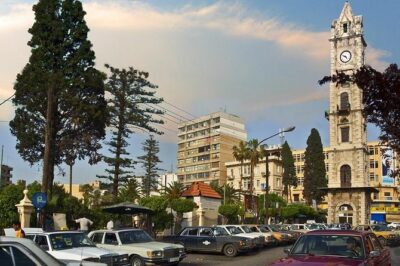
Tripoli is about 80 kilometers north-northeast of Beirut, at the mouth of the Abu Ali River. It is one of Lebanon’s oldest cities, with roots reaching back to the Phoenician era and a remarkable collection of Mamluke and Ottoman buildings.
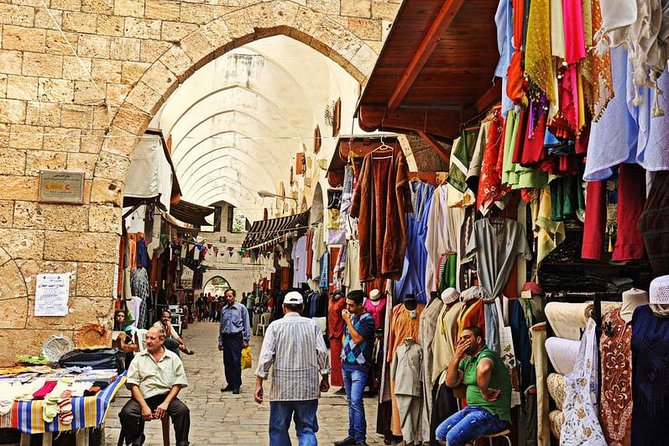
The old quarter is best understood as a working district, not a polished open-air museum. The souks still connect trades, food shops, workshops, religious buildings, and small passages. You may notice the changing smells and sounds as you move from one market lane to another. That everyday activity gives the visit its character.
The city has dozens of registered historic buildings, including 12 surviving mosques from the Mamluke and Ottoman periods. The tour cannot offer a long visit to all of them, but it introduces the main types of buildings that define old Tripoli: khans for commerce, hammams for bathing, mosques for worship, and fortified structures for defense.
The Citadel of Saint Gilles and Tripoli from Above
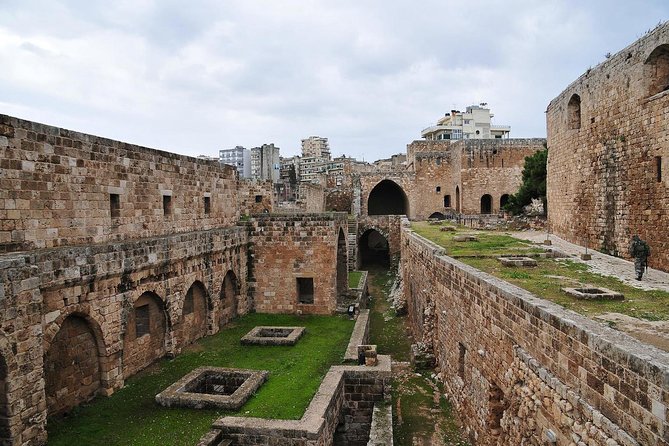
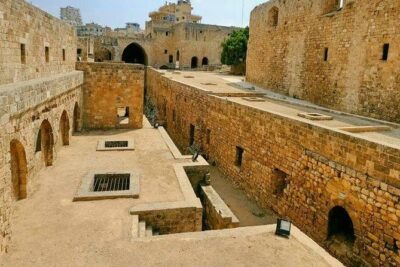
The Citadel of Saint Gilles, also called Qal’at Sinjil, overlooks the city. Allow about 30 minutes here, with admission not included in the tour price.
This large fortress measures roughly 140 meters long and 70 meters wide. Its present form reflects several periods of construction and repair. You can find traces of Fatimid, Crusader, Mamluke, and Ottoman work, along with major restoration carried out by Mustafa Barbar Agha, Tripoli’s governor in the early 19th century.
The site is valuable because it gives you architectural clues from several eras in one place. An octagonal Fatimid structure was converted into a church by the Crusaders. Later rulers added their own walls and rooms. Instead of seeing a single frozen moment, you see how the city’s rulers adapted the fortress over time.
The short time allocation means you should focus on the main views and the guide’s explanation. If you want to inspect every corner, read every inscription, or linger over military details, this tour will feel quick.
Two Mosques Built Over Earlier Christian Structures
The Al Mansouri Great Mosque was begun in 1294 and completed in 1315 on the site of a 12th-century Crusader cathedral dedicated to Saint Mary of the Tower. Its courtyard is surrounded by a vaulted prayer hall, and parts of the earlier church remain visible.
The northern entrance and the former Lombard-style bell tower are especially useful details to look for. The tower was later converted into a minaret. Foundation plaques and decrees also offer clues about construction and daily life during the Mamluke period.
You have about 20 minutes here, and admission is free. The visit is short but worthwhile, particularly if your guide points out where the older Christian structure was reused.
The Taynal Mosque offers another example of Tripoli’s layered past. Built in 1336 by Saif Ed-Dine Taynâl on the site of a ruined Crusader church, it includes two rows of granite columns with late Roman capitals in the first prayer hall. A domed mausoleum beside the mosque contains the founder’s tomb.
The entrance to the second prayer hall has distinctive Mamluke decoration. Again, the point is not simply to see an old mosque. You are seeing how later builders incorporated earlier columns, walls, and design elements into a new religious building.
The tour lists about 20 minutes at Taynal Mosque. Dress and behavior should be respectful at both mosques, and follow the guide’s instructions about entering prayer areas.
A few more trips out of Beirut worth a look
- Guided Small-Group Tour to Baalbek, Anjar and Ksara with Lunch
★ 5.0 · 511 reviews - Guided Small-Group Tour to Jeita, Harissa, Byblos with Lunch
★ 5.0 · 361 reviews - Anjar, Baalbek & Ksara Day Trip – With Lunch (4G on Board)
★ 4.5 · 181 reviews - Byblos, Jeita Grotto & Harissa Day Trip -With Lunch (4G on Board)
★ 4.5 · 145 reviews
Tripoli’s Souks and the Old Khans
The souks are the part of Tripoli where you are most likely to feel the city’s daily pulse. The tour allows about an hour among the market lanes, which is the longest single stop in the old commercial quarter.
There are nine named souks, including Attareen, Bazerkan, Haddadin, Haraj, Kameh, Koundarjiyeh, Nahhasin, Samak, and Sayyaghin. There is also a food market with fresh produce, meat, fish, and other goods.
You will move through narrow passages and small alleys rather than one broad shopping street. The experience is less about checking off shops and more about noticing how the market is organized by trade. The names of the souks reflect the kinds of work once carried out there, and many areas still retain that connection.
Khan al-Khayyatin is a rectangular structure measuring about 40 by 80 meters, with a covered courtyard and shops around the edges. Tailors and related trades, including sellers of needles, thread, and sewing machines, have long used the building.
The khan helps explain how merchants and craftspeople worked in historic Tripoli. You may have only five minutes here, so the guide’s remarks will matter more than a long independent visit.
Soap, Sweets, and the Hammams of Tripoli
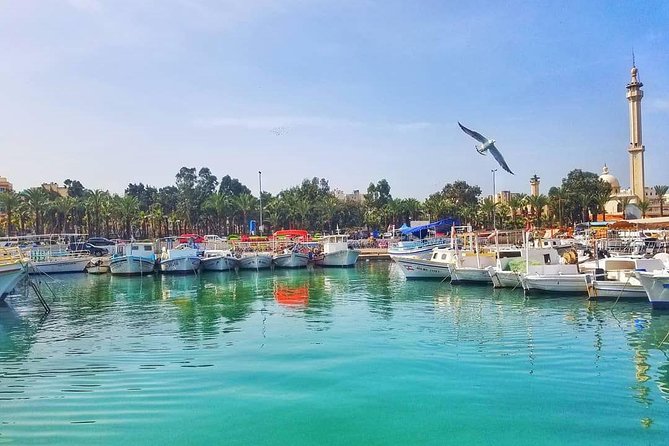
Khan As Sabon, or the Soap Khan, was built at the beginning of the 17th century. Its first purpose was military, serving as a barracks for Ottoman troops. The building has two-story arcaded corridors around a courtyard fountain.
Today, its connection with soap-making gives it a more peaceful identity, but its original role also shows how closely military power and city administration were tied together. The scheduled visit is only five minutes, so think of it as a quick architectural stop.
Hallab 1881 offers a different side of Tripoli. Abdul Rahman Hallab began producing Lebanese sweets in 1881, and the business’s Kasr El Helou has become one of the city’s best-known landmarks. The stop lasts about 15 minutes.
This is a useful food break because it connects a famous local business with the city’s identity. You may want to ask the guide which sweets are most associated with Tripoli, though the provided schedule does not promise a tasting or purchase. The included lunch is separate from this stop.
The hammams reveal another part of urban life. Hammam El-Abed is described as the only functioning hammam in Tripoli. Its pierced domes, cushions, central fountain, and traditional fittings preserve the look of a public bath from the Mamluke and Ottoman periods.
Hammam Al-Jadid, built around 1740, is the largest bathhouse in Tripoli, though it has not operated since the 1970s. Its faded condition is part of what makes the stop evocative, but access may be limited.
Hammam Izzed-dine was donated to the city by the Mamluke governor Izz ed-Dîne Aybak, who died in 1298 and is buried in a nearby mausoleum. The building was in regular use until recently and is now being restored.
Each hammam receives about five minutes. You will not get a full architectural study of all three, but together they help you understand the old city’s public life. The quick timing also means you should not count on entering every building.
The Oscar Niemeyer Fairground and Al Mina Port
The Rashid Karami International Fair is one of the day’s more unexpected stops. Brazilian architect Oscar Niemeyer designed its 15 structures in 1963. The project was abandoned during the civil war in 1975, leaving a large unfinished exhibition center.
The site is described as one of the world’s five largest exhibition centers. The tour allows five minutes, which suggests a brief look rather than a full architectural visit. Still, this stop broadens the day beyond ancient ruins and medieval buildings. It reminds you that Lebanon’s architectural story also includes ambitious modern projects interrupted by conflict.
At Al Mina, the coastal town of Tripoli, you see the harbor area connected with the site of the old Phoenician city. The area includes nine islands, four of which have been declared natural reservations to help protect fish breeding and local habitat.
The stop lasts about 15 minutes. It is a short coastal counterpoint to the close quarters of the souks and mosques.
Lebanese Lunch as Part of the Day
Lunch is included at an authentic Lebanese restaurant. The tour does not specify the exact menu, restaurant, or serving style, so you should treat the meal as a convenient local dining stop rather than expect a particular dish.
This inclusion matters. An eight-hour outing with many stops can become expensive once you add food and transport, while a traveler organizing the same route alone would need to arrange both. It also keeps the group together and avoids losing sightseeing time while searching for a place to eat.
If you are visiting Lebanon to understand its food as well as its monuments, lunch adds real value. Lebanese cuisine is a central part of the country’s culture, and a local restaurant gives the day a more grounded feel than a packaged meal at a roadside stop.
Batroun and the Phoenician Sea Wall
Batroun is one of the world’s oldest cities, with a Phoenician foundation more than three millennia old. It is known for old castles and churches, citrus fruit, beaches, and modern nightlife.
You have about 30 minutes in Batroun, followed by about 20 minutes at the Phoenician Wall. That is enough for a concise introduction, not enough for a full city tour.
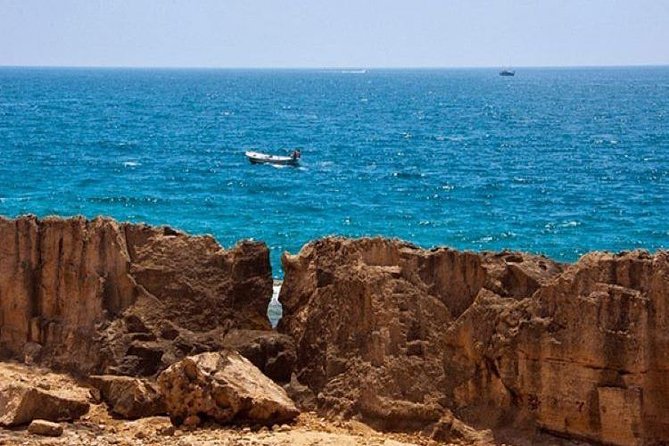
The sea wall is the key sight. It began as petrified sand dunes and was gradually reinforced by the Phoenicians with stone. Its current form dates to the first century BC. The wall protected the old city from storms and invaders, and during Roman times it also served as a quarry.
It stretches about 225 meters and is between one and one and a half meters thick. Parts have crumbled, but the remaining stones still form a clear link between Batroun’s ancient port and the modern shoreline.
I would save your energy for this final coastal section, especially if you enjoy ancient engineering and sea views. The visit is brief, so you will need to listen closely and make the most of the time rather than wander far from the meeting point.
What the Guide and Vehicle Add
The strongest positive feedback centers on the guide and driver. One five-star account specifically names Albert and praises his welcoming manner, explanations, and willingness to discuss current situations in Lebanon and the wider world.
That kind of guide is especially useful in Tripoli, where a building can reflect several religions, dynasties, and changes in use. A simple explanation of a former church entrance, a reused column, or a khan’s trade can make the old quarter far easier to read.
The vehicle is air-conditioned, and pickup and drop-off are direct at your Beirut hotel. Those details are practical rather than glamorous, but they save you from arranging transport to a meeting point and from managing the route yourself.
The tour currently has a five out of five rating from 16 reviews and a 100 percent recommendation figure. That is a small sample, so I would not treat it as a guarantee, but the praise is consistent around hospitality, guide interaction, and the overall route.
Who Should Book This Tour
I would recommend it if you are staying in Beirut and want to see northern Lebanon in one day without renting a car. It is also a good fit if you value local context, historic streets, and a guide who can explain more than dates and building names.
The tour suits first-time visitors who want an organized introduction to Tripoli and Batroun. The included lunch and hotel transfers make it easy to budget, and the 15-person limit keeps the group from becoming unwieldy.
You may want a different plan if you prefer slow photography, extended shopping, or long visits inside individual monuments. The schedule covers at least 15 stops, and several are listed at five minutes. That is a lot of ground for eight hours.
Free cancellation is available if you cancel at least 24 hours before the 8:30 am start. Changes or cancellations made less than 24 hours in advance are not refunded.
Should You Book It?
Book this tour if you want a practical, fairly priced day from Beirut that combines Tripoli’s working old city with Batroun’s ancient coast. The best reasons are the small group, included lunch, direct transfers, and guide service praised for warmth and useful explanations.
Do not book it expecting an unhurried archaeological study. You will see many places, but some visits are brief. For most people, that tradeoff is sensible: one well-organized day gives you a strong first look at two northern Lebanese cities while leaving the driving and meal arrangements to someone else.
FAQ
What is included in the $65 tour price?
The price includes lunch, hotel pickup and drop-off, an air-conditioned vehicle, a professional guide, small-group transportation, and the listed tour service.
How long does the experience last?
The tour lasts approximately eight hours and begins at 8:30 am.
How large is the group?
The group can include a maximum of 15 people.
Does the tour pick me up at my Beirut hotel?
Yes. Hotel pickup and direct drop-off are included.
Is admission to the Citadel included?
No. Admission to the Citadel of Saint Gilles is not included. Most other listed stops have no admission charge.
Which cities does the tour visit?
The tour visits Tripoli and Batroun, both in northern Lebanon.
Is lunch included?
Yes. An authentic Lebanese restaurant lunch is included.
Can I cancel for a full refund?
Yes, if you cancel at least 24 hours before the experience start time. Cancellations made less than 24 hours before the start are not refunded.
Newest Beirut reviews
- Wine Tasting Tour★ 5.0 · 2 reviews
- Journey Through Time: Half-Day Private Tour to Baalbek★ 5.0 · 3 reviews
- Lebanon’s Treasures: Jeita Grotto and Harissa Private Tour★ 5.0 · 2 reviews
- Traveling Spoon Lebanese Mezze Private Online Cooking Class★ 5.0 · 4 reviews
- Wine Tasting and Culture★ 5.0 · 3 reviews
- Small Group Tour to Baalbek, Anjar & Ksara with Hotel pickup★ 5.0 · 2 reviews
- Small Group Tours to Jeita Grotto and Byblos with tickets★ 5.0 · 3 reviews
- Small-Group Tour with Lunch to Baalbek, Anjar and Ksara★ 5.0 · 3 reviews
Tripoli Tours, compared.
PRIVATE city Tour of authentic Tripoli and vibrant Batroun
Read our review →
Full day Tripoli private great guide/all-in + rustic meal
Read our review →
Private Full-Day Tour to Byblos and Tripoli from Beirut
Read our review →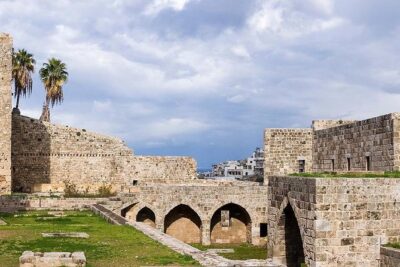
Guided Full-Day Private Trip to Tripoli from Beirut
Read our review →Browse the lists this tour appears in