
Review · BAALBEK & BEKAA VALLEY TOURS
Anjar, Baalbek & Ksara Day Trip – With Lunch (4G on Board)
Ancient stones, excellent wine, one long day. This Beirut excursion packs Lebanon’s Roman, Umayyad, and winemaking traditions into about nine hours, making it a strong choice when your time is short. I especially like the scale of Baalbek’s temples and the easy mix of ruins, food, and wine. I also like that entrance fees, lunch, water, WiFi, and transport are included. The main drawback is the pace: traffic or a large group can push lunch late and leave little room to linger.
The $95 price is fair for a full day from Beirut, particularly because the route covers three major stops and includes a set Lebanese meal plus wine tasting. Pickup is convenient for people staying at hotels inside Beirut, but the arrangement is less useful if you are in an Airbnb, hostel, or private apartment.
In This Review
- Key points at a glance
- Why this Beirut day trip works
- Baalbek and the temples of Heliopolis
- Anjar’s Umayyad palace-city
- Lebanese lunch in the Bekaa Valley
- Chateau Ksara and its underground cellars
- Transport, pickup, and the group dynamic
- What the $95 price really covers
- Who will enjoy this tour most
- Should you book Anjar, Baalbek, and Ksara?
- FAQ
- How long does the tour last?
- Where does the tour begin?
- Is hotel pickup included?
- What sites does the tour visit?
- Is lunch included?
- Is wine tasting included?
- What languages does the guide speak?
- Is transportation provided?
- Can the tour be canceled or changed?
Key points at a glance
- Baalbek delivers the grandest moment: The Temple of Jupiter and Temple of Bacchus make this the day’s essential stop.
- Anjar changes the story: Its 8th-century Umayyad palace-city brings a different period and architectural style into the same outing.
- Ksara offers a cool finish: Ancient caverns hold thousands of wine bottles at Lebanon’s oldest wine estate.
- Lunch is more than a quick bite: Expect Lebanese mezze, a main dish, fruit or dessert, and a soft drink.
- The guide can make the long ride worthwhile: Guides such as Natasha, Lucy, Fadi, and Waleed have been praised for clear explanations and friendly service.
- Group size affects the day: The stated maximum is 25 people, but one account described a group of 30 to 35, with delays as a result.
Why this Beirut day trip works
I like this outing because it avoids the usual single-theme day tour. You do not spend nine hours looking only at ruins or only at vineyards. Instead, the day moves from Roman imperial power to early Islamic city planning, then ends with Lebanon’s living wine industry.
That variety gives the long coach ride a purpose. The route heads from Beirut through the countryside toward Baalbek, with the guide providing background on the places ahead. The vehicle is air-conditioned, bottled water is supplied, and WiFi is available on board. Those details matter during a full day, especially when road conditions or traffic stretch the schedule.
The tour is conducted in English and French. Guides named in past accounts include Natasha, Lucy, Fadi, and Waleed. The strongest praise has focused on guides who explain the sites clearly, answer questions, keep the group moving, and add warmth to the ride. A good guide is especially valuable at Baalbek, where a field of giant columns and broken walls can otherwise become a blur of impressive stone.
The company has a 4.5 rating from 181 reviews, with 91 percent recommending the experience. That points to a reliably strong day, though not a private or highly flexible one.
More runs out to the Bekaa and its Roman temples:
- Guided Small-Group Tour to Baalbek, Anjar and Ksara with Lunch
★ 5.0 · 511 reviews - Baalbek – Anjar – Ksara Trip From Beirut
★ 4.5 · 80 reviews - Private Anjar and Baalbek Tour from Beirut with Departure Ticket
★ 5.0 · 79 reviews
Baalbek and the temples of Heliopolis
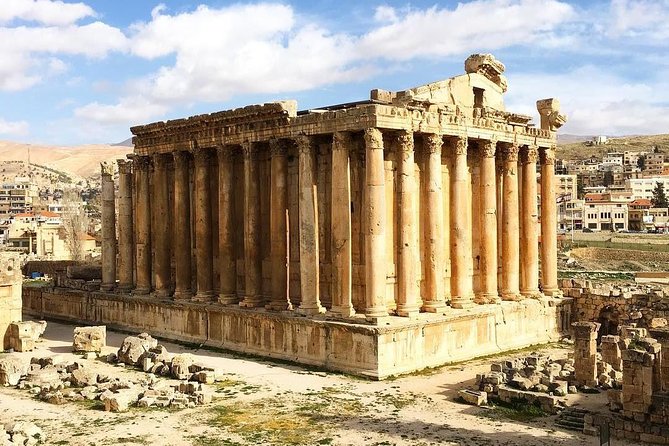
Baalbek is the reason to book this trip. The Roman city was known as Heliopolis, or City of the Sun, and its remains are among the most imposing ancient ruins in Lebanon. You receive about two hours here, including the Temple of Jupiter and the Temple of Bacchus.
The Temple of Jupiter was built on a huge podium above a rectangular courtyard. The courtyard was connected with ritual activity, including sacrifices, and the surviving foundations give you a sense of the scale of the original complex. Even in a partly ruined state, the site feels oversized in a way that photographs rarely capture.
The foundation stones are part of the fascination. Some are enormous blocks, and the guide will explain the long-running questions about how ancient builders transported and positioned them. You are not just looking at columns. You are looking at an engineering problem that still seems startling.
The Temple of Bacchus is another major highlight. It is praised for its preservation and detailed stonework, and many people consider it the most memorable structure on the route. Take time to look upward at the carved ceiling areas and the surviving columns. The site rewards slow observation, but the fixed schedule means you may need to keep moving.
Baalbek is also physically demanding in a modest but real way. The tour asks for a moderate fitness level, and you will spend time walking over an archaeological site rather than sitting in a vehicle. Wear practical shoes, carry water, and expect sun exposure in open areas.
The guide’s commentary matters here. Baalbek has layers of Roman, Greek, and earlier religious use, and the tour description specifically raises the mystery of older temple foundations and the huge stones used beneath them. With clear storytelling, the ruins become easier to picture as a working city rather than a collection of leftovers.
Anjar’s Umayyad palace-city
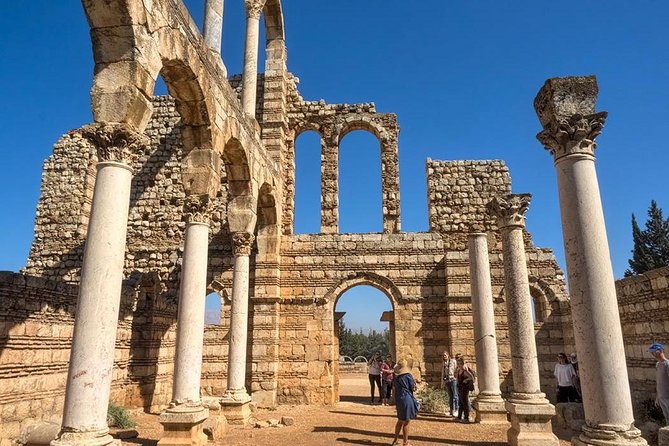
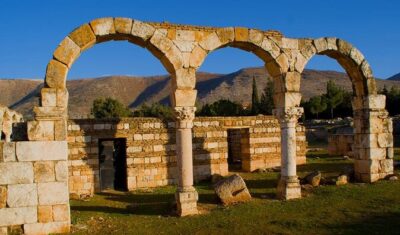
Anjar is a shorter stop, scheduled for about one hour, but it earns its place. Its remains come from an 8th-century Umayyad city, and the site includes arcades, gates, ruined temples, and palace structures.
The architecture makes Anjar especially useful after Baalbek. Roman and Hellenistic forms appear in a later Islamic city, so you can compare columns, arches, street planning, and decorative choices across different periods. The result is not simply another set of old stones. It shows how architectural ideas continued to be used and adapted.
The tour also allows time around Anjar’s souks. That gives the stop a little more local texture than a quick archaeological walk, though the exact amount of free time will depend on the group and the day’s traffic. I would treat Anjar as a compact historical visit rather than a place for an extended independent exploration.
Some descriptions of the site refer to it as a city ruled by the Umayyad dynasty. That setting helps explain why Anjar feels different from Baalbek. Baalbek is monumental and temple-focused. Anjar is more about the outline of a planned palace-city, with gates, arcades, and civic remains spread across the site.
The one-hour visit is enough to understand the essentials, especially with a guide, but people who enjoy archaeology may wish they had longer. The advantage is that Anjar keeps the itinerary moving and leaves time for lunch and Ksara.
Lebanese lunch in the Bekaa Valley
Lunch is included and normally follows the Baalbek visit. The set menu includes Lebanese mezze, a main dish, fruit or dessert, and one soft drink. Descriptions of the meal emphasize generous portions, meat dishes, and a good setting. Vegetarian and vegan diners have also been accommodated well in at least one account.
Mezze is a useful introduction to Lebanese dining because it lets you try several small dishes rather than committing to one unfamiliar plate. The meal is not an optional extra, so you do not need to budget separately for a restaurant stop.
Timing is the main caution. On a smooth day, lunch fits comfortably into the route. Traffic, a minor road incident, or a slow-moving large group can push the meal much later. One account described eating at around 4 p.m., which is a strong reason to have a small snack before departure, even though bottled water is provided.
I see the lunch as good value rather than a luxury dining experience. You are being fed during a demanding sightseeing day, with enough food to make the afternoon easier. If you have strict dietary needs, tell the operator when booking and remind the guide early in the day. The available information confirms that vegan food has been handled, but it does not promise a full range of special menus.
Other Lebanese wine estates worth the drive:
- Guided Private Full Day Tour to Baalbek, Anjar and Chateau Ksara
★ 5.0 · 60 reviews - Lebanon tour Baalbek ruins & Ksara w/pick-up, lunch,guide+entries
★ 5.0 · 35 reviews - Baalbek Temples & Ksara Caves w/pick-up,guide, entries+lunch
★ 4.9 · 34 reviews - Small Group Tours to Baalbek, Anjar & Chateau Ksara with lunch and Tickets
★ 5.0 · 29 reviews
Chateau Ksara and its underground cellars
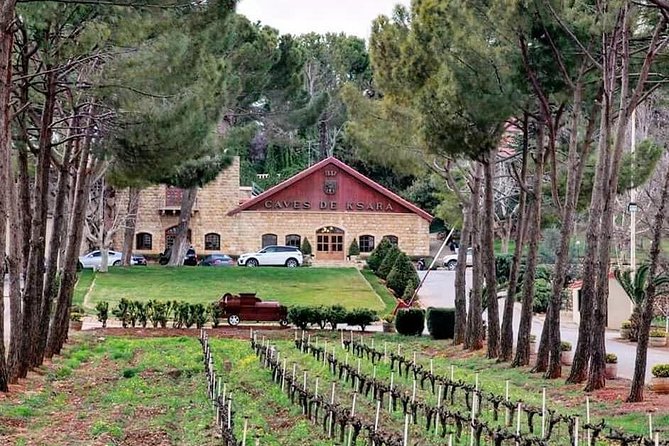
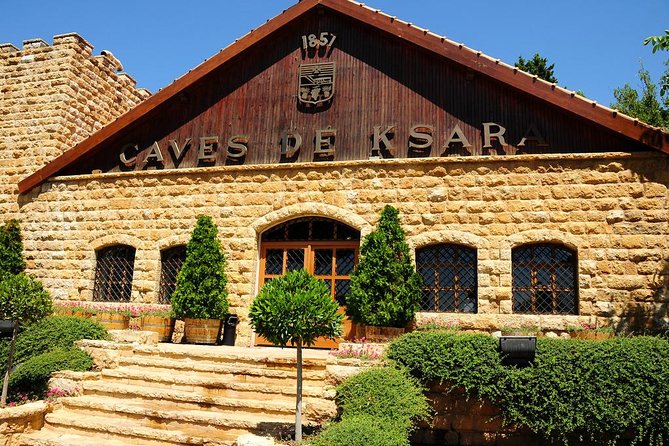
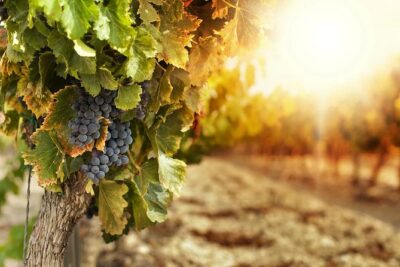
Ksara changes the mood after the ruins. Chateau Ksara is described as Lebanon’s oldest winery, and its ancient caverns have been used as wine cellars since their discovery in 1898.
The one-hour visit includes a winery tour and wine tasting. You will see thousands of bottles stored in the caves and hear about the production process. The cellars also offer a welcome break from the sun and walking at Baalbek and Anjar.
I like Ksara because it connects the past to something still operating today. Baalbek and Anjar are archaeological sites. Ksara shows how an old place can remain part of daily business and regional culture. The wine tasting is a pleasant final stop, though wine lovers may find the visit brief.
The winery shop is another practical advantage. Prices there have been described as reasonable, so you may have a chance to buy a bottle or other products without treating the stop as a high-end shopping expedition. Since the tour ends back in Beirut, remember that anything you purchase must travel with you on the coach.
Transport, pickup, and the group dynamic
The trip begins at 8:30 a.m. at Nakhal Tourism and Travel in Beirut and ends back at the same meeting point. Pickup and drop-off are included only for people staying in hotels located within Beirut City. Hostels, Airbnbs, and private apartments are excluded, so check this point before paying.
The coach is air-conditioned, and the package includes WiFi and bottled water. Several accounts praise the driver’s skill and the smooth transfers between stops. One particularly unusual account describes a driver reversing out of a traffic jam, an example of the practical driving required on a busy day, though I would not treat that as a standard feature.
The advertised maximum is 25 people. One account described a group of 30 to 35 and reported delays, while a later outing with around 15 to 20 people felt smoother. That is useful advice: group size can shape the experience as much as the sites themselves.
A larger group means more waiting when people return to the coach, more difficulty hearing commentary, and less flexibility at lunch or the ruins. A smaller group can make the same schedule feel relaxed. Ask about the expected group size if that detail matters to you, but understand that the published capacity and actual operating arrangements may not always align perfectly.
The full day lasts about nine hours, but this should be viewed as an estimate. Beirut traffic, road conditions, and group timing can all affect the return. I would avoid booking an evening flight or a fixed dinner reservation immediately after the tour.
What the $95 price really covers
At $95 per person, this is not the cheapest way to see Lebanon’s interior, but it includes the major costs that can quickly add up. You receive:
- Air-conditioned transport
- A professional licensed guide in English and French
- Pickup and drop-off for eligible Beirut hotel stays
- Entrance fees for Baalbek, Anjar, and Ksara
- Lebanese lunch
- One soft drink with lunch
- Bottled water
- WiFi on board
- Ksara wine tasting
The strongest value comes from the combination. Baalbek entrance, transport over a long route, a full meal, and a winery visit would be awkward to arrange independently in a single day. You also avoid the work of coordinating three separate stops.
The tradeoff is control. You cannot decide to spend an extra hour at the Temple of Bacchus or skip the winery to return earlier. This is a planned group outing, and the schedule serves the whole coach.
For a first visit to Lebanon, I think the price is reasonable. For a returning visitor who wants long photography sessions or detailed archaeological study, a private guide could offer better control, though this tour would likely cost more.
Who will enjoy this tour most
I would choose this trip if you are staying in Beirut and want to see major inland sights without arranging a car. It suits first-time visitors, history fans, wine lovers, and anyone with only a few days in Lebanon.
It is also a good fit if you appreciate a guide’s context. Baalbek is visually powerful on its own, but the explanations about Heliopolis, the temple platforms, and the giant foundation stones give the visit more meaning.
You should think twice if you dislike long coach days, fixed meal times, or group travel. The tour covers a lot of ground, and you may spend a good part of the day on the road. People who need a slow pace may prefer to visit fewer places with more time at each.
Bring comfortable walking shoes, sun protection, and a snack for the possibility of a late lunch. Confirm your hotel pickup eligibility, arrive early if meeting at the Nakhal office, and keep some room in your schedule for a delayed return.
Should you book Anjar, Baalbek, and Ksara?
I would book it if Baalbek is high on your list and you want a practical one-day route from Beirut. Baalbek alone is worth the effort, while Anjar adds an important Umayyad chapter and Ksara provides an easy, enjoyable change of pace.
The decision comes down to flexibility. You are paying for a well-organized package with transport, guide, admissions, lunch, water, WiFi, and tasting included. You are also accepting a long day, a fixed itinerary, and the possibility of delays if the group is large.
If that trade suits you, this is one of the most efficient ways to connect Lebanon’s ancient monuments with its food and wine culture in one outing.
FAQ
How long does the tour last?
The tour lasts approximately nine hours, beginning at 8:30 a.m. and returning to the Beirut meeting point later the same day.
Where does the tour begin?
The meeting point is Nakhal Tourism and Travel in Beirut, Lebanon.
Is hotel pickup included?
Pickup and drop-off are included for people staying in hotels located within Beirut City. Pickup is not included for hostels, Airbnbs, or private apartments.
What sites does the tour visit?
The itinerary includes the Umayyad ruins of Anjar, the temples of Baalbek, and Chateau Ksara winery in Zahle.
Is lunch included?
Yes. Lunch includes Lebanese mezze, a main dish, fruit or dessert, and one soft drink.
Is wine tasting included?
Yes. The Chateau Ksara visit includes a winery tour and wine tasting.
What languages does the guide speak?
The professional licensed guide speaks English and French.
Is transportation provided?
Yes. Transport is by air-conditioned vehicle, with bottled water and WiFi on board.
Can the tour be canceled or changed?
The experience is non-refundable and cannot be changed for any reason. If poor weather or an insufficient number of participants causes the operator to cancel, you will be offered another date or experience, or a full refund.
More 1-Day Tours in Beirut
- Small-Group Adventure Tour to Sidon Tyre & Maghdouche-Day Trip
★ 5.0 · 45 reviews - Private Tour: Anjar, Baalbek and Ksara Day Trip from Beirut
★ 5.0 · 20 reviews - Beirut, Beiteddine & DeirElQamar Day Trip-With Lunch(4G on Board)
★ 4.5 · 12 reviews - DeirElkamar, Beitdeen, Moussa Palace, EinwZien Grotto,Full-Day Trip PRIVATE-CAR
★ 5.0 · 5 reviews
More Lunch Experiences in Beirut
- Guided Small-Group Tour to Jeita, Harissa, Byblos with Lunch
★ 5.0 · 361 reviews - Byblos, Jeita Grotto & Harissa Day Trip -With Lunch (4G on Board)
★ 4.5 · 145 reviews - Semi-Private Tour to Jeita Grotto, Harissa & Byblos with Lunch
★ 5.0 · 52 reviews - Sidon, Tyre & Maghdouche Day Trip – With Lunch (4G on Board)
★ 4.5 · 44 reviews
Newest Beirut reviews
- Wine Tasting Tour★ 5.0 · 2 reviews
- Journey Through Time: Half-Day Private Tour to Baalbek★ 5.0 · 3 reviews
- Lebanon’s Treasures: Jeita Grotto and Harissa Private Tour★ 5.0 · 2 reviews
- Traveling Spoon Lebanese Mezze Private Online Cooking Class★ 5.0 · 4 reviews
- Wine Tasting and Culture★ 5.0 · 3 reviews
- Small Group Tour to Baalbek, Anjar & Ksara with Hotel pickup★ 5.0 · 2 reviews
- Small Group Tours to Jeita Grotto and Byblos with tickets★ 5.0 · 3 reviews
- Small-Group Tour with Lunch to Baalbek, Anjar and Ksara★ 5.0 · 3 reviews
Baalbek & Bekaa Valley Tours, compared.
Guided Small-Group Tour to Baalbek, Anjar and Ksara with Lunch
Read our review →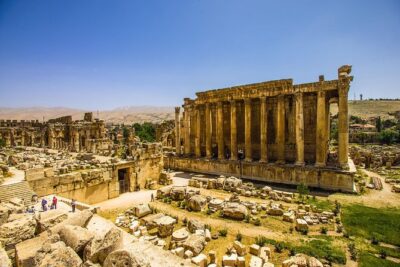
Private Anjar and Baalbek Tour from Beirut with Departure Ticket
Read our review →
Guided Private Full Day Tour to Baalbek, Anjar and Chateau Ksara
Read our review →
Lebanon tour Baalbek ruins & Ksara w/pick-up, lunch,guide+entries
Read our review →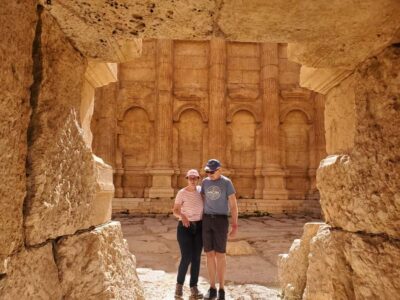
Baalbek Temples & Ksara Caves w/pick-up,guide, entries+lunch
Read our review →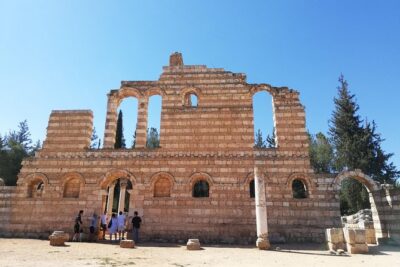
Small Group Tours to Baalbek, Anjar & Chateau Ksara with lunch and Tickets
Read our review →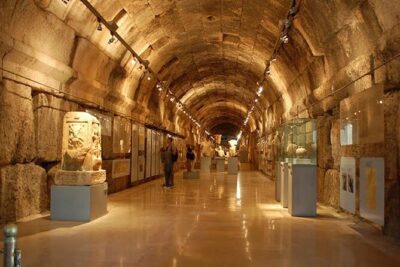
Private Tour: Anjar, Baalbek and Ksara Day Trip from Beirut
Read our review →Browse the lists this tour appears in