
Review · HISTORICAL TOURS
Exploring Beirut’s Past: A Private Guided Historical Tour
Beirut tells its story in layers. This private five-hour tour links the National Museum, Roman baths, mosques, churches, seaside views, and a stark civil-war landmark into one useful introduction to Lebanon’s capital. I like the way it moves from ancient archaeology to modern Beirut without treating the city as a collection of disconnected sights. I also like the private format, since your guide can explain the places that interest you most.
The strongest part is the National Museum, where two hours give you enough time to see Lebanon’s long archaeological record without rushing through every display. The tour also includes private air-conditioned transportation and hotel pickup and drop-off. The main consideration is the schedule: most downtown stops receive only about 10 minutes, and access to central Beirut can sometimes change because of security conditions or protests.
In This Review
- Key points to know before booking
- Why this private Beirut tour works
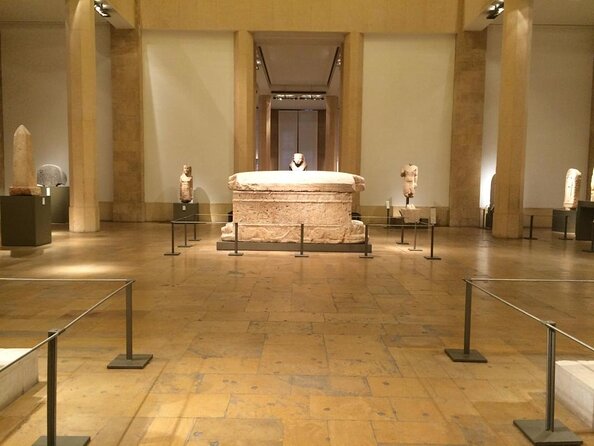
- Two hours among Lebanon’s ancient treasures
- Pigeon Rocks and the Beirut Corniche
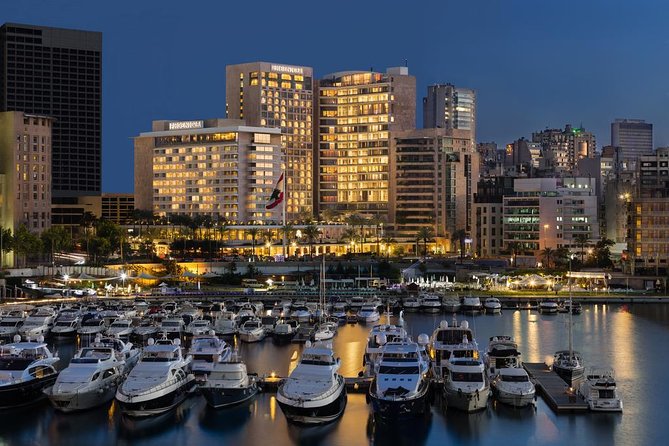
- Zaitunay Bay and modern Beirut
- The Holiday Inn and Beirut’s difficult recent past
- Downtown’s mosques, churches, and layered faiths
- Martyrs’ Square and Place de l’Étoile
- Beirut Souks and the city rebuilt
- The Roman Baths of Berytus
- Guide quality and the shape of the day
- Who will get the most from this tour?
- Practical details before you reserve
- Should you book Exploring Beirut’s Past?
- FAQ
- How long does the Beirut historical tour last?
- What is included in the tour price?
- Is admission to the National Museum included?
- Are meals included?
- Is this a private tour?
- Is hotel pickup available?
- Does the tour provide a mobile ticket?
- When is the National Museum open for this experience?
- Can most people participate?
- What is the cancellation policy?
Key points to know before booking
- Two hours at the National Museum: This is the tour’s main historical anchor, with artefacts from across Lebanon and several ancient civilizations.
- A private vehicle and guide: Hotel pickup, drop-off, and air conditioning make the five-hour route easier than arranging each stop yourself.
- Beirut’s history in sharp contrast: Roman baths, Ottoman-era memories, religious buildings, modern shopping, and the abandoned Holiday Inn all appear in one morning.
- The seafront is brief but worthwhile: Pigeon Rocks, the Corniche, and Zaitunay Bay provide quick breaks from museums and monuments.
- Guide quality matters: Past bookings praised Pierre for clear explanations, while Susan and driver Nasser were remembered for making the day enjoyable and well organized.
- Downtown access may change: The route has been adjusted when security restrictions or protests limited access to central Beirut.
Why this private Beirut tour works
Beirut can be hard to read at street level. A Roman column, a restored mosque, a war-damaged hotel, and a modern marina may sit within a short drive of one another, but the connections are not always obvious. A private guide gives you the missing thread.
This is not a walking-only history lesson. The air-conditioned vehicle carries you between the National Museum, the western coast, and downtown. That matters in a city where the planned stops cover a wide area and where the day includes both indoor and outdoor viewing.
The private arrangement is also useful for questions. You are not tied to a large group’s pace, and only your party takes part. The guide can focus on archaeology, architecture, religion, the civil war, or daily life, depending on what you want to understand.
The tour costs $75 per person. That price includes transportation, hotel pickup and drop-off, a tour leader, and a professional guide, but not the National Museum admission or meals. The value is strongest if you want an efficient first look at Beirut and prefer not to arrange transportation between scattered sites.
More history-led days around Beirut:
- PRIVATE Beirut Historical Walking Half Day Tour
★ 5.0 · 27 reviews - Historical Beirut Tour (AM) Half Day – (4G on Board)
★ 4.0 · 16 reviews - Temple of Eshmun – Mleeta Landmark – Beaufort Castle
★ 5.0 · 9 reviews
Two hours among Lebanon’s ancient treasures
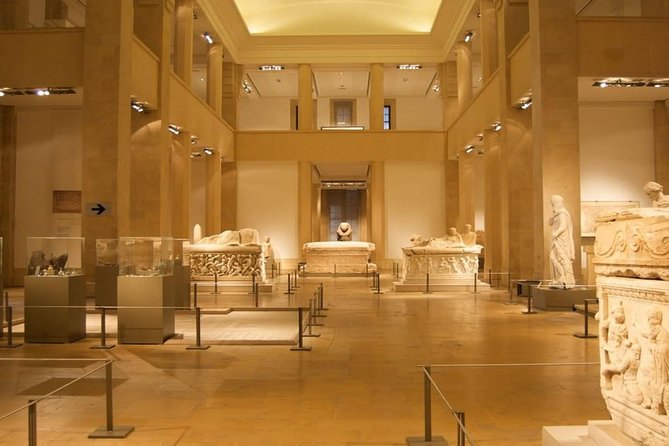
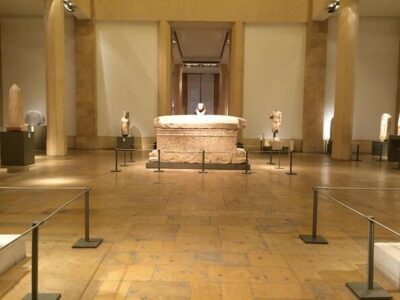
The National Museum of Beirut deserves the longest visit of the day. Its collection brings together finds from across Lebanon, a country shaped by contact between major civilizations and trade routes.
You can expect the museum to provide the broad historical framework that the rest of the tour needs. Instead of seeing the Roman baths as an isolated ruin, you begin to understand Beirut as an ancient city with connections to wider Mediterranean cultures. The museum’s displays cover archaeology from different parts of Lebanon, offering a useful introduction to the country’s past.
Two hours is a sensible amount of time here. You have room to look closely, listen to explanations, and pause at objects that catch your attention. One past booking described the museum as the best part of the day, and that makes sense: it is the one stop where the tour’s historical subject receives sustained attention.
Admission is not included, so budget for that separately. The museum is open Tuesday through Sunday from 8:30 a.m. to 1 p.m. during the listed operating periods. The morning schedule matters, since the tour needs to fit within those hours.
Pigeon Rocks and the Beirut Corniche
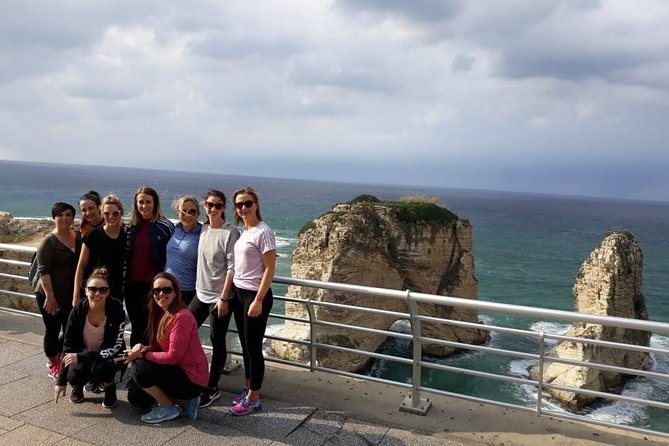
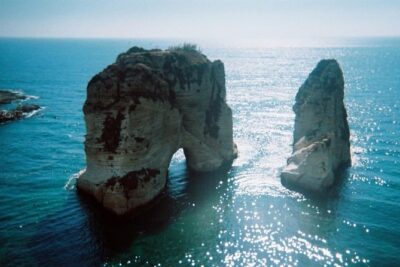
After the museum, the route shifts from archaeology to the Mediterranean edge. Pigeon Rocks, also called the Rock of Raouché, are two large offshore formations at Beirut’s western tip.
You get about 10 minutes here, enough for a quick look and photographs rather than a long coastal walk. The formations serve as a familiar symbol of Beirut, and their position gives you a clear sense of the city facing west toward the sea.
The nearby Corniche offers another short stop. This palm-lined promenade extends from Ramlet al Bayda toward the Saint George marina, with views of the Mediterranean, Pigeon Rock, and Mount Lebanon to the east. The contrast is useful: one moment you are looking at ancient objects indoors, and soon after you are seeing the natural setting that helped make Beirut an important port city.
There is no admission charge for either stop. Since the visits are brief, wear comfortable shoes and keep your camera ready. The tour is not designed as a long seaside stroll, so you should choose this experience for its range rather than for extended time at the shore.
Zaitunay Bay and modern Beirut
Zaitunay Bay provides a look at Beirut’s newer waterfront. Shops and restaurants line the promenade, making it a leisure district rather than a traditional monument.
The stop lasts about 10 minutes. That is enough to see the setting and compare it with the older quarters, but not enough for a meal or serious shopping. Meals are not included in the tour, so do not count on eating here unless your guide and schedule allow a change.
I like this short pause because it keeps the tour from presenting Beirut only through ruins and war scars. The city is also a modern commercial center with fashionable waterfront development. Still, if your main interest is ancient architecture, this will be one of the less important stops.
A few more trips out of Beirut worth a look
- Guided Small-Group Tour to Baalbek, Anjar and Ksara with Lunch
★ 5.0 · 511 reviews - Guided Small-Group Tour to Jeita, Harissa, Byblos with Lunch
★ 5.0 · 361 reviews - Paragliding Trip Over Lebanon – Jounieh Bay
★ 5.0 · 257 reviews - First Paragliding Club in Lebanon – Since 1992
★ 5.0 · 193 reviews
The Holiday Inn and Beirut’s difficult recent past
The abandoned Holiday Inn is one of the most arresting places on the route. Built between 1971 and 1974 during a period of strong economic growth, the hotel was intended for a city that had become one of the Middle East’s major tourist destinations.
The Lebanese Civil War began in 1975, and the hotel soon became part of the Battle of the Hotels. More than 25,000 combatants fought for control of luxury hotels in the area, including the Holiday Inn and the Phoenicia.
The building remains empty and untouched decades later. It is not a polished memorial or a conventional attraction. Its damaged shell carries a harder message, showing how quickly a city’s commercial confidence can be overtaken by conflict.
The provided schedule does not specify a length for this stop, unlike most of the others. Treat it as a viewing point from outside rather than a building you enter. This is also a place where a guide’s explanation adds real value. Without context, you see an abandoned hotel. With context, you see a physical record of Beirut’s civil war.
Downtown’s mosques, churches, and layered faiths
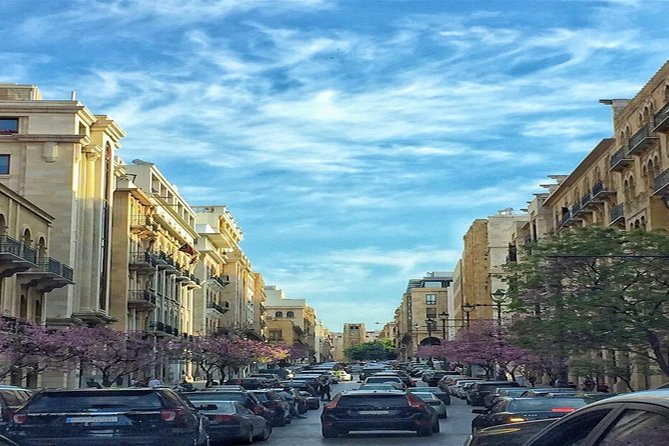
The downtown section brings several religious buildings close together. The Mohammad Al-Amin Mosque, also called the Blue Mosque, is the largest mosque in Lebanon. Opened in 2008 near Martyrs’ Square, it has four minarets reaching 65 meters and several domes covered in light blue tiles.
You have about 10 minutes here, so expect an exterior introduction rather than an extended architectural visit. The mosque’s amber-colored walls, pale blue domes, tall minarets, and large arches make it easy to recognize. If you want to enter a religious building, follow your guide’s instructions and dress respectfully.
The Al-Omari Mosque takes you much farther back. It was built in 635 AD in the age of Omar Bin El Khattab, converted into the Church of Saint John by Crusaders in the 12th century, and returned to use as the city’s Grand Mosque under the Mamluks in 1291. Damage from the civil war was repaired by 2004.
That sequence is the point. Beirut’s buildings have often changed function as rulers, religions, and political powers changed. Ten minutes is short, but the stop gives your guide a chance to explain how one structure can hold several chapters of the city’s past.
The Greek Orthodox Cathedral of Saint George adds another layer. It is the seat of the Greek Orthodox Metropolitan bishop of Beirut and is described as the city’s oldest church. The first Christian temple on the site dates to the mid-sixth century and is linked to Beirut’s famous Law School.
Again, the stop is brief. You will not get a full church tour based on the supplied schedule, but you will see why this location matters. The cathedral sits in the heart of central Beirut, where religious history, civic life, and archaeology occupy the same compact district.
Martyrs’ Square and Place de l’Étoile
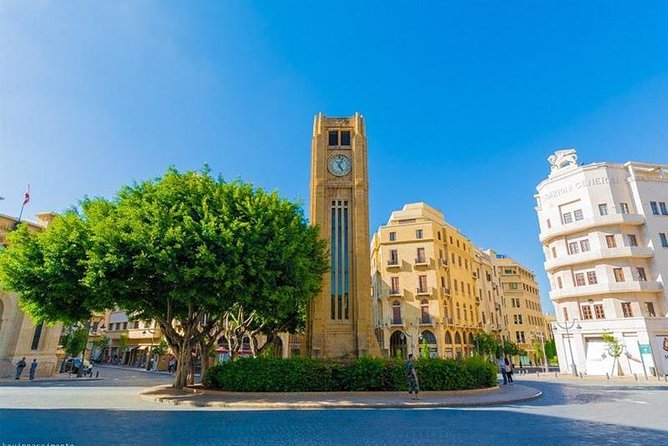
Martyrs’ Square is one of Beirut’s most meaningful public spaces. It was historically known as Al Burj or Place des Cannons, and its current name recalls the executions of Lebanese nationalists by the Ottoman authorities on May 6, 1916, during World War I.
The square’s importance is political as well as historical. It has been a place where Beirut’s national memory and public life meet. You receive around 10 minutes here, enough for a guide’s explanation and a look at the surroundings.
Place de l’Étoile, also called Nejme Square, is the central square of downtown. It is home to the Lebanese Parliament and related buildings, two cathedrals, a museum, cafes, and restaurants. Its most recognizable feature is the four-faced Rolex clock from the 1930s.
This is a good place to notice Beirut’s urban design. The square feels more formal than the Corniche or Zaitunay Bay, and its architecture reflects a different era of the city’s development. You should expect a quick orientation, not open-ended time for sitting in a cafe.
Beirut Souks and the city rebuilt
Beirut Souks is a modern commercial district with more than 200 shops, 25 restaurants and cafes, an entertainment center, and a cinema complex. It is the largest shopping and leisure area in Beirut.
The 10-minute stop works as a glance at the city’s rebuilt commercial center. It may be useful if you want to understand how Beirut combines old street plans and religious landmarks with new retail development. It is less useful if shopping is a main reason for booking, since the schedule does not provide enough time to browse.
This quick stop also reinforces one of the tour’s central ideas: Beirut is not frozen in one historical period. Ancient remains, Ottoman-era memories, war landmarks, and modern shopping districts all share the same city.
The Roman Baths of Berytus
The Roman Baths are the final major historical stop and one of the most important ancient sites in downtown Beirut. They were discovered in 1968 and 1969 and underwent major renovation in the mid-1990s.
Roman Berytus had four major bath complexes. The first was created in the early first century under Augustus, showing the city’s role within the Roman world. A major earthquake in 551 AD destroyed the baths.
Today, the remains are outdoors. One of the bath areas is used for artistic performances and concerts, giving the ruins a continuing public role rather than leaving them as silent stones. You have about 10 minutes here, so listen closely while the guide points out the layout and explains how Roman bathing worked.
The baths are particularly valuable after the National Museum. The museum gives you objects and wider context, while the downtown ruins let you see the ancient city in place. I would have preferred more time here, but the stop is still worthwhile because it helps connect Beirut’s present streets with its Roman past.
Guide quality and the shape of the day
The guide can make or break a tour with this many short stops. The strongest praise in the available feedback centers on clear explanations, professionalism, and a pleasant working relationship between guide and driver.
Pierre received especially strong approval for showing Beirut clearly and providing extensive information. Susan and driver Nasser were remembered for making a day enjoyable and well organized. These details matter because the itinerary moves quickly, and good commentary helps prevent the morning from feeling like a series of photo stops.
The tour lasts about five hours, although one booking ran longer than five hours. Do not plan a tight appointment immediately afterward. The exact rhythm can change based on traffic, security, access, and how much time you spend at the museum.
A significant practical point is that central Beirut access has sometimes been restricted because of tight security and protests. One booking reached the National Museum but could not access the city center as planned. This is not a reason to reject the tour, but you should accept that Beirut’s route can change.
Who will get the most from this tour?
I would choose this tour if you have limited time in Beirut and want a guided overview instead of building a route from scratch. The private vehicle is especially useful for combining the museum, coast, downtown, and war landmark in one morning.
It suits history-minded visitors, first-time guests, and anyone who wants a guide to explain political and religious changes without handling the logistics alone. It also works well for families or small groups who value a private schedule.
I would hesitate if you want long visits at every site, extended shopping time, or a relaxed seaside walk. Most stops after the museum last only 10 minutes. The tour favors breadth, context, and convenience over slow exploration.
The $75 price is reasonable when you use the included pickup, drop-off, vehicle, and guide. For a solo participant, it is a larger outlay than joining a group. For several people sharing a private experience, the value improves, especially because group discounts are available.
Practical details before you reserve
Pickup is offered from your hotel, and transportation is private and air-conditioned. Your group alone participates, which gives you more freedom to ask questions and discuss changes with the guide.
The National Museum admission is extra, and meals are not included. The listed operating hours are Tuesday through Sunday, 8:30 a.m. to 1 p.m., with separate seasonal dates shown for 2026. Confirm the exact operating day and pickup time when booking.
Confirmation is received at booking, and most people can participate. The experience is available with a mobile ticket. Free cancellation applies when you cancel at least 24 hours before the start time. Cancellations or changes made within 24 hours are not refunded or accepted, based on local time.
Should you book Exploring Beirut’s Past?
Book it if you want one well-organized morning that explains Beirut through archaeology, faith, the sea, commerce, and war. The National Museum is the clear centerpiece, while Pierre, Susan, Nasser, and the other staff praised in the available feedback show how much a strong guide can add.
Skip it if you want to linger. Ten-minute stops leave little time for independent discovery, and downtown access may change because of current conditions. For a first visit, limited time, or a group that wants private transportation, this is a useful and thoughtful introduction to Beirut.
FAQ
How long does the Beirut historical tour last?
The tour lasts approximately five hours. One booking lasted longer than five hours, so avoid scheduling an immediate appointment afterward.
What is included in the tour price?
The price includes private transportation, hotel pickup and drop-off, a tour leader, an air-conditioned vehicle, and a professional guide.
Is admission to the National Museum included?
No. Admission to the National Museum of Beirut is not included in the tour price.
Are meals included?
No. Meals are not included.
Is this a private tour?
Yes. Only your group participates in the private tour or activity.
Is hotel pickup available?
Yes. Hotel pickup and drop-off are included.
Does the tour provide a mobile ticket?
Yes. A mobile ticket is available.
When is the National Museum open for this experience?
The listed opening hours are Tuesday through Sunday from 8:30 a.m. to 1 p.m. The supplied schedule also includes separate seasonal dates in 2026.
Can most people participate?
Yes. The additional information states that most people can participate.
What is the cancellation policy?
You receive a full refund if you cancel at least 24 hours before the experience start time. Cancellations or changes made less than 24 hours before the start time are not accepted, and the amount paid is not refunded.
Newest Beirut reviews
- Wine Tasting Tour★ 5.0 · 2 reviews
- Journey Through Time: Half-Day Private Tour to Baalbek★ 5.0 · 3 reviews
- Lebanon’s Treasures: Jeita Grotto and Harissa Private Tour★ 5.0 · 2 reviews
- Traveling Spoon Lebanese Mezze Private Online Cooking Class★ 5.0 · 4 reviews
- Wine Tasting and Culture★ 5.0 · 3 reviews
- Small Group Tour to Baalbek, Anjar & Ksara with Hotel pickup★ 5.0 · 2 reviews
- Small Group Tours to Jeita Grotto and Byblos with tickets★ 5.0 · 3 reviews
- Small-Group Tour with Lunch to Baalbek, Anjar and Ksara★ 5.0 · 3 reviews
Historical Tours, compared.
Historical Beirut Tour (AM) Half Day – (4G on Board)
Read our review →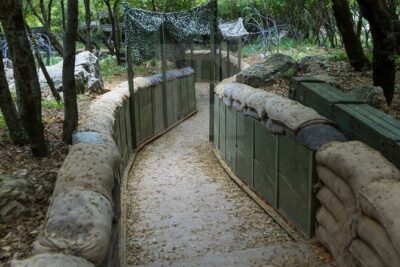
Temple of Eshmun – Mleeta Landmark – Beaufort Castle
Read our review →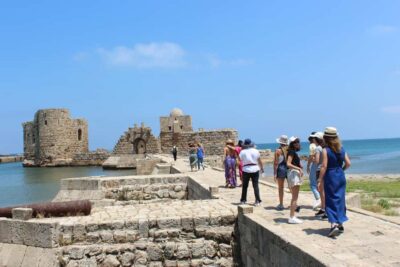
Sidon & Tyre Unesco Heritage w/pick-up, guide, entries+lunch
Read our review →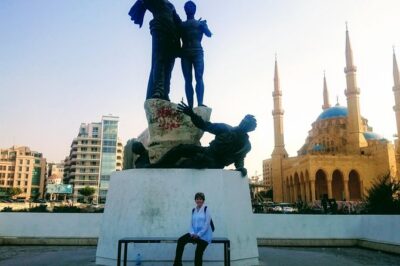
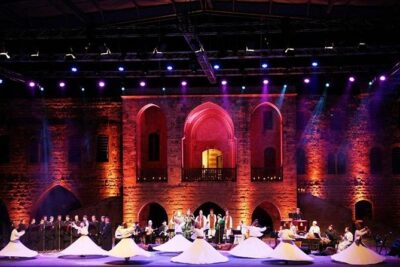
PRIVATE tour to Beirut history museum, Beiteddine & Deir elQamar
Read our review →
Baalbek, Anjar & Wine: A Journey Through Lebanon’s Heritage
Read our review →
Browse the lists this tour appears in