
Review · HISTORICAL TOURS
Historical Beirut Tour (AM) Half Day – (4G on Board)
Beirut’s past is never far below the pavement. I like this tour for its clear introduction to the city’s long story, from a settlement more than 5,000 years old to a Roman city-state and the capital of modern Lebanon. I also like the National Museum visit, where Phoenician, Roman, and Byzantine pieces turn that history into something you can see.
The main trade-off is simple: this is called a walking tour, but much of the three hours is spent at the museum or in the vehicle. If you want a broad outdoor walk through Beirut’s neighborhoods, you may find the route too short. If you want a compact history lesson with transport, water, WiFi, and an English or French-speaking guide, the $50 price is reasonable.
In This Review
- Key points to know before booking
- A useful first morning in Beirut
- Martyr’s Square and the memory of World War I
- Nejmeh Square and rebuilt downtown Beirut
- The Roman Baths and Beirut’s ancient foundations
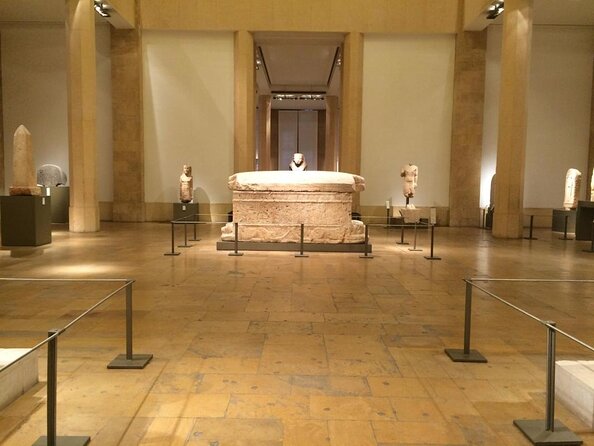
- One hour inside the National Museum of Beirut
- What the guides add to the morning
- Is $50 a fair price?
- Pickup, timing, and practical details
- Who should book this Beirut tour?
- Final verdict: a strong introduction, not a full city walk
- FAQ
- How long does the Historical Beirut Tour last?
- What time does the tour begin?
- Is hotel pickup included?
- Where does the tour start?
- Where does the tour finish?
- Is admission to the National Museum included?
- What languages does the guide speak?
- Is lunch included?
- What is the maximum group size?
- Is cancellation allowed?
Key points to know before booking
- The National Museum gets about one hour, making it the tour’s main cultural stop.
- Downtown walking time is limited, with visits to Martyr’s Square, Nejmeh Square, the Roman Baths, and nearby landmarks.
- Guides are the strongest part of the experience, with past guides including Madeline and Eliane.
- Hotel pickup is limited to selected Beirut hotels, not hostels, Airbnb rentals, or private apartments.
- The tour begins at 8:30 am and lasts roughly three hours.
- The group can include up to 25 people, so this is a small-to-medium group outing rather than a private tour.
A useful first morning in Beirut
This half-day tour works best near the beginning of your stay. Beirut can feel like several cities at once: ancient port, Ottoman-era capital, French-influenced downtown, war-damaged city, and modern commercial center. A local guide helps connect those pieces before they become a blur of monuments and reconstructed streets.
The tour begins at 8:30 am, either with pickup from a qualifying hotel in Beirut or at Nakhal Tourism and Travel in downtown Beirut. The vehicle is air-conditioned, and bottled water and onboard WiFi are included. Those details may sound ordinary, but a morning in Beirut is easier when you do not need to arrange a taxi to the starting point or carry water from the hotel.
The opening talk sets the time scale. Beirut was settled more than 5,000 years ago and prospered as a Roman city-state from 15 BC. The city later became the capital of modern Lebanon after the collapse of the Ottoman Empire following World War I. Your guide also explains how Beirut kept its liberal character through long periods of conflict and near-destruction.
That broad introduction is one of the tour’s real strengths. You do not simply hear that a building is old or that a square is important. You get a basic explanation of how Beirut became the city you see today.
More history-led days around Beirut:
- PRIVATE Beirut Historical Walking Half Day Tour
★ 5.0 · 27 reviews - Temple of Eshmun – Mleeta Landmark – Beaufort Castle
★ 5.0 · 9 reviews - Sidon & Tyre Unesco Heritage w/pick-up, guide, entries+lunch
★ 4.9 · 6 reviews
Martyr’s Square and the memory of World War I
The first listed stop is Place des Martyrs, also called Martyr’s Square. The visit lasts about 10 minutes and admission is free.
The square is tied to Lebanese nationalists who were executed by Ottoman authorities during World War I. Its central monument, the Martyr’s Statue, gives the stop emotional weight. The figures are not presented as distant history. They represent a period when political identity, foreign rule, and the future of Lebanon were all in dispute.
Ten minutes is enough for a photo stop and a concise explanation, but not enough for a long look at every detail. The square is best understood as an introduction to Beirut’s modern political story rather than a full museum-style visit.
This is also one place where the pace can feel brisk. If you enjoy taking photographs or asking detailed questions about the civil war and later rebuilding, you may want to note the location and return on your own. The guide’s commentary adds value, but the schedule does not allow the group to linger for long.
Nejmeh Square and rebuilt downtown Beirut
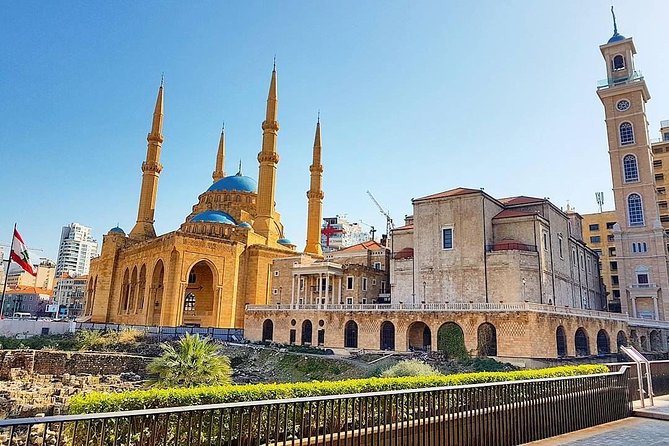
From Martyr’s Square, the tour continues through central Beirut, including recently renovated Nejmeh Square. This is the heart of the modern downtown district, with its famous central clock tower.
The tower was built during World War I, giving the square a useful visual link between the Ottoman period and the city’s later development. The square also shows the careful rebuilding of central Beirut after years of conflict. Its polished appearance can feel very different from the harder, less tidied parts of the city, and that contrast is worth noticing.
The guide brings the area to life by explaining the people and events connected to the buildings and monuments. One particularly valuable part of the commentary concerns the contested parts of Beirut during the Lebanese Civil War and the rebuilding of downtown afterward.
Access to specific areas can vary. One group was fortunate enough to enter the Parliament area, but that should be treated as an unexpected possibility rather than a guaranteed part of the tour. If access happens, it adds a memorable architectural and civic detail. If not, the square still provides a useful look at central Beirut.
The outdoor portion is not a long city walk. Some people like that. You cover key central sights without tiring yourself early in the day. Others find it disappointing because the tour description suggests more walking than the schedule delivers. I would book this as a guided downtown orientation with museum time, not as a full walking tour of Beirut.
The Roman Baths and Beirut’s ancient foundations
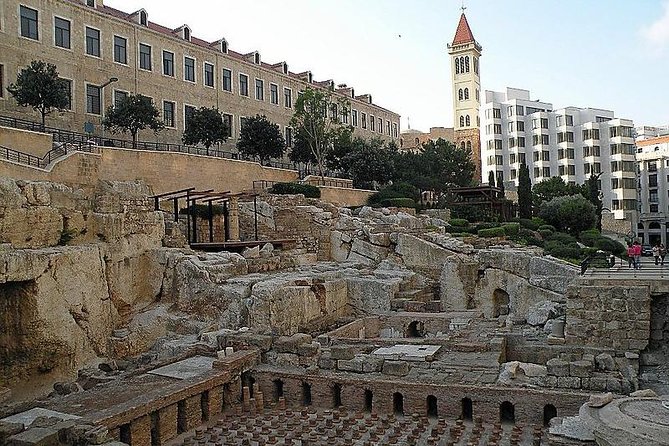
The Roman Baths are included as part of a roughly 30-minute visit to the Roman Baths and downtown Beirut. Admission is free.
The remains give you a direct connection to Beirut’s Roman period, when the city was an important Roman center. They also help explain why modern Beirut is full of archaeological layers. Ancient remains can appear beneath streets and buildings that otherwise look thoroughly modern.
The stop is not a long archaeological field visit. Instead, it forms part of the guide’s larger explanation of how Beirut has been built, damaged, and rebuilt over many centuries. The most useful questions here concern continuity: how much of Roman Beirut remains, how archaeologists found newer sites, and how ancient remains fit into a modern capital.
The tour also refers to archaeological sights discovered as recently as 2007. That detail matters because Beirut’s past is not finished being found. The city is not simply an open-air collection of ruins from one distant age. New discoveries continue to change the story.
A few more trips out of Beirut worth a look
- Guided Small-Group Tour to Baalbek, Anjar and Ksara with Lunch
★ 5.0 · 511 reviews - Guided Small-Group Tour to Jeita, Harissa, Byblos with Lunch
★ 5.0 · 361 reviews - Paragliding Trip Over Lebanon – Jounieh Bay
★ 5.0 · 257 reviews - First Paragliding Club in Lebanon – Since 1992
★ 5.0 · 193 reviews
One hour inside the National Museum of Beirut
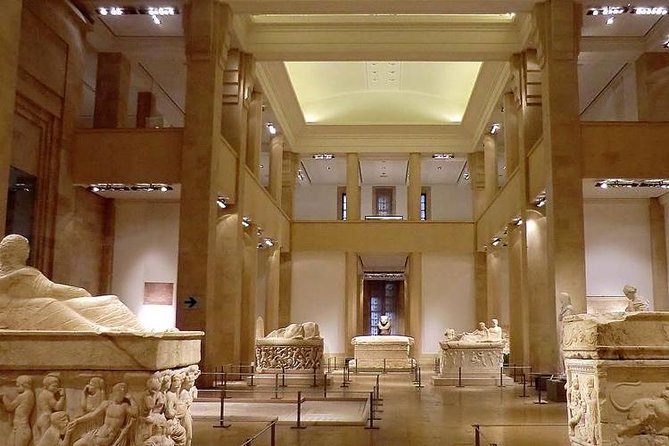
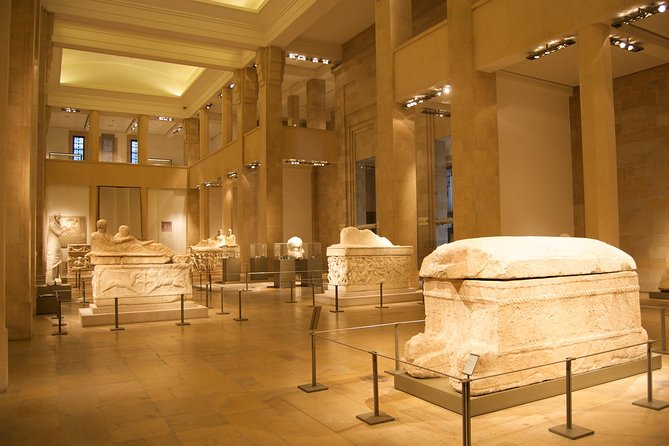
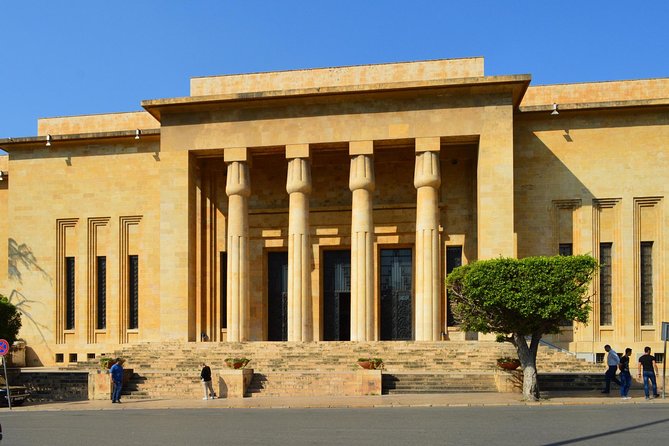
The National Museum is the centerpiece of the morning, with about one hour inside and admission included.
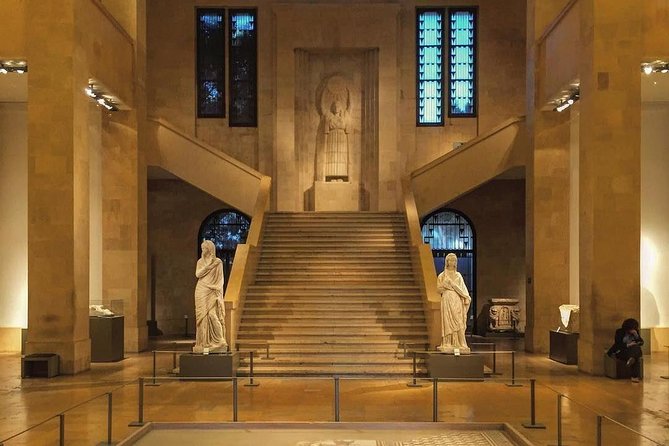
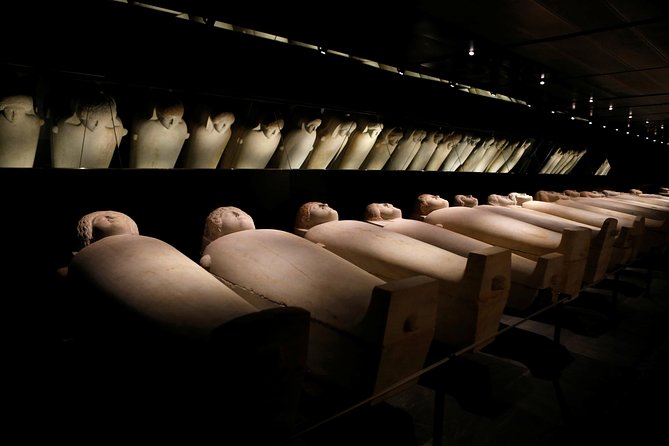
I consider this the best value in the tour. The museum gathers artifacts from Lebanon’s long history and gives you a focused way to understand the country beyond Beirut’s current streets. The galleries include Phoenician statues, Byzantine mosaics, and Roman pieces, among other archaeological finds.
The Phoenician material is especially useful because it places Lebanon within the story of the ancient eastern Mediterranean. Roman objects connect neatly with the earlier explanation of Beirut as a Roman city-state. Byzantine mosaics show the cultural changes that followed. Taken together, the displays provide a compact history lesson rather than a collection of unrelated old objects.
The museum visit also carries modern meaning. The building and its collections survived years of conflict and were later restored. You can appreciate the care involved in bringing the museum back into public use, not just the age of the objects inside it.
The one-hour limit is both helpful and restrictive. It keeps the half-day schedule manageable and gives you enough time to see major highlights. It does not allow a slow look at every gallery or a long conversation about individual pieces. If you are passionate about archaeology, you may wish the entire morning were devoted to the museum.
Several visitors felt the museum took up too much of the tour compared with the outdoor walking section. That criticism is fair, especially if you have already planned to visit the museum independently. But if you are new to Beirut and want a strong historical foundation, the museum is exactly what makes this tour more than a quick downtown drive.
What the guides add to the morning
The guide can make or break a short history tour, and the strongest comments about this experience focus on the guides. Madeline was praised for her presentation of downtown Beirut and the National Museum. Eliane was described as charming and especially helpful when explaining the city’s contested areas, civil war history, and the rebuilding of downtown.
Those names do not guarantee who will lead your group, but they show the level of local interpretation the operator can provide. The guide is licensed and speaks English and French. The commentary is designed to be informative without turning the whole morning into a lecture.
I like the way the guide’s role fills in gaps that signs cannot. A monument can tell you whom it honors. A local guide can explain why that monument matters, how the surrounding district changed, and what the city chooses to remember.
Still, the group size may reach 25 people. That is manageable, but it can make personal questions harder during busy moments. If you want a private conversation about a particular neighborhood, political issue, or archaeological object, ask early and stay near the guide.
Is $50 a fair price?
At $50 per person, this is not the cheapest way to see Beirut’s downtown sights. You could visit some outdoor landmarks independently, and the Roman Baths and Martyr’s Square do not require admission fees.
The price becomes more reasonable when you count the included elements: an expert licensed guide, transport in an air-conditioned vehicle, hotel pickup and return for eligible Beirut hotels, bottled water, WiFi, and admission to the National Museum. You are paying mainly for structure and interpretation, not for entrance tickets alone.
The value is strongest if you are visiting Beirut for the first time, have only one morning available, or prefer not to organize transport and museum timing yourself. It is weaker if you are an independent walker who enjoys researching each site and already intends to visit the museum.
The tour finishes back at its original starting point. It does not include lunch, so plan a meal afterward. An afternoon tour may also be available as a separate option, but you should ask about it in advance. One person wished they had known about the possibility of continuing with the group for lunch and an afternoon outing sooner.
Pickup, timing, and practical details
Hotel pickup and drop-off are included only for selected hotels located within Beirut City. Hostels, Airbnb properties, and private apartments are excluded, so check your pickup arrangement before the morning of the tour.
If you are not staying at an eligible hotel, meet at Nakhal Tourism and Travel in Beirut. One person found the meeting arrangement inconvenient enough to leave the hotel very early, so confirm the exact meeting point and time rather than relying on a general downtown location.
The experience is listed at about three hours. The schedule is early but efficient: a short introduction, downtown landmarks, approximately 30 minutes around the Roman Baths and central Beirut, and about one hour at the museum. The remaining time covers transport and transitions.
Most people can participate, and the maximum group size is 25. No lunch is included. The booking confirmation arrives at the time of reservation, and the ticket is mobile, which saves you from printing paperwork.
The safety situation in Lebanon deserves serious attention. The United States Department of State has issued a warning against travel to Lebanon because of safety and security concerns. The tour operator says its local partners and guides continue to monitor conditions and that tours operate as scheduled, but you should check current official advice and local conditions before booking and again before departure.
Who should book this Beirut tour?
I would recommend this experience to a first-time visitor who wants the main historical frame in one morning. It suits you especially well if you value a guide’s explanation, want guaranteed museum entry, and prefer included transport.
It also works for people with limited time. You see Martyr’s Square, Nejmeh Square, the Roman Baths, downtown landmarks, and the National Museum without spending a full day on logistics.
I would choose another plan if your priority is extended walking. The outdoor route is too short for anyone hoping to explore several neighborhoods on foot. The tour also gives little time for Ottoman Beirut, interior visits to key buildings, or a closer look at southern Beirut and its political importance.
For museum lovers, the tour is a good introduction but not a complete visit. You will see important highlights in an hour, then can decide if you want to return independently for more time.
The cancellation terms are generous if your plans change: cancel at least 24 hours before the local start time for a full refund. Changes or cancellations made less than 24 hours ahead are not accepted for a refund.
Final verdict: a strong introduction, not a full city walk
Book this tour if you want Beirut’s history explained in a clean, three-hour package. The best features are the skilled local guides, the National Museum, and the way downtown monuments are linked to Lebanon’s Roman, Ottoman, wartime, and modern stories.
Skip it if you want hours of outdoor exploration or already know the museum and central Beirut well. For everyone else, $50 is a fair price for a guided first look, especially with hotel pickup, transport, water, WiFi, and admission included. Think of it as a historical orientation with a museum at its center, not a long walking tour.
FAQ
How long does the Historical Beirut Tour last?
The tour lasts approximately three hours.
What time does the tour begin?
The tour starts at 8:30 am.
Is hotel pickup included?
Pickup and drop-off are included for guests staying at selected hotels located within Beirut City. Pickup is not included for hostels, Airbnb rentals, or private apartments.
Where does the tour start?
You can be picked up from an eligible Beirut hotel, or meet at Nakhal Tourism and Travel in Beirut.
Where does the tour finish?
The activity finishes back at its original meeting point.
Is admission to the National Museum included?
Yes. Entrance fees to all mentioned sites in the program are included, including the National Museum of Beirut.
What languages does the guide speak?
The professional licensed guide speaks English and French.
Is lunch included?
No. Lunch is not included in the tour price.
What is the maximum group size?
The tour can have a maximum of 25 participants.
Is cancellation allowed?
Yes. You can cancel at least 24 hours before the experience start time for a full refund. Cancellations or changes made less than 24 hours before the start time are not accepted for a refund.
Newest Beirut reviews
- Wine Tasting Tour★ 5.0 · 2 reviews
- Journey Through Time: Half-Day Private Tour to Baalbek★ 5.0 · 3 reviews
- Lebanon’s Treasures: Jeita Grotto and Harissa Private Tour★ 5.0 · 2 reviews
- Traveling Spoon Lebanese Mezze Private Online Cooking Class★ 5.0 · 4 reviews
- Wine Tasting and Culture★ 5.0 · 3 reviews
- Small Group Tour to Baalbek, Anjar & Ksara with Hotel pickup★ 5.0 · 2 reviews
- Small Group Tours to Jeita Grotto and Byblos with tickets★ 5.0 · 3 reviews
- Small-Group Tour with Lunch to Baalbek, Anjar and Ksara★ 5.0 · 3 reviews
Historical Tours, compared.
Temple of Eshmun – Mleeta Landmark – Beaufort Castle
Read our review →
Sidon & Tyre Unesco Heritage w/pick-up, guide, entries+lunch
Read our review →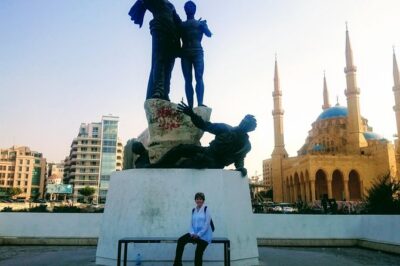
PRIVATE tour to Beirut history museum, Beiteddine & Deir elQamar
Read our review →
Baalbek, Anjar & Wine: A Journey Through Lebanon’s Heritage
Read our review →

Exploring Beirut’s Past: A Private Guided Historical Tour
Read our review →Browse the lists this tour appears in