Review · PRIVATE
Half-Day Private Panoramic Tour of Beirut
Beirut packs centuries into a short morning. I like the private, flexible format and the fact that hotel pickup, transport, and route planning are handled for you. The main drawback is simple: with so many stops, most visits are brief, and you will not have time for a long look at every site.
This is a useful first taste of the city, especially if your time is limited or you want an overview before exploring alone. Guide and driver Albert is singled out for being professional, engaging, and willing to adjust the route, which is exactly the kind of help that makes a custom city tour work well.
In This Review
- Key points to know before booking
- Why this five-hour private tour works well
- Pigeon Rocks and the Al Manara Corniche
- Zaitunay Bay and Beirut’s modern waterfront
- The Holiday Inn and Beirut’s difficult recent past
- Martyrs’ Square and the heart of downtown
- Mohammad Al-Amin Mosque and the Al-Omari Mosque
- Saint George Cathedral and Place de l’Étoile
- Beirut Souks and the Roman Berytus Baths
- Transport, timing, and the value of a private guide
- Who should book this Beirut tour?
- Should you book the Half-Day Private Panoramic Tour of Beirut?
- FAQ
- How long does the Beirut panoramic tour last?
- Is hotel transportation included?
- Is this a private tour?
- Can the itinerary be customized?
- Is lunch included?
- What is the cancellation policy?
Key points to know before booking
- Pigeon Rocks opens the tour with Beirut’s best-known coastal view, a quick and memorable stop at Raouche.
- You control the emphasis, so you can give more attention to history, religious buildings, downtown, or other interests.
- The route links very different Beiruti stories, from seaside leisure areas to Ottoman-era memory, civil-war ruins, and Roman remains.
- Hotel pickup and drop-off save valuable time, especially when you are still learning Beirut’s layout.
- The five-hour private format suits a first visit, a cruise stop, or anyone who wants an introduction without giving up the rest of the day.
- The pace is brisk, so think of this as a guided orientation rather than a series of long museum visits.
Why this five-hour private tour works well
Beirut can feel hard to read at first. The Mediterranean lies to the west, Mount Lebanon rises inland, and important sights are spread between the coast and the downtown core. A private vehicle gives you a practical way to connect those areas without spending part of the day sorting out transport.
The tour costs $75 per person, with group discounts available. That price is easier to justify for a small private party than for a solo visitor, since the guide, driver, vehicle, and hotel transfers are built into the experience. You are paying not only for sightseeing, but also for time saved and for the freedom to shape the morning.
I would not book this expecting a slow cultural walk with long interior visits. The listed stop times range from 10 to 15 minutes, and some locations are mainly viewed from outside. Instead, think of it as a well-organized city sampler. You see the major landmarks, hear their place in Beirut’s story, and then decide which ones deserve a longer return visit.
The private setup is the tour’s strongest feature. You are not locked into a fixed route, and you can ask to adjust the focus to suit your group. If one person cares about architecture, another about the civil war, and someone else wants the waterfront, the guide can help balance those interests.
A few more trips out of Beirut worth a look
- Byblos Half-Day & st.Charbel great guide/all-in+breakfast
★ 5.0 · 15 reviews - Half-Day Private Trip to Jeita Grotto and Harissa
★ 5.0 · 11 reviews - All-in Half-Day Jounieh Teleferique JeitaGrotto guide + breakfast
★ 5.0 · 9 reviews
Pigeon Rocks and the Al Manara Corniche
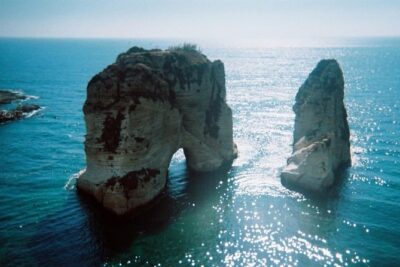
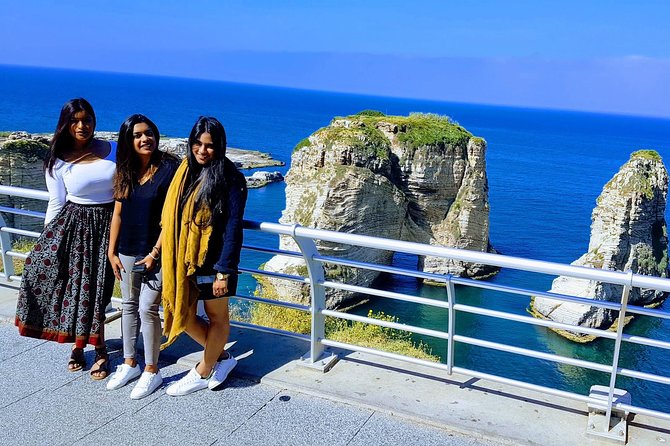
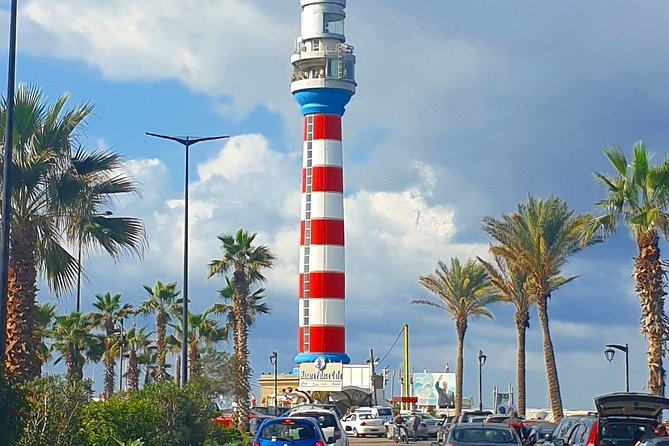
The opening stop at Pigeon Rocks in Raouche gives you an immediate sense of Beirut’s setting. Two huge rock formations rise from the sea at the city’s western tip, where the coast opens into a broad Mediterranean view.
You have about 15 minutes here, with no admission fee. That is enough for photographs and a first look, but not enough to linger along the shore or spend much time watching the water. If the sea view is a priority, tell your guide early that you would like a few extra minutes at Raouche.
The nearby Al Manara Corniche stretches from the Ramlet al Bayda area toward the Saint George marina. Palm trees line the promenade, and the view includes Pigeon Rock, the Mediterranean, and the summits of Mount Lebanon to the east. This contrast is one of Beirut’s visual pleasures: open sea in one direction, high mountains in the other.
The Corniche also helps you understand how the city uses its waterfront. It is not simply a scenic stop. It is one of Beirut’s most recognized public spaces, where the coast, city life, and views come together. Because the tour is conducted by vehicle with short stops, you will get the broad picture rather than a full promenade walk.
Zaitunay Bay and Beirut’s modern waterfront
Zaitunay Bay presents a newer side of the city. The waterfront area has shops and restaurants, with a promenade designed for leisure and dining. It feels quite different from the older religious and historic sites later in the route.
The visit lasts around 15 minutes and is free. That makes it a quick orientation stop rather than a meal break. Lunch is not included, so you can ask your guide how the flexible schedule might accommodate food later, but you should not assume that a restaurant visit is built into the five hours.
I like having Zaitunay Bay in the same morning as Pigeon Rocks. The two waterfront stops show different sides of Beirut’s relationship with the sea. Raouche offers natural drama, while Zaitunay Bay shows the city’s modern commercial face.
The Holiday Inn and Beirut’s difficult recent past
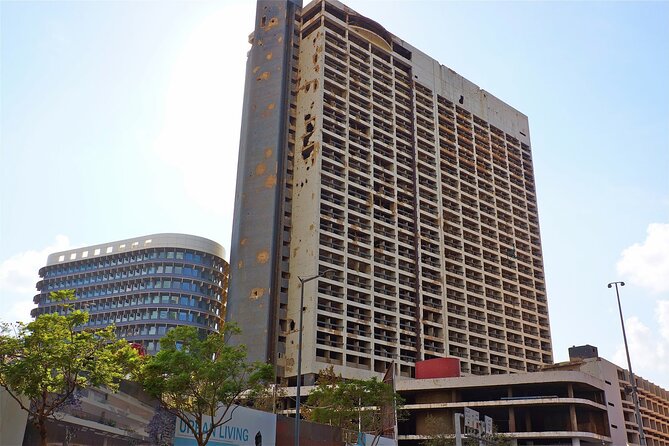
The abandoned Holiday Inn is one of the most striking stops because it is not polished or restored. Built between 1971 and 1974, when Beirut was enjoying a major economic and tourism boom, the hotel later became part of the Battle of the Hotels during the Lebanese Civil War, which began in 1975.
The building remains empty and damaged, a stark reminder of the conflict. It is not a conventional attraction, and that is precisely why it matters. You are looking at a physical marker of a period that still shapes how Lebanon understands itself.
This stop calls for a thoughtful guide. The building’s appearance alone cannot explain the conflict, and the tour gives you only a short visit. Ask questions if this part of Beirut’s story matters to you. The flexible format is useful here, since your guide can provide more context or keep the focus moving if your group prefers architecture and ancient history.
A different side of Lebanon altogether:
- Guided Small-Group Tour to Baalbek, Anjar and Ksara with Lunch
★ 5.0 · 511 reviews - Guided Small-Group Tour to Jeita, Harissa, Byblos with Lunch
★ 5.0 · 361 reviews - Paragliding Trip Over Lebanon – Jounieh Bay
★ 5.0 · 257 reviews - First Paragliding Club in Lebanon – Since 1992
★ 5.0 · 193 reviews
Martyrs’ Square and the heart of downtown
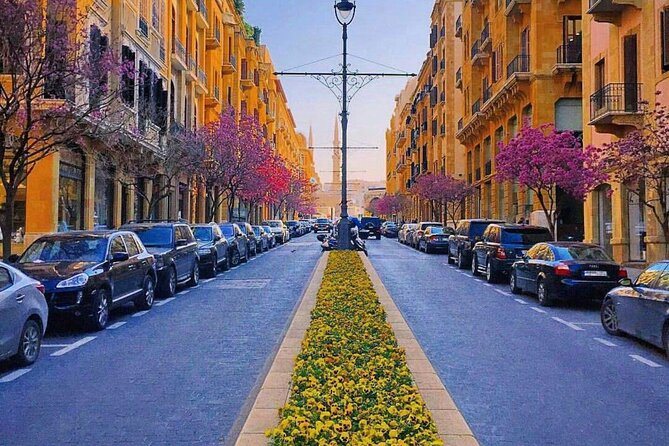
Martyrs’ Square sits in central Beirut and carries a name tied to the Ottoman period. It recalls the executions of Lebanese nationalists on May 6, 1916, ordered by Jamal Pasha during World War I.
The visit is listed at about 10 minutes. That is enough to locate the square, hear the basic story, and connect it to the surrounding downtown area. It is not a full historical walking tour, so you may want to return later if you want to examine the square in greater detail.
The site is valuable because it anchors Beirut’s political memory. Later stops add religious, commercial, and ancient layers, but Martyrs’ Square helps you see downtown as a place shaped by foreign rule, nationalism, war, and reconstruction.
Mohammad Al-Amin Mosque and the Al-Omari Mosque
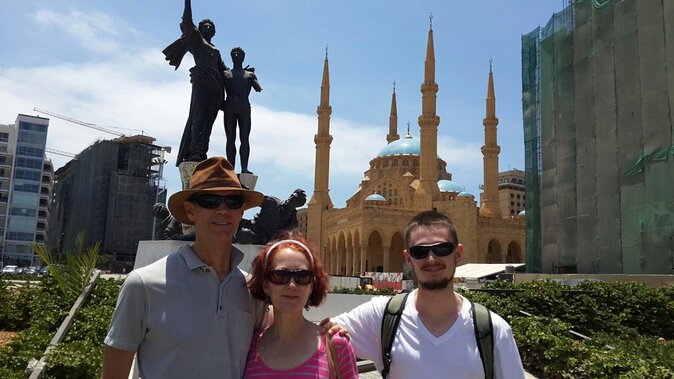
The Mohammad Al-Amin Mosque, often called the Blue Mosque, is one of Beirut’s most recognizable religious buildings. It opened in 2008 and has four minarets, each about 65 meters high. Its amber-colored exterior, light blue tiled domes, and tall arches give it a grand presence near Martyrs’ Square.
You have around 15 minutes here, with no admission charge listed. The stop is mainly about the building’s scale and appearance, though your guide can help explain its place in modern downtown Beirut. Dress and conduct should be respectful at religious sites, even when you are visiting briefly.
The Al-Omari Mosque gives you a much older layer of history. It was built in 635 AD during the age of Omar Bin El Khattab, later converted into the Church of Saint John by Crusaders, and returned to use as the city’s Grand Mosque under the Mamluks in 1291. Civil-war damage was repaired by 2004.
Seeing these two mosques together is especially useful. Mohammad Al-Amin represents modern Beirut and its monumental architecture. Al-Omari carries a much longer sequence of religious and political change. The short schedule does not allow for a detailed architectural study, but the pairing makes the city’s layered identity clear.
Saint George Cathedral and Place de l’Étoile
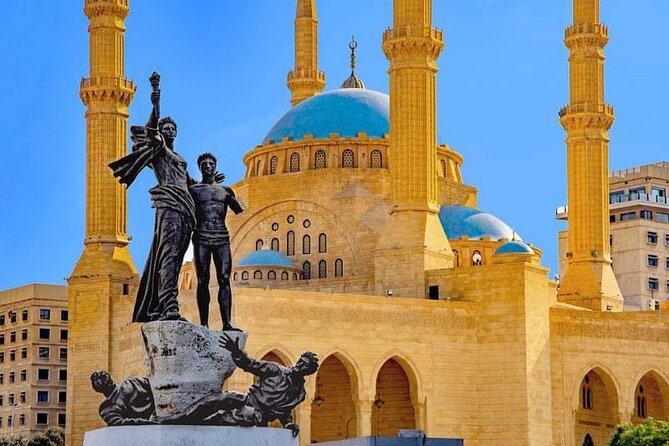
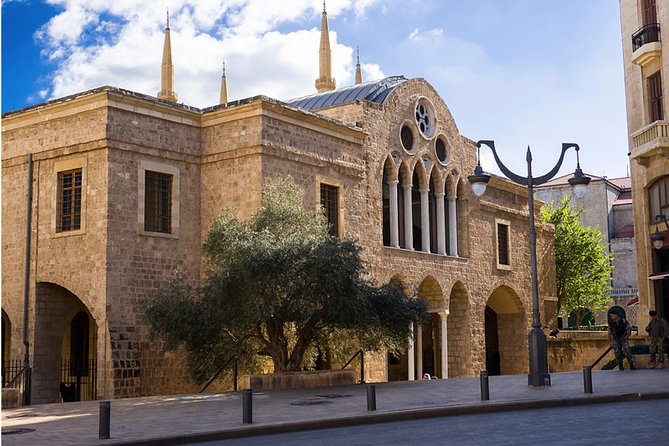
The Greek Orthodox Cathedral of Saint George is described as the oldest church in Beirut and one of the oldest in the region. The first Christian temple at this location dates to the mid-sixth century, and the site is linked to Beirut’s famous ancient Law School.
The stop lasts about 15 minutes. That gives you time to see the cathedral in the city center and understand its importance, but you should not expect a long service or art-focused visit. The tour’s value here is the historical connection between Beirut’s early Christian community and its tradition of law and learning.
Next comes Place de l’Étoile, also called Nejme Square. This central downtown square includes the Lebanese Parliament and nearby religious, cultural, dining, and civic buildings. Its most familiar feature is the four-faced Rolex clock from the 1930s.
You get about 10 minutes at the square. It is a compact stop, but a useful one for understanding the shape of central Beirut. The surrounding architecture and cafes make it a good place to mark for a later return, especially if you want to explore on foot after the tour ends.
Beirut Souks and the Roman Berytus Baths
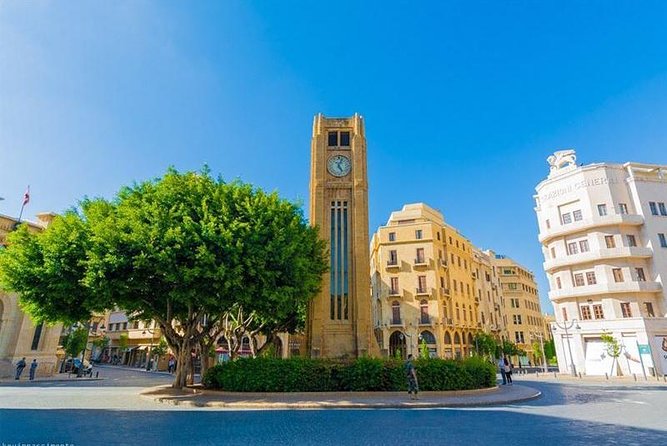
Beirut Souks provides a modern commercial counterpoint to the old mosques and cathedral. The district includes more than 200 shops, 25 restaurants and cafes, an entertainment center, and a cinema complex.
The scheduled visit is about 10 minutes, so you will not have time to shop seriously. I see this stop as a quick look at the rebuilt commercial center, not a dedicated shopping excursion. If buying clothing, gifts, or local products is important to you, ask whether the route can be adjusted.
The Roman Berytus Baths bring the tour back to antiquity. The baths were discovered in 1968 and 1969 and underwent major renovation in the mid-1990s. Ancient Berytus had four major bath complexes, with the first created in the early first century under Augustus.
An earthquake in 551 AD destroyed the baths. Today, the remains help show how public bathing shaped Roman city life, and one bath area is used for artistic performances and concerts. The 15-minute stop is enough to see the outdoor remains and hear the main facts, but it is another place where a return visit would reward anyone with a strong interest in archaeology.
The final stop is a fitting one. You have moved from Beirut’s natural coast through modern commerce, Ottoman memory, religious buildings, civil-war reminders, and Roman remains. Few short city tours can give you that range without spending the whole day on the road.
Transport, timing, and the value of a private guide
Hotel pickup and drop-off are included, along with comfortable air-conditioned private transportation. That matters in a city tour with stops spread across the coast and downtown. You do not need to arrange separate taxis or work out how to connect each location.
The five-hour duration is long enough for a useful introduction, yet short enough to leave the rest of your day free. You could use the afternoon for a meal, additional shopping, or a return to the place that caught your attention most.
The guide and driver handle the route and other practical details. Albert, specifically praised for being professional, engaging, and flexible, is a good example of what you should want from this format. The most useful guide is not simply someone who recites dates. You want someone who listens when you say you would rather spend more time at the coast, see another downtown site, or focus on Beirut’s religious history.
Since this is a private activity, only your group participates. That makes it a better fit for families, couples, friends, or small groups with mixed interests than a fixed coach tour. It also makes the $75 price more appealing when divided among several people, especially with group discounts available.
The tour is suitable for most people, and confirmation is provided at booking. Lunch is not included, so plan around that. Free cancellation is available if you cancel at least 24 hours before the start time. Changes or cancellations made later are not accepted, and the local start time controls the deadline.
Who should book this Beirut tour?
I would choose this experience if you have only half a day in Beirut, are visiting for the first time, or want a private introduction before exploring on your own. It also suits anyone who prefers a car and guide to a fixed group schedule.
You should be comfortable with a fast pace. Ten or 15 minutes at a site can feel short, especially at the Roman baths, Saint George Cathedral, or the downtown mosques. If you want long interior visits, extended shopping, or a relaxed coastal walk, you may need to customize the route and remove some stops.
The tour is also a good choice for groups that cannot agree on one theme. Beirut’s mix of ancient remains, religious buildings, war history, and waterfront districts gives your guide plenty to work with. The key is to discuss your priorities at the beginning rather than wait until the final stop.
Should you book the Half-Day Private Panoramic Tour of Beirut?
Book it if you want breadth, flexibility, and simple transport in one morning. The route covers Beirut’s main visual landmarks and gives you enough historical context to make later independent exploring more rewarding.
Skip it if your priority is a slow, specialist visit to one subject, such as Roman archaeology, religious art, or the Lebanese Civil War. For most first-time visitors with limited time, though, the private format and adaptable guide make $75 per person a reasonable way to get oriented without surrendering your entire day.
FAQ
How long does the Beirut panoramic tour last?
The tour lasts approximately five hours, including the scheduled sightseeing stops and private transportation.
Is hotel transportation included?
Yes. Pickup and drop-off at your Beirut hotel are included, along with private, air-conditioned transportation.
Is this a private tour?
Yes. Only your group participates in the activity.
Can the itinerary be customized?
Yes. The route can be tailored to your group’s interests rather than following only a fixed itinerary.
Is lunch included?
No. Lunch is not included in the tour price.
What is the cancellation policy?
You can cancel for a full refund if you do so at least 24 hours before the experience start time. Cancellations or changes made less than 24 hours before the start time are not accepted for a refund.
Newest Beirut reviews
- Wine Tasting Tour★ 5.0 · 2 reviews
- Journey Through Time: Half-Day Private Tour to Baalbek★ 5.0 · 3 reviews
- Lebanon’s Treasures: Jeita Grotto and Harissa Private Tour★ 5.0 · 2 reviews
- Traveling Spoon Lebanese Mezze Private Online Cooking Class★ 5.0 · 4 reviews
- Wine Tasting and Culture★ 5.0 · 3 reviews
- Small Group Tour to Baalbek, Anjar & Ksara with Hotel pickup★ 5.0 · 2 reviews
- Small Group Tours to Jeita Grotto and Byblos with tickets★ 5.0 · 3 reviews
- Small-Group Tour with Lunch to Baalbek, Anjar and Ksara★ 5.0 · 3 reviews
Private, compared.
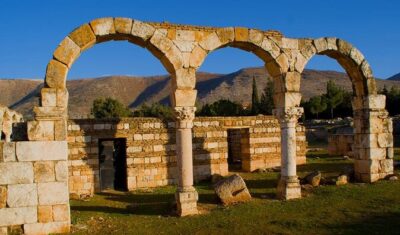
Private Anjar and Baalbek Tour from Beirut with Departure Ticket
Read our review →
Guided Private Full Day Tour to Baalbek, Anjar and Chateau Ksara
Read our review →
Semi-Private Tour to Jeita Grotto, Harissa & Byblos with Lunch
Read our review →
PRIVATE city Tour of authentic Tripoli and vibrant Batroun
Read our review →
Private Guided Tour to Jeita Grotto through Harissa and Byblos
Read our review →
Jeita Grotto, Harissa & Byblos Private Day Tour
Read our review →