
Review · BAALBEK & BEKAA VALLEY TOURS
Small Group Tours to Baalbek, Anjar & Chateau Ksara with lunch and Tickets
Lebanon packs a lot into one day. This small-group tour from Beirut links the Roman temples of Baalbek, the Umayyad ruins at Anjar, and Château Ksara’s wine cellars in about nine hours. You get hotel pickup, an air-conditioned minivan, a local guide, lunch, and a group capped at 15 people.
I especially like the three very different stops and the fact that lunch is part of the plan rather than an afterthought. I also like the access to local expertise: Natasha, an archaeologist, has guided this route, while Khalil and Ziad have each earned praise for their care and clear explanations. The main consideration is the long road day, plus the fact that Château Ksara’s admission is listed separately from the other included site tickets.
You pay $75 per person, which is a fair price for a full day with transport, guiding, lunch, and entry to Baalbek and Anjar. If your Beirut visit is short, this is an efficient way to reach the Bekaa Valley without arranging several separate trips.
In This Review
- Key points to know before booking
- Why this three-stop route works so well
- Baalbek’s Roman temples and colossal stones
- The Stone of the Pregnant Woman and Roman ambition
- A brief look at the Mosque of Sayyeda Khawla
- Anjar’s Umayyad city of trade and power
- Lebanese lunch at a local restaurant
- Château Ksara and Lebanese wine in the Bekaa Valley
- What the $75 price really gives you
- Guides, group size, and the feel of the day
- Who should book this day trip?
- FAQ
- How long does the tour last?
- Is hotel pickup included?
- How many people can join the tour?
- Are entrance tickets included?
- Is lunch included?
- What happens if the weather is poor?
- Should you book it?
Key points to know before booking
- Baalbek takes center stage: Allow about 90 minutes for one of the finest Roman temple complexes in the region.
- The Stone of the Pregnant Woman adds scale: This short stop helps explain how enormous Roman building projects really were.
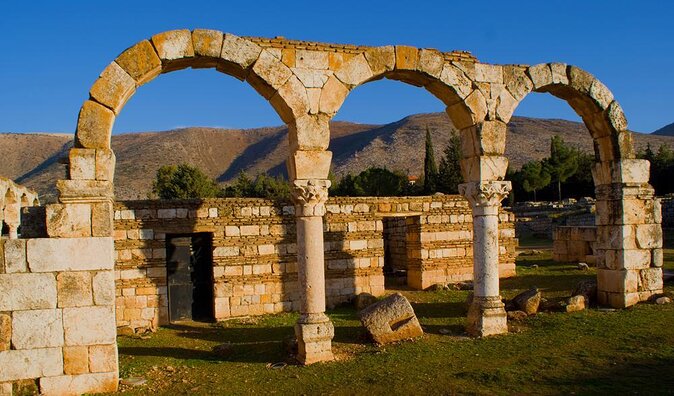
- Anjar offers a different era: Its Umayyad palace, mosque, baths, and arcades show a planned inland city rather than another Roman sanctuary.
- Ksara brings Lebanon into the present: You can learn about winemaking, see the on-site cave, and taste several wines.
- Lunch is a major part of the value: The local Lebanese meal has received especially strong praise for both quality and size.
- The small van matters: A maximum of 15 people makes questions and guide contact easier than on a large coach.
Why this three-stop route works so well
The clever part of this outing is the contrast. Baalbek is monumental and ceremonial. Anjar is urban and Islamic, with a grid of ruins that reveals how people lived and traded. Ksara shifts the focus to agriculture, production, and modern Lebanese culture.
That variety keeps the day from feeling like a parade of similar ruins. You also get a useful sense of the Bekaa Valley as a place shaped by roads, farming, religion, empire, and commerce. The itinerary is busy, but each stop has a clear purpose.
The tour begins at about 8:00 a.m. with hotel pickup in Beirut. From there, you ride in a climate-controlled private minivan. A small vehicle is a real advantage on a long day, since it makes the road time more comfortable and keeps the group together without the feel of a large excursion bus.
The total duration is about nine hours. That includes transport, guided visits, lunch, and the wine stop, so you should expect a full day rather than a relaxed half-day outing. The trade-off is simple: you cover much more ground than you could easily manage alone, but you will not have unlimited time at every site.
More runs out to the Bekaa and its Roman temples:
- Guided Small-Group Tour to Baalbek, Anjar and Ksara with Lunch
★ 5.0 · 511 reviews - Anjar, Baalbek & Ksara Day Trip – With Lunch (4G on Board)
★ 4.5 · 181 reviews - Baalbek – Anjar – Ksara Trip From Beirut
★ 4.5 · 80 reviews
Baalbek’s Roman temples and colossal stones
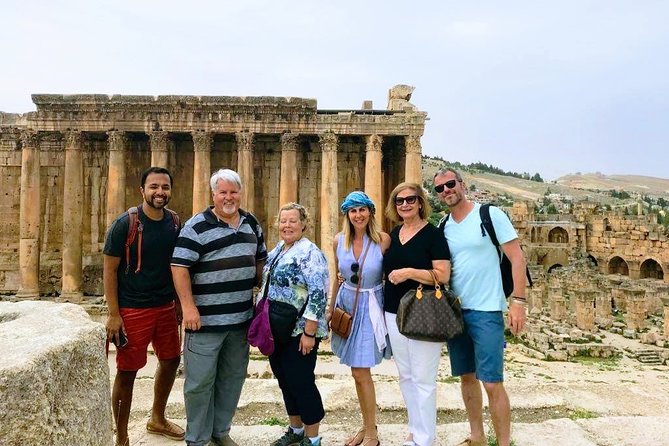
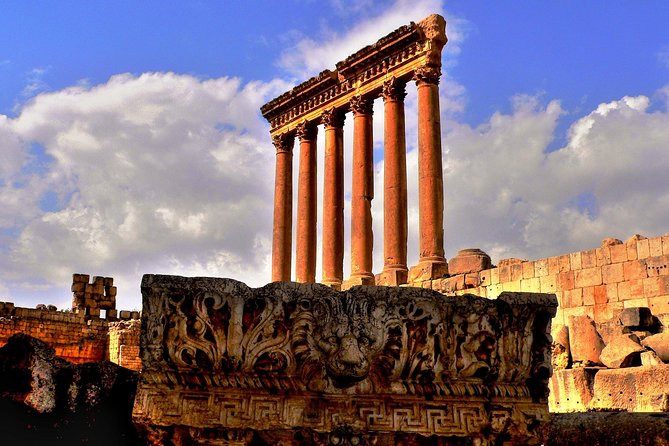
Baalbek is the main reason to book this trip. The ancient sanctuary sits at about 1,150 meters near the southwestern slope of the Anti-Lebanon range, beside the fertile Bekaa Valley. In Roman times, the city reached its peak, and construction continued for more than two centuries.
The complex was dedicated to the Romanized Triad of Heliopolis: Jupiter, Venus, and Bacchus. Those names reflect a Roman presentation of an older Phoenician religious tradition. That layering is part of what makes Baalbek so interesting. You are not looking at a single, simple culture, but at a sacred place reshaped by different powers over time.
You should expect about 90 minutes at the temples, with admission included. That is enough to see the main structures and hear the essential background, though anyone who loves ancient architecture could easily spend much longer studying the stones.
The scale is the first thing that hits you. Baalbek was built to impress pilgrims and rulers, and it still does. The enormous columns, platforms, and carved blocks show the engineering confidence of imperial Rome. Even if you are not an archaeology specialist, the site gives you a clear sense of how religion and political power were joined in the ancient world.
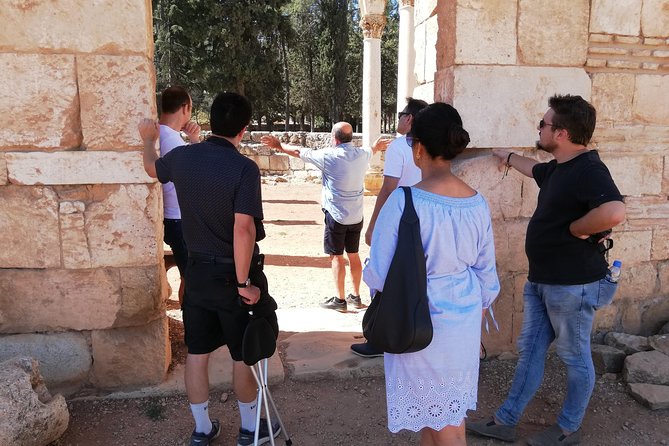
A guide makes a real difference here. Natasha, an archaeologist who has led the tour, is particularly well suited to a place where construction methods, religious change, and Roman design all matter. You should use the small-group format to ask about the temple plan, the deities, and how the sanctuary fits into the wider ancient world.
One practical point: Baalbek is not a quick photo stop. Wear shoes suitable for uneven ancient stone, and give yourself a moment to look upward and outward rather than only at the details underfoot. The altitude and long day may also make the pace feel more demanding than a city walking tour.
The Stone of the Pregnant Woman and Roman ambition
The Stone of the Pregnant Woman is a brief stop, listed at about 15 minutes, but it helps put Baalbek’s scale into perspective. This worked Roman monolith, along with another large block nearby, is among the biggest ancient stones ever quarried.
The stone was likely intended for the nearby temple complex. Its importance is not only visual. It raises practical questions about quarrying, moving, and lifting blocks of a size that seems almost unreasonable even today.
You will not spend long here, and admission is free. That is appropriate. The stop works best as a short lesson in Roman building ambition, not as a separate major attraction. Listen to the explanation, take in the size, and save your energy for the main temple area and the later sites.
A brief look at the Mosque of Sayyeda Khawla
The route also includes a stop at the Mosque of Sayyeda Khawla in Baalbek. It is built at the site where Sayyida Khawla, the daughter of Imam al-Hussein, is believed to have been buried.
The local belief connects the site with the caravan of captives from Karbala and Khawla’s death and burial at Baalbek. This adds a living religious dimension to the ancient city. You are not only moving between archaeological remains. You are also seeing how Baalbek continues to carry meaning for local communities.
The supplied schedule does not give a fixed duration for this visit, so your time there may depend on the day’s pacing. Treat it as a respectful cultural stop and follow your guide’s instructions about appropriate behavior.
Other Lebanese wine estates worth the drive:
- Guided Private Full Day Tour to Baalbek, Anjar and Chateau Ksara
★ 5.0 · 60 reviews - Lebanon tour Baalbek ruins & Ksara w/pick-up, lunch,guide+entries
★ 5.0 · 35 reviews - Baalbek Temples & Ksara Caves w/pick-up,guide, entries+lunch
★ 4.9 · 34 reviews - Lebanon Wine Tasting Tour From Beirut
★ 4.5 · 25 reviews
Anjar’s Umayyad city of trade and power
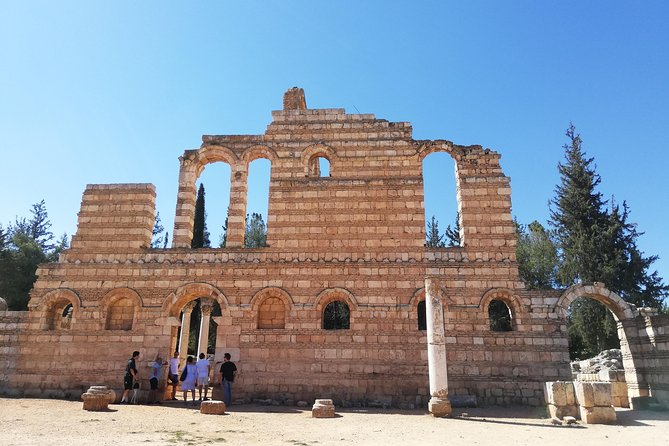
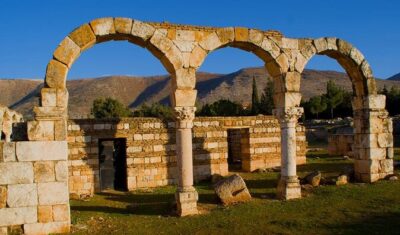
Anjar changes the mood completely. Instead of a vast Roman sanctuary, you see the remains of an Umayyad city built at a crossroads. One route connected Beirut with Damascus. Another crossed the Bekaa toward Homs and Tiberiade.
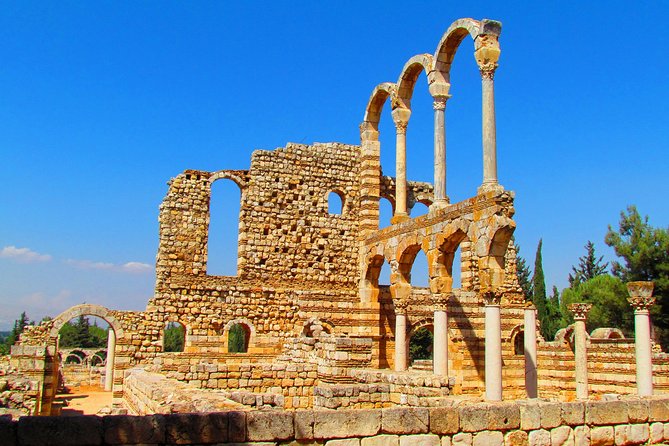
That location explains the site’s purpose. Anjar was an inland commercial center, positioned to benefit from movement between major cities and regions. Its ruins include the city walls, a mosque, the caliph’s great palace, a smaller palace and harem area, thermal baths, and many columns.
The site was only uncovered by archaeologists in the late 1940s, which gives it a different feel from Baalbek. Anjar is not simply a famous ancient monument that has been visible for centuries. Its rediscovery helped bring an important Umayyad urban center back into public view.
You have about 45 minutes here, with admission included. That is enough for an introduction to the main ruins, though it is a fairly brisk visit. I would pay attention to the street plan and the relationship between the buildings. The Roman-style columns are easy to notice, but the larger story is the city’s organization as a place of government, trade, worship, and bathing.
The Roman architectural influence is especially useful for understanding cultural continuity. Anjar belongs to the Umayyad period, yet its builders used forms associated with earlier Roman construction. Empires change, but building techniques and visual ideas often continue.
If Baalbek is about grand sacred monuments, Anjar is about how a city functioned. That contrast is one of the tour’s strongest features.
Lebanese lunch at a local restaurant
Lunch is included, and it is more than a convenient break between ruins. A local Lebanese meal gives the day a necessary change of pace and lets you experience food as part of the region’s culture.
The meal has been praised for being both delicious and generous, with one description calling it sumptuous. The exact dishes are not specified, so you should not book expecting a particular menu. What you can count on is that lunch is arranged at a local Lebanese restaurant rather than left for you to solve on your own.
This matters on a nine-hour trip. You avoid losing time searching for food, and the guide or driver can help keep service organized. Ziad, one of the drivers associated with the tour, has been specifically praised for making sure lunch was served properly.
If you have dietary restrictions, ask the operator before departure. The supplied information does not state how special diets are handled, so it is better to confirm than assume.
Château Ksara and Lebanese wine in the Bekaa Valley
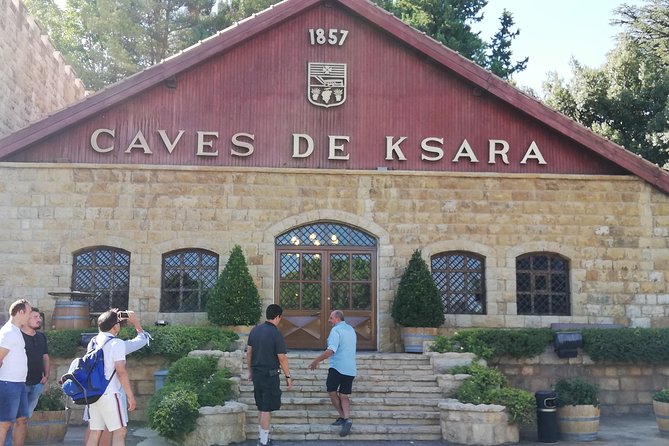
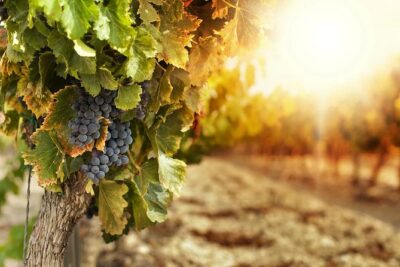
The final major stop is Château Ksara, founded by Jesuit priests in 1857. The winery developed Lebanon’s first dry wine and now produces roughly three million bottles each year, with its wines available in several countries.
The visit lasts about an hour. You go behind the scenes to learn how Lebanese wine is made, look into the on-site cave, and taste several wines. After ancient temples and palace ruins, this is a useful reminder that the Bekaa Valley is not only a place of archaeology. It is also a working food and wine region.
The wine tasting gives the day a social finish, but it is worth reading the ticket details carefully. Baalbek and Anjar admission are included, while the Château Ksara stop is listed as admission not included. The tour description also presents the wine tasting as part of the experience, so confirm exactly what the $75 covers at booking.
You should also plan sensibly if you will be tasting wine and then riding back to Beirut. The air-conditioned minivan provides the transport, and the guide can explain the winery process without requiring you to arrange a separate driver.
Ksara is a good stop for anyone curious about Lebanese wine, but it may be less important to you if your sole goal is ancient history. In that case, the first two sites are the core of the outing, while Ksara provides variety and a relaxed ending.
What the $75 price really gives you
At $75 per person, the price is strong for the amount covered. You receive hotel pickup and drop-off, a local guide, a tour leader, an air-conditioned vehicle, lunch, and entry to the main archaeological sites.
The cost also saves you the trouble of combining several destinations by taxi or arranging a private driver for a long day. The small group, capped at 15, adds value because you can ask questions and hear explanations without competing with a crowd.
The main qualification is the Ksara admission detail. Since that item is not clearly included in the supplied inclusions, check before paying. Also remember that this is a set group route, not a private tour. You will follow the planned timing, especially at Anjar and the Stone of the Pregnant Woman.
The tour is particularly good value if you have limited time in Beirut. It gives you a major Roman site, an Umayyad site, wine, and lunch in a single organized day. If you prefer slow museum visits or long independent photography sessions, the schedule may feel tight.
Guides, group size, and the feel of the day
The strongest praise goes to the human side of the experience. Natasha’s archaeology background adds depth at Baalbek and Anjar. Khalil has been singled out as an engaging guide at Baalbek, and Ziad has been praised for looking after the group and keeping lunch running smoothly.
Those details matter because a history-heavy day can become a blur of names and dates. A guide who explains why a site matters, rather than only pointing out stones, gives you a much better return on your time.
The group limit of 15 is a sensible middle ground. You get more personal attention than on a large coach tour, while the cost remains far below a private excursion. Hotel transfers also make the morning easier, since you do not need to reach a distant meeting point.
The overall rating is 5 out of 5 from 29 reviews, with 100 percent recommending the experience. That is a strong record, though the small number means you should still judge the format against your own interests and energy level.
Who should book this day trip?
I would recommend this tour if you are staying in Beirut and want to see Baalbek without managing a long intercity journey yourself. It also suits first-time visitors who want a clear introduction to Lebanon’s Roman, Umayyad, religious, and wine-making traditions.
It is a good match for people who enjoy guided archaeology, local food, and a little variety. The small group should appeal to you if you like asking questions but do not want to pay private-tour prices.
You might choose another option if you want a slow, specialist visit focused only on Baalbek. The nine-hour schedule covers a lot, and the 45-minute Anjar visit is designed as an overview rather than an exhaustive archaeological study.
Free cancellation is available if you cancel at least 24 hours before the 8:00 a.m. start time. Changes made inside that window are not accepted, and poor weather may lead to a new date or a full refund.
FAQ
How long does the tour last?
The experience lasts approximately nine hours and starts at 8:00 a.m.
Is hotel pickup included?
Yes. Hotel pickup and drop-off in Beirut are included.
How many people can join the tour?
The group has a maximum of 15 travelers.
Are entrance tickets included?
Admission to the Temples of Baalbek and the Umayyad ruins of Anjar is included. The Stone of the Pregnant Woman is free. Château Ksara is listed as admission not included, so confirm the exact wine-stop charges before booking.
Is lunch included?
Yes. Lunch at a local Lebanese restaurant is included.
What happens if the weather is poor?
The experience requires good weather. If it is canceled because of poor weather, you will be offered another date or a full refund.
Should you book it?
Book this tour if you want a well-organized day from Beirut that combines Lebanon’s most striking Roman ruins with Anjar’s Umayyad remains, a substantial Lebanese lunch, and a Lebanese wine tasting. The $75 price is persuasive, especially with transport, guiding, lunch, and key site tickets included.
Before booking, confirm what Château Ksara admission covers and be ready for a long, full schedule. If those conditions suit you, this is one of the more useful ways to see the Bekaa Valley in a single day.
More Lunch Experiences in Beirut
- Guided Small-Group Tour to Jeita, Harissa, Byblos with Lunch
★ 5.0 · 361 reviews - Byblos, Jeita Grotto & Harissa Day Trip -With Lunch (4G on Board)
★ 4.5 · 145 reviews - Semi-Private Tour to Jeita Grotto, Harissa & Byblos with Lunch
★ 5.0 · 52 reviews - Sidon, Tyre & Maghdouche Day Trip – With Lunch (4G on Board)
★ 4.5 · 44 reviews
Newest Beirut reviews
- Wine Tasting Tour★ 5.0 · 2 reviews
- Journey Through Time: Half-Day Private Tour to Baalbek★ 5.0 · 3 reviews
- Lebanon’s Treasures: Jeita Grotto and Harissa Private Tour★ 5.0 · 2 reviews
- Traveling Spoon Lebanese Mezze Private Online Cooking Class★ 5.0 · 4 reviews
- Wine Tasting and Culture★ 5.0 · 3 reviews
- Small Group Tour to Baalbek, Anjar & Ksara with Hotel pickup★ 5.0 · 2 reviews
- Small Group Tours to Jeita Grotto and Byblos with tickets★ 5.0 · 3 reviews
- Small-Group Tour with Lunch to Baalbek, Anjar and Ksara★ 5.0 · 3 reviews
Baalbek & Bekaa Valley Tours, compared.
Guided Small-Group Tour to Baalbek, Anjar and Ksara with Lunch
Read our review →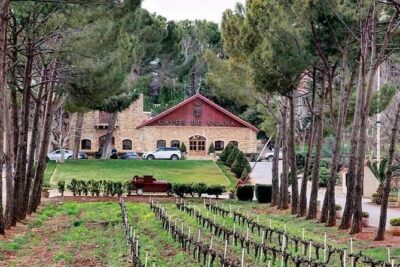
Anjar, Baalbek & Ksara Day Trip – With Lunch (4G on Board)
Read our review →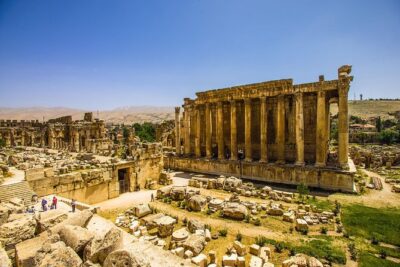
Private Anjar and Baalbek Tour from Beirut with Departure Ticket
Read our review →
Guided Private Full Day Tour to Baalbek, Anjar and Chateau Ksara
Read our review →
Lebanon tour Baalbek ruins & Ksara w/pick-up, lunch,guide+entries
Read our review →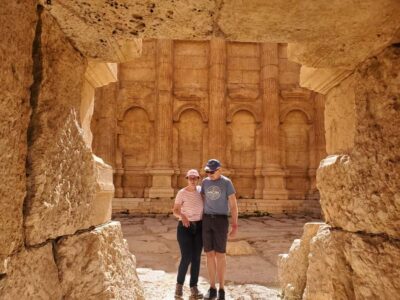
Baalbek Temples & Ksara Caves w/pick-up,guide, entries+lunch
Read our review →
Private Tour: Anjar, Baalbek and Ksara Day Trip from Beirut
Read our review →Browse the lists this tour appears in