
Review · SIDON & TYRE TOURS
Small-Group Tour with Lunch to Sidon, Tyre & Maghdouche
Ancient ports, Roman ruins, and a Lebanese lunch make this a full day. From Beirut, this southbound trip packs several important sites into roughly eight hours, with stops in Sidon, Maghdouche, and Tyre. I especially like the small group of no more than 15 people, which should make the day easier to manage than a large coach outing, and the chance to see both working old-town streets and major archaeological remains. I also like that lunch and hotel pickup are included, though you should confirm the entrance-fee details before booking because the tour information gives conflicting answers about two sites.
The route covers a lot of ground, so this is not a slow, lingering visit to each city. You will get a useful introduction to southern Lebanon, guided context at the historic sites, and time to look around on foot. Guide Hassan received particular praise for being informative, helpful, flexible, and easy to communicate with, which matters on a busy day with several moving parts.
In This Review
- Five Things To Know Before You Go
- Why This Southbound Route Works
- Sidon: Phoenician Beginnings and a Living Old Town
- The Crusaders Sea Castle
- Khan al-Franj and Its Courtyard
- Sidon’s Souks
- Maghdouche and the Shrine of Our Lady of Mantara
- Tyre: The Main Archaeological Payoff
- The Tyre Hippodrome
- Lebanese Lunch Makes the Day Easier
- Transport, Timing, and Group Size
- Who Will Get the Most From This Tour?
- Booking Advice and Final Verdict
- FAQ
- What time does the tour begin?
- How long does the experience last?
- Is hotel pickup available?
- How many people can join the tour?
- Is lunch included?
- Are entrance fees included?
- Can I cancel for a full refund?
Five Things To Know Before You Go
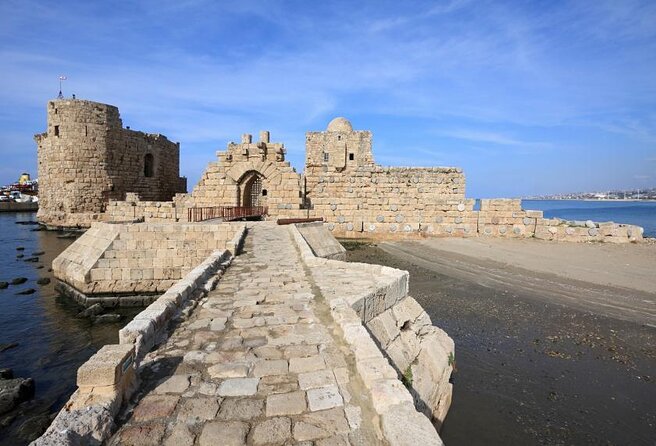
- Sidon combines a Crusader fortress, an old khan, and narrow souks in a compact historic center.
- Tyre offers the strongest Roman remains, including a large second-century hippodrome and two major archaeological zones.
- Maghdouche adds a religious and local dimension, with a shrine, tower, church, cemetery, and sacred cave.
- Lunch is included, giving you a chance to eat Lebanese food as part of the day rather than arrange another stop.
- The group is capped at 15 people, with an air-conditioned vehicle and a start time of 8:30 a.m.
- Check admission costs in advance, since the general description says entrance fees are included, while the detailed schedule excludes the Sea Castle and Tyre Hippodrome.
Why This Southbound Route Works
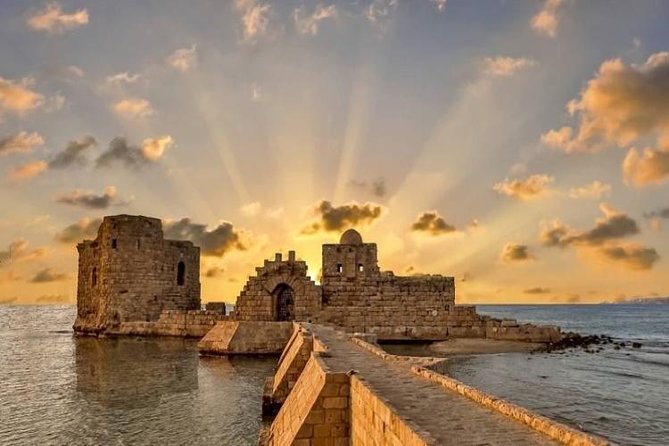
Lebanon’s southern coast gives you several layers of the country in one outing. Sidon brings Phoenician origins, Crusader architecture, Ottoman-era commercial buildings, and a working souk. Maghdouche offers a short but meaningful stop at a Christian shrine. Tyre then supplies the grand Roman remains and the strongest archaeological focus of the day.
I like this mix because you are not spending eight hours looking only at ruins. You move between a port city, a market district, a hilltop religious site, and an ancient city with wide archaeological grounds. That variety helps the day feel connected to present-day Lebanon rather than sealed inside a history lesson.
The trade-off is pace. The schedule gives two hours for Sidon and two hours for Tyre, but those blocks include several separate stops. The Sea Castle gets about 30 minutes, Khan al-Franj 15 minutes, and the souks another 15 minutes. That is enough to see the main points, but not enough for an unhurried shopping trip or a long museum visit.
You should also expect a fairly long day in a vehicle. The air-conditioned transport is useful, especially during warmer months, but this is still a touring route rather than a single-site excursion. The small group helps with timing and communication, while the tour leader and guide provide structure.
Other days along the southern coast:
- Small-Group Adventure Tour to Sidon Tyre & Maghdouche-Day Trip
★ 5.0 · 45 reviews - Sidon, Tyre & Maghdouche Day Trip – With Lunch (4G on Board)
★ 4.5 · 44 reviews - Guided Small-Group Tour to Sidon, Tyre & Maghdouche with Lunch
★ 5.0 · 41 reviews
Sidon: Phoenician Beginnings and a Living Old Town
Sidon is one of the oldest Phoenician cities, with foundations reaching back to the third millennium BC. It grew prosperous through maritime trade, purple dye made from sea snails, and glass production. That background gives the city a strong connection to the wider Mediterranean world, long before the Roman or Crusader periods.
The city also appears in the New Testament, with Jesus recorded as having visited Sidon. Later, it changed hands repeatedly during the Crusades and suffered destruction before being rebuilt. You do not need to memorize every dynasty to appreciate the place. The useful point is that Sidon has been rebuilt and reused many times, and its streets reflect that long sequence.
The two-hour Sidon portion is divided among several locations. That arrangement lets you see the city from different angles, but you will need to keep an eye on the clock.
The Crusaders Sea Castle
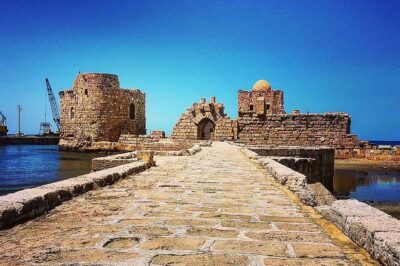
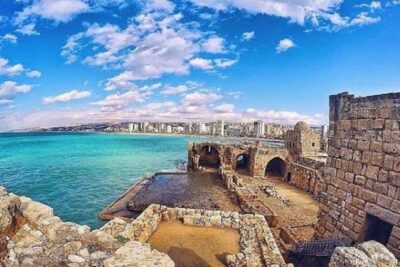
The Sea Castle sits on a small island connected to shore by a causeway. Crusaders built it in the thirteenth century as a fortress tied to the Holy Land. The Mamluks largely destroyed it in 1291, and Fakhr el-Dine Maan II later restored it in the early seventeenth century.
Only part of the original decoration remains, so you should come for the setting, walls, and layered past rather than a fully preserved medieval fortress. Old prints show a far more elaborate structure than what survives today. Even so, the position over the harbor makes this one of Sidon’s most recognizable sights.
The scheduled visit is about 30 minutes. That is a sensible amount of time for a quick look, photographs, and an explanation of the site. It is not enough for a long architectural study. The detailed tour information lists admission as not included here, despite the broader description saying entrance fees are covered. Ask the provider to clarify this point before departure.
Khan al-Franj and Its Courtyard
Khan al-Franj was built at the beginning of the seventeenth century by Emir Fakhreddine II. It began as a hotel for ambassadors and a place where Lebanon and France could conduct commercial business. Over time, it also became connected with literature, religion, history, industry, and diplomacy.
The building follows the classic khan pattern: a large rectangular courtyard with a fountain and covered galleries around the edges. I find places like this useful because they explain how trade worked on the ground. This was not simply a pretty building. It was a place for people, goods, negotiations, and official visitors.
The stop lasts about 15 minutes and admission is listed as free. That short visit should give you time to grasp the layout, but you will not have much room for a slow inspection.
A few more trips out of Beirut worth a look
- Guided Small-Group Tour to Baalbek, Anjar and Ksara with Lunch
★ 5.0 · 511 reviews - Guided Small-Group Tour to Jeita, Harissa, Byblos with Lunch
★ 5.0 · 361 reviews - Anjar, Baalbek & Ksara Day Trip – With Lunch (4G on Board)
★ 4.5 · 181 reviews - Byblos, Jeita Grotto & Harissa Day Trip -With Lunch (4G on Board)
★ 4.5 · 145 reviews
Sidon’s Souks
Sidon’s souks are still tied to daily commerce. Narrow lanes hold small shops, cafés, craft businesses, butchers, grocers, shoemakers, tailors, jewelers, and street merchants. This is the part of the route that feels least like a formal monument and most like an active city district.
The scheduled time is also about 15 minutes. I would treat that as a quick orientation, not a shopping session. If you find a craft or food item you want, you may need to decide quickly. The souks are worth seeing precisely because they are not arranged as a museum display, but that also means the short stop may feel rushed.
A separate visit to the Soap Museum is worth considering if you have extra time in Sidon before or after the tour. It was specifically praised as a worthwhile stop, but it is not included in the stated route, so do not assume you will visit it during this day.
Maghdouche and the Shrine of Our Lady of Mantara
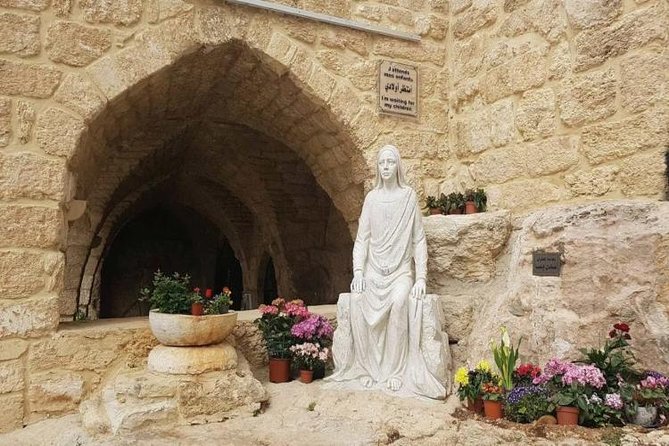
The route then moves to Maghdouche for the Basilica of Our Lady of Mantara, also called Our Lady of Awaiting. The Melkite Greek Catholic shrine was discovered on September 8, 1721, by a young shepherd.
The site includes a tower topped with a statue of the Virgin and Child, a cathedral, a cemetery, and a sacred cave. The cave is believed to be where the Virgin Mary rested while waiting for Jesus. That belief gives the stop its central meaning, while the tower and church provide a clear visual focus.
Only about 15 minutes are scheduled here. You can take in the main shrine area and hear the story, but this is a brief visit rather than a lengthy religious or architectural tour. If you value sacred places, the stop adds something different from the coastal ruins. If your main interest is ancient archaeology, you may find it less compelling than Tyre.
The site also shows why this excursion is more than a Roman-ruins circuit. Lebanon’s past is not one straight line. Phoenician, Greek, Roman, Crusader, Ottoman, and Christian traditions all appear during the day.
Tyre: The Main Archaeological Payoff
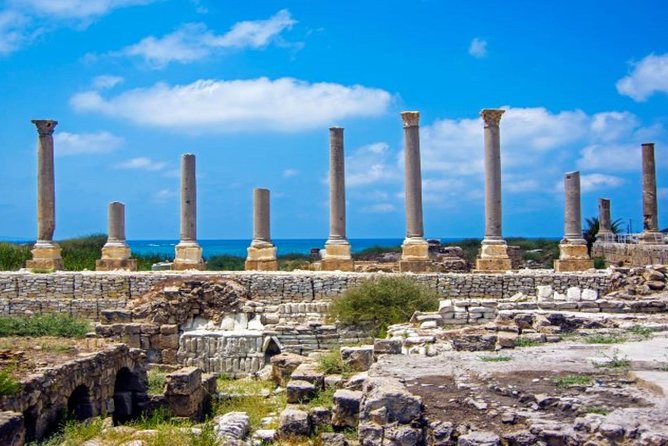
Tyre is the major stop for ancient history. The Phoenician port dates back to approximately 2750 BC and later came under Egyptian rule before flourishing under King Hiram. It was famous for purple dye produced from murex sea snails, a luxury product that helped give the city international importance.
Tyre is also linked with Elissar, the Phoenician princess traditionally associated with the founding of Carthage. The city later passed through Greek, Seleucid, Roman, Byzantine, Arab, Crusader, Mamluk, and Ottoman control. That long sequence can sound like a list, but the remains make the changes easier to understand.
The archaeological sites are commonly divided into Al-Bass and Al-Mina. Together, they show why Tyre has UNESCO World Heritage status. The city also has a seaside setting and well-regarded beaches, so you get a sense of both its ancient importance and its modern appeal.
About two hours are allocated to Tyre. That is the longest single city block on the tour, though one hour is specifically assigned to the hippodrome. You will see the key features, but you should not expect to cover every corner of both archaeological areas at a leisurely pace.
The Tyre Hippodrome
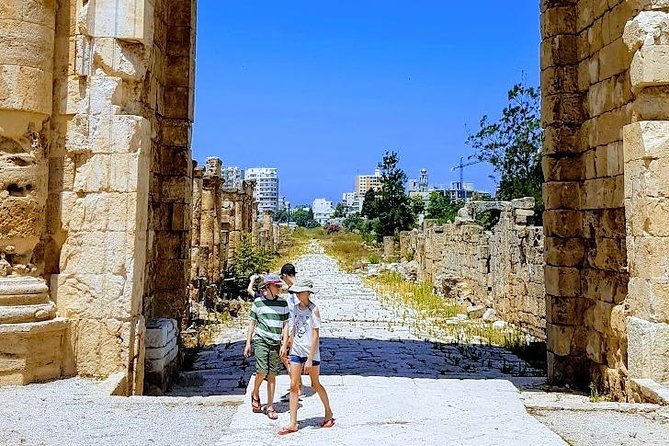
The second-century Roman hippodrome is the most striking single monument on the route. It is described as one of the largest and best-preserved Roman hippodromes of its type in the Roman world. The scale is the point: this was a venue built for major public events, not a small local track.
The long stone structure helps you picture Roman entertainment and civic life. It also gives the day its clearest connection to the imperial period. The ancient Roman ruins are the part of the excursion most likely to stay with you, especially if you enjoy seeing how large public buildings were planned.
The scheduled visit is one hour. That gives you time to walk around, listen to the guide, and study the surviving stonework. Admission is marked as not included in the detailed schedule, again conflicting with the general statement that all entrance fees are covered. Confirm the current arrangement before you pay.
Lebanese Lunch Makes the Day Easier
Lunch is included and is described as an authentic Lebanese meal, eaten in the local style. The available information does not specify the restaurant, menu, or whether drinks are included, so you should not book this expecting a particular dish or dining room.
Still, included lunch has real value on a tightly timed day. You do not need to spend part of the excursion searching for a place to eat, checking prices, or negotiating a menu while the group waits. It also gives the guide a natural opportunity to explain local food and customs, if the schedule allows.
The meal should be viewed as practical as well as cultural. At $60 per person, a day of transport, a guide, a tour leader, and lunch is a fair package, especially for a small group. The value depends partly on the entrance-fee question. If the two marked admissions require extra payment, add that cost when comparing this tour with arranging a private driver or visiting independently.
Transport, Timing, and Group Size
Pickup is offered, and the tour begins at 8:30 a.m. The air-conditioned vehicle is important because the route includes outdoor archaeological areas and several hours on the road. Comfortable transportation will make a noticeable difference on a full eight-hour schedule.
The maximum group size is 15 people. That is small enough for a guide to answer questions and for the group to move through narrow streets more easily than a large bus party. It is not a private tour, so you will still follow a shared timetable and wait for other members of the group.
The role of the guide matters here. Hassan was singled out for being informative, helpful, flexible, and clear in communication. Those qualities are especially useful when a day includes several short stops, a working market, and sites with different historical periods.
The itinerary says most people can participate, but it does not provide detailed accessibility information. If you need specific support, ask the provider before booking. The Sea Castle causeway, old souks, archaeological grounds, and shrine may involve walking on uneven surfaces, though the supplied details do not specify the exact conditions.
Who Will Get the Most From This Tour?
I would recommend this outing to you if you have limited time in Beirut and want a broad introduction to Lebanon’s southern coast. It suits people who enjoy history but also want local streets, religious sites, food, and a seaside city in the same day.
It is also a good fit if you prefer a planned excursion to working out transport between three destinations yourself. Pickup, an air-conditioned vehicle, a guide, a tour leader, lunch, and a group capped at 15 remove much of the day’s practical work.
You may want a different plan if you prefer long museum visits, extended shopping, or quiet time at each ruin. The short Sidon stops and the brief Maghdouche visit are designed for coverage, not leisurely exploration. Independent visitors with several days in Lebanon could spend more time in Sidon and Tyre separately.
Families and first-time visitors may appreciate the structure, provided everyone is comfortable with a full day of transport and walking. History fans should give Tyre priority, while shoppers and architecture lovers may wish for more time in Sidon’s souks and khans.
Booking Advice and Final Verdict
At $60, this is a strong-value day trip if you want several southern destinations without arranging transport and meals yourself. The best parts are the variety, the Roman remains at Tyre, the compact old-town sights in Sidon, and the small-group format.
Before booking, get a clear answer about admission to the Sea Castle and Tyre Hippodrome. The stated information says both that all entrance fees are included and that these two tickets are not included. That is the one practical uncertainty in an otherwise straightforward package.
You can cancel free of charge up to 24 hours before the start time for a full refund. Changes or cancellations inside that 24-hour window are not accepted for a refund. If you book, keep the 8:30 a.m. start and the full eight-hour commitment in mind.
I would book this tour if you want an efficient, well-supported introduction to Sidon, Maghdouche, and Tyre. I would skip it only if your main goal is slow archaeological study or extensive time in one city. For most visitors based in Beirut, the combination of ancient ports, Crusader remains, a Christian shrine, Roman ruins, and Lebanese lunch makes the $60 price easy to justify, provided the ticket issue is settled first.
FAQ
What time does the tour begin?
The tour starts at 8:30 a.m.
How long does the experience last?
The tour lasts approximately eight hours.
Is hotel pickup available?
Yes. Pickup is offered, although the provided information does not list the exact pickup locations.
How many people can join the tour?
The maximum group size is 15 people.
Is lunch included?
Yes. An authentic Lebanese lunch is included.
Are entrance fees included?
The general tour description says all entrance fees are included, but the detailed stop information lists admission as not included for the Crusaders Sea Castle and the Tyre Hippodrome. Confirm this point with the provider before booking.
Can I cancel for a full refund?
Yes. You can cancel at least 24 hours before the local start time for a full refund. Cancellations or changes made less than 24 hours before the start time are not accepted for a refund.
Newest Beirut reviews
- Wine Tasting Tour★ 5.0 · 2 reviews
- Journey Through Time: Half-Day Private Tour to Baalbek★ 5.0 · 3 reviews
- Lebanon’s Treasures: Jeita Grotto and Harissa Private Tour★ 5.0 · 2 reviews
- Traveling Spoon Lebanese Mezze Private Online Cooking Class★ 5.0 · 4 reviews
- Wine Tasting and Culture★ 5.0 · 3 reviews
- Small Group Tour to Baalbek, Anjar & Ksara with Hotel pickup★ 5.0 · 2 reviews
- Small Group Tours to Jeita Grotto and Byblos with tickets★ 5.0 · 3 reviews
- Small-Group Tour with Lunch to Baalbek, Anjar and Ksara★ 5.0 · 3 reviews
Sidon & Tyre Tours, compared.
Small-Group Adventure Tour to Sidon Tyre & Maghdouche-Day Trip
Read our review →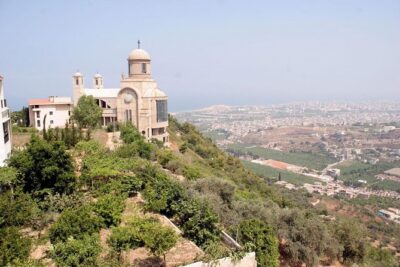
Sidon, Tyre & Maghdouche Day Trip – With Lunch (4G on Board)
Read our review →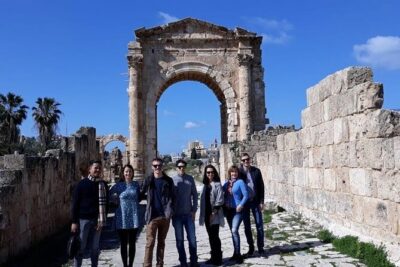
Guided Small-Group Tour to Sidon, Tyre & Maghdouche with Lunch
Read our review →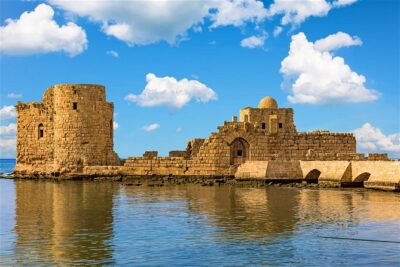
Small Group Tour to Sidon, Tyre & Maghdouche with lunch
Read our review →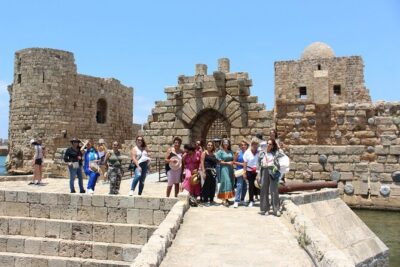
Lebanon tour Sidon & Tyre ruins with pick-up, guide,lunch+entries
Read our review →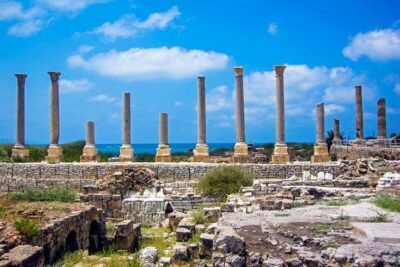
Lebanon Unveiled: Exclusive Private Tours to Sidon & Tyre
Read our review →
Browse the lists this tour appears in