
Review · JEITA GROTTO TOURS
Sightseeing all-inclusive Small Group Tour to Jeita Grotto, Harissa and Byblos
Lebanon packs ancient wonders into one day. This eight-hour small-group tour links Jeita Grotto, the hilltop shrine at Harissa, and the Phoenician port city of Byblos with hotel pickup, transport, admission tickets, a local guide, and lunch included.
I like the easy door-to-door setup, especially if you are based in Beirut and do not want to arrange three separate trips. I also like the mix of experiences: Jeita delivers striking cave formations, Harissa offers broad views over Jounieh Bay, and Byblos brings archaeology, a Crusader castle, an old market, and a historic harbor.
The trade-off is pace. You cover a lot of ground in one day, and some stops are brief. If you prefer to linger over ruins or explore Byblos slowly, this schedule may feel tight.
In This Review
- Key points to know before booking
- Why this Beirut day trip works
- Inside Jeita Grotto, Lebanon’s great cave complex
- Harissa and the statue overlooking Jounieh Bay
- Byblos, where the ancient city meets the sea
- Climbing Byblos Castle for the best site view
- A quick walk through the souk and port
- Lunch, transport, and the real value of $65
- Who should book this experience
- Should you book the Jeita, Harissa, and Byblos tour?
- FAQ
- How long does the tour last?
- Where does the tour start and end?
- How many people can join the group?
- Is lunch included?
- Are admission tickets included?
- What places does the tour visit?
- What is the cancellation policy?
Key points to know before booking
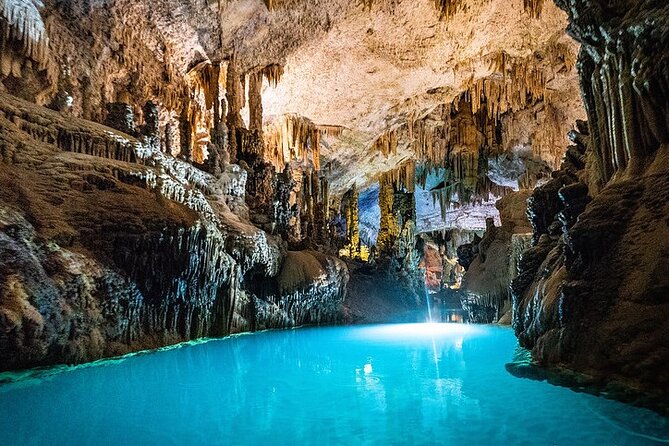
- Jeita Grotto has two very different cave levels: The upper cave is filled with stalactites, stalagmites, columns, curtains, and other limestone forms, while the lower gallery follows an underground river and lake.
- Harissa is about views as much as religion: The 15-ton statue of Our Lady of Lebanon looks toward Beirut and the Bay of Jounieh from a prominent hilltop.
- Byblos combines several sights in one historic area: You get ancient ruins, Byblos Castle, the old souk, and the port without needing another transfer.
- The group is limited to 15 people: That is small enough for a more personal outing than a large coach tour.
- The $65 price covers the costly basics: Transport, pickup and drop-off, attraction admissions, a tour leader, a local guide, and Lebanese restaurant lunch are included.
- Guide Shark is a memorable part of the experience: One account singles out the guide’s humor as a welcome lift during a full sightseeing day.
Why this Beirut day trip works

Lebanon’s major sights are spread across the coast and hills north of Beirut. Jeita Grotto is inland near the Nahr al-Kalb valley, Harissa rises above Jounieh, and Byblos sits farther north along the Mediterranean. Seeing all three independently would mean arranging transport, checking admission details, and keeping an eye on road time.
This tour handles that work for you. An air-conditioned vehicle collects you anywhere in Beirut and returns you there after the day. That matters in a country where a full day of sightseeing can become tiring once you add directions, parking, and local transport.
The group limit of 15 is another plus. You should not expect a private tour, but you are also unlikely to feel lost in a crowd. A designated tour leader and local guide provide structure, which is useful at a large archaeological site such as Byblos.
The itinerary is full. You spend about 90 minutes at Jeita Grotto, 45 minutes around the Harissa area, and roughly three hours focused on Byblos and its castle, followed by very short visits to the old souk and port. Lunch is included at a local Lebanese restaurant, though the exact menu is not specified.
Other ways to see the Jeita caves:
- Guided Small-Group Tour to Jeita, Harissa, Byblos with Lunch
★ 5.0 · 361 reviews - Jeita Grotto – Harissa – Byblos Trip
★ 5.0 · 169 reviews - Byblos, Jeita Grotto & Harissa Day Trip -With Lunch (4G on Board)
★ 4.5 · 145 reviews
Inside Jeita Grotto, Lebanon’s great cave complex
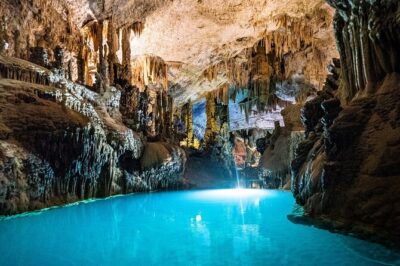
Jeita Grotto is the dramatic opening act. The cave system formed in karstic limestone over millions of years and has a vertical difference of about 305 meters. Its two sections are separate but connected, with the upper cave about 300 meters above sea level.
The upper gallery is the part known for its huge variety of mineral formations. You can expect stalactites hanging from the ceiling, stalagmites rising from the floor, columns where the two meet, and formations shaped like mushrooms, curtains, and draperies. Ponds and other crystallized forms add to the variety.
The scale is impressive. The upper cave extends about 2,130 meters, while the lower gallery runs for about 6,200 meters. The lower section sits roughly 60 meters below the upper one and includes an underground river and lake.
You have about 90 minutes here, with admission included. That is enough time for a meaningful visit, but not an open-ended cave expedition. I would treat this as a focused sightseeing stop. Pay attention to the shapes and the size of the chambers rather than trying to race from one formation to the next.
Jeita is also the stop most likely to set the pace for the rest of the day. It offers an experience that is hard to replicate elsewhere in the itinerary, so it deserves your full attention. Wear practical footwear and expect the cave visit to be visually rich, but keep in mind that the supplied information does not specify walking distances, internal transport arrangements, or accessibility details.
Harissa and the statue overlooking Jounieh Bay
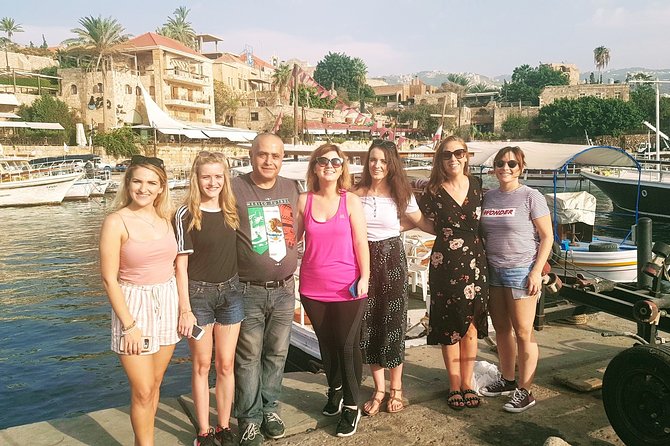
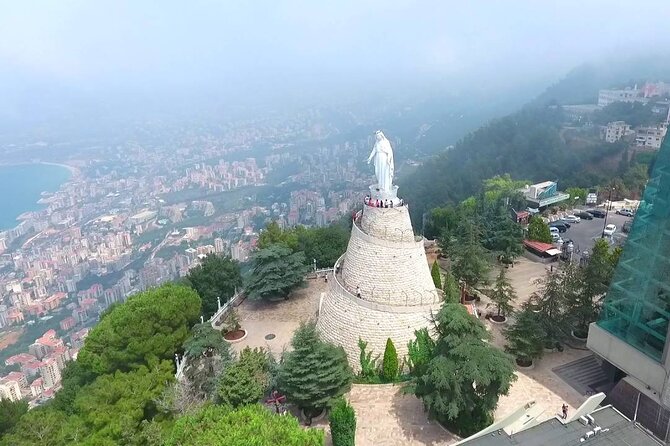
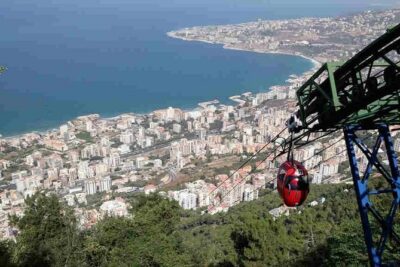
The road then climbs toward Harissa, a major Christian pilgrimage site above Jounieh. The focal point is Our Lady of Lebanon, a white-painted bronze statue of the Virgin Mary with her arms extended toward Beirut.
The statue weighs 15 tons, measures 8.5 meters high, and has a diameter of five meters. It was made at the end of the 19th century and inaugurated in 1908. A small chapel sits inside the base, while a large cathedral made of concrete and glass stands nearby.
You have about 30 minutes at the shrine and another 15 minutes around the churches of Harissa. That is enough for the main view, a look at the statue, and a quick sense of the religious setting. It is not enough for a slow church visit or extended quiet time.
The view is the main reward. From the shrine, you look toward Beirut and over the Bay of Jounieh. The elevated position gives Harissa a different feel from the coastal and archaeological stops. I like this contrast because the tour is not just a run through old stones. You get a major religious site and one of the day’s best wide views.
The nearby churches include the Byzantine-style Melkite Greek Catholic Basilica of St. Paul, along with other Christian places of worship. The short timing means you will need to follow the guide’s lead. If religious architecture is your main interest, you may want more time here than the schedule allows.
Byblos, where the ancient city meets the sea
Byblos is the longest and most layered part of the day. It is one of the oldest Phoenician cities and has been inhabited since Neolithic times. Its importance reaches beyond Lebanon: Byblos is closely connected with the development and spread of the Phoenician alphabet.
This is where the tour shifts from natural wonder and pilgrimage site to archaeology and urban history. You move through a place shaped by thousands of years of settlement, trade, religion, and seafaring.
The main Byblos visit lasts about two hours, with a separate hour allocated to Byblos Castle. Admission to the castle is included, while the broader Byblos stop is listed without a separate admission charge. The exact movement between the archaeological area and castle may depend on the guide and the day’s timing.
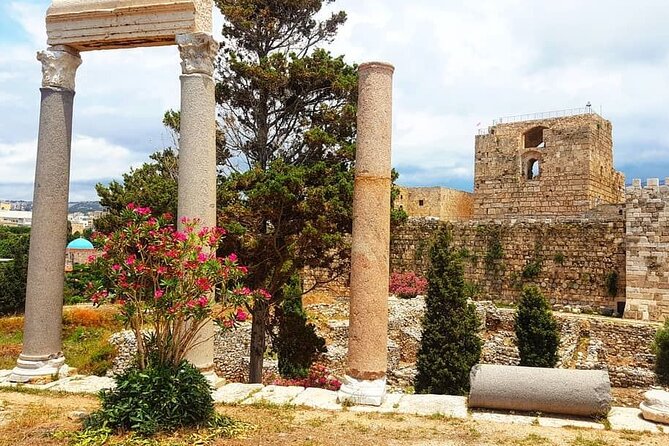
Give the ruins your attention first. The site contains remains connected with the Temple of Baalat Gebal and the Temple of the Obelisks, along with Bronze Age dwellings. You can see how different periods overlap rather than viewing a single isolated monument.
I find Byblos especially useful for visitors who want history they can read spatially. The ruins, castle, souk, and port are close enough to form a clear picture of the city’s changing role. You are not simply looking at one impressive building. You are seeing a town that grew around worship, trade, defense, and the sea.
Other trips down to the old harbour at Byblos:
- Semi-Private Tour to Jeita Grotto, Harissa & Byblos with Lunch
★ 5.0 · 52 reviews - Small Group Tour to Jeita Grotto, Harisa & Byblos with Hotel pickup
★ 5.0 · 49 reviews - Private Guided Tour to Jeita Grotto through Harissa and Byblos
★ 5.0 · 48 reviews - New Guided Semi-Private Tour to Jeita Grotto, Harissa & Byblos
★ 5.0 · 47 reviews
Climbing Byblos Castle for the best site view
Byblos Castle is a restored 12th-century Crusader fortress surrounded by a dry moat about 10 meters wide. It sits within the wider archaeological area, so the castle visit adds a later chapter to the ancient ruins around it.
The square keep is the key feature. From the top, you get a useful view across the archaeological remains and toward the sea. Bronze Age dwellings are visible below the walls, making the castle’s height valuable rather than merely decorative.
Inside, a small museum and information panels explain the city’s past. The panels can help you place the Phoenician, Bronze Age, and Crusader remains in order. This is one reason I appreciate having a local guide along: without some explanation, the site can feel like a collection of stones from unrelated centuries.
You have about an hour for the castle. That should allow time for the keep, views, museum, and displays, but you may need to make choices. If you stop at every panel or spend a long time taking photos, the final short stops in Byblos will feel even shorter.
The castle is also a practical high point of the visit. You can look down over the site and understand the relationship between defense, settlement, and coastline. It gives Byblos a strong visual shape.
A quick walk through the souk and port
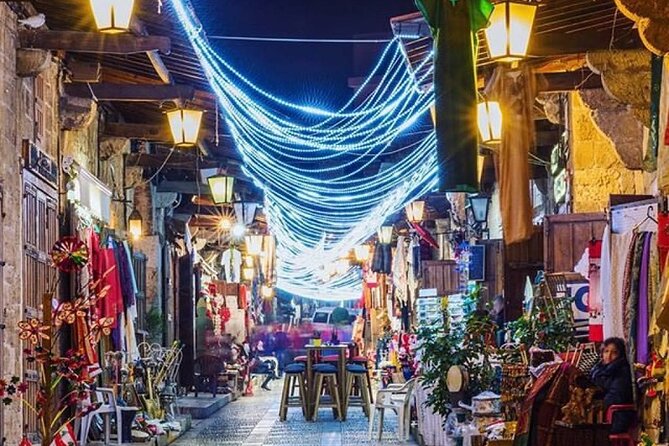
The old souk receives about 10 minutes. That is enough for a short stroll along cobblestone streets and a quick look at the old market architecture. You might find souvenirs, antiques, and small shops, but this is not enough time for a serious shopping session.
Use the souk as a transition rather than a shopping mission. It gives you a taste of Byblos as a living town after the more formal archaeological visit. If you want to browse carefully, ask the guide how much time is available before wandering off.
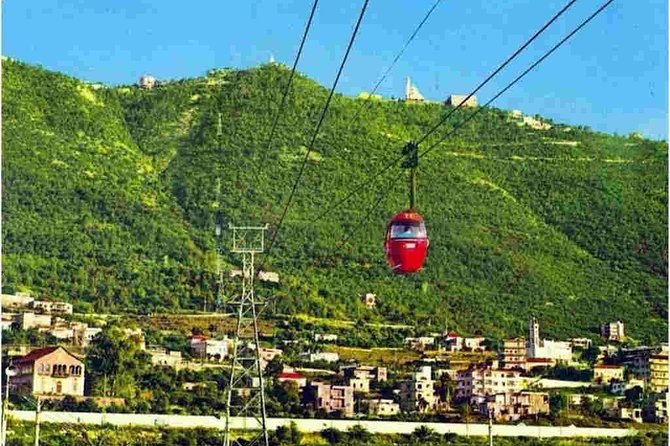
The port also receives about 10 minutes. Byblos Port is regarded by Lebanese people as one of the oldest ports in the world, and around 3000 BC it was an important timber-shipping center in the eastern Mediterranean.
The port stop is brief, but its meaning is large. After seeing temples and defensive walls, you reach the water that helped make Byblos important. The short visit works best as a final look at the city’s connection with maritime trade.
Do not expect a long waterfront meal or extended free time here. The value lies in seeing the port as part of the larger story, not in spending an afternoon beside the boats.
Lunch, transport, and the real value of $65
At $65 per person, this tour offers solid value because several expenses are bundled together. You receive air-conditioned transport, hotel pickup and drop-off anywhere in Beirut, a tour leader, a local guide, admission tickets to the visited attractions, and lunch at a Lebanese restaurant.
The lunch inclusion is useful on an eight-hour outing. You do not need to spend part of the day searching for a restaurant or guessing how long a meal will take. The information does not specify the restaurant or dishes, so I would book this for convenience rather than for a promised culinary menu.
The included admissions matter most at Jeita Grotto and Byblos Castle. Paying for those separately, arranging transport, and hiring guidance could quickly narrow the gap between this tour and an independent day. The value is strongest if you are staying in Beirut and want a simple one-day plan.
The group size also affects the price. A maximum of 15 people gives you some personal attention without the higher cost of a private vehicle. Still, do not confuse small group with flexible touring. The route has several fixed stops, and the short Harissa, souk, and port visits leave little room for major changes.
The vehicle is air-conditioned, a welcome feature for a long day that includes coastal roads and hill travel. Pickup and drop-off remove one of the biggest practical headaches. Confirmation is provided at booking, and most people can participate, though specific accessibility arrangements are not provided.
Who should book this experience
I would recommend this tour to a first-time Beirut visitor who wants a broad introduction to northern Lebanon in one day. It is also a good fit if you value transport and structure more than independent wandering.
You will get the most from it if you enjoy variety:
- Natural formations at Jeita Grotto
- Religious art and high views at Harissa
- Phoenician and Bronze Age archaeology in Byblos
- A Crusader fortress with a museum and viewing platform
- A short look at an old market and ancient port
The tour suits visitors who want a manageable group and a guide to keep the day moving. Guide Shark is specifically praised for adding humor to the journey, which can make a long schedule feel lighter.
I would hesitate if your main goal is detailed archaeology, extended shopping, or quiet time at the shrine. Byblos is the place where you may want extra hours, and Harissa’s 45-minute allocation is enough for a snapshot, not a full religious or architectural study.
The day also involves multiple types of sightseeing. You should be ready to move from cave formations to a hilltop shrine, then to archaeological ruins and a castle. That variety is the tour’s strength, but it can also make the day feel full.
Should you book the Jeita, Harissa, and Byblos tour?
Book it if you want three major Lebanese sights in one organized day, with lunch, transport, and admissions already handled. At $65, the package is particularly appealing for visitors based in Beirut who do not want to piece together their own route.
The best reasons to choose it are Jeita Grotto’s unusual cave system, Harissa’s broad view, and Byblos Castle’s clear perspective over the ancient site. The main caution is time. You will see each place, but you will not have unlimited hours to linger.
Free cancellation is available up to 24 hours before the start time for a full refund. If you cancel later, the payment is not refunded, and changes made within 24 hours are not accepted.
FAQ
How long does the tour last?
The tour lasts approximately eight hours.
Where does the tour start and end?
Hotel pickup and drop-off are offered anywhere in Beirut.
How many people can join the group?
The group has a maximum of 15 participants.
Is lunch included?
Yes. Lunch at a local Lebanese restaurant is included.
Are admission tickets included?
Yes. Admission tickets to the visited attractions are provided, including Jeita Grotto and Byblos Castle.
What places does the tour visit?
The tour visits Jeita Grotto, the Shrine of Our Lady of Lebanon, the churches of Harissa, Byblos, Byblos Castle, the old souk, and Byblos Port.
What is the cancellation policy?
You can cancel at least 24 hours before the experience starts for a full refund. Cancellations or changes made less than 24 hours before the start time are not accepted for a refund.
More Harissa Tours
- Lebanon Tour Jeita-Harissa & Byblos w/pickup,lunch,entries +guide
★ 5.0 · 27 reviews - Jeita Grotto – Harissa – Byblos Tour (All Inclusive)
★ 4.5 · 27 reviews - Jeita Grotto, Byblos and Harissa Full-Day Tour from Beirut
★ 5.0 · 23 reviews - Full-Day Private Tour to Jeita Grotto, Harissa and Byblos
★ 5.0 · 20 reviews
Newest Beirut reviews
- Wine Tasting Tour★ 5.0 · 2 reviews
- Journey Through Time: Half-Day Private Tour to Baalbek★ 5.0 · 3 reviews
- Lebanon’s Treasures: Jeita Grotto and Harissa Private Tour★ 5.0 · 2 reviews
- Traveling Spoon Lebanese Mezze Private Online Cooking Class★ 5.0 · 4 reviews
- Wine Tasting and Culture★ 5.0 · 3 reviews
- Small Group Tour to Baalbek, Anjar & Ksara with Hotel pickup★ 5.0 · 2 reviews
- Small Group Tours to Jeita Grotto and Byblos with tickets★ 5.0 · 3 reviews
- Small-Group Tour with Lunch to Baalbek, Anjar and Ksara★ 5.0 · 3 reviews
Jeita Grotto Tours, compared.
Guided Small-Group Tour to Jeita, Harissa, Byblos with Lunch
Read our review →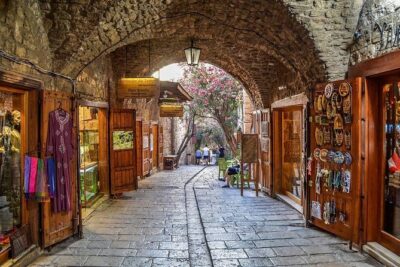
Byblos, Jeita Grotto & Harissa Day Trip -With Lunch (4G on Board)
Read our review →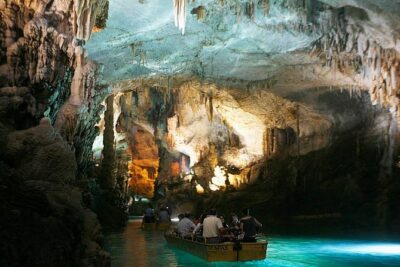
Semi-Private Tour to Jeita Grotto, Harissa & Byblos with Lunch
Read our review →
Small Group Tour to Jeita Grotto, Harisa & Byblos with Hotel pickup
Read our review →
Private Guided Tour to Jeita Grotto through Harissa and Byblos
Read our review →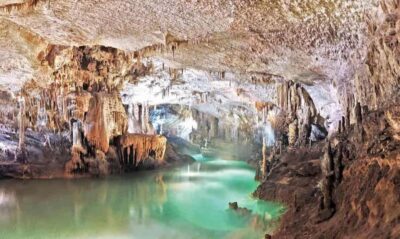
Jeita Grotto, Harissa & Byblos Private Day Tour
Read our review →
Jeita Grotto, Harissa, Byblos group tour & Guide
Read our review →Browse the lists this tour appears in