
Review · JEITA GROTTO TOURS
Jeita Grotto – Harissa – Byblos Tour (All Inclusive)
Three Lebanese highlights, one busy day. This eight-hour tour from Beirut links the underground chambers of Jeita Grotto, the hilltop shrine at Harissa, and the ancient port of Byblos without making you arrange several separate trips. I like the front-door pickup and air-conditioned transport, and I like how the route mixes nature, scenery, and history instead of giving you three similar stops. The main caution is the pace: Byblos gets three hours, but Jeita Grotto and Harissa require you to keep moving.
At $85 per person, the tour offers solid value if you want to see several headline sights in one day. The small-group limit of 15 helps, and groups can be much smaller, with one outing including only five people. Still, the guiding quality may vary. Hamza is praised for being informative and fun, while another account describes the guide mainly as a driver who managed timing and head counts.
In This Review
- Key points to know before booking
- Why this full-day route works from Beirut
- Jeita Grotto: a cave visit with cable cars, a train, and a boat
- Harissa and Our Lady of Lebanon: 15 minutes above Jounieh Bay
- Byblos: three hours in one of the world’s oldest cities
- What the $85 price really buys you
- The guide can shape the whole day
- Timing, group size, and the pace of the day
- Who should book this Lebanon day trip?
- Should you book the Jeita, Harissa, and Byblos tour?
- FAQ
- Where does the tour start and end?
- How long does the tour last?
- What sights are included?
- Is transportation provided?
- How large is the group?
- Can I take photographs inside Jeita Grotto?
Key points to know before booking
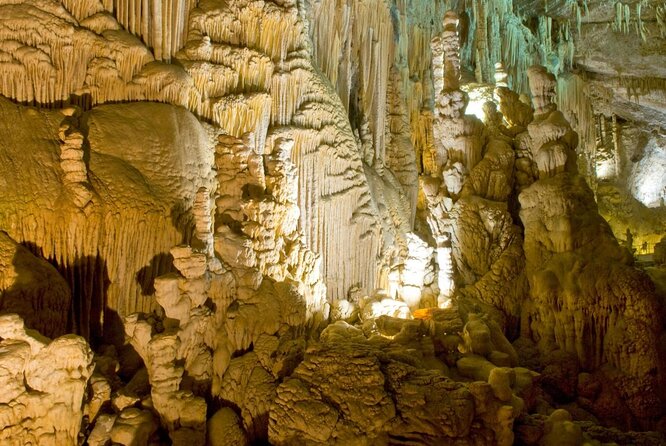
- Jeita Grotto combines three kinds of transport: a cable car to the upper cave, a train back down, and a boat through the lower cavern.
- Harissa gives you a quick but memorable viewpoint over Jounieh Bay from the statue of Our Lady of Lebanon.
- Byblos receives the most time: three hours for lunch, the old souq, Crusader Castle, the Fossils Museum, the port, and St Jean Marc Church.
- Hotel pickup and drop-off in Beirut simplify the day, especially when you are trying to cover several places without renting a car.
- Photography is restricted at Jeita Grotto, so do not expect to document every part of the cave.
- The tour runs with a maximum of 15 people, though the actual group may be smaller.
Why this full-day route works from Beirut
Lebanon packs major sights into a relatively small area, but getting between them is not always simple if you have limited time. This route solves that problem with door-to-door transport from Beirut and a fixed order that moves from cave to mountain to coast.
The day begins at 8:30 a.m. and ends back at the meeting point. That timing gives you a useful full day, but it also means you should be ready early and prepared for a fairly active schedule. The attraction count is high, so this is best viewed as an efficient first look rather than a slow, unhurried exploration of each place.
I like the mix. Jeita gives you a natural spectacle, Harissa supplies the broad view, and Byblos brings the history down to street level. You are not spending the whole day in museums or sitting on a bus between distant cities.
The air-conditioned vehicle matters in practical terms. You can leave the driving and route planning to someone else, return to the vehicle between stops, and avoid trying to coordinate taxis for three separate destinations. Pickup and drop-off are provided from your Beirut hotel, making the tour especially useful for a short stay.
The group size is capped at 15. That is not the same as a private tour, but it is more manageable than a large coach. A group of five was reported on one outing, which would make the day feel quite personal. The actual size depends on the booking date.
Other ways to see the Jeita caves:
- Guided Small-Group Tour to Jeita, Harissa, Byblos with Lunch
★ 5.0 · 361 reviews - Jeita Grotto – Harissa – Byblos Trip
★ 5.0 · 169 reviews - Byblos, Jeita Grotto & Harissa Day Trip -With Lunch (4G on Board)
★ 4.5 · 145 reviews
Jeita Grotto: a cave visit with cable cars, a train, and a boat
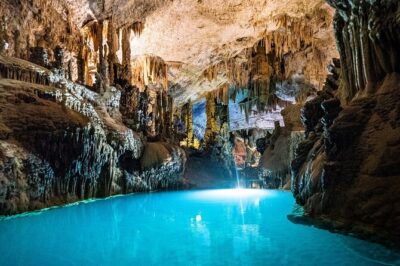
Jeita Grotto is the star attraction for many people on this route. The cave complex is described as the longest in the Middle East and was nominated as one of the New Seven Wonders of the World. Even before you reach the chambers, the visit has an unusual sequence of rides that makes it feel more like a full attraction than a simple walk underground.
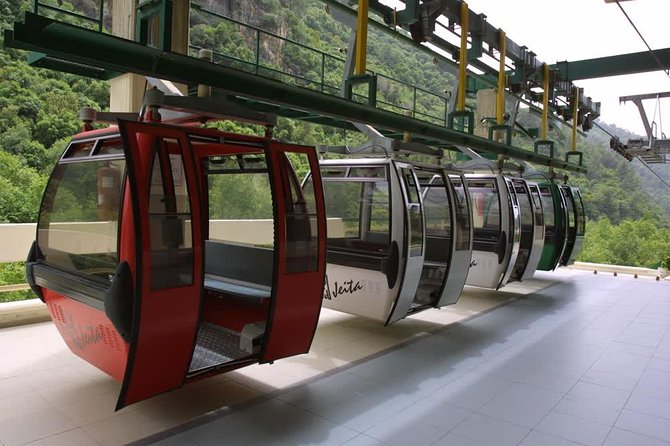
The first part uses a scenic cable car to reach the upper cave. One especially memorable detail is the cable car passing above busy highways. That contrast, an old natural cavern at the end of a ride suspended over modern traffic, gives the visit a surprisingly dramatic start.
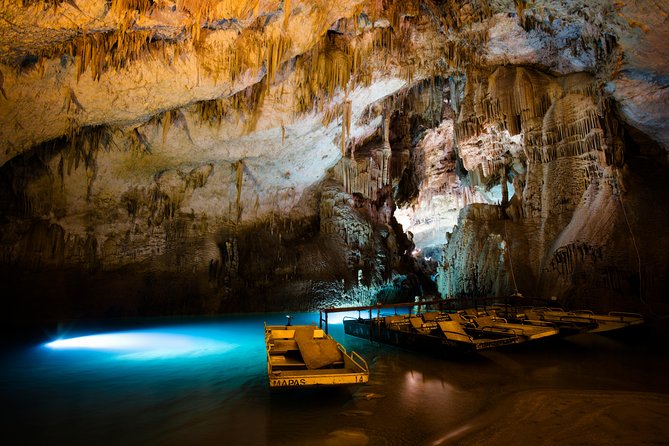
Inside the upper cave, you will see the formations that make Jeita famous: stalactites hanging from the ceiling and stalagmites rising from the floor. The shapes and scale are the point here, so allow yourself time to look up and around rather than treating the cave as a quick photo stop.
Photography is not allowed inside Jeita Grotto. This is an important practical detail. You will need to keep your phone or camera away and rely on memory instead. If taking pictures is central to your sightseeing, this rule may disappoint you. If you can accept it, the restriction also keeps the visit more focused on the cave itself.
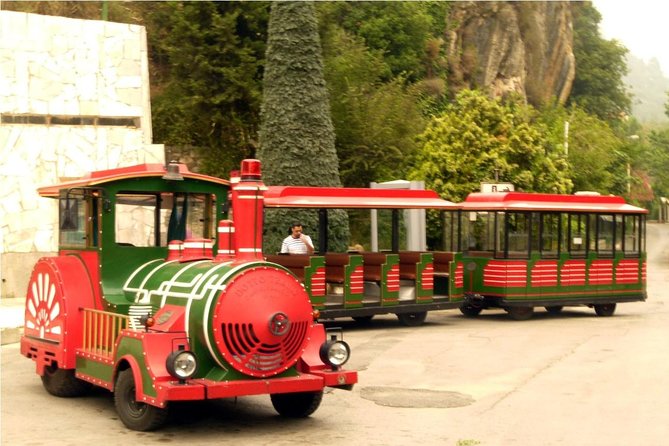
After exploring the upper cave, a train takes you down to the lower cave. Then you board a boat for a ride beneath the river cavern. That boat portion gives the visit a different mood from the upper chamber, with the water forming the main part of the experience.
The full stop lasts about 90 minutes. That is enough time to experience the main elements, but not enough for a slow, self-directed visit. Follow the guide’s timing closely, since the cable car, train, and boat all shape the schedule.
Jeita is listed with no separate admission charge in the tour details, while the Harissa cable car is specifically shown as included. Since the package is advertised as all-inclusive, the price is designed to cover the main planned components, but lunch is not specifically described as included. If that matters to your budget, confirm the meal arrangement before booking.
Harissa and Our Lady of Lebanon: 15 minutes above Jounieh Bay
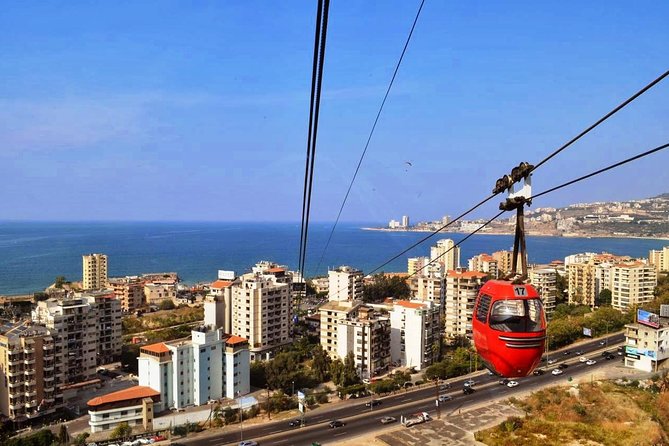
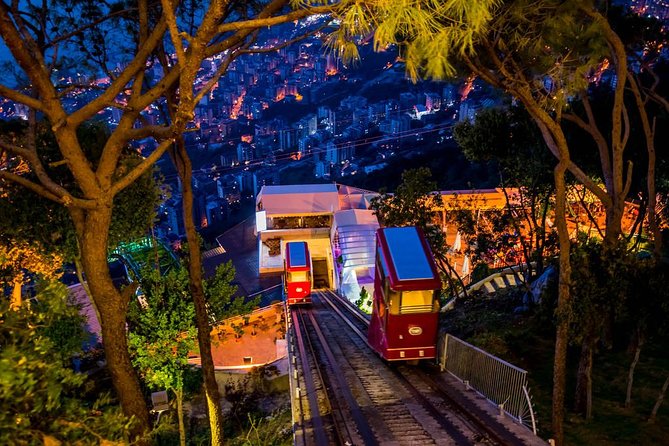
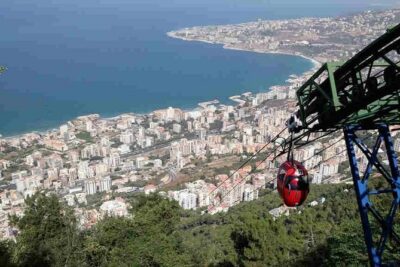
From Jeita, the route continues to the Teleferique du Liban. The cable car ride up the mountain takes about 15 minutes and leads to the Shrine of Our Lady of Lebanon at Harissa.
The ride is short, but it gives you a change of scale. Jeita keeps your attention on rock, water, and darkness. Harissa opens the view outward toward Jounieh Bay. You get a broad look across the coast from high above, which helps you understand how the mountains and shoreline fit together.
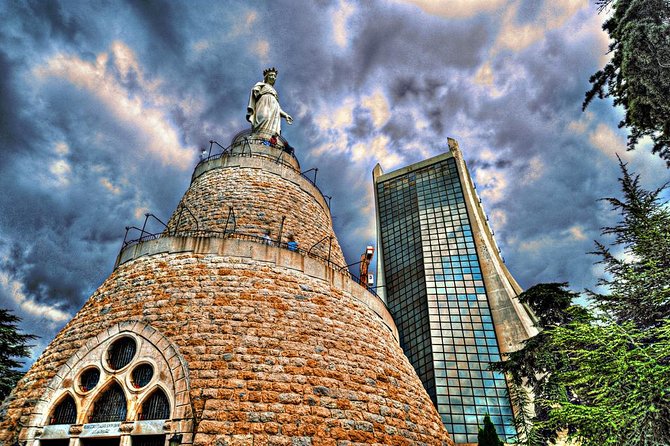
At the top, the statue of Our Lady of Lebanon is the main sight. The shrine’s position recalls the familiar hilltop setting of the Christ the Redeemer statue in Rio de Janeiro, with the figure looking over the bay below. You will have about 45 minutes at the shrine, enough for the viewpoint and a quick look around without turning the stop into a long visit.
This portion of the day is more about the view than an extended historical explanation. If you prefer long museum visits, 45 minutes may seem brief. If you want a strong photograph-free visual break between the cave and Byblos, the timing works well.
The stop also gives you a chance to stretch your legs. The wider day is tightly planned, so even a short period outside at a high viewpoint helps break up the vehicle time. Keep an eye on the meeting time, since the group must continue to Byblos.
Byblos: three hours in one of the world’s oldest cities
Byblos receives the largest block of time, about three hours. That is a sensible choice. Unlike Jeita and Harissa, Byblos is not one single attraction. It is a collection of old streets, ruins, religious buildings, waterfront views, and museums that are best understood on foot.
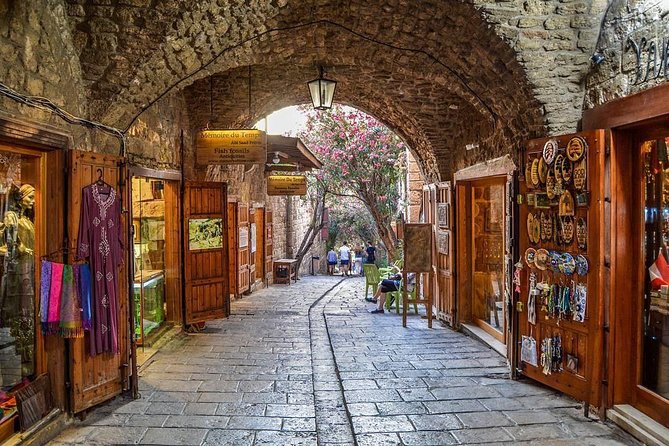
The city is described as one of the oldest continuously inhabited cities in the world, with roots reaching back to about 8000 B.C. That immense span can be hard to grasp from a single viewpoint. Walking through the old souq makes the history feel more tangible because the ancient setting is mixed with everyday streets and local life.
Lunch comes first in the Byblos portion of the route. The supplied details do not specify a restaurant or say that lunch is included in the $85 price, so plan your questions around that point. You may want to know how much time is reserved for eating and whether the meal is paid separately.
After lunch, the walking portion includes several sights:
- The old souq gives you a chance to wander through the historic center.
- Byblos Crusader Castle provides the most obvious medieval element in the visit.
- The Fish Fossils Museum adds a different angle, moving beyond the city’s better-known Phoenician and Crusader past.
- The old port connects the city to its long maritime role.
- St Jean Marc Church adds a religious and architectural stop to the route.
That list is ambitious for three hours. You should expect an overview of each place rather than a long examination of every room, object, or ruin. The advantage is variety. By the time you leave, you will have seen the main pieces of Byblos instead of spending the entire afternoon at just the castle.
I would pay attention to the guide’s explanations here. Byblos has many layers, and the ruins can blur together without context. A guide who explains what you are looking at can turn a pleasant walk into a more meaningful history lesson. Hamza is specifically praised for being informative at every step and for adding fun to the day, while the quality of commentary may be less consistent with another guide.
The old port is likely to be one of the easiest places to appreciate without much explanation. It gives you an immediate sense of Byblos as a coastal city, while the castle and church need more historical framing. You may find the Fossils Museum more unusual than expected, since it changes the subject from human history to the natural past of the area.
Other trips down to the old harbour at Byblos:
- Semi-Private Tour to Jeita Grotto, Harissa & Byblos with Lunch
★ 5.0 · 52 reviews - Small Group Tour to Jeita Grotto, Harisa & Byblos with Hotel pickup
★ 5.0 · 49 reviews - Private Guided Tour to Jeita Grotto through Harissa and Byblos
★ 5.0 · 48 reviews - New Guided Semi-Private Tour to Jeita Grotto, Harissa & Byblos
★ 5.0 · 47 reviews
What the $85 price really buys you
At $85 per person, the value comes from combining transportation, several attractions, and a full day of coordination. You are paying for the convenience of hotel pickup, an air-conditioned vehicle, a route that covers three major sights, and a guide who manages the schedule.
The value is strongest if you have only a short time in Lebanon. Arranging Jeita, Harissa, and Byblos independently could require several transfers and careful timing. This tour removes that work and returns you to Beirut at the end of the day.
The price is less compelling if you prefer to linger. You cannot decide at noon to spend the rest of the day in Byblos, because the route has to keep moving. You are also sharing the schedule with the group, even though the maximum is limited to 15.
The phrase all-inclusive should be read carefully. The package covers the listed transport and planned attraction components, and the Harissa cable car is marked as included. The Byblos section begins with lunch, but no lunch inclusion is specified. Ask before departure so you know how much extra cash to carry.
The tour has a 4.7 rating from 27 reviews, with 93 percent recommending it. That is a strong overall signal, but the individual experiences show why expectations matter. A guide can make a major difference, and the day works best when you want efficient sightseeing rather than complete independence.
The guide can shape the whole day
The guide’s role is more than pointing out the next stop. This route includes caves, a shrine, a cable car, a boat, a Crusader castle, a church, a port, and a fossil museum. Without clear timing and explanations, the day could feel like a checklist.
Hamza receives especially warm praise for being informative and making the outing more enjoyable. That suggests the tour can have a friendly, personal feel when the right guide is assigned.
You should also know that the guiding style may be practical rather than deeply interpretive. One account describes the guide as mainly a driver who controlled the schedule and counted participants. That does not make the tour useless, but it means you should not assume every departure will include long historical commentary.
The safest expectation is a well-organized day with some guiding, not a specialist-led archaeology tour. If you want detailed history at every site, ask about the guide arrangement before you commit. If you mainly want reliable transport and a sensible route, the basic level of coordination may be enough.
Timing, group size, and the pace of the day
The schedule adds up to roughly 90 minutes at Jeita, 15 minutes on the mountain cable car, 45 minutes at Harissa, and three hours in Byblos, plus driving and transitions. That is a lot for eight hours, so you will want comfortable shoes and a willingness to move when the group moves.
The route is not presented as strenuous, and most people can participate. Still, it includes walking at Jeita and Byblos, along with cable car and train transfers. If you need more time at stops, the fixed schedule may feel restrictive.
A group limit of 15 is a useful middle ground. You get the ease of shared transport without the scale of a very large tour. A smaller group can also make it easier to hear the guide and gather quickly when it is time to leave.
Pickup begins in Beirut at 8:30 a.m., and the tour returns to the same meeting point. That makes it easy to fit into a Beirut hotel stay, but you should not plan another major activity immediately afterward. Delays, traffic, or a slow-moving group could push the return time later than expected.
Who should book this Lebanon day trip?
I would recommend it to a first-time visitor with only one free day, especially someone who wants Lebanon’s most recognizable sights without renting a car. It also suits you if you value transport and logistics as much as independent exploration.
Families and mixed-interest groups may like the variety. Children who lose patience with ruins may enjoy the cable car, train, and boat at Jeita, while adults get the history of Byblos and the view from Harissa.
I would be more cautious if your priority is photography. Jeita’s no-photo rule removes the chance to capture the caves, and the stop-by-stop schedule leaves limited room to wait for perfect light elsewhere.
I would also hesitate if you want a slow historical tour. Three hours in Byblos is useful, but it is still an overview. You will see the key areas, not exhaust the city’s archaeology.
The non-refundable booking rule is another reason to decide carefully. The experience cannot be changed or refunded after booking, so make sure your Beirut plans are firm before paying.
Should you book the Jeita, Harissa, and Byblos tour?
Book it if you have limited time and want a practical, well-packed introduction to three major Lebanese sights. The best reasons are the door-to-door transport, the unusual Jeita sequence of cable car, train, and boat, and the generous Byblos stop.
Do not book it if you need a flexible schedule, guaranteed specialist commentary, or a fully confirmed lunch arrangement. The day is busy, and the guide’s style may vary.
For the right person, $85 is a fair price for covering this much ground from Beirut. Go in expecting an efficient overview, protect your time at Jeita from the camera rule, and ask about lunch before setting out. With those expectations, this tour gives you a useful first taste of Lebanon’s natural wonders, mountain views, and long coastal past.
FAQ
Where does the tour start and end?
The tour starts in Beirut, Lebanon, at 8:30 a.m., and ends back at the meeting point in Beirut.
How long does the tour last?
The tour lasts approximately eight hours.
What sights are included?
The route includes Jeita Grotto, the Teleferique du Liban, the Shrine of Our Lady of Lebanon at Harissa, and Byblos.
Is transportation provided?
Yes. The tour includes door-to-door pickup and drop-off from your Beirut hotel in an air-conditioned vehicle.
How large is the group?
The tour has a maximum of 15 participants. The actual group may be smaller.
Can I take photographs inside Jeita Grotto?
No. Photography is not allowed inside Jeita Grotto.
More Harissa Tours
- Lebanon Tour Jeita-Harissa & Byblos w/pickup,lunch,entries +guide
★ 5.0 · 27 reviews - Jeita Grotto, Byblos and Harissa Full-Day Tour from Beirut
★ 5.0 · 23 reviews - Full-Day Private Tour to Jeita Grotto, Harissa and Byblos
★ 5.0 · 20 reviews - PRIVATE tour to Jeita Grottos, Harissa Shrine & Byblos City
★ 5.0 · 12 reviews
Newest Beirut reviews
- Wine Tasting Tour★ 5.0 · 2 reviews
- Lebanon’s Treasures: Jeita Grotto and Harissa Private Tour★ 5.0 · 2 reviews
- Journey Through Time: Half-Day Private Tour to Baalbek★ 5.0 · 3 reviews
- Traveling Spoon Lebanese Mezze Private Online Cooking Class★ 5.0 · 4 reviews
- Wine Tasting and Culture★ 5.0 · 3 reviews
- Small Group Tour to Baalbek, Anjar & Ksara with Hotel pickup★ 5.0 · 2 reviews
- Small Group Tours to Jeita Grotto and Byblos with tickets★ 5.0 · 3 reviews
- Small-Group Tour with Lunch to Baalbek, Anjar and Ksara★ 5.0 · 3 reviews
Jeita Grotto Tours, compared.
Guided Small-Group Tour to Jeita, Harissa, Byblos with Lunch
Read our review →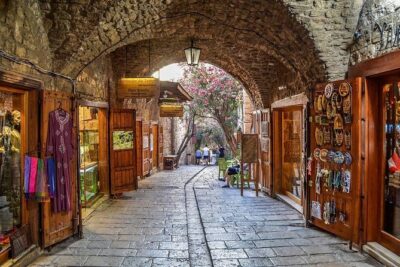
Byblos, Jeita Grotto & Harissa Day Trip -With Lunch (4G on Board)
Read our review →
Semi-Private Tour to Jeita Grotto, Harissa & Byblos with Lunch
Read our review →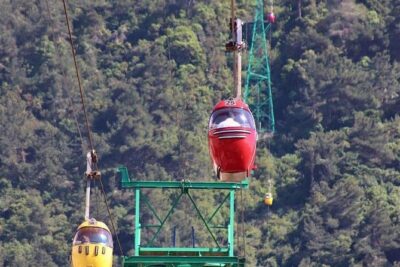
Small Group Tour to Jeita Grotto, Harisa & Byblos with Hotel pickup
Read our review →
Private Guided Tour to Jeita Grotto through Harissa and Byblos
Read our review →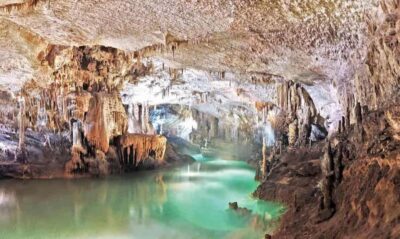
Jeita Grotto, Harissa & Byblos Private Day Tour
Read our review →
Jeita Grotto, Harissa, Byblos group tour & Guide
Read our review →Browse the lists this tour appears in