
Review · BAALBEK & BEKAA VALLEY TOURS
PRIVATE Tour of Baalbek Temples, Umayyad Anjar & Ksara Winery
Three very different stops, one long day. This private tour links Baalbek’s giant Roman temples, the 8th-century Umayyad ruins at Anjar, and Chateau Ksara in the Bekaa Valley, with a guide handling the driving from Beirut.
I like the door-to-door pickup and the chance to see two UNESCO-listed places without arranging several separate trips. I also like the private format, which lets your group ask questions and set a comfortable pace. The main drawback is the schedule: six to eight hours is a lot of road and ruins, and lunch is not included.
For the strongest experience, ask for Dave if he is available. He is praised for explaining Lebanese history, culture, and current life in clear English or French, while keeping the day relaxed. Past guests also describe comfortable, air-conditioned transport, careful timing, and a guide who knows where to focus your attention instead of making you wander aimlessly.
In This Review
- Key Points Before You Book
- Leaving Beirut for the Bekaa Valley
- Baalbek’s Temples of Jupiter and Bacchus
- Anjar and the Umayyad Chapter of Lebanon
- Chateau Ksara’s Cellars and Lebanese Wine
- What the Guide Adds to the Day
- Price, Pace, and What You Still Pay For
- Who Will Get the Most From This Tour
- Booking Details That Matter
- Should You Book This Baalbek and Ksara Tour?
- FAQ
- What time does the tour start?
- Is hotel pickup and drop-off included?
- How long does the tour last?
- Are admission fees included?
- Is lunch included?
- Are alcoholic drinks included, and who may drink?
Key Points Before You Book
- Baalbek gets the most time: Plan on about two hours among the temples of Jupiter, Bacchus, and Venus.
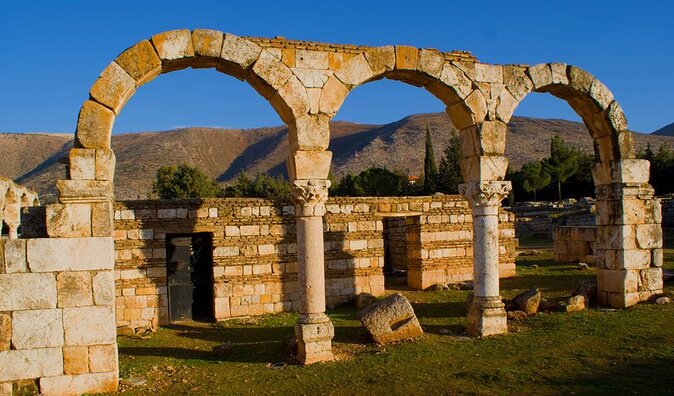
- Anjar shows a different Lebanon: Its Umayyad ruins offer an Islamic chapter after the Roman grandeur of Baalbek.
- Ksara is more than a tasting room: You visit an old Lebanese winery and its large natural cellars.
- Private transport saves effort: Hotel pickup and drop-off remove the need to drive through unfamiliar roads.
- The guide is central to the value: Dave is praised for detailed explanations, good timing, and fluent English or French.
- Budget for lunch and wine: The tour price includes entry fees and taxes, but lunch and alcoholic drinks are extra.
Leaving Beirut for the Bekaa Valley
The tour begins at 9:00 a.m. with pickup from your hotel in Beirut. Since this is a private activity, only your group takes part. That matters here because the day combines long driving stretches with three stops that deserve different amounts of attention.
The operator lists the outing at six to eight hours. Your exact return time can depend on traffic, time spent at the ruins, and the pace of your group. If you are trying to fit another Beirut activity into the evening, leave some breathing room.
The practical advantage is simple: you do not need to rent a car, study the route, or worry about driving after a wine tasting. One person described being the only customer on the day and receiving what the guide jokingly called a VIP tour. A private booking does not guarantee that you will be alone, but it does mean your own party is not joined by strangers.
The transport has been described as a comfortable, air-conditioned car or minivan. That is useful on a full day, especially when you are moving between Beirut and the Bekaa Valley. The ride also gives your guide time to explain Lebanon before you reach the archaeological sites.
More runs out to the Bekaa and its Roman temples:
- Guided Small-Group Tour to Baalbek, Anjar and Ksara with Lunch
★ 5.0 · 511 reviews - Anjar, Baalbek & Ksara Day Trip – With Lunch (4G on Board)
★ 4.5 · 181 reviews - Baalbek – Anjar – Ksara Trip From Beirut
★ 4.5 · 80 reviews
Baalbek’s Temples of Jupiter and Bacchus
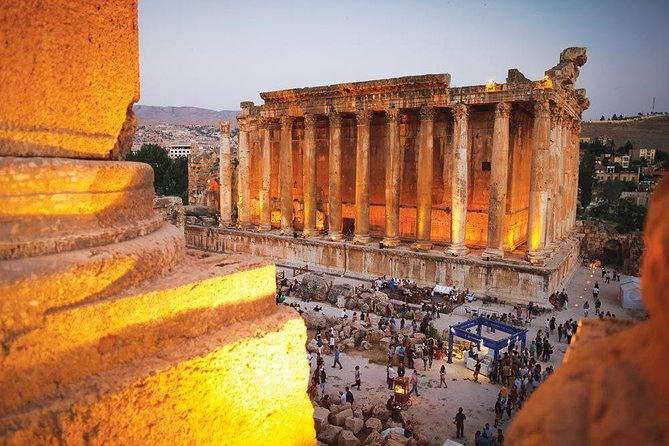
Baalbek is the emotional center of the day. You get about two hours here, with admission included, and that is the right order of priority. The site is vast, visually powerful, and difficult to appreciate through a quick photo stop.
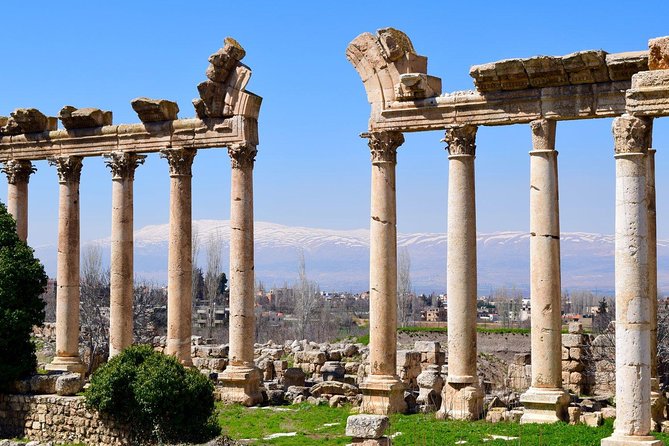
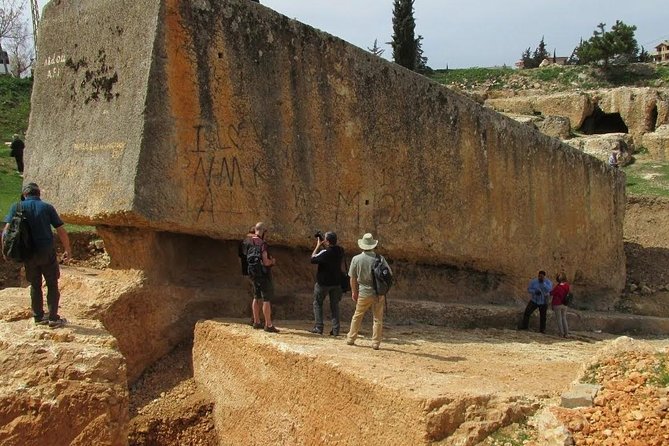
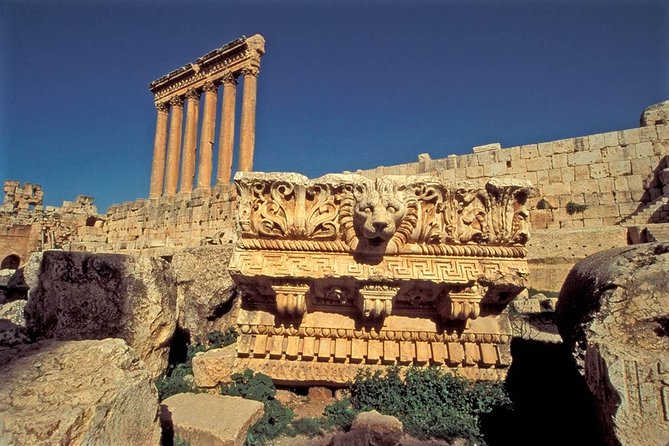
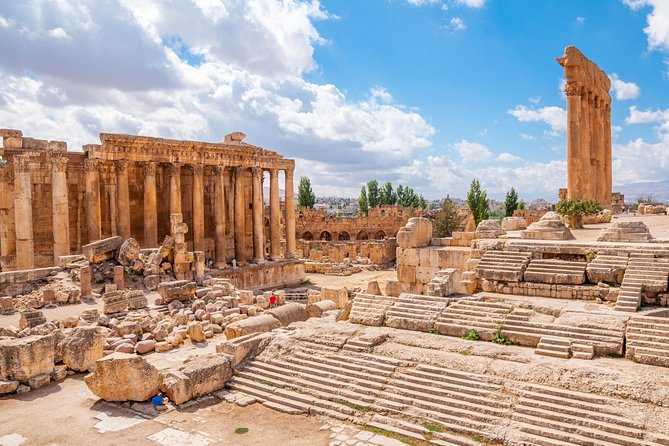
The Roman complex includes the temples of Jupiter, Bacchus, and Venus, along with additional ruins. The scale is the first thing you notice. Huge columns, monumental stonework, and broad temple spaces make it clear that this was not a minor provincial outpost.
Your guide can help turn scattered stones into a readable story. Dave is repeatedly praised for pointing out small details, explaining the importance of the temples, and answering questions about Lebanon’s past and present. That is especially valuable at Baalbek, where a large site can otherwise become a parade of impressive stones without much context.
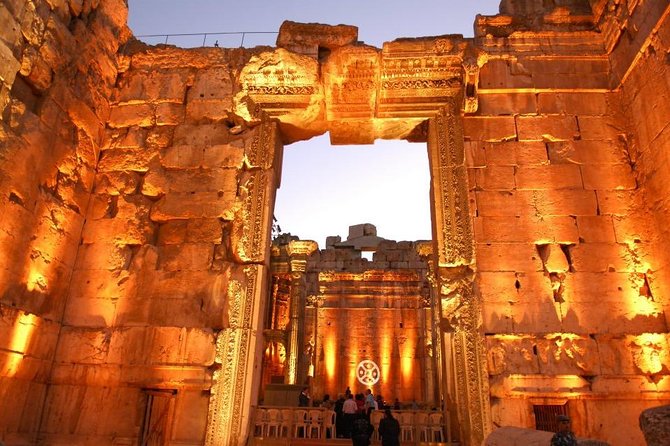
Give the Temple of Bacchus proper time. It is one of the site’s most striking structures, and several comments single it out along with Jupiter and Venus. Look closely at the scale and decoration rather than rushing straight through for photographs.
The Temple of Jupiter is equally important for understanding the monumental ambition of the complex. You will see the remains of an enormous Roman sanctuary, with columns and foundations that help show how large the original setting was. The Temple of Venus provides a different shape and feel within the wider complex.
Two hours should allow a solid visit, but it is not an unlimited archaeological study. If you want to examine every wall, inscription, and architectural fragment at a slow pace, you may wish the stop were longer. The tradeoff is that you still get to see Anjar and Ksara in the same day.
Wear sensible shoes and smart-casual clothing. The dress guidance is not formal, but you are visiting open archaeological grounds, not a museum with level floors and shade at every turn. Bring water and sun protection, particularly in warm weather. These are practical suggestions rather than special tour requirements.
Anjar and the Umayyad Chapter of Lebanon
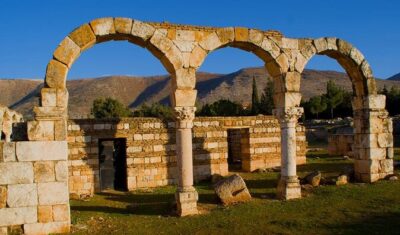
After Baalbek, the tour moves to Anjar, described as the only Umayyad ruins in Lebanon. The visit lasts about an hour, and admission is included.
Anjar changes the historical rhythm of the day. Baalbek brings you the Roman world and its monumental temples. Anjar shows an 8th-century Islamic city, giving you a look at another period and another type of urban planning.
The ruins are not simply a smaller version of Baalbek. You are looking at the remains of a city rather than a temple complex, so the interest comes from the pattern of the site and the evidence of organized urban life. Your guide’s explanations are important here because the remains may not speak as clearly to you at first glance as Baalbek’s giant columns do.
One hour is enough for a guided introduction and a good walk around the principal remains. It is also a sensible limit within a full-day route. If you have a special interest in early Islamic archaeology, tell your guide at the start so the stop can be shaped around your questions where possible.
The contrast between Anjar and Baalbek is one of the tour’s best features. You are not spending the whole day on one era or one style of monument. Instead, the route gives you a compact view of Lebanon’s Roman and Umayyad past, with wine culture added at the end.
Chateau Ksara’s Cellars and Lebanese Wine
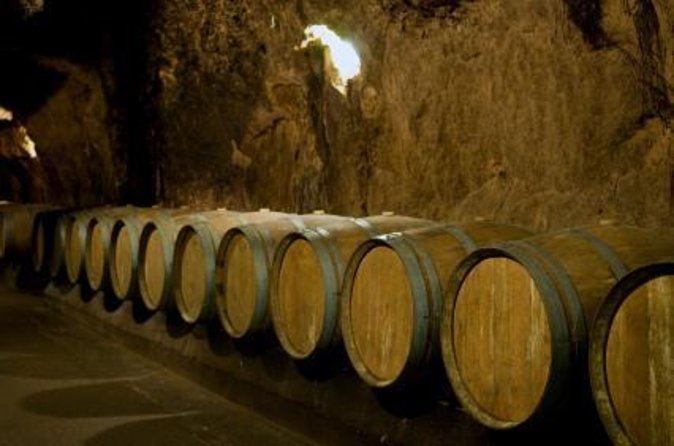
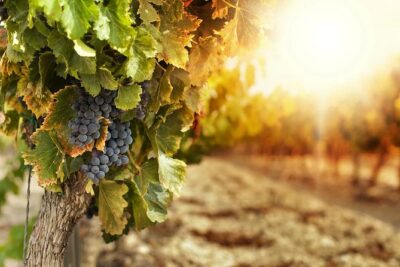
The final planned stop is Chateau Ksara, with about an hour for the winery visit and tasting. The chateau is presented as Lebanon’s oldest wine-making chateau, and its large natural cellars are a major part of the visit.
The cellar tour gives the tasting a setting and a sense of place. You are not simply handed a glass and sent on your way. The winery adds a modern cultural layer to the day, connecting the Bekaa Valley to Lebanon’s long-standing wine production.
Alcoholic beverages are not included in the tour price, so you should expect to pay separately for the tasting or any wine you buy. The experience description includes the winery visit and tasting, but it does not specify the number of wines, the exact tasting fee, or the labels served. Ask the operator for those details before departure if they matter to your budget.
The one-hour stop is a good length for a first introduction. It lets you see the cellars and sample local wine without turning the day into a winery-only outing. If you are not interested in alcohol, the archaeological stops remain the main reason to book, though you may find the winery portion less useful.
The tour’s decision to include a guide and driver is especially sensible here. You can taste without taking responsibility for the return drive. The practical rule is clear: allow your guide to handle the road while you focus on the visit.
Other Lebanese wine estates worth the drive:
- Guided Private Full Day Tour to Baalbek, Anjar and Chateau Ksara
★ 5.0 · 60 reviews - Lebanon tour Baalbek ruins & Ksara w/pick-up, lunch,guide+entries
★ 5.0 · 35 reviews - Baalbek Temples & Ksara Caves w/pick-up,guide, entries+lunch
★ 4.9 · 34 reviews - Small Group Tours to Baalbek, Anjar & Chateau Ksara with lunch and Tickets
★ 5.0 · 29 reviews
What the Guide Adds to the Day
This tour is sold on places, but its value depends heavily on the guide. Baalbek and Anjar are major sites, yet a short visit can feel thin if nobody explains what you are seeing.
Dave receives the strongest praise for expert historical explanations, cultural insight, professional conduct, and an entertaining manner. He is described as a native Lebanese guide who can handle persistent questions about history and culture. That sort of conversation can make the driving time useful rather than dead time between stops.
Language ability is another practical strength. The experience may be operated by a multilingual guide, and Dave has been praised for working in both English and French. One Spanish-speaking guest also described the conversation and advice as especially helpful, though the available details do not confirm Spanish service for every booking.
The guide also seems to be good at route management. One account highlights reaching the right spots at each site without wasting energy in the wrong places. That sounds minor, but it matters when you have only two hours at Baalbek and one hour at Anjar.
A private tour gives you more room to speak up. Ask for clarification when a monument is hard to picture, request a little extra time for a favorite section, or say if you need a short pause. The tour is planned, but the private setup should allow some reasonable adjustment.
Price, Pace, and What You Still Pay For
At $113.34 per person, this is not the cheapest way to reach Baalbek. It can still be good value if you are staying in Beirut and want transportation, admission fees, a private guide, Anjar, and Ksara in one day.
The price includes local taxes, the driver-guide, hotel pickup and drop-off, and all listed fees and taxes. You do not need to build a separate transport budget or buy site tickets on the day.
Lunch is not included. You will need to plan for that expense, although the supplied details do not identify a restaurant or a meal stop. Ask about the lunch plan before you go, especially if your group has dietary needs or wants a proper sit-down meal.
Wine is also not included in the price. Minimum drinking age is 18. If someone in your group does not drink, confirm how the winery visit works for non-drinkers before booking.
The cost looks strongest for couples, families, or small groups who value a private vehicle and a dedicated guide. Group discounts are offered, though no discount amount is given. For a larger party, ask for the exact total rather than assuming the per-person rate will remain unchanged.
The schedule is efficient but full. You will see three important places, not spend a leisurely day at one site. I would choose this tour if your time in Lebanon is limited and you want a broad introduction to the Bekaa Valley. I would look for a slower, more specialized arrangement if Baalbek is your main archaeological purpose.
Who Will Get the Most From This Tour
This outing suits you if you want history explained in plain language rather than simply being dropped at a gate. It also suits anyone who prefers not to drive, navigate, or organize several tickets and transfers.
Families can take part, but children must be accompanied by an adult. The tour information says most people can participate, without listing special physical restrictions. Since the day includes outdoor ruins, walking ability and comfort in open archaeological areas are sensible considerations.
It is a good choice for first-time visitors to Lebanon because the route shows several sides of the country in one day. You get Roman monuments, an Umayyad city, mountain and valley scenery along the road, and Lebanese wine culture at Ksara.
It may be less suitable if you dislike long road days, do not want to visit a winery, or need a fixed return time. The advertised duration is approximate, and three stops require a firm schedule.
The experience also suits curious people who ask questions. Dave’s reputation for discussing Lebanon’s culture, people, past, and present is one of the main reasons to choose a private tour rather than a basic transfer.
Booking Details That Matter
Confirmation is normally received at booking. If you book within 12 hours of departure, confirmation arrives as soon as possible and remains subject to availability.
The start time is 9:00 a.m., with hotel pickup offered in Beirut. Children need adult supervision, and the dress code is smart casual. The guide may be multilingual.
You can cancel for a full refund if you do so at least 24 hours before the local start time. Cancellations or changes made less than 24 hours ahead are not accepted for a refund.
If you want Dave specifically, request him when booking, but do not assume he is guaranteed unless the operator confirms it. The supplied information identifies DAVE LEBANON DMC as the provider.
Should You Book This Baalbek and Ksara Tour?
Book it if you want Baalbek as the main event, with Anjar and Ksara adding useful variety. The private vehicle, hotel pickup, included admissions, and strong guide service make the $113.34 price easier to justify, especially for a small group.
Skip it if you want a slow archaeological day, a guaranteed meal, or a detailed wine program with tasting fees already covered. For most first visits from Beirut, though, this is a smart way to cover a demanding route without driving yourself. Ask about lunch, tasting costs, and guide language before paying, then let the guide manage the road and focus your attention on the remarkable places along it.
FAQ
What time does the tour start?
The tour starts at 9:00 a.m.
Is hotel pickup and drop-off included?
Yes. Round-trip hotel pickup and drop-off are included.
How long does the tour last?
The tour lasts approximately six to eight hours.
Are admission fees included?
Yes. The tour includes all listed fees and taxes, including admission for Baalbek, Anjar, and Chateau Ksara.
Is lunch included?
No. Lunch is not included in the tour price.
Are alcoholic drinks included, and who may drink?
Alcoholic beverages are not included. The minimum drinking age is 18.
Newest Beirut reviews
- Wine Tasting Tour★ 5.0 · 2 reviews
- Journey Through Time: Half-Day Private Tour to Baalbek★ 5.0 · 3 reviews
- Lebanon’s Treasures: Jeita Grotto and Harissa Private Tour★ 5.0 · 2 reviews
- Traveling Spoon Lebanese Mezze Private Online Cooking Class★ 5.0 · 4 reviews
- Wine Tasting and Culture★ 5.0 · 3 reviews
- Small Group Tour to Baalbek, Anjar & Ksara with Hotel pickup★ 5.0 · 2 reviews
- Small Group Tours to Jeita Grotto and Byblos with tickets★ 5.0 · 3 reviews
- Small-Group Tour with Lunch to Baalbek, Anjar and Ksara★ 5.0 · 3 reviews
Baalbek & Bekaa Valley Tours, compared.
Guided Small-Group Tour to Baalbek, Anjar and Ksara with Lunch
Read our review →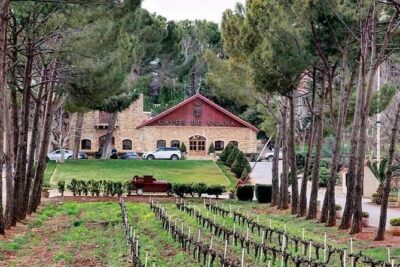
Anjar, Baalbek & Ksara Day Trip – With Lunch (4G on Board)
Read our review →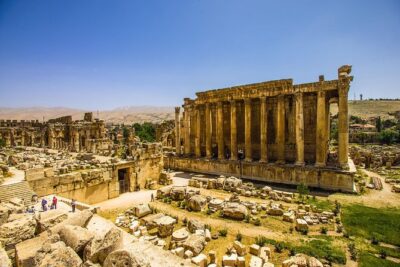
Private Anjar and Baalbek Tour from Beirut with Departure Ticket
Read our review →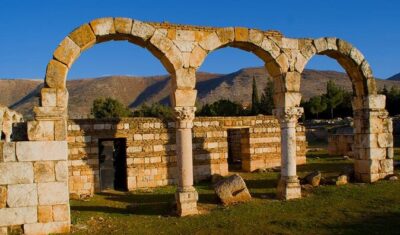
Guided Private Full Day Tour to Baalbek, Anjar and Chateau Ksara
Read our review →
Lebanon tour Baalbek ruins & Ksara w/pick-up, lunch,guide+entries
Read our review →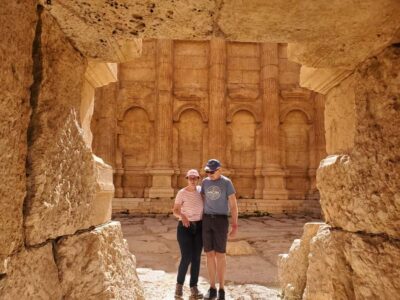
Baalbek Temples & Ksara Caves w/pick-up,guide, entries+lunch
Read our review →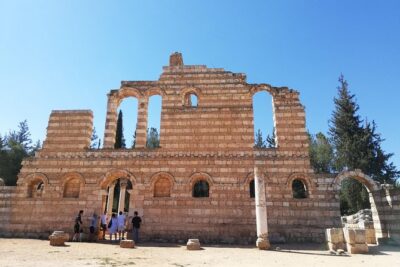
Small Group Tours to Baalbek, Anjar & Chateau Ksara with lunch and Tickets
Read our review →Browse the lists this tour appears in