Review · GUIDED
Guided Small-Group Tour to Beirut, Beiteddin & Deir elQamar
Two sides of Lebanon in one day. This 8-hour small-group trip pairs Beirut’s seafront, religious landmarks, war memorials, and Roman remains with the mountain village of Deir el Qamar and grand Beiteddine Palace. I like the smart mix of city and countryside, and I like that hotel pickup, lunch, transport, and a guide are included in the $99 price. The main drawback is the pace: with many Beirut stops scheduled for only 10 minutes, you will see a lot but rarely linger.
This is a useful choice if you want a broad first look at Lebanon without arranging several separate outings. The group is capped at 15 people, which should make the day more personal than a large coach trip. You should also budget extra for Beiteddine Palace admission, which is not included.
In This Review
- Key points at a glance
- Why this day works for first-time visitors
- Pigeon Rock and the Mediterranean opening
- Zaitunay Bay and Beirut’s changing waterfront
- The Holiday Inn and the memory of war
- Downtown Beirut’s mosques, churches, and public squares
- Beirut Souks and the Roman Berytus baths
- Deir el Qamar, the village of the moon
- Fakhreddine Mosque and Saydet El Talle Church
- Beiteddine Palace, the day’s main event
- Lunch, transport, and the $99 value
- Who should book this tour?
- FAQ
- What time does the tour start?
- How long does the experience last?
- Is hotel pickup and drop-off included?
- Is lunch included?
- Is admission to Beiteddine Palace included?
- How large is the tour group?
- Should you book this Beirut and Beiteddine tour?
Key points at a glance
- Pigeon Rock begins the day with a classic Beirut view: You get a quick look at the city’s famous offshore rock formations and the Mediterranean.
- Beirut’s history comes in many layers: Mosques, cathedrals, Roman baths, Ottoman-era memories, modern shopping, and civil-war landmarks all appear in one city circuit.
- Deir el Qamar offers slower village time: Plan on about 30 minutes around the municipality, mosque, and church area.
- Beiteddine Palace is the main historical visit: The 90-minute stop gives you the most time to explore a single site.
- Lunch and hotel transfers add real value: You do not need to solve the day’s transport or find a meal between stops.
- This is a highlights tour, not a deep archaeological visit: The schedule favors range and context over long visits at individual monuments.
Why this day works for first-time visitors
Beirut can feel like several cities at once. Along the coast, you see a modern Mediterranean capital with promenades, marinas, restaurants, and palm-lined roads. In the center, ancient ruins sit beside churches, mosques, parliament buildings, and reconstructed commercial streets. Then the road rises toward Mount Lebanon, where Deir el Qamar and Beiteddine offer a very different setting.
I like this pairing because it answers a common trip-planning problem: do you spend your only free day in Beirut, or do you leave the city for the mountains? Here, you get both. The tradeoff is that the schedule is tightly packed, so this suits you best if you want orientation and variety rather than a slow, detailed study of every site.
The tour begins at 8:30 a.m. and lasts about eight hours. Pickup and drop-off at your hotel are included, along with an air-conditioned vehicle, lunch, and a professional guide. With no more than 15 people, the vehicle should feel more manageable than a full-size sightseeing bus, though the exact comfort level will depend on the group and traffic.
A few more trips out of Beirut worth a look
- Guided Small-Group Tour to Baalbek, Anjar and Ksara with Lunch
★ 5.0 · 511 reviews - Guided Small-Group Tour to Jeita, Harissa, Byblos with Lunch
★ 5.0 · 361 reviews - Paragliding Trip Over Lebanon – Jounieh Bay
★ 5.0 · 257 reviews
Pigeon Rock and the Mediterranean opening
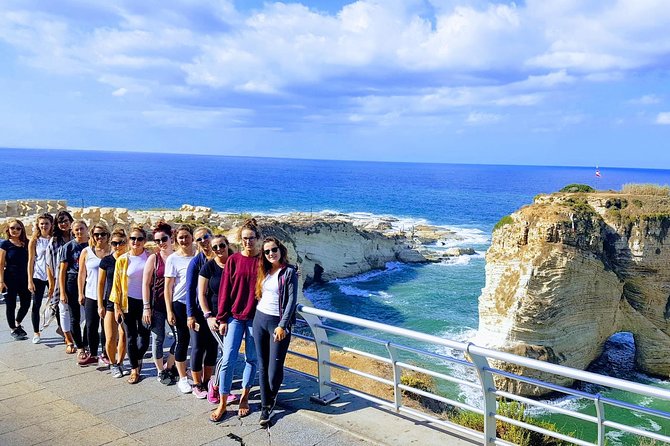
The first stop is Pigeon Rock in Raouche, one of Beirut’s most familiar views. Two large stone formations rise from the sea at the city’s western tip, and they are especially striking from the Corniche.
The official stop is listed at 10 minutes, so think of this as a photo and orientation stop. You will have time to take in the rocky formations and the coastline, but not to wander far along the promenade. If you enjoy seafront walks, Al Manara Corniche is an important part of the setting. It runs from the Ramlet al Bayda area toward Saint George marina, with palms, Mediterranean views, and sightlines toward Mount Lebanon.
This quick start gives you Beirut’s geography right away. The city faces west toward the sea, while the mountains rise inland. That contrast becomes more useful later when you leave the coast for Deir el Qamar and Beiteddine.
Zaitunay Bay and Beirut’s changing waterfront
Zaitunay Bay is the next short stop. It is a newer waterfront area with shops, restaurants, and a promenade designed for leisure. The visit lasts about 10 minutes and is free.
I find this stop useful because it shows Beirut’s modern face before the tour shifts toward older religious and archaeological sites. It also breaks up the historical material with a look at the city’s contemporary waterfront economy. Do not expect a full meal or shopping session here. The included lunch comes later, and 10 minutes is enough mainly for a look around and a few photographs.
The contrast between Zaitunay Bay and the abandoned Holiday Inn is one of the day’s most telling transitions. One represents polished redevelopment. The other is a stark reminder of the Lebanese Civil War.
The Holiday Inn and the memory of war
The abandoned Holiday Inn is not a conventional sightseeing stop. Built between 1971 and 1974, when Beirut was a major tourist and business center, the hotel became part of the Battle of the Hotels after the Civil War began in 1975.
The building remained empty and visibly damaged long after the fighting ended. Its place in the itinerary gives the guide an opening to explain how war reshaped Beirut, not as an abstract date in a history book but through a structure that still occupies a prominent urban site.
You will likely view it from outside. The information provided does not indicate an interior visit, so treat this as a contextual stop rather than a museum experience. Some visitors may find the building more affecting than the polished monuments that follow. It brings a serious note to the morning and helps you understand why Beirut can feel both rebuilt and marked by the past.
A different side of Lebanon altogether:
- First Paragliding Club in Lebanon – Since 1992
★ 5.0 · 193 reviews - Anjar, Baalbek & Ksara Day Trip – With Lunch (4G on Board)
★ 4.5 · 181 reviews - Jeita Grotto – Harissa – Byblos Trip
★ 5.0 · 169 reviews - Byblos, Jeita Grotto & Harissa Day Trip -With Lunch (4G on Board)
★ 4.5 · 145 reviews
Downtown Beirut’s mosques, churches, and public squares
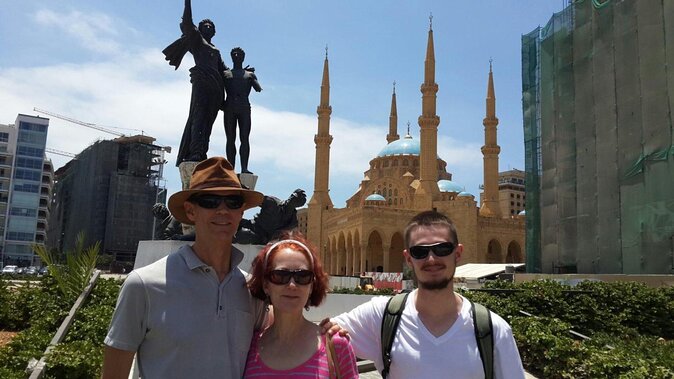
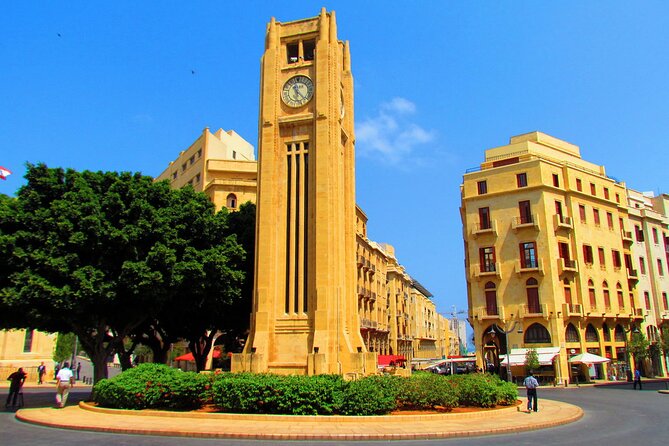
The central Beirut portion is packed with short stops. The Mohammad Al-Amin Mosque, also called the Blue Mosque, is the largest mosque in Lebanon. Its light blue domes, tall arches, and four minarets, each reaching about 65 meters, make it hard to miss near Martyrs’ Square.
The mosque opened in 2008, giving the tour a modern religious landmark in a district filled with much older buildings. The visit is scheduled for 10 minutes, so you should expect an exterior look unless the guide confirms that entry is possible. Dress and behavior should be respectful around any religious site.
The Al-Omari Grand Mosque brings a much older story. It was built in 635 during the age of Omar Bin El Khattab, later became the Church of Saint John under the Crusaders, and returned to use as a mosque under the Mamluks in 1291. Civil-war damage led to restoration completed in 2004.
That sequence tells you much about Beirut. Buildings changed use as rulers and communities changed, and restoration is part of the city’s present-day story. Again, the 10-minute schedule means the value comes from the guide’s explanation and the chance to see the site, not from a long architectural inspection.
The Greek Orthodox Cathedral of Saint George is described as the oldest church in Beirut. A Christian temple occupied the site as early as the mid-sixth century, and the location is linked with the city’s famous ancient Law School. It sits in the center of modern Beirut, where several eras meet within a short walk.
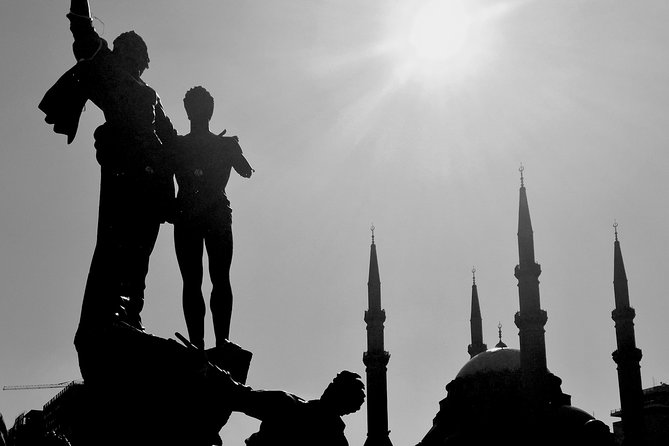
Martyrs’ Square adds political and national memory. The square was known historically as Al Burj or Place des Cannons, and its present name recalls the Lebanese nationalists executed by the Ottomans on May 6, 1916. You will have about 10 minutes here, enough to understand the location and its significance.
Place de l’Étoile is another brief central stop. The square contains the Lebanese Parliament and related buildings, two cathedrals, a museum, cafes, and restaurants. Its best-known feature is the four-faced 1930 Rolex clock. The square’s layout and architecture make it one of the easiest places to recognize in photographs of central Beirut.
Taken together, these stops give you more than a string of monuments. They show Beirut as a meeting point of religions, empires, political movements, and rebuilding efforts. The limitation is clear: you will not have enough time to enter and study each building at length.
Beirut Souks and the Roman Berytus baths
Beirut Souks offers another change of mood. The commercial district includes more than 200 shops, 25 restaurants and cafes, an entertainment center, and a cinema complex. The scheduled visit is 10 minutes, so the point is to see the scale and setting of the shopping district rather than shop seriously.
The souks also raise an interesting question about reconstruction. Modern retail streets occupy an area associated with Beirut’s long commercial tradition, while ancient remains and war-era buildings appear nearby. I would use this stop to orient yourself and save any serious shopping for another day.
The Roman Berytus baths are among the most important archaeological sights in the downtown area. They were discovered in 1968 and 1969, restored in the 1990s, and originally formed part of four major bath complexes. The first was created in the early first century under Augustus. An earthquake in 551 destroyed the baths.
Today, the site is outdoors, and one of the bath areas is used for artistic performances and concerts. The 10-minute stop is short, but the ruins help explain the importance of ancient Berytus before the tour moves into the mountains.
Deir el Qamar, the village of the moon
After Beirut, the day changes character at Deir el Qamar. The village sits southeast of the capital in the Chouf District, about five kilometers from Beiteddine Palace. Its name means Monastery of the Moon.
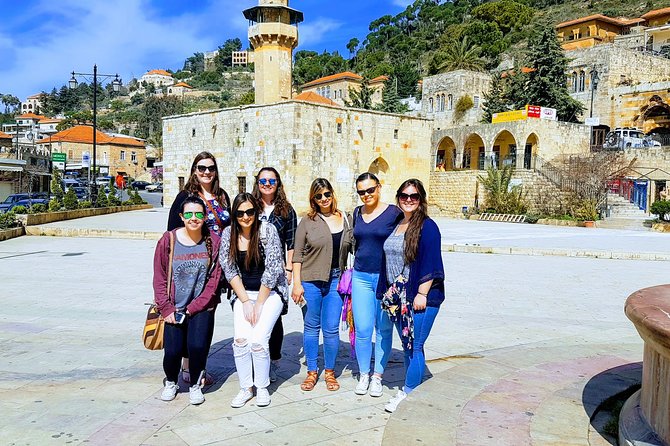
You get about 30 minutes at the municipality area, which is the longest Beirut and village stop before the palace. Deir el Qamar was Lebanon’s first village to establish a municipality, in 1864. It also became home to people from different religious backgrounds, with a mosque, synagogue, and Christian churches within the town’s story.
The village suffered destruction during the 1860 conflict between Druze and Christians. It was later rebuilt with help from a French contingent sent by Napoleon III. That history gives the town a particular weight. Its stone buildings and religious sites are not simply picturesque scenery. They reflect periods of conflict, repair, and shared local life.
The pace here should feel less rushed than the downtown circuit, but 30 minutes still limits what you can do. You will get a taste of the village and its main sights rather than a long wander through every lane.
Fakhreddine Mosque and Saydet El Talle Church
Fakhreddine Mosque is scheduled for 15 minutes. Its octagonal minaret makes it easy to identify, and its construction dates to 1493. It was restored in the sixteenth century by Fakhreddine I and is considered the oldest mosque in Mount Lebanon.
The mosque matters not only for age but also for the way it fits into Deir el Qamar’s mixed religious heritage. It gives you a compact example of Islamic architecture in a town also known for historic churches.
The Church of Saydet El Talle, or Our Lady of the Hill, receives another 15 minutes. The church dates to the fifteenth century and is linked to the remains of an older Phoenician temple dedicated to Astarte. That earlier site was later destroyed by an earthquake in 859.
A local legend connects the church’s location with a light seen on the hill by a Druze emir. The story reflects the layered religious traditions that shape Deir el Qamar. You do not need to accept every part of the legend literally to appreciate how local memory gives meaning to the site.
These two stops work well together. The mosque and church are close enough in the itinerary to show how much religious history is concentrated in a small mountain town. Their short visit times favor listening to the guide and observing the exteriors over independent research on site.
Beiteddine Palace, the day’s main event
Beiteddine Palace is the final major stop and receives about 90 minutes. That is a sensible allocation because the palace is the most extensive site of the day.
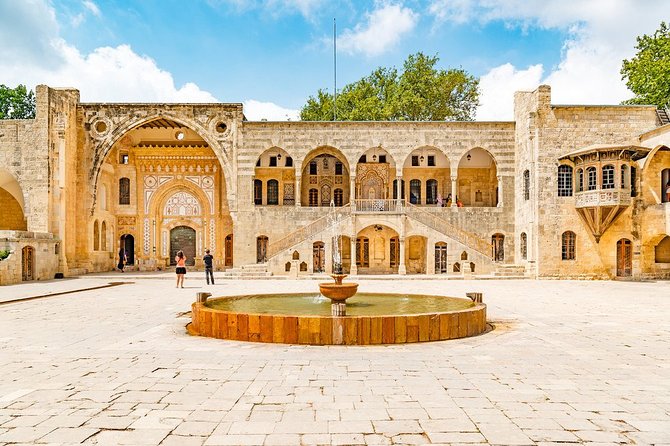
Emir Bashir Chehab II built the palace between 1788 and 1818 after becoming ruler of the Mount Lebanon Emirate. Its name means House of Faith, and it is considered Lebanon’s best example of early nineteenth-century Lebanese architecture.
The building’s later history is just as revealing. After 1840, the Ottomans used it as a government building. During the French Mandate, it served as a local administrative office. In 1943, it became the official summer residence of the president. It suffered heavy damage during the Civil War, and only parts are open to the public today, while the rest remains the president’s summer residence.
The palace now houses the Beiteddine Palace Museum and hosts the annual Beiteddine Festival. With 90 minutes, you should have a fair chance to appreciate the courtyards, architecture, and museum areas open to visitors. The exact route through the palace may depend on what is open that day.
Admission is not included, and the price is not provided in the tour details. I would confirm the current entrance fee before booking so the $99 headline price does not surprise you. Even with that extra cost, the palace is the part of the day that gives the tour its strongest sense of place.
Lunch, transport, and the $99 value
At $99 per person, this tour offers solid value if you want a full day without arranging a driver, guide, and lunch separately. Hotel pickup and drop-off remove two practical hassles, especially for a day that combines Beirut with a mountain destination.
The air-conditioned vehicle matters in a schedule this full. You will spend time moving between the coast, downtown, Deir el Qamar, and Beiteddine, so comfortable transport is not a minor perk. Lunch is also included, with the promise of a fresh Lebanese meal, though the exact restaurant and menu are not specified.
The price is less attractive if you mainly want an unhurried Beirut walk. Several stops last only 10 minutes, and the tour does not provide long independent periods in the souks, along the Corniche, or inside the religious buildings. You are paying for range, transport, interpretation, and convenience.
Free cancellation is available if you cancel at least 24 hours before the 8:30 a.m. start time. Changes or cancellations inside that window are not refundable.
Who should book this tour?
I would recommend this trip to a first-time visitor who wants Beirut plus one of Lebanon’s best-known mountain heritage areas. It is also a good fit if you have only one full day available and prefer a guide to explain the religious, political, and architectural context.
The tour suits you if you enjoy seeing many different places in a day and do not mind short stops. It is less suitable if you want long museum visits, extended photography time, or the freedom to set your own pace.
The published rating is 5 out of 5 from seven ratings, and the strongest praise centers on getting both Beirut and Beiteddine in one day. That is exactly the tour’s main strength. You see modern waterfront Beirut, war-era reminders, ancient Roman remains, a historic village, and a palace tied to Lebanon’s former emirs without spending your day organizing the pieces yourself.
FAQ
What time does the tour start?
The tour starts at 8:30 a.m.
How long does the experience last?
The tour lasts approximately eight hours.
Is hotel pickup and drop-off included?
Yes. Hotel pickup and drop-off are included.
Is lunch included?
Yes. Lunch is included in the tour price.
Is admission to Beiteddine Palace included?
No. Admission to Beiteddine Palace is not included.
How large is the tour group?
The group can include a maximum of 15 travelers.
Should you book this Beirut and Beiteddine tour?
Book it if you want maximum variety in one day. The combination of Beirut’s coast and downtown, Deir el Qamar’s religious sites, and Beiteddine Palace is difficult to arrange as neatly on your own without private transport.
Skip it if your priority is a slow Beirut visit or detailed time inside each monument. For most first-time visitors, though, the included lunch, hotel transfers, air-conditioned vehicle, small group, and broad itinerary make $99 a reasonable price, even after adding the separate palace admission.
Newest Beirut reviews
- Wine Tasting Tour★ 5.0 · 2 reviews
- Journey Through Time: Half-Day Private Tour to Baalbek★ 5.0 · 3 reviews
- Lebanon’s Treasures: Jeita Grotto and Harissa Private Tour★ 5.0 · 2 reviews
- Traveling Spoon Lebanese Mezze Private Online Cooking Class★ 5.0 · 4 reviews
- Wine Tasting and Culture★ 5.0 · 3 reviews
- Small Group Tour to Baalbek, Anjar & Ksara with Hotel pickup★ 5.0 · 2 reviews
- Small Group Tours to Jeita Grotto and Byblos with tickets★ 5.0 · 3 reviews
- Small-Group Tour with Lunch to Baalbek, Anjar and Ksara★ 5.0 · 3 reviews
Guided, compared.
Guided Small-Group Tour to Baalbek, Anjar and Ksara with Lunch
Read our review →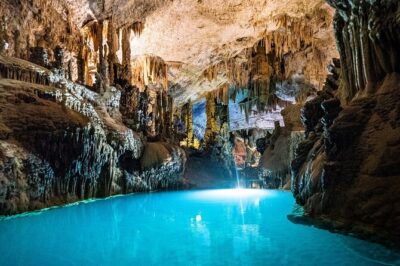
Guided Small-Group Tour to Jeita, Harissa, Byblos with Lunch
Read our review →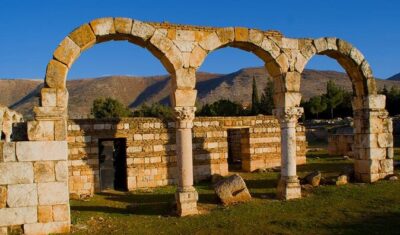
Guided Private Full Day Tour to Baalbek, Anjar and Chateau Ksara
Read our review →
Private Guided Tour to Jeita Grotto through Harissa and Byblos
Read our review →
Guided Small-Group Tour to Sidon, Tyre & Maghdouche with Lunch
Read our review →
Guided Small-Group Tour to Qadisha, Bcharee & Cedars with Lunch
Read our review →
Lebanon tour Baalbek ruins & Ksara w/pick-up, lunch,guide+entries
Read our review →