
Review · BAALBEK & BEKAA VALLEY TOURS
Guided Small-Group Tour to Baalbek, Cedars & Qozhaya with Lunch
Lebanon packs centuries into one long day. I like the way this tour links Baalbek’s Roman temples with the Cedars of God and the religious sites of Qadisha, rather than treating each place as a separate trip. I also like the practical package: hotel pickup, a local Baalbek guide, site admissions, lunch, and an air-conditioned vehicle are all included.
The trade-off is the distance. You spend roughly eight to nine hours on the road and at the sights, so this is a brisk introduction rather than a slow, deeply detailed visit. One review described it as a very big tour, even though the stated maximum is 15 people, so I would not book it expecting a private, unhurried outing.
The best part is the range. In one day, you move from mountain cedars and Christian monastic caves to colossal Roman stonework, with a Lebanese meal in between. It is a strong choice if you have limited time in Beirut and want to see several of the country’s major cultural sites without arranging transport yourself.
In This Review
- Key points at a glance
- Why this route works so well from Beirut
- Qadisha Valley and the mountain road
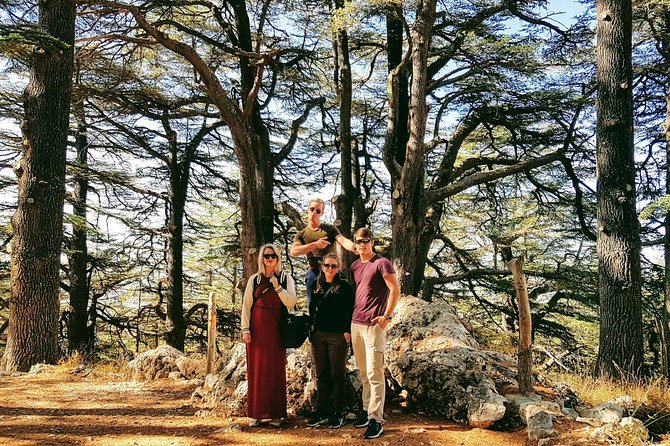
- Bcharre and the Cedars of God
- Qozhaya Monastery and the story of hermit life
- Baalbek’s temples: the day’s main event
- The Stone of the Pregnant Woman
- Lunch and the practical value of the package
- Who should book this day trip?
- Booking, cancellation, and final verdict
- FAQ
- Where does the tour begin?
- How long does the tour last?
- What is included in the $150 price?
- How large is the group?
- Is lunch included?
- Is a guide provided at Baalbek?
- How long is the stop at the Cedars of God?
- How long is the visit to Qozhaya Monastery?
- What is the cancellation policy?
Key points at a glance
- Baalbek gets the serious sightseeing time: Plan on about three hours around the town and temple complex, including the famous Stone of the Pregnant Woman.
- The Cedars of God are a short but meaningful stop: The grove contains 375 trees and represents one of the last surviving parts of Lebanon’s ancient cedar forests.
- Qozhaya adds a very different mood: The mountain monastery offers a brief look at Lebanon’s long Christian monastic tradition.
- Lunch is part of the value: A fresh Lebanese meal is included, so you do not need to budget separately for the main midday stop.
- The group is capped at 15 people: That is smaller than a standard coach excursion, but the day may still feel busy if the group fills.
- Be ready for a full day: The 8 to 9 hour schedule covers long distances, several stops, and a return to Beirut.
Why this route works so well from Beirut
Baalbek alone can fill a day, but this tour gives you a wider picture of Lebanon. The route crosses mountain country and the Bekaa area, combining nature, religious heritage, and ancient architecture in a single outing.
I especially like the contrast between the morning and afternoon. The Cedars of God and Qozhaya are quiet, high-country places. Baalbek then brings you face to face with huge columns, carved stone, ceremonial courtyards, and the remains of an ancient sanctuary built on a grand scale.
That mix gives the day some shape. You are not looking at one ruin after another. You are seeing how Lebanon’s mountains, faith traditions, and ancient cities fit together.
The tour begins at 8:30 am, with pickup offered from your Beirut hotel. That removes one of the main headaches of a long day trip: finding your way out of the city and arranging transport between sites. The air-conditioned vehicle matters, too, since the schedule involves substantial driving.
The price is $150 per person. That is not a budget excursion, but it covers round-trip hotel transfers, transport, a tour leader, a local guide at Baalbek, lunch, and admission to the historical sites. If you tried to arrange a private vehicle, separate entrance tickets, and a meal on your own, the price difference could narrow quickly. The value is strongest for solo visitors, couples, and small groups who want convenience without booking an entirely private tour.
More runs out to the Bekaa and its Roman temples:
- Guided Small-Group Tour to Baalbek, Anjar and Ksara with Lunch
★ 5.0 · 511 reviews - Anjar, Baalbek & Ksara Day Trip – With Lunch (4G on Board)
★ 4.5 · 181 reviews - Baalbek – Anjar – Ksara Trip From Beirut
★ 4.5 · 80 reviews
Qadisha Valley and the mountain road
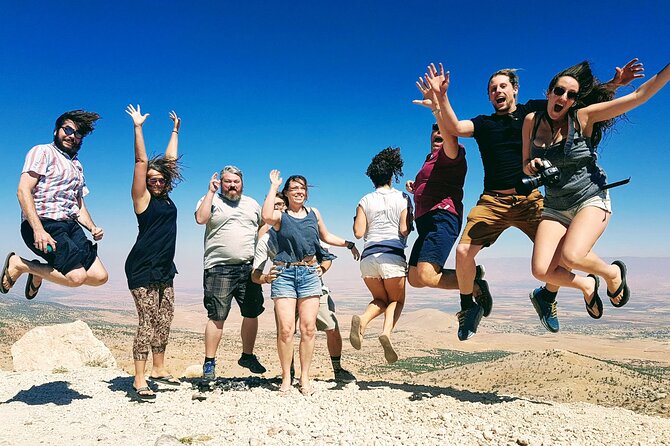
Qadisha Valley is not listed with a fixed stop time, but it forms an important part of the day’s setting. The valley contains caves, monasteries, and cultivated terraces linked to some of the earliest Christian monastic settlements in the world.
Its appeal is not one single building. It is the sense of a whole religious world spread through steep, rugged mountain country. Hermits and monastic communities used the caves and valleys as places of retreat, worship, and work.
You should think of this portion as a scenic and cultural introduction rather than a long hike. The stated itinerary does not promise a valley walk or extended exploration of individual caves. You will see the setting associated with the monasteries, then continue toward Bcharre and the cedar grove.
That limitation is worth knowing. If Qadisha is your main reason for booking, ask the operator before departure how much time is spent viewing the valley itself. The day includes several major sights, so the schedule cannot offer a slow exploration of every monastery.
Bcharre and the Cedars of God
Bcharre is the town linked with Lebanon’s surviving original cedar forest. It is also the birthplace of Khalil Jubran, the Lebanese poet, painter, and sculptor whose work is honored by a museum in town. Bcharre is sometimes called the city of churches, with about 37 churches, and it is also home to the Cedars Ski Resort and Lebanon’s first ski lift, built in 1953.
The tour’s main stop here is the Cedars of God. You get about 30 minutes in the grove, and admission is listed as free.
Thirty minutes is enough to see the trees and take photographs, but not enough to make this a long forest outing. You should arrive ready to walk at an easy pace, look closely at the old trunks, and listen to the guide’s explanation of why cedar matters so much to Lebanon.
The grove has 375 trees and preserves one of the last remnants of the ancient cedar forests. Cedar wood was prized in antiquity as a building material for important religious structures, and the tree is cited 103 times in the Bible. It is also the national symbol, appearing on the Lebanese flag.
That background makes the stop more than a photo break. The cedar is tied to Lebanon’s identity, religion, trade, and national imagery. Even with limited time, the grove gives you a useful connection to the country you are visiting.
Still, keep expectations sensible. This is a compact preserved forest, not a full-day wilderness visit. The value comes from its cultural meaning and the age of the trees, not from miles of walking trails.
Qozhaya Monastery and the story of hermit life
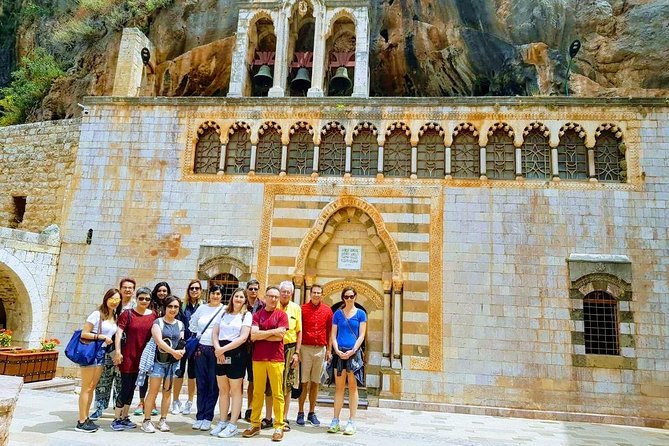
Deir Qozhaya, also known as the Monastery of Saint Anthony the Great, sits at about 950 meters above sea level in the Valley of Qozhaya. Pine and oak cover the surrounding hills, while fruit trees grow along the valley.
The monastery is thought to have been founded and occupied by hermits as early as the beginning of the fourth century. It was looted, burned, and rebuilt several times, yet parts of the site date back to the seventh century.
The scheduled visit lasts about 30 minutes, with no admission fee listed. That makes it a short stop, but an important one. Qozhaya helps explain why Qadisha is associated with Christian monastic life. You are not simply seeing an old religious building. You are seeing a place shaped by centuries of retreat, hardship, rebuilding, and continued devotion.
The setting adds to the experience. The valley, trees, and high elevation create a marked change from Beirut and from the open Roman site at Baalbek. I like that the itinerary puts a mountain monastery beside a major ancient sanctuary. The comparison shows two very different ways people have used Lebanon’s sacred places.
Again, the time is limited. You may find that 30 minutes allows only a quick look rather than a detailed tour of every room or religious object. If you want a longer monastic visit, confirm the exact schedule before booking.
Other days in the cedar country and the Qadisha:
- Guided Small-Group Tour to Qadisha, Bcharee & Cedars with Lunch
★ 5.0 · 39 reviews - Cedars of Lebanon, Qozhaya, & Bcharre – With Lunch (4G on Board)
★ 4.5 · 34 reviews - Cedars, Bsharre & Kozhaya Day Tour
★ 5.0 · 15 reviews - Guided small group to Cedars Reserve & Beiteddine w/lunch+entries
★ 5.0 · 12 reviews
Baalbek’s temples: the day’s main event
Baalbek is the anchor of the excursion. The site was known as Heliopolis during the Hellenistic period and became one of the Roman world’s most important sanctuaries. Its religious tradition began with a Phoenician triad of deities and continued under Rome with Jupiter, Venus, and Bacchus.
The temple complex is a UNESCO World Heritage site and sits near the foothills of the Anti-Lebanon range, beside the fertile Bekaa plain at an altitude of about 1,150 meters.
You get around an hour and a half in Baalbek, followed by another hour and a half specifically at the temples. The schedule appears to allow about three hours for the Baalbek portion, which is appropriate for a first visit. The local guide is particularly valuable here because the ruins are vast, and the scale can be hard to understand without context.
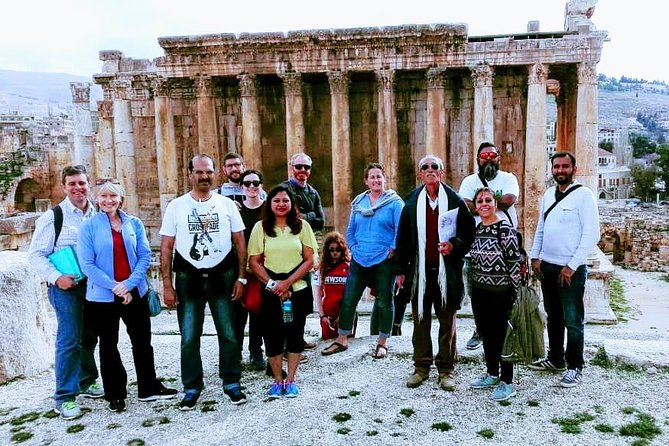
The Temple of Jupiter is famous for its massive surviving columns and huge foundations. The Temple of Bacchus is remarkably well preserved in several sections, with detailed stone carving and a powerful sense of height and proportion.
The site can feel almost unreal in scale. Roman builders worked for more than two centuries to create a sanctuary that could impress pilgrims arriving from across the region. The point was not modest worship. It was grandeur made from stone.
I would allow time to look beyond the best-known columns. Notice the approach to the sanctuary, the arrangement of the courtyards, the carved decoration, and the relationship between the different temple buildings. A guide can help you see how the complex functioned, instead of leaving you with a collection of impressive fragments.
The main drawback is the pace. Three hours sounds generous, but Baalbek is the kind of place where you can easily spend half a day or more. If you enjoy ancient architecture, you may wish for more time to study details and take photographs.
There is also a separate stop at the Mosque of Sayyida Khawla in Baalbek. It is associated with Sayyida Khawla, believed by local people to be the daughter of Imam al-Hussein, the grandson of the Prophet Muhammad. The mosque is said to occupy the place where she was buried after the caravan of captives from Karbala passed through Baalbek.
This stop adds a living religious dimension to the ancient city. It also reminds you that Baalbek is not only an archaeological site. It remains a town with active traditions and places of devotion.
The Stone of the Pregnant Woman
The Stone of the Pregnant Woman is a short stop of about 15 minutes. It is a worked Roman monolith, one of several enormous blocks quarried near Baalbek.
The stone is striking because of its size and because nobody can be entirely sure how such blocks were intended to be moved and fitted into the temple complex. Another huge block is located nearby, and both show the extraordinary scale of the building project.
Fifteen minutes is enough to see the stone, hear its story, and take a few photographs. Do not expect a separate archaeological visit with extensive interpretation. Its real value is as a final reminder of the engineering problem behind Baalbek’s monumental buildings.
After this stop, you return to Beirut. The trip back is part of the full-day commitment, so do not schedule an important evening activity too tightly after the stated return window.
Lunch and the practical value of the package
Lunch at a Lebanese restaurant is included. One account specifically praised the meal, calling it excellent, and that is important because food is not an afterthought on a long day like this. A proper Lebanese meal gives you a break from the vehicle and helps make the route feel like a visit to Lebanon rather than a rapid succession of ticketed sites.
The exact restaurant and menu are not specified, so I would not book this expecting a particular dish. The useful point is that lunch is arranged and included, which simplifies both timing and budgeting.
The tour also includes historical-site admissions, a tour leader, professional guides, an air-conditioned vehicle, and hotel pickup and drop-off. These inclusions matter more here than they would on a compact city tour. The route is wide, the roads take time, and the sites are spread across different parts of northern and central Lebanon.
The maximum group size is 15 people. That is a reasonable small-group limit, though it is not the same as a private tour. One description of the experience called it a very big tour, so you should prepare for a group atmosphere if the vehicle is full.
Who should book this day trip?
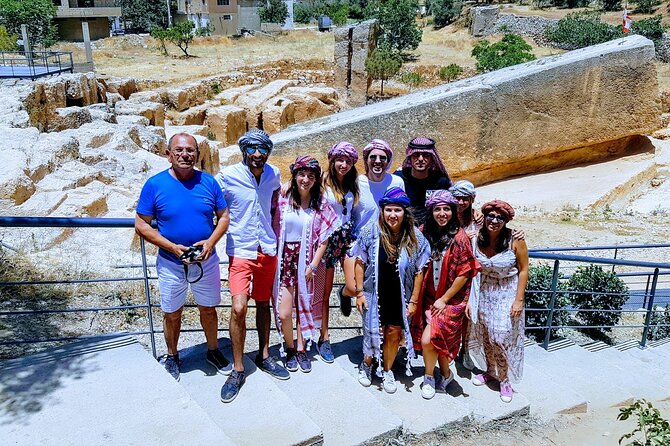
I would recommend it most strongly to visitors with limited time in Beirut who want to see Baalbek but also care about Lebanon’s mountain culture and religious heritage. It is also a sensible choice if you prefer not to navigate long-distance transport or coordinate several entrance tickets yourself.
You will get the most from it if you enjoy variety and can accept a firm schedule. The tour gives you a broad introduction to the Cedars of God, Qadisha, Qozhaya, Bcharre, and Baalbek, but it does not give every site the leisurely attention it deserves.
It may be less suitable if your priority is one slow, detailed archaeological visit. Baalbek deserves hours on its own, and the cedar grove and monastery are both brief stops. A private trip might suit you better if you need flexible timing, but this group tour offers better simplicity and includes more than just the Roman ruins.
The trip involves changes in elevation, mountain roads, and walking around historical sites. The information says most people can participate, but the schedule still favors anyone comfortable with a long sightseeing day.
Booking, cancellation, and final verdict
The tour starts at 8:30 am, offers mobile tickets, and provides confirmation at booking. Free cancellation is available if you cancel at least 24 hours before the local start time. Changes or cancellations made inside that 24-hour window are not accepted for a refund.
Should you book it? Yes, if you want a wide, efficient introduction to northern Lebanon from Beirut. The combination of Baalbek, the cedars, Qozhaya, Qadisha, and lunch gives the $150 price real substance, especially with transport and admission included.
Book with realistic expectations. This is a long day, the group may feel full, and the shorter stops are more about orientation than thorough exploration. If that sounds like a fair trade for seeing several major sites in one outing, this is one of the better ways to make your Beirut stay reach well beyond the city.
FAQ
Where does the tour begin?
The tour begins with pickup offered from your Beirut hotel, with a stated start time of 8:30 am.
How long does the tour last?
The experience lasts approximately eight to nine hours.
What is included in the $150 price?
The price includes hotel pickup and drop-off, an air-conditioned vehicle, comfortable transportation, lunch, a tour leader, professional guides, historical-site admissions, and small-group service.
How large is the group?
The maximum group size is 15 people.
Is lunch included?
Yes. Lunch at a Lebanese restaurant is included in the tour price.
Is a guide provided at Baalbek?
Yes. A local guide leads the Baalbek visit, along with the tour leader.
How long is the stop at the Cedars of God?
The scheduled stop at the Cedars of God lasts about 30 minutes, and admission is listed as free.
How long is the visit to Qozhaya Monastery?
The scheduled visit to Deir Qozhaya, or the Monastery of Saint Anthony the Great, lasts about 30 minutes, with admission listed as free.
What is the cancellation policy?
You can cancel for a full refund if you do so at least 24 hours before the experience begins. Cancellations or changes made less than 24 hours before the start time are not refunded.
More Lunch Experiences in Beirut
- Guided Small-Group Tour to Jeita, Harissa, Byblos with Lunch
★ 5.0 · 361 reviews - Byblos, Jeita Grotto & Harissa Day Trip -With Lunch (4G on Board)
★ 4.5 · 145 reviews - Semi-Private Tour to Jeita Grotto, Harissa & Byblos with Lunch
★ 5.0 · 52 reviews - Sidon, Tyre & Maghdouche Day Trip – With Lunch (4G on Board)
★ 4.5 · 44 reviews
Newest Beirut reviews
- Wine Tasting Tour★ 5.0 · 2 reviews
- Lebanon’s Treasures: Jeita Grotto and Harissa Private Tour★ 5.0 · 2 reviews
- Journey Through Time: Half-Day Private Tour to Baalbek★ 5.0 · 3 reviews
- Traveling Spoon Lebanese Mezze Private Online Cooking Class★ 5.0 · 4 reviews
- Wine Tasting and Culture★ 5.0 · 3 reviews
- Small Group Tour to Baalbek, Anjar & Ksara with Hotel pickup★ 5.0 · 2 reviews
- Small Group Tours to Jeita Grotto and Byblos with tickets★ 5.0 · 3 reviews
- Small-Group Tour with Lunch to Baalbek, Anjar and Ksara★ 5.0 · 3 reviews
Baalbek & Bekaa Valley Tours, compared.
Guided Small-Group Tour to Baalbek, Anjar and Ksara with Lunch
Read our review →
Anjar, Baalbek & Ksara Day Trip – With Lunch (4G on Board)
Read our review →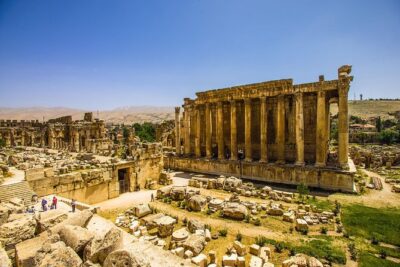
Private Anjar and Baalbek Tour from Beirut with Departure Ticket
Read our review →
Guided Private Full Day Tour to Baalbek, Anjar and Chateau Ksara
Read our review →
Lebanon tour Baalbek ruins & Ksara w/pick-up, lunch,guide+entries
Read our review →
Baalbek Temples & Ksara Caves w/pick-up,guide, entries+lunch
Read our review →
Small Group Tours to Baalbek, Anjar & Chateau Ksara with lunch and Tickets
Read our review →Browse the lists this tour appears in