
Review · JEITA GROTTO TOURS
Guided Full-Day Private Tour to Jeita Grotto, Byblos and Baalbek
Three major sites, one very long day. This private trip packs Lebanon’s most important sights into about 10 hours, with hotel pickup, an air-conditioned vehicle, and a guide to connect the country’s Phoenician, Roman, and natural wonders. I like the door-to-door transport and the chance to see three very different places without arranging separate trips.
I also like the private format. Your group controls the pace more than it would on a large coach tour, and guide Hassan has earned special praise for making the day fun and worthwhile. The main drawback is simple: this is an ambitious schedule. You will spend many hours on the road, and admission charges for Jeita Grotto, Byblos Castle, and the Baalbek temple complex are not included.
In This Review
- Key points to know before booking
- Why this Beirut day trip works
- Jeita Grotto: Lebanon’s remarkable underground world
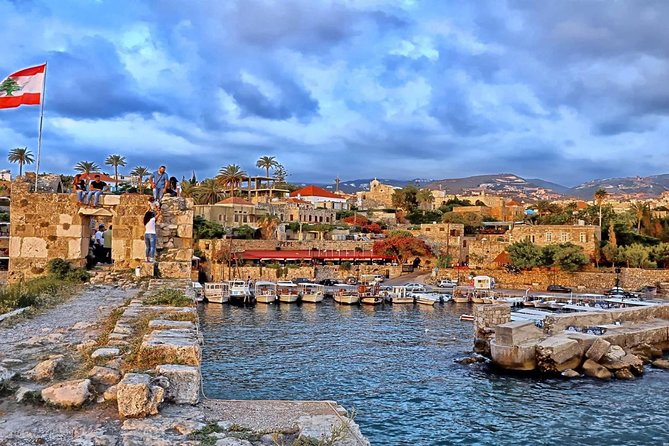
- Byblos connects Phoenician history with a working port town
- Byblos Castle and the archaeological site
- The old souk and ancient harbor
- Baalbek: the day’s monumental climax
- Temple of Jupiter and Temple of Bacchus
- The Stone of the Pregnant Woman
- The schedule, transport, and energy level
- Who will get the most from this tour
- Price, tickets, and cancellation terms
- Should you book the Jeita, Byblos, and Baalbek tour?
- FAQ
- How long does the tour last?
- Is hotel pickup and drop-off included?
- Is this a private tour?
- Are admission tickets included in the price?
- Is lunch included?
- Is transportation provided?
- What is the cancellation policy?
Key points to know before booking
- Three major sights in one day: Visit Jeita Grotto, Byblos, and Baalbek from Beirut in roughly 10 hours.
- Hassan is specifically praised: One available review calls the tour with Hassan amazing and strongly recommends it for a full day of exploring.
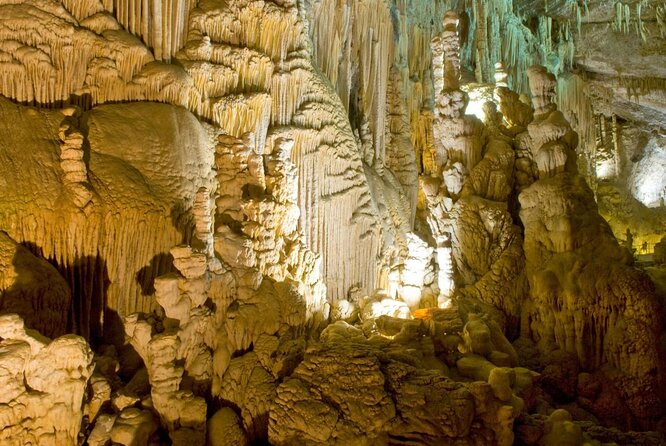
- Jeita has two cave levels: The upper cave is filled with crystal formations, while the lower gallery includes an underground river and lake.
- Byblos gives you several kinds of history: You see the castle, archaeological ruins, old souk, and ancient port in one compact stop.
- Baalbek is the grand finale: The Roman sanctuary includes the Temple of Jupiter, Temple of Bacchus, and the enormous Stone of the Pregnant Woman.
- Budget for extra entrance fees and lunch: Transportation and guiding are included, but food and listed admission tickets are not.
Why this Beirut day trip works
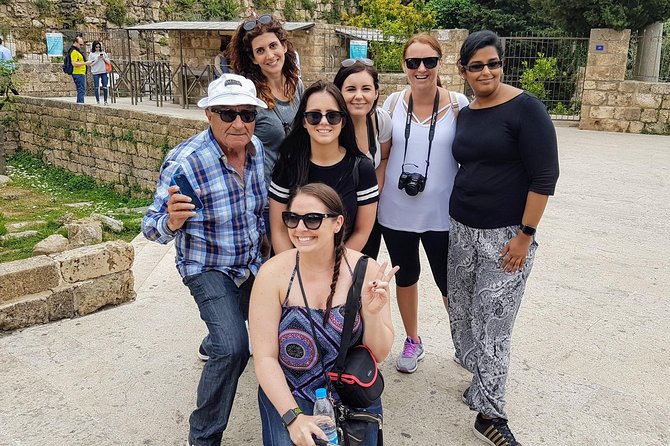
Lebanon rewards travelers who can connect its sites rather than seeing each one in isolation. Jeita Grotto shows the country’s natural side. Byblos brings you into the world of Phoenician seafaring and early writing. Baalbek then delivers Roman architecture on a huge scale.
That variety is the strongest reason to choose this tour. You are not spending the entire day looking at similar ruins. Instead, the experience moves from underground rock formations to a historic coastal town, then inland to the Bekaa Valley and one of the Roman world’s greatest sanctuaries.
The private setup matters too. Hotel pickup and drop-off from Beirut remove the work of arranging transport across three separate areas. The vehicle is air-conditioned, which is welcome on a full day that includes a long journey toward Baalbek.
At $100 per person, the value depends on your group size and priorities. You are paying for private transport, a tour leader, and professional guiding, not just entry to attractions. For someone with only a short stay in Lebanon, that can be a sensible use of time. You should still add lunch and entrance fees to the real budget.
Other ways to see the Jeita caves:
- Guided Small-Group Tour to Jeita, Harissa, Byblos with Lunch
★ 5.0 · 361 reviews - Jeita Grotto – Harissa – Byblos Trip
★ 5.0 · 169 reviews - Byblos, Jeita Grotto & Harissa Day Trip -With Lunch (4G on Board)
★ 4.5 · 145 reviews
Jeita Grotto: Lebanon’s remarkable underground world
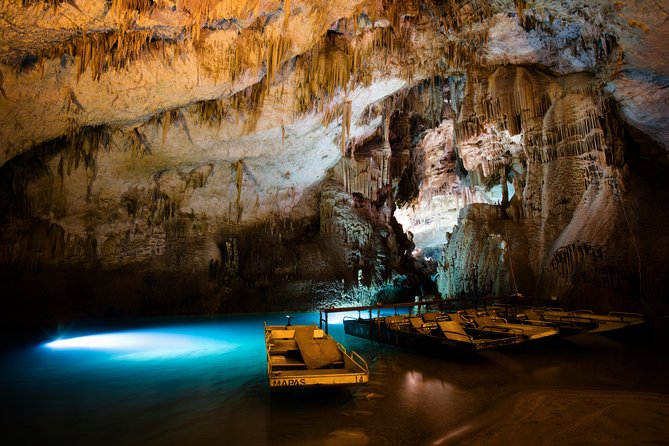
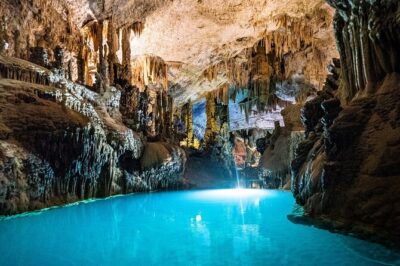
The first major stop is Jeita Grotto, about 300 metres above sea level. It is a system of two separate but connected limestone caves formed over millions of years. The complex is described as the longest cave system in the Middle East, with a total height difference of 305 metres.
The upper cave is the visual showpiece. It stretches for about 2,130 metres and contains stalactites, stalagmites, columns, mushrooms, ponds, curtains, and draperies. Those names can sound like a standard cave checklist, but the appeal is the sheer range of shapes created by mineral deposits over vast periods.
You get about one hour here. That is enough for a strong first impression, but it is not a slow, detailed cave study. If underground geology is your main interest, the time may feel short. If you are using the tour to see several parts of Lebanon in one day, the visit gives you a memorable taste without taking over the schedule.
The lower gallery lies about 60 metres beneath the upper one and stretches for roughly 6,200 metres. It is crossed by a smooth underground river and a lake. The important practical point is that the cave experience has two distinct levels, so you are seeing more than one large chamber dressed in similar rock formations.
Admission is not included. Check the current entry arrangements when you book, since the tour price covers transport and guiding rather than every site ticket. Comfortable footwear is sensible for any visit involving cave paths, although the supplied information does not specify a detailed accessibility policy.
Byblos connects Phoenician history with a working port town
From Jeita, the tour turns to Byblos, one of the oldest Phoenician cities. Its settlement reaches back to Neolithic times, and the city is closely tied to Mediterranean legends, trade, and the spread of the Phoenician alphabet.
Byblos is valuable because the history is not confined to one monument. Within a short visit, you can see archaeological remains, a Crusader castle, old market streets, and the port. The result is a more human-scale stop than Baalbek, where the stones can feel almost too massive to take in at once.
The main Byblos visit lasts about an hour, followed by separate time at the castle, old souk, and port. The schedule is brisk, but the stops are close enough to create a clear picture of the old city.
Byblos Castle and the archaeological site
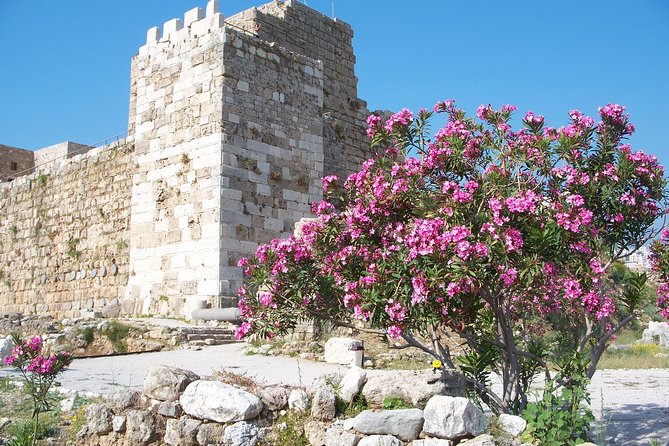
Byblos Castle is a restored 12th-century Crusader fortress surrounded by a dry moat about 10 metres wide. It sits inside an archaeological area containing the remains of the Temple of Baalat Gebal and the Temple of the Obelisks.
The castle’s square keep gives you a useful view across the ruins and toward the sea. Bronze Age dwellings can be seen below the walls, which helps connect the surviving medieval structure with a much older settlement. Inside, a small museum and information panels explain the city’s story.
You have about 30 minutes here, and admission is not included. That half-hour should be treated as a focused look, not a full museum visit. I would use the time to climb for the view, scan the ruins, and let the guide explain how the Phoenician and Crusader layers fit together.
More runs out to the Bekaa and its Roman temples:
- Guided Small-Group Tour to Baalbek, Anjar and Ksara with Lunch
★ 5.0 · 511 reviews - Anjar, Baalbek & Ksara Day Trip – With Lunch (4G on Board)
★ 4.5 · 181 reviews - Baalbek – Anjar – Ksara Trip From Beirut
★ 4.5 · 80 reviews - Private Anjar and Baalbek Tour from Beirut with Departure Ticket
★ 5.0 · 79 reviews
The old souk and ancient harbor
The old souk is a short 10-minute stop. Its cobblestone lanes offer souvenirs, antiques, and older buildings, though the brief timing leaves little room for serious shopping. You can stroll, take in the architecture, and keep moving.
Another 10 minutes goes to Byblos Port. Lebanese tradition identifies it as the oldest port in the world, and around 3000 BC it served as a major timber shipping center in the eastern Mediterranean. That timber trade helps explain why Byblos mattered far beyond its immediate shoreline.
The port stop is short, so do not expect a long waterfront visit. Its value is mainly historical: you are looking at the place that helped connect Phoenicia with the wider Mediterranean.
Baalbek: the day’s monumental climax
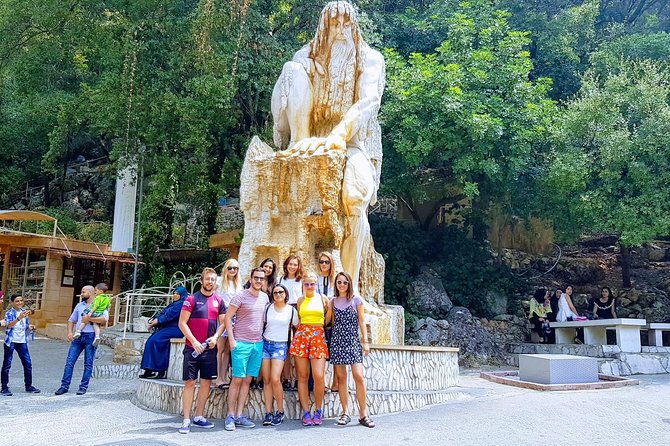
Baalbek is the most dramatic stop and the reason many people will accept the long driving time. The ancient city lies at the foot of the Anti-Lebanon range, beside the Bekaa plain, at an altitude of about 1,150 metres.
The site was known as Heliopolis during the Hellenistic period. In Roman times, it remained a major religious center dedicated to a triad of deities: Jupiter, Venus, and Bacchus. Pilgrims came here in large numbers, and the sanctuary grew into one of the finest examples of Imperial Roman architecture.
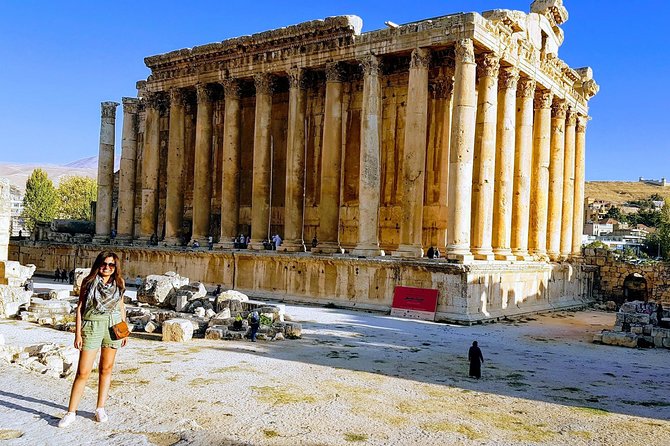
The scale is difficult to understand from photographs. The complex includes the Temple of Jupiter and the Temple of Bacchus, two of the largest and grandest Roman temple ruins. Baalbek became a UNESCO World Heritage site in 1984.
The listed time at Baalbek is about an hour and a half, with another hour and a half assigned to the temples themselves. In practice, those blocks form the central part of your visit. Your guide can help you read the remains instead of simply walking past huge columns and broken walls.
Temple of Jupiter and Temple of Bacchus
The Temple of Jupiter is known for colossal construction, while the Temple of Bacchus is among the best-preserved major Roman temples. Together, they show how Roman builders used enormous stones, formal courts, columns, and sacred buildings to create a place meant to impress pilgrims.
The complex developed over more than two centuries. That long building period matters because Baalbek is not one isolated monument. It is an expanding sanctuary shaped by changing religious and political power.
Admission to the temple complex is not included, so plan for an additional fee. The information provided does not give a current ticket price. You should also confirm the opening details close to your travel date.
Baalbek receives the longest single attention of the day, and it deserves it. Still, one and a half hours is a guided overview rather than a complete archaeological study. If you enjoy ancient sites, you may wish you had more time. If your goal is to see the main monuments in a single day, the allocation is reasonable.
The Stone of the Pregnant Woman
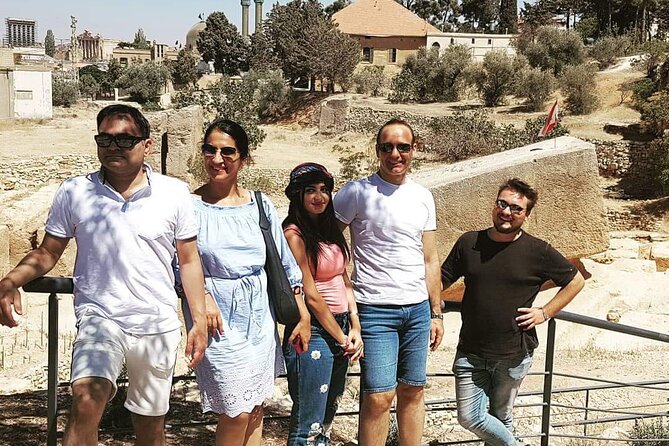
The Stone of the Pregnant Woman is a worked Roman monolith near the temple complex. It belongs to a group of enormous ancient blocks that are among the largest ever quarried. Another nearby stone adds to the sense of scale.
The blocks were likely intended for the Roman temples. Their size raises obvious questions about quarrying, transport, and construction, and this is where a guide adds real value. A quick stop can otherwise become a photo beside a very large rock. Allow about 30 minutes to look carefully and hear the explanation.
The name itself is unusual, and the stone is one of the day’s most memorable details because it shows the extreme ambition behind Baalbek’s construction. The temples are grand. This monolith explains just how grand the builders were thinking.
The schedule, transport, and energy level
The day begins at 7:30 a.m. with pickup from your Beirut hotel. That early start is necessary. Jeita, Byblos, and Baalbek are spread across different parts of Lebanon, and the tour needs both sightseeing time and substantial road time.
You travel in a private, air-conditioned vehicle with hotel drop-off at the end. That is much easier than piecing together local transport, especially when you want to reach Baalbek and return to Beirut on the same day.
The itinerary lists roughly six hours and 20 minutes of visits, before accounting for the drive between sites. That tells you what kind of day this is: full, efficient, and tiring. You will not have long stretches for lingering over coffee, extended shopping, or a leisurely meal.
Lunch is not included. Since the day is tightly timed, ask the operator how lunch fits into the route when confirming your booking. The supplied details do not name a restaurant or promise a particular meal, so do not assume food is covered by the $100 price.
The tour is private, meaning only your group participates. This is useful for families, couples, or friends who want a shared day without strangers setting the pace. Group discounts are also offered, which may improve the per-person value for a larger party.
Who will get the most from this tour
I would recommend this experience most strongly if you have limited time in Lebanon and want the major sights handled in one organized day. It is also a good fit if you value a guide’s historical explanations and do not want to negotiate several long-distance transfers yourself.
The tour suits people who enjoy variety. Jeita offers geology, Byblos combines ancient and medieval remains with a port and market, and Baalbek delivers monumental Roman ruins. Each stop feels different.
It is less suitable if you dislike early starts, long drives, or a fixed schedule. Visitors who want extended time at each archaeological site should consider a slower plan with overnight stays or separate day trips. The private format helps, but it cannot change the geography of Lebanon.
Most people can participate, according to the available tour information. Still, because the exact walking surfaces, stairs, and cave arrangements are not described, anyone with mobility concerns should ask the provider for current site details before paying.
Price, tickets, and cancellation terms
The advertised cost is $100 per person. That includes hotel pickup and drop-off, private air-conditioned transport, a tour leader, and professional guiding. It does not include lunch or admission tickets for Jeita Grotto, Byblos Castle, and the Baalbek temple complex.
That makes the tour’s value depend on what you would otherwise spend on transport and planning. For a solo visitor, $100 plus entrance fees and lunch may feel substantial. For a private group sharing the vehicle, the group discount can make the arrangement more appealing.
Confirmation is provided at booking, and free cancellation is available up to 24 hours before the start time for a full refund. Cancellations or changes within 24 hours are not refunded or accepted, and the cut-off follows local time.
Should you book the Jeita, Byblos, and Baalbek tour?
Book it if you want a practical one-day introduction to Lebanon’s biggest sights and you are willing to trade leisurely pacing for coverage. The combination is unusually strong: an underground cave, a Phoenician city, and Roman temples of extraordinary scale.
Before booking, confirm the current admission costs and ask how lunch is handled. If possible, request Hassan, whose guiding receives the clearest praise in the available feedback. I would choose this tour for a short Beirut stay, a private group, or anyone who wants the difficult transport logistics taken care of.
Skip it if your ideal holiday moves slowly. For that style, Byblos and Baalbek each deserve their own day. But if your time is short, this is an efficient and memorable way to put three of Lebanon’s essential sights within reach.
FAQ
How long does the tour last?
The tour lasts approximately 10 hours and begins at 7:30 a.m.
Is hotel pickup and drop-off included?
Yes. Pickup and drop-off from your Beirut hotel are included.
Is this a private tour?
Yes. Only your group participates in the activity.
Are admission tickets included in the price?
No. Admission to Jeita Grotto, Byblos Castle, and the Baalbek temple complex is not included.
Is lunch included?
No. Lunch is not included.
Is transportation provided?
Yes. The tour includes private transportation in a comfortable, air-conditioned vehicle.
What is the cancellation policy?
You can cancel at least 24 hours before the start time for a full refund. Cancellations or changes made less than 24 hours before the experience are not accepted and are not refunded.
More Byblos Tours
- Semi-Private Tour to Jeita Grotto, Harissa & Byblos with Lunch
★ 5.0 · 52 reviews - Small Group Tour to Jeita Grotto, Harisa & Byblos with Hotel pickup
★ 5.0 · 49 reviews - Private Guided Tour to Jeita Grotto through Harissa and Byblos
★ 5.0 · 48 reviews - New Guided Semi-Private Tour to Jeita Grotto, Harissa & Byblos
★ 5.0 · 47 reviews
Newest Beirut reviews
- Wine Tasting Tour★ 5.0 · 2 reviews
- Journey Through Time: Half-Day Private Tour to Baalbek★ 5.0 · 3 reviews
- Lebanon’s Treasures: Jeita Grotto and Harissa Private Tour★ 5.0 · 2 reviews
- Traveling Spoon Lebanese Mezze Private Online Cooking Class★ 5.0 · 4 reviews
- Wine Tasting and Culture★ 5.0 · 3 reviews
- Small Group Tour to Baalbek, Anjar & Ksara with Hotel pickup★ 5.0 · 2 reviews
- Small Group Tours to Jeita Grotto and Byblos with tickets★ 5.0 · 3 reviews
- Small-Group Tour with Lunch to Baalbek, Anjar and Ksara★ 5.0 · 3 reviews
Jeita Grotto Tours, compared.
Guided Small-Group Tour to Jeita, Harissa, Byblos with Lunch
Read our review →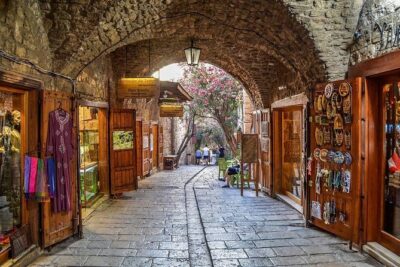
Byblos, Jeita Grotto & Harissa Day Trip -With Lunch (4G on Board)
Read our review →
Semi-Private Tour to Jeita Grotto, Harissa & Byblos with Lunch
Read our review →
Small Group Tour to Jeita Grotto, Harisa & Byblos with Hotel pickup
Read our review →
Private Guided Tour to Jeita Grotto through Harissa and Byblos
Read our review →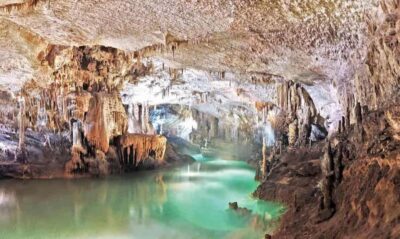
Jeita Grotto, Harissa & Byblos Private Day Tour
Read our review →
Jeita Grotto, Harissa, Byblos group tour & Guide
Read our review →Browse the lists this tour appears in