
Review · BAALBEK & BEKAA VALLEY TOURS
Guided Full-Day Private Tour to Byblos and Baalbek from Beirut
Two ancient cities, one very long day. This private tour links Byblos and Baalbek, two of Lebanon’s most important historic places, in about 10 hours from Beirut. I like the personal format, with private guides at both archaeological sites, and I like that admission fees, transport, and hotel pickup are included.
The main drawback is the pace. Byblos receives several short visits, while Baalbek is a long drive from Beirut, so this is a full day with plenty of time in the vehicle. Still, for a first look at Lebanon’s ancient past, the combination is hard to beat.
I would especially consider this tour if you want door-to-door convenience and direct explanations at the sites. Guide Rita received particular praise for answering questions and making the day comfortable, supported by an excellent driver. Lunch is not included, so plan for that extra cost.
In This Review
- Key points to know before booking
- Why this Beirut day trip works
- Byblos: where Phoenician history meets the sea
- Climbing Byblos Castle
- Byblos Old Souk and the ancient port
- The road to Baalbek and why the schedule matters
- Baalbek’s Roman temples and enormous scale
- Sayyida Khawla Shrine: a brief modern religious stop
- The Stone of the Pregnant Woman
- What the private guides add
- Is $100 per person good value?
- Who should book this tour?
- Should you book it?
- FAQ
- How long is the tour?
- What time does the tour start?
- Does the tour provide hotel pickup and drop-off?
- Is transportation private?
- Are entrance fees included?
- Is lunch included?
- Which sites are visited in Byblos?
- Which sites are visited in Baalbek?
- Can I cancel for a full refund?
Key points to know before booking
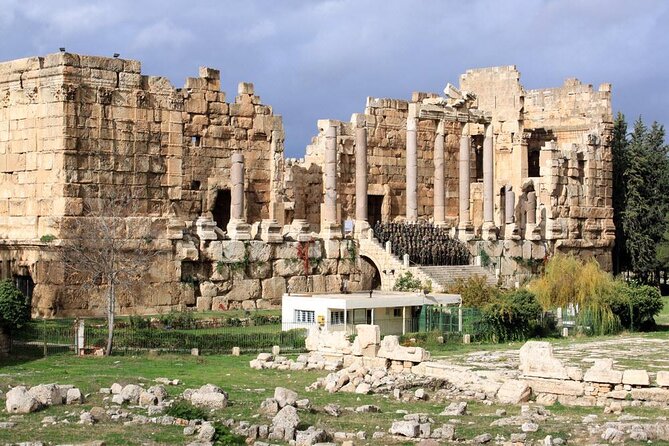
- Baalbek is the day’s great spectacle: The Roman temple complex includes enormous columns, grand courtyards, and the remains of a sanctuary built for Jupiter, Venus, and Bacchus.
- Byblos packs several eras into one stop: You can see Phoenician remains, Bronze Age dwellings, a Crusader castle, a medieval souk, and an ancient port.
- The private format matters: Your group has its own vehicle, tour leader, and local guides, with more room for questions than on a large coach outing.
- The Stone of the Pregnant Woman is a quick but striking stop: This huge worked Roman block helps explain the scale of Baalbek’s construction.
- The schedule begins early: Pickup starts at 7:30 a.m., and the full program lasts about 10 hours.
- The price covers the costly basics: At $100 per person, the package includes transport, hotel pickup and drop-off, guides, and entrance fees, but not lunch.
Why this Beirut day trip works
Lebanon offers ancient sites from several cultures within a relatively compact country, but visiting them independently can involve planning roads, tickets, parking, and local explanations. This tour removes much of that work. You are collected from your Beirut hotel, ride in an air-conditioned private vehicle, and have local guides at the two main sites.
The value is not only the transport. Baalbek is vast and full of names, rulers, gods, and reconstructed elements that can blur together without context. Byblos also rewards explanation, since its ruins represent thousands of years rather than one neatly preserved period.
The private arrangement gives you a better chance to stop and ask about details that catch your eye. If you are interested in archaeology, religion, architecture, or the long story of Mediterranean trade, that access can make the difference between looking at stones and understanding what you are seeing.
The tradeoff is time. You are attempting two major destinations in one day, with several stops in Byblos and Baalbek. If you prefer slow lunches, long museum visits, or hours of unplanned wandering, the schedule may feel tight.
More runs out to the Bekaa and its Roman temples:
- Guided Small-Group Tour to Baalbek, Anjar and Ksara with Lunch
★ 5.0 · 511 reviews - Anjar, Baalbek & Ksara Day Trip – With Lunch (4G on Board)
★ 4.5 · 181 reviews - Baalbek – Anjar – Ksara Trip From Beirut
★ 4.5 · 80 reviews
Byblos: where Phoenician history meets the sea
Byblos is the gentler opening to the day. The city has been inhabited since Neolithic times and is closely tied to the history of the Mediterranean. It is also linked to the Phoenician alphabet, making it more than a pretty coastal town with old stones.
You begin with about two hours in Byblos itself. That gives you time to get oriented and see how the modern town and ancient remains sit close together. I would pay attention to the way different periods appear side by side, since Byblos is best understood as a long-running settlement rather than a single monument.
The city’s importance grew from its connection to the sea and regional trade. Its Phoenician past is especially significant because the Phoenicians helped spread an alphabetic writing system around the Mediterranean. Your guide can connect the physical ruins to that wider story, which is one of the strongest reasons to choose a guided visit.
Climbing Byblos Castle
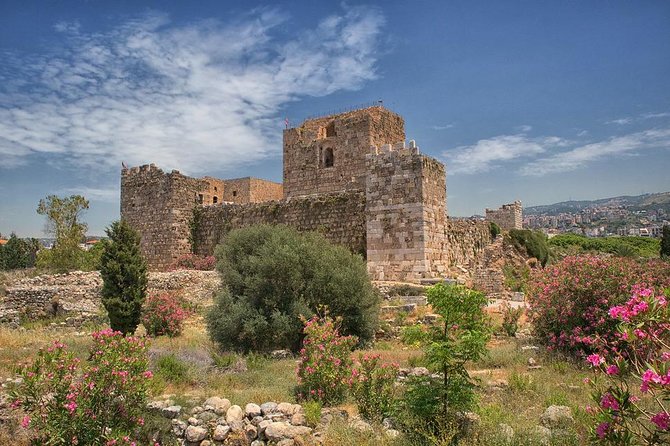
Byblos Castle is the main architectural feature of the archaeological site. Built by Crusaders in the 12th century, it is surrounded by a dry moat about 10 meters wide and has been restored enough for you to understand its shape and purpose.
The square keep offers an excellent view over the site. From above, you can look down toward Bronze Age dwellings and across toward the sea. This viewpoint is valuable because the ruins can otherwise seem flat and scattered when seen only from ground level.
Inside, a small museum and information panels outline the city’s past. Do not expect a large museum collection. The attraction here is the combination of the castle, the view, and the layers of earlier remains around its walls.
The castle visit lasts about an hour, and the admission fee is included. Wear shoes suitable for uneven historic surfaces, since the experience involves moving through an archaeological area rather than a polished modern attraction.
Byblos Old Souk and the ancient port
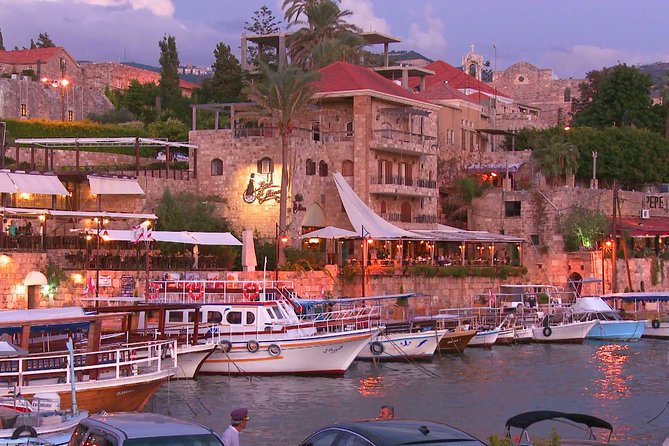
The old souk receives about 15 minutes, so think of it as a short stroll rather than a serious shopping session. Its cobblestone streets, old buildings, souvenirs, and antiques provide a change from the formal archaeological site.
This is a useful pause in the day. You can see the living town around the ruins and browse for a small keepsake without losing much time. If you want to shop at length, you may find the stop too brief, but the compact visit suits a packed itinerary.
The port also receives about 15 minutes. It is believed by Lebanese people to be the oldest port in the world, and around 3000 BC it served as an important timber shipping center in the eastern Mediterranean.
That claim is part of the site’s local identity, but the port’s real value is broader. It helps you picture how Byblos connected inland resources with sea trade. A short look is enough to link the city’s ancient prosperity with its coastal position.
Other trips down to the old harbour at Byblos:
- Guided Small-Group Tour to Jeita, Harissa, Byblos with Lunch
★ 5.0 · 361 reviews - Jeita Grotto – Harissa – Byblos Trip
★ 5.0 · 169 reviews - Byblos, Jeita Grotto & Harissa Day Trip -With Lunch (4G on Board)
★ 4.5 · 145 reviews - Semi-Private Tour to Jeita Grotto, Harissa & Byblos with Lunch
★ 5.0 · 52 reviews
The road to Baalbek and why the schedule matters
Baalbek is the larger commitment of the day. The site lies at the foot of the southwestern slope of the Anti-Lebanon Mountains, beside the fertile Bekaa plain, at an altitude of about 1,150 meters.
The tour starts at 7:30 a.m. and lasts roughly 10 hours. Since the route includes Beirut, Byblos, Baalbek, and the return journey, you should expect a substantial amount of driving. The air-conditioned private vehicle and hotel pickup help make that easier, particularly when you do not want to manage directions or transport connections yourself.
The private vehicle also allows the program to remain focused on your group. You are not joining a large public excursion with fixed commentary and little chance to ask questions. The day is still busy, but it is more personal.
Bring water and set aside money for lunch. Lunch is the only clear major expense not included in the tour price, so ask your guide or tour leader about the meal plan at the start of the day.
Baalbek’s Roman temples and enormous scale
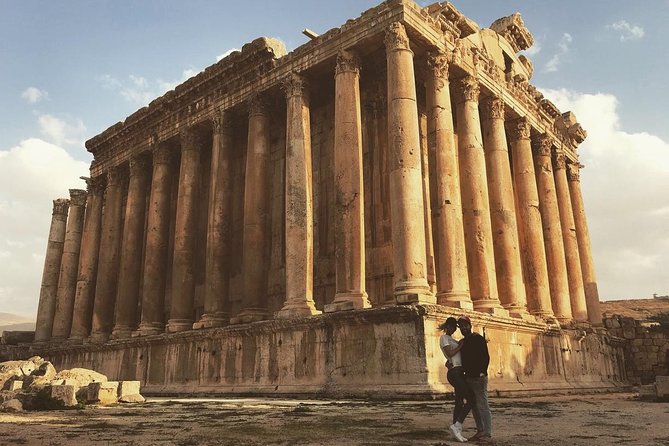
Baalbek is the high point of the tour. The temple complex reached its greatest importance during Roman times and was built over more than two centuries. Its size is the first thing that hits you: colossal construction, huge architectural fragments, and open spaces that make ordinary Roman ruins feel modest.
The sanctuary was devoted to the Romanized Triad of Heliopolis: Jupiter, Venus, and Bacchus. The religious story is also tied to an older Phoenician cult, so the site reflects several cultural layers rather than a simple Roman import.
You have about 90 minutes at the temples, with admission included and a local guide to explain the complex. That is enough for a strong introduction, though not enough to inspect every stone or linger over every section. I would listen closely to the guide’s explanation of the building program, since the physical scale is easier to appreciate when you understand how long the construction took.
Baalbek rewards looking upward and outward. Notice the size of the surviving columns, the relationship between the courtyards and temples, and the way the ruins occupy such a broad space. Even if you are not an archaeology specialist, you can grasp the ambition of the builders.
The site is also a reminder that ancient monuments were working religious centers. Pilgrims came to honor the three deities, and the complex functioned as a major sanctuary in the Roman world. That human purpose gives the stones more meaning than architectural size alone.
Sayyida Khawla Shrine: a brief modern religious stop
The tour includes a five-minute visit to the Sayyida Khawla Shrine in Baalbek. The mosque is built where Sayyida Khawla, the daughter of Imam al-Hussein and granddaughter of the Prophet Muhammad, is believed to have been buried.
The stop is short, but it adds a later religious layer to a day otherwise focused heavily on Phoenician, Crusader, and Roman remains. Local belief holds that Khawla died and was buried at Baalbek when the caravan of captives from Karbala passed through the area.
Because the visit lasts only five minutes, do not expect a full architectural tour or extended time inside. Its value is in seeing that Baalbek remains a place of religious importance, not simply an archaeological site preserved for history.
The Stone of the Pregnant Woman
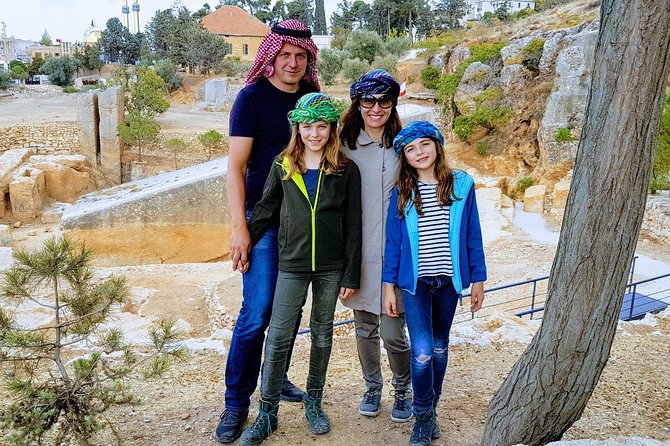
The Stone of the Pregnant Woman receives about 30 minutes, giving you more time than the shrine stop. It is a worked Roman monolith, and together with another ancient block nearby, it is among the largest stones ever quarried.
The blocks were likely intended for the nearby Roman temple complex. Their size helps explain the astonishing engineering behind Baalbek. Once you see the stone as a building component rather than an isolated curiosity, the temple complex feels even more ambitious.
This is a good place to ask questions. How was the block quarried? How might it have been moved? Why were stones of such scale chosen? The supplied tour information does not promise a detailed engineering demonstration, but your local guide can provide context and help you focus on the most important features.
The nickname is memorable, but the fact behind it is more interesting than the name. You are looking at monolithic construction on a scale that had few equals in antiquity.
What the private guides add
The tour includes a tour leader and professional local guides at Byblos and Baalbek. That division is useful because each site has its own history and visual language. Byblos needs help sorting Phoenician, Bronze Age, Crusader, and later layers, while Baalbek demands a clear explanation of Roman religion and construction.
Rita is the one guide specifically praised in the available feedback. Her strengths were answering questions and helping make the day comfortable. That detail matters to me because a private tour is only as good as the person leading it. A guide who welcomes questions can adjust the experience to your interests instead of delivering a fixed speech.
The driver also received strong praise for comfort and service. Since the tour involves a long day and considerable road time, good driving and a comfortable vehicle are not minor extras. They are central to how you will feel by the final stop.
Is $100 per person good value?
At $100 per person, the tour offers solid value if you are traveling with enough interest in both sites to justify the long day. The fee includes hotel pickup and drop-off, private air-conditioned transportation, a tour leader, local guides, and all admission fees.
Buying those pieces separately could take more effort and could make the final cost less predictable. The private format is especially useful for couples, families, or small groups who would rather pay for personal attention than join a larger shared excursion.
The price is less compelling if you only want to see one destination. Byblos alone needs less time, while Baalbek alone could justify a focused visit for anyone deeply interested in Roman architecture. This package makes the most sense when you want both and have limited time in Lebanon.
Remember to budget for lunch. No meal is included, and the schedule is long enough that you will need to arrange food during the day.
Who should book this tour?
I would recommend it to first-time visitors based in Beirut who want an efficient introduction to Lebanon’s major ancient sites. It also suits anyone who values hotel pickup, private transport, and the chance to ask a guide questions without a large group around them.
History lovers will get the most from the trip, but you do not need a technical background. Byblos offers a mix of town, sea, castle, and ruins, while Baalbek supplies the grand Roman spectacle. The different moods keep the day from feeling like two identical archaeological visits.
I would think twice if you dislike early starts, long drives, or tightly organized days. The itinerary gives you a broad sample of both destinations, not unlimited free time. People with mobility concerns should also note that the tour takes place across historic sites, where surfaces and access may not be as smooth as in a modern museum. The supplied information says most people can participate, but it does not provide detailed accessibility specifications.
Free cancellation is available if you cancel at least 24 hours before the 7:30 a.m. start. Changes or cancellations made inside that window are not accepted for a refund.
Should you book it?
Book this tour if you want to see both Byblos and Baalbek from Beirut without arranging transport, tickets, and local explanations yourself. The included fees and private vehicle make $100 per person a fair package price, and Rita’s praised attention to questions is exactly the kind of personal touch this format should provide.
Skip it if you want a slow, independent day or if Baalbek deserves your entire focus. For most visitors with only one open day, though, this is a practical and memorable way to connect Lebanon’s Phoenician, Crusader, Roman, and living religious traditions.
FAQ
How long is the tour?
The tour lasts approximately 10 hours.
What time does the tour start?
The scheduled start time is 7:30 a.m.
Does the tour provide hotel pickup and drop-off?
Yes. Round-trip pickup and drop-off from your Beirut hotel are included.
Is transportation private?
Yes. The experience is a private tour with comfortable transportation in an air-conditioned vehicle, and only your group participates.
Are entrance fees included?
Yes. Admission to Byblos Castle and the Baalbek Temple Complex is included.
Is lunch included?
No. Lunch is not included in the tour price.
Which sites are visited in Byblos?
The program includes Byblos, Byblos Castle, the Old Souk, and Byblos Port.
Which sites are visited in Baalbek?
The program includes the Baalbek Temples, Sayyida Khawla Shrine, and the Stone of the Pregnant Woman.
Can I cancel for a full refund?
Yes, if you cancel at least 24 hours before the experience start time. Cancellations made less than 24 hours before the start are not refunded.
Newest Beirut reviews
- Wine Tasting Tour★ 5.0 · 2 reviews
- Lebanon’s Treasures: Jeita Grotto and Harissa Private Tour★ 5.0 · 2 reviews
- Journey Through Time: Half-Day Private Tour to Baalbek★ 5.0 · 3 reviews
- Traveling Spoon Lebanese Mezze Private Online Cooking Class★ 5.0 · 4 reviews
- Wine Tasting and Culture★ 5.0 · 3 reviews
- Small Group Tour to Baalbek, Anjar & Ksara with Hotel pickup★ 5.0 · 2 reviews
- Small Group Tours to Jeita Grotto and Byblos with tickets★ 5.0 · 3 reviews
- Small-Group Tour with Lunch to Baalbek, Anjar and Ksara★ 5.0 · 3 reviews
Baalbek & Bekaa Valley Tours, compared.

Guided Small-Group Tour to Baalbek, Anjar and Ksara with Lunch
Read our review →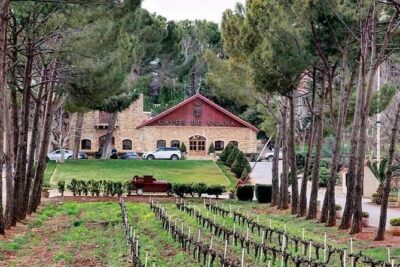
Anjar, Baalbek & Ksara Day Trip – With Lunch (4G on Board)
Read our review →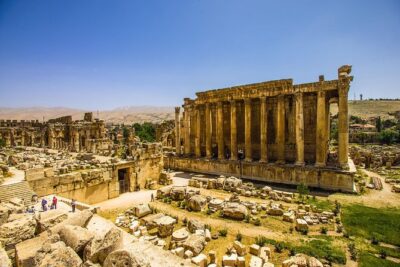
Private Anjar and Baalbek Tour from Beirut with Departure Ticket
Read our review →
Guided Private Full Day Tour to Baalbek, Anjar and Chateau Ksara
Read our review →
Lebanon tour Baalbek ruins & Ksara w/pick-up, lunch,guide+entries
Read our review →
Baalbek Temples & Ksara Caves w/pick-up,guide, entries+lunch
Read our review →
Small Group Tours to Baalbek, Anjar & Chateau Ksara with lunch and Tickets
Read our review →Browse the lists this tour appears in