
Review · BAALBEK & BEKAA VALLEY TOURS
Exclusive Excursion: Discover Baalbek, Anjar, and Chateau Ksara
Ancient stones, modern Lebanese wine. This 8-hour outing pairs Baalbek’s colossal Roman temples with the quieter Umayyad ruins of Anjar, then finishes at Chateau Ksara in the Bekaa Valley. I like the private car and guide, which make a long day from Beirut far easier, and I like the mix of archaeology, religious heritage, and wine. The main drawback is that admissions and lunch are extra, so the $70 price is not the final cost.
You start at 8:30 a.m. with hotel pickup and return by air-conditioned vehicle. I also like that the wine tasting comes at the end, after the driving is finished. Still, this is a packed day with several hours on the road, and the short scheduled visits mean you should expect highlights rather than a slow, scholarly look at every site.
In This Review
- Key points to know before booking
- Why this Beirut day trip works so well
- Baalbek and the Roman world in one powerful hour
- The Mosque of Sayyeda Khawla and Baalbek’s living faith
- The Stone of the Pregnant Woman puts Roman engineering in perspective
- Anjar reveals a different kind of ancient city
- Chateau Ksara brings wine and a calmer final hour
- What $70 really gets you
- Who will get the most from this private excursion
- Should you book this Baalbek, Anjar, and Ksara tour?
- FAQ
- What is the start time for the tour?
- How long does the experience last?
- Is hotel pickup included?
- Is the tour private?
- What transportation is provided?
- Are admission tickets included?
- Is lunch included?
- Can I cancel for a full refund?
Key points to know before booking
- Baalbek delivers the day’s biggest visual impact: Roman temples, huge stone blocks, and the remains of the ancient sanctuary of Heliopolis.
- The Stone of the Pregnant Woman is a quick but striking stop: It helps you understand the scale of Roman building at Baalbek.
- Anjar changes the historical focus: Its Umayyad ruins show an 8th-century Islamic city planned around trade routes and palace life.
- Chateau Ksara adds a welcome change of pace: You tour historic cellars and taste Lebanese wine at a winery founded in 1857.
- Private transport matters here: Hotel pickup, a dedicated vehicle, and a guide make a full-day excursion more comfortable than arranging several separate trips.
- Budget for extras: The tour price is $70 per person, but entrance fees and lunch are not included.
Why this Beirut day trip works so well
Lebanon packs several very different eras into a small country. On this route, you move from Phoenician religious roots and Roman imperial power to Umayyad city planning and modern Lebanese winemaking. That gives the day more range than a simple ruins tour.
I especially like the private format. You are not being moved around as part of a large group, and your own guide can keep the explanations focused on what interests you. The vehicle also matters because Baalbek and Anjar are well beyond central Beirut, while Chateau Ksara sits in the Bekaa Valley. Door-to-door transport removes the need to negotiate separate taxis or figure out connections between widely spaced sites.
The tour runs for about eight hours, beginning at 8:30 a.m. That early start is useful. You have a better chance of reaching the major monuments while your energy is still good, and the day has a clear rhythm: Baalbek first, Anjar next, then wine at Ksara.
This is not a route for anyone hoping to linger for hours at one archaeological site. The listed time at Baalbek is about one hour, Anjar about 45 minutes, and Chateau Ksara about one hour. Think of it as a carefully chosen introduction to three major attractions, not a specialist archaeology seminar.
More runs out to the Bekaa and its Roman temples:
- Guided Small-Group Tour to Baalbek, Anjar and Ksara with Lunch
★ 5.0 · 511 reviews - Anjar, Baalbek & Ksara Day Trip – With Lunch (4G on Board)
★ 4.5 · 181 reviews - Baalbek – Anjar – Ksara Trip From Beirut
★ 4.5 · 80 reviews
Baalbek and the Roman world in one powerful hour
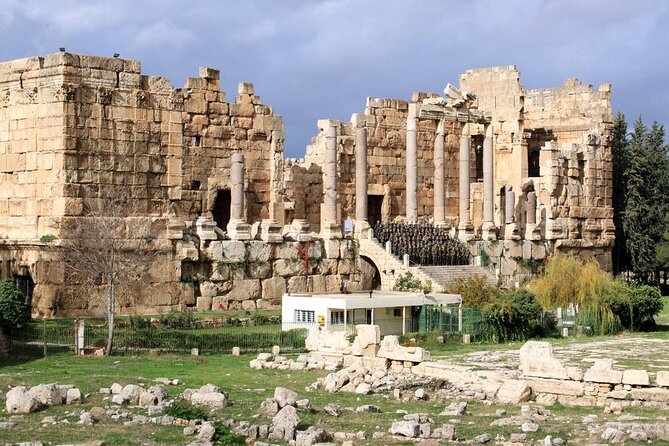
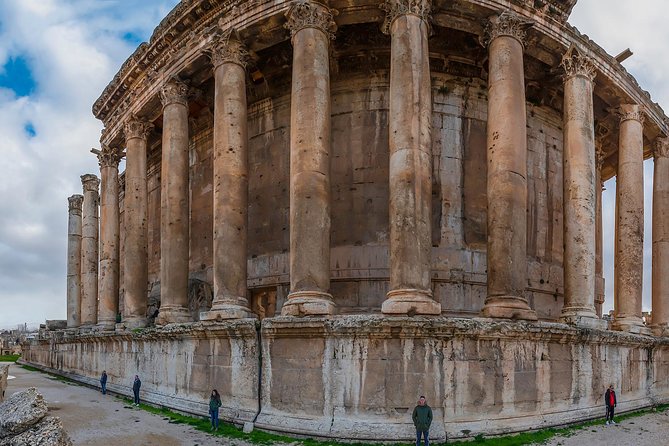
Baalbek is the reason many people choose this trip. The ancient sanctuary sits near the southwestern slope of the Anti-Lebanon Mountains, at an altitude of about 1,150 meters, beside the fertile Bekaa Plain. Its location gives the site a strong sense of scale even before you focus on the ruins.
The city reached its peak under Roman rule. Construction of its immense temples continued for more than two centuries, creating one of the grandest sacred complexes in the Roman world. The sanctuary honored the Romanized Heliopolitan Triad: Jupiter, Venus, and Bacchus. Beneath those Roman names was an older Phoenician religious tradition, which gives the site more depth than its familiar imperial label suggests.
With roughly an hour here, your guide should help you focus on the key remains rather than attempt to cover every stone. Look for the engineering as much as the decoration. Baalbek was built to impress pilgrims, and its scale still does the job. Giant columns, monumental platforms, and massive blocks make ordinary Roman ruins feel almost modest by comparison.
I would give Baalbek your full attention during this first stop. The details can blur if you rush from one photograph to another, so listen for the explanation of how the sanctuary worked and which gods were honored here. The site is not just a pile of old columns. It was a major religious center designed to draw people toward the power of the gods and the empire that supported the complex.
Entrance is not included in the $70 price. That is important when comparing the tour with other day trips. The private vehicle and guide add real value, but you should allow extra money for the Baalbek admission fee.
The Mosque of Sayyeda Khawla and Baalbek’s living faith
The route also includes the Mosque of Sayyeda Khawla in Baalbek. It is associated with the burial place of Sayyida Khawla, believed to have been the daughter of Imam al-Hussein, the grandson of the Prophet Muhammad.
This stop adds a modern religious layer to a city usually presented through its Roman remains. Baalbek is not only an ancient site for archaeology fans. It remains a place connected to faith, memory, and local tradition.
The supplied schedule does not assign a separate duration or explain whether a full interior visit is included, so you should treat this as a brief cultural stop within the Baalbek portion of the day. Dress and behave respectfully at a religious site, and follow your guide’s instructions about where you may go.
The Stone of the Pregnant Woman puts Roman engineering in perspective
A short 15-minute stop brings you to the Stone of the Pregnant Woman. Despite its curious name, the attraction is the sheer size of the worked Roman monolith. Along with another nearby block, it ranks among the largest stones ever quarried.
The stone was probably intended for the nearby temple complex. It offers a useful piece of the Baalbek puzzle because you can see the raw building ambition more clearly here. At the main sanctuary, your eye may be drawn to columns and carved architecture. At this stop, one enormous block tells the story: the builders were moving material on a scale that still seems hard to grasp.
Admission is free, and 15 minutes is enough for a look, photographs, and a short explanation. Do not expect a full archaeological stop. Its value comes from connecting the quarry stone with the monumental structures you have just seen.
Other Lebanese wine estates worth the drive:
- Guided Private Full Day Tour to Baalbek, Anjar and Chateau Ksara
★ 5.0 · 60 reviews - Lebanon tour Baalbek ruins & Ksara w/pick-up, lunch,guide+entries
★ 5.0 · 35 reviews - Baalbek Temples & Ksara Caves w/pick-up,guide, entries+lunch
★ 4.9 · 34 reviews - Small Group Tours to Baalbek, Anjar & Chateau Ksara with lunch and Tickets
★ 5.0 · 29 reviews
Anjar reveals a different kind of ancient city
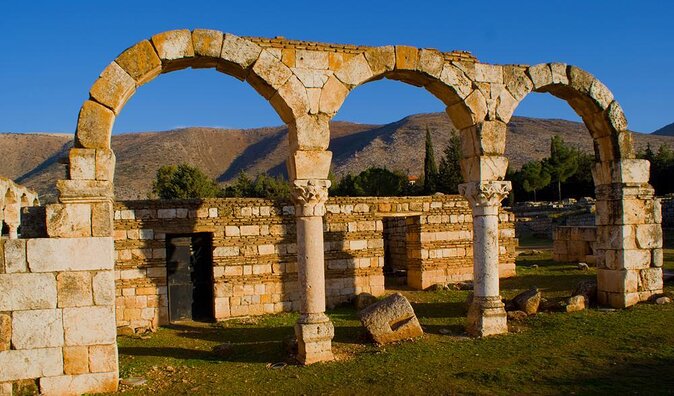
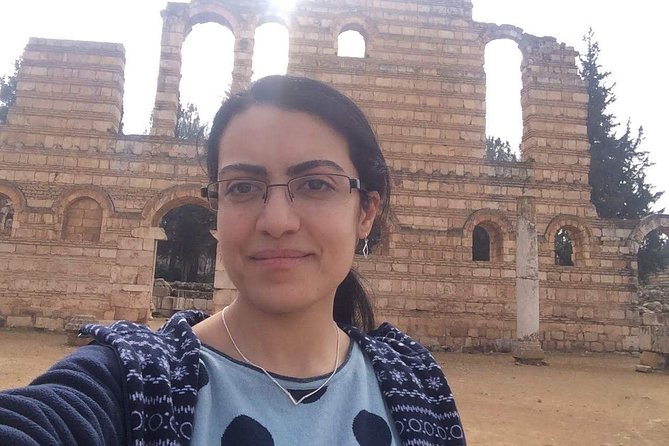
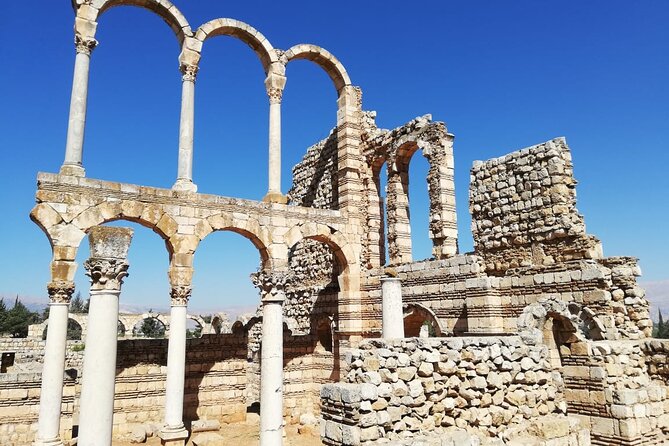
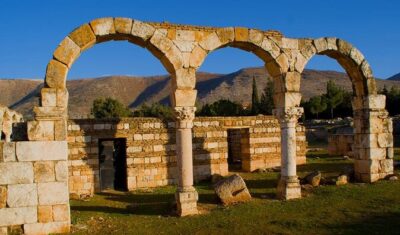
After Baalbek, the tour shifts from Roman imperial religion to the Umayyad period. Anjar was an 8th-century inland commercial center positioned where important routes crossed. One route connected Beirut with Damascus, while another crossed the Bekaa toward Homs and Tiberiade.
The site was found by archaeologists only in the late 1940s, which helps explain why the ruins can feel less familiar than Baalbek. You see the remains of an Umayyad palace, harems, a mosque, the caliph’s great palace, thermal baths, and rows of pillars. Roman architectural elements appear in the city, but the setting and plan belong to a later Islamic center.
I like Anjar because it prevents the day from becoming a single-era tour. You are not simply looking at another Roman ruin after Baalbek. Instead, you get a clearer sense of how cities changed as power, religion, and trade shifted across the region.
The scheduled visit lasts about 45 minutes, and admission is not included. That is enough time to grasp the basic plan and see the principal ruins, but not enough for a slow examination of every building. If you enjoy ancient city planning, ask your guide to point out the palace areas, mosque, baths, and commercial setting.
Anjar is also a good place to keep your expectations realistic. The ruins are important, but they may not have the same immediate drama as Baalbek’s gigantic temple remains. Its appeal is more architectural and historical: a planned Umayyad city at a crossroads, with Roman influence visible in the stonework.
Chateau Ksara brings wine and a calmer final hour
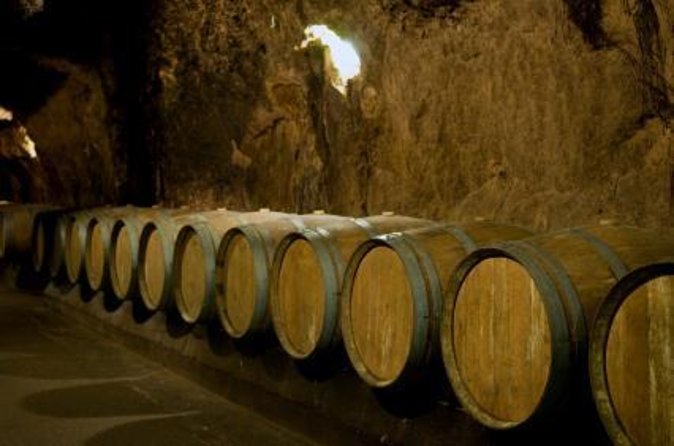
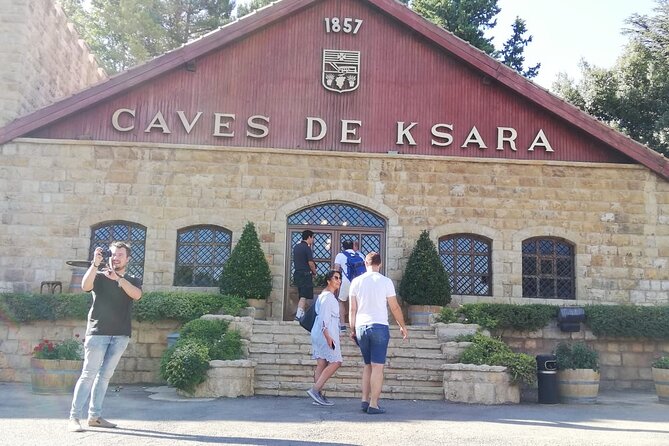
The final stop is Chateau Ksara, Lebanon’s oldest winery. Jesuit priests founded it in 1857, and the winery later developed Lebanon’s first dry wine. Today, it produces about three million bottles each year and exports to more than 40 countries.
After a morning of temples and ruins, wine tasting is a sensible finish. You can sit back, learn about the winery, tour the cellars, and sample Lebanese wines without worrying about who will drive back to Beirut. That is one of the strongest practical reasons to book this as a private excursion rather than trying to combine wine tasting with your own rental car.
The winery visit lasts about an hour. It is long enough for a basic introduction and tasting, though not a full wine course. If wine is your main reason for booking, you may want to confirm exactly which wines are included and whether tasting fees form part of the admission charge, since the listed tour price does not include admission.
The setting also gives you a different view of the Bekaa Valley. You have seen the plain as the setting for Roman and Umayyad sites. At Ksara, you see it connected to Lebanon’s modern agricultural and commercial life.
What $70 really gets you
At $70 per person, this tour offers solid value if you want to cover all three destinations in one day. The price includes comfortable private transportation, hotel pickup and drop-off, an air-conditioned vehicle, a tour leader, and a local guide.
Those inclusions matter more than they may at first appear. Baalbek, Anjar, and Chateau Ksara are not a compact walking circuit. A private driver saves time and reduces the stress of arranging transport between sites. A guide gives the ruins context, which is especially helpful at Anjar, where the remains may be less immediately readable than Baalbek.
The private format also means only your group participates. That can make the day feel more personal and gives you a better chance to ask questions or adjust the pace within the fixed schedule. Group discounts are available, so the per-person value may improve if you are booking for several people.
There are two clear extra costs. Entrance fees for Baalbek, Anjar, and Chateau Ksara are not included, and lunch is also excluded. One account of the day included an excellent lunch, but that does not mean lunch is part of the package. Plan to pay for it separately and check with the guide about the available arrangement.
The tour accepts mobile tickets, and confirmation is provided at booking. Free cancellation is available if you cancel at least 24 hours before the local start time. Changes or cancellations made less than 24 hours before departure are not accepted for a refund.
Who will get the most from this private excursion
I would recommend this trip to first-time visitors who want a broad introduction to the Bekaa Valley without building a complicated independent route. It suits couples, families, and small groups who value a private vehicle and prefer door-to-door service.
It is also a good choice if you want history with variety. Baalbek is the major draw, but Anjar adds Islamic history and Chateau Ksara provides a social, food-and-drink finish. That mix keeps the day from feeling like one long sequence of ruins.
You should think twice if you want a slow visit at Baalbek or a serious wine-focused experience. The timings are short, and the day covers a lot of ground. You should also be comfortable with a full 8-hour outing and road travel from Beirut.
Because the tour is private, it may work well for anyone who dislikes large groups or fixed commentary aimed at the lowest common denominator. You can ask your guide to explain the Phoenician roots behind the Roman triad, the Umayyad city plan, or the winery’s history in more detail.
Should you book this Baalbek, Anjar, and Ksara tour?
Book it if you want an efficient, well-rounded day from Beirut and care more about seeing the region’s major highlights than spending half a day at one monument. Baalbek is the star, but the combination with Anjar and Chateau Ksara gives you a fuller picture of Lebanon’s ancient and modern culture.
The $70 price is attractive for private transport and guiding, but remember to add entrance fees and lunch. I would also confirm the exact tasting arrangements before departure. For a first visit, this is a strong choice: practical, varied, and far less stressful than driving between the sites yourself.
FAQ
What is the start time for the tour?
The tour starts at 8:30 a.m.
How long does the experience last?
The excursion lasts approximately eight hours.
Is hotel pickup included?
Yes. Hotel pickup and drop-off are included.
Is the tour private?
Yes. Only your group participates in this private tour or activity.
What transportation is provided?
The tour includes comfortable private transportation in an air-conditioned vehicle.
Are admission tickets included?
No. Admission tickets for Baalbek, Anjar, and Chateau Ksara are not included in the tour price.
Is lunch included?
No. Lunch is not included.
Can I cancel for a full refund?
Yes, if you cancel at least 24 hours before the experience start time. Cancellations made less than 24 hours before the start time are not refunded.
Newest Beirut reviews
- Wine Tasting Tour★ 5.0 · 2 reviews
- Journey Through Time: Half-Day Private Tour to Baalbek★ 5.0 · 3 reviews
- Lebanon’s Treasures: Jeita Grotto and Harissa Private Tour★ 5.0 · 2 reviews
- Traveling Spoon Lebanese Mezze Private Online Cooking Class★ 5.0 · 4 reviews
- Wine Tasting and Culture★ 5.0 · 3 reviews
- Small Group Tour to Baalbek, Anjar & Ksara with Hotel pickup★ 5.0 · 2 reviews
- Small Group Tours to Jeita Grotto and Byblos with tickets★ 5.0 · 3 reviews
- Small-Group Tour with Lunch to Baalbek, Anjar and Ksara★ 5.0 · 3 reviews
Baalbek & Bekaa Valley Tours, compared.
Guided Small-Group Tour to Baalbek, Anjar and Ksara with Lunch
Read our review →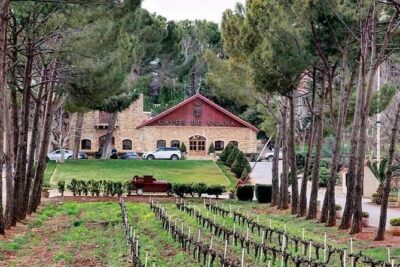
Anjar, Baalbek & Ksara Day Trip – With Lunch (4G on Board)
Read our review →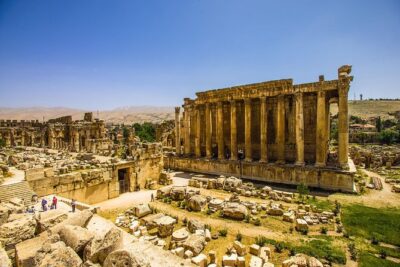
Private Anjar and Baalbek Tour from Beirut with Departure Ticket
Read our review →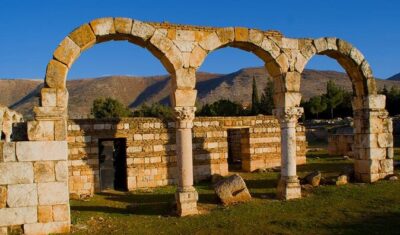
Guided Private Full Day Tour to Baalbek, Anjar and Chateau Ksara
Read our review →
Lebanon tour Baalbek ruins & Ksara w/pick-up, lunch,guide+entries
Read our review →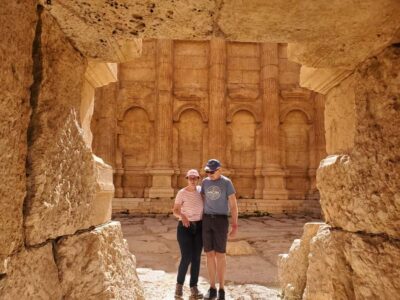
Baalbek Temples & Ksara Caves w/pick-up,guide, entries+lunch
Read our review →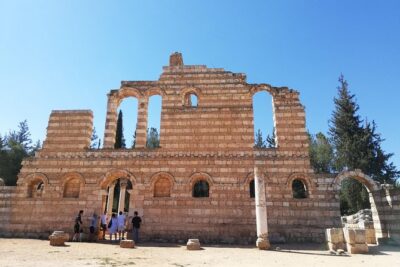
Small Group Tours to Baalbek, Anjar & Chateau Ksara with lunch and Tickets
Read our review →Browse the lists this tour appears in