
Review · BAALBEK & BEKAA VALLEY TOURS
Baalbek, Anjar & Ksara: Private Tour Through Lebanon’s Treasures
Ancient giants await in Lebanon’s Beqaa Valley. This private day trip links Baalbek’s huge Roman temples, Anjar’s orderly Umayyad ruins, and a working winery in one long but rewarding outing. I especially like the private vehicle and the chance to set your own pace. Having an English-speaking driver and hotel pickup also removes much of the day’s practical fuss. The main consideration is that the eight-hour schedule is full, and several entrance fees and lunch are extra.
The strongest human touch may come from the guiding. Albert has earned praise for his care, good manner, and close attention to detail, while the Baalbek visit can include an archaeologist guide. That can turn a pile of ancient stones into a readable story. I also like the stop at the Stone of the Pregnant Woman, a quick visit with a wonderfully odd name and a serious engineering puzzle behind it.
In This Review
- Key points to know before booking
- Why this Beirut day trip works
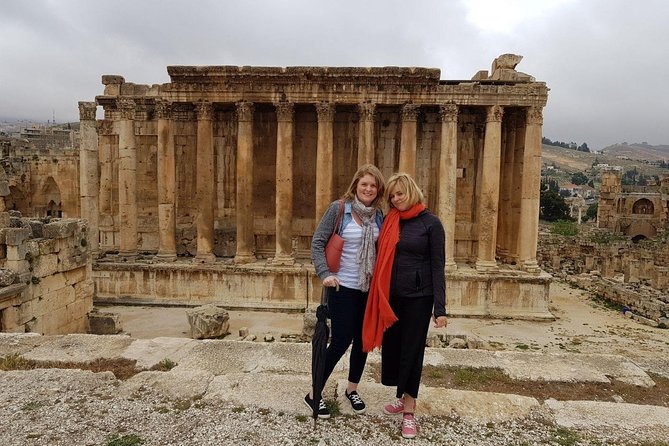
- Baalbek’s Roman temples and enormous scale
- The Stone of the Pregnant Woman in 15 minutes
- Anjar’s straight Umayyad city plan
- Chateau Ksara and Lebanon’s Beqaa wine
- The private vehicle and the pace of the day
- Who gets the most value from this tour
- Booking details and cancellation
- Should you book Baalbek, Anjar, and Ksara?
- FAQ
- Where does the tour begin?
- How long does the tour last?
- Is this a private tour?
- Is transportation included?
- Is the driver English-speaking?
- Is lunch included?
- Is admission to Baalbek included?
- Is admission to Anjar included?
- Can I cancel for a refund?
Key points to know before booking
- Three very different stops in one day: Roman temples, an Umayyad city, and a Lebanese winery give the outing useful variety.
- Private travel from Beirut: Your group alone takes part, with hotel pickup, hotel drop-off, and an air-conditioned vehicle.
- Baalbek is the main event: Allow about 90 minutes for the temple complex, with admission charged separately.
- A rare archaeological detail: The Stone of the Pregnant Woman is one of the largest ancient worked stone blocks ever quarried.
- Anjar rewards orderly sightseeing: Its straight urban plan, palace remains, mosque, baths, and columns show a very different age from Baalbek.
- Budget for extras: Lunch and entrance fees are not included, and the Chateau Ksara visit may involve separate costs.
Why this Beirut day trip works
From Beirut, this tour takes you inland to the Beqaa Valley for a concentrated lesson in Lebanon’s past. You do not spend the day visiting one ancient site after another that begins to blur together. Baalbek gives you Roman scale, Anjar shifts the story to the Umayyad period, and Chateau Ksara adds a modern Lebanese product with roots reaching back to the nineteenth century.
The private format matters here. You are not tied to the pace of a large coach group, and your own party takes part in the excursion. That gives you more room to linger at a column, ask about a carved detail, or keep the final winery stop brief if the ruins have absorbed your attention.
The day begins at about 9:00 a.m. with hotel pickup. Transport is by air-conditioned vehicle, with an English-speaking driver and private transfers included. The full outing lasts about eight hours, so you should expect a substantial day on the road as well as time walking around archaeological sites.
At $65 per person, the price looks attractive for a private day out, especially when the cost is shared by several people. It covers the driver, vehicle, and hotel transfers, but not lunch or all admissions. Check the final price of any site tickets and winery purchases before setting your budget.
More runs out to the Bekaa and its Roman temples:
- Guided Small-Group Tour to Baalbek, Anjar and Ksara with Lunch
★ 5.0 · 511 reviews - Anjar, Baalbek & Ksara Day Trip – With Lunch (4G on Board)
★ 4.5 · 181 reviews - Baalbek – Anjar – Ksara Trip From Beirut
★ 4.5 · 80 reviews
Baalbek’s Roman temples and enormous scale
The first major stop is Baalbek, set at roughly 1,150 metres near the southwestern slope of the Anti-Lebanon range. The site sits beside the fertile Beqaa plain, but the real reason to come is the monumental Roman sanctuary built over more than two centuries.
You have about 90 minutes at the temple complex. That is enough for a focused visit, though not enough for an unhurried study of every feature. If ancient architecture is your main interest, use the private arrangement to make your priorities clear early in the day.
Roman Baalbek was known as Heliopolis, and its sanctuary honoured a Romanized triad of Jupiter, Venus, and Bacchus. The older religious roots were Phoenician, which gives the site more depth than a simple Roman label suggests. You are looking at a place where local beliefs were reshaped under Roman rule, then expressed through grand imperial building.
The scale is the first thing you notice. Colossal blocks, towering columns, and broad temple spaces make human figures look small. The site was built to impress pilgrims, and it still does. Baalbek is not subtle, but it is memorable.
Admission is not included, so keep some money aside for the ticket. The listed stop also leaves the guiding arrangement somewhat flexible. One especially useful possibility is an archaeologist guide at Baalbek. The tour’s strongest praise goes to this kind of expert attention, and Albert, the named guide, is also credited with being careful, friendly, and precise.
That distinction matters. A driver who simply drops you at the gate gives you transport. A strong guide helps you understand why a column is where it is, how the sanctuary developed, and what you are seeing beneath the Roman surface. Ask at booking or before departure whether an archaeologist guide is confirmed for your date, since the available information does not promise one on every tour.
The Stone of the Pregnant Woman in 15 minutes
A short stop brings you to the Stone of the Pregnant Woman, another Roman monolith near Baalbek. You have about 15 minutes, and there is no admission charge listed for this stop.
The block is famous for its size. Along with another nearby ancient stone, it ranks among the largest monoliths ever quarried. The stones were likely intended for the Roman temple complex, though they never reached their final place.
The name is memorable, but the engineering question is the real attraction. How did ancient builders quarry, move, and plan to use such a massive block? You will not spend long here, yet the stop adds a useful practical angle to Baalbek. The temples show the finished work. This block shows the astonishing raw material and labour behind it.
Because the visit is brief, expect a quick look rather than a long archaeological talk. It works best as a pause between larger sites, not as a separate major attraction. If you enjoy ancient construction methods, you may want to ask the driver or guide to explain how this stone relates to the temple complex.
Anjar’s straight Umayyad city plan
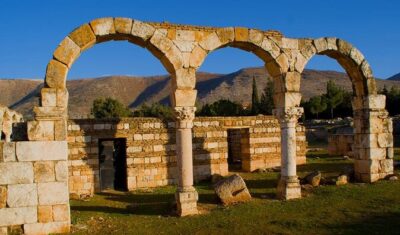
After Baalbek, the tour shifts from Roman imperial architecture to the early Islamic world. Anjar was founded by Caliph Walid I at the start of the eighth century, and its plan is one of the site’s most striking features.
You have about 45 minutes at Anjar. The ruins are laid out in a regular pattern, more like a planned palace city than an organically grown settlement. That order helps you read the site. Instead of wandering through scattered remains, you can see how streets, buildings, and major public spaces fitted into a wider urban design.
Anjar was an inland commercial centre at the meeting point of important routes. One route linked Beirut with Damascus. Another crossed the Beqaa toward Homs and Tiberiade. That location helps explain why a city was built here, even though the site was only found by archaeologists in the late 1940s.
The ruins include palace walls, harems, a mosque, the great palace of the caliph, thermal baths, and many columns. Some columns show Roman architectural influence, a useful reminder that later builders often worked with older forms and materials.
The tour summary lists Anjar as a free stop, while the Umayyad ruins are listed separately with admission not included. Treat that as a sign to confirm ticket arrangements before departure. You do not want the only small surprise of the day to happen at the entrance.
Anjar is a good counterpoint to Baalbek. Baalbek overwhelms you with mass and height. Anjar asks you to look at streets, functions, and city planning. I would not rush this stop, but the 45-minute slot means you should keep moving if you want to see the main palace, mosque, baths, and columns.
Other Lebanese wine estates worth the drive:
- Guided Private Full Day Tour to Baalbek, Anjar and Chateau Ksara
★ 5.0 · 60 reviews - Lebanon tour Baalbek ruins & Ksara w/pick-up, lunch,guide+entries
★ 5.0 · 35 reviews - Baalbek Temples & Ksara Caves w/pick-up,guide, entries+lunch
★ 4.9 · 34 reviews - Small Group Tours to Baalbek, Anjar & Chateau Ksara with lunch and Tickets
★ 5.0 · 29 reviews
Chateau Ksara and Lebanon’s Beqaa wine
The last listed stop is Chateau Ksara, a Lebanese wine company in the Beqaa Valley. The winery was founded by Jesuit priests in 1857 and later developed Lebanon’s first dry wine. Today, it produces about three million bottles a year and exports to more than 40 countries.
You have about an hour here. That gives the day a change of rhythm after the stonework and open ruins. Instead of another ancient site, you get a look at a regional product and the chance to purchase local wines.
This stop will appeal most if you enjoy wine, food culture, or small shopping opportunities tied to place. It is less essential if your only goal is archaeology. The tour description presents it as a chance to purchase local vintages, so you should not assume that a tasting, meal, or formal cellar tour is included unless confirmed separately.
Chateau Ksara also gives the schedule some balance. Three archaeological locations in one day could feel heavy, especially under the sun. An hour at a winery lets you sit down, browse, and shift from ancient history to present-day Lebanon.
Admission is not included here either. Lunch is also excluded from the tour price. Ask how much time is available for food and plan accordingly. The eight-hour day does not leave unlimited room for an extended meal, so a practical lunch plan will help keep the final stops from feeling hurried.
The private vehicle and the pace of the day
The transport setup is one of the tour’s clearest advantages. Hotel pickup and drop-off in Beirut save you the trouble of arranging separate transfers to the Beqaa Valley. The air-conditioned vehicle is especially useful on a full day that combines driving with walking around exposed ruins.
You are not joining a larger shared group. Only your party takes part, which makes the experience more personal and gives you some control over the day. You can ask for more explanation at Baalbek, take a little longer at Anjar, or move along when a stop has given you enough.
Still, private does not mean unlimited time. The advertised schedule assigns about 90 minutes to Baalbek, 15 minutes to the stone, 45 minutes to Anjar, 45 minutes to the Umayyad ruins, and one hour at Chateau Ksara. Add driving, pickup, and drop-off, and the eight-hour estimate becomes a carefully packed day.
The schedule is best for someone who wants to cover major sights efficiently. If you prefer long museum visits, slow photography, or extended meals, you may find the plan tight. You can ask whether timings can be adjusted, but the supplied details do not promise a longer tour.
The English-speaking driver is another practical plus. The driver may provide useful context, but the information does not state that a full licensed guide is included at every site. That is why the mention of Albert and the archaeologist at Baalbek is important. Confirm who will explain each location if interpretation is central to your decision.
Who gets the most value from this tour
I would recommend this outing to first-time visitors based in Beirut who want to reach Baalbek and Anjar without arranging their own transport. It also suits couples, families, and small groups who value privacy and a day built around their own party.
History fans get the widest range of material. You can compare Roman religious architecture, ancient quarrying, Umayyad urban planning, and modern Lebanese wine production in a single day. That is a strong return for eight hours.
The tour also works well for people who dislike large group schedules. The private vehicle and hotel transfers remove common points of friction, while group discounts may improve the per-person value when several people book together.
I would be more cautious if you are counting every expense. The $65 price does not cover lunch, Baalbek admission, the Umayyad ruins admission, or costs connected with Chateau Ksara. The exact ticket arrangements should be confirmed before departure. The base price is reasonable, but the final bill will be higher.
The day may also feel long for anyone who struggles with a packed sightseeing schedule. The tour covers two major historic centres plus the stone and winery. You are gaining range, but giving up the slower pace of a single-site visit.
Booking details and cancellation
The experience begins at 9:00 a.m., and confirmation is issued when you book. Most people can take part, and the activity is private for your group.
Free cancellation is available if you cancel at least 24 hours before the local start time. Cancellations made within 24 hours are not refunded, and changes inside that window are not accepted. Keep that deadline in mind when plans in Beirut are still uncertain.
The tour is booked, on average, 11 days ahead. That does not guarantee that every date fills quickly, but it is a useful reason to reserve before your preferred day disappears, especially if you want a private vehicle and a specific guiding arrangement.
Should you book Baalbek, Anjar, and Ksara?
Book this tour if you want the easiest way to connect Lebanon’s major Beqaa Valley sights from Beirut. The combination is unusually strong: Baalbek supplies the grand Roman drama, Anjar offers a clear look at Umayyad city planning, and Chateau Ksara brings in a living local industry.
The best reasons to choose it are the private pace, hotel transfers, air-conditioned transport, and the possibility of excellent guiding. Albert’s praised attention to detail and the potential archaeologist at Baalbek can make a real difference.
Before paying, confirm the entrance fees, lunch plan, and whether a dedicated guide will join you at each site. If you are comfortable with those extras and a full day of sightseeing, $65 per person is a sensible starting price for this much ground. If you want a slow, deeply focused archaeological visit, choose a longer private arrangement instead.
FAQ
Where does the tour begin?
The tour begins with hotel pickup in Beirut at about 9:00 a.m.
How long does the tour last?
The excursion lasts approximately eight hours.
Is this a private tour?
Yes. Only your group participates in the activity.
Is transportation included?
Yes. Private transportation in an air-conditioned vehicle is included, along with hotel pickup and drop-off.
Is the driver English-speaking?
Yes. An English-speaking driver is included.
Is lunch included?
No. Lunch is not included in the tour price.
Is admission to Baalbek included?
No. Admission to the Baalbek temple complex is not included.
Is admission to Anjar included?
The Anjar stop is listed as free, but admission to the Umayyad Ruins of Aanjar is listed separately as not included. Confirm the exact ticket arrangements before the tour.
Can I cancel for a refund?
Yes. You can receive a full refund if you cancel at least 24 hours before the local start time. Cancellations within 24 hours are not refunded.
Newest Beirut reviews
- Wine Tasting Tour★ 5.0 · 2 reviews
- Lebanon’s Treasures: Jeita Grotto and Harissa Private Tour★ 5.0 · 2 reviews
- Journey Through Time: Half-Day Private Tour to Baalbek★ 5.0 · 3 reviews
- Traveling Spoon Lebanese Mezze Private Online Cooking Class★ 5.0 · 4 reviews
- Wine Tasting and Culture★ 5.0 · 3 reviews
- Small Group Tour to Baalbek, Anjar & Ksara with Hotel pickup★ 5.0 · 2 reviews
- Small Group Tours to Jeita Grotto and Byblos with tickets★ 5.0 · 3 reviews
- Small-Group Tour with Lunch to Baalbek, Anjar and Ksara★ 5.0 · 3 reviews
Baalbek & Bekaa Valley Tours, compared.
Guided Small-Group Tour to Baalbek, Anjar and Ksara with Lunch
Read our review →
Anjar, Baalbek & Ksara Day Trip – With Lunch (4G on Board)
Read our review →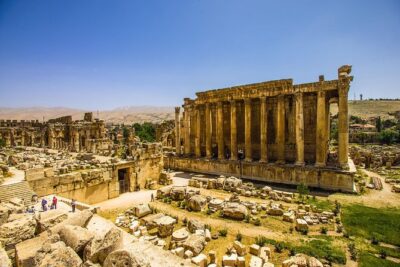
Private Anjar and Baalbek Tour from Beirut with Departure Ticket
Read our review →
Guided Private Full Day Tour to Baalbek, Anjar and Chateau Ksara
Read our review →
Lebanon tour Baalbek ruins & Ksara w/pick-up, lunch,guide+entries
Read our review →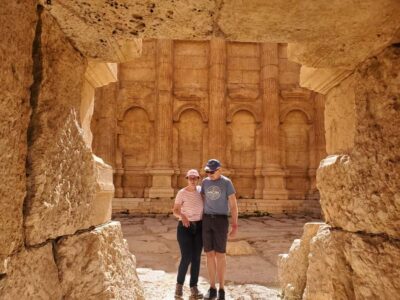
Baalbek Temples & Ksara Caves w/pick-up,guide, entries+lunch
Read our review →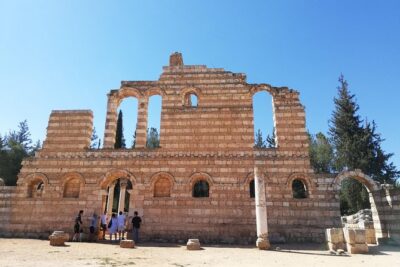
Small Group Tours to Baalbek, Anjar & Chateau Ksara with lunch and Tickets
Read our review →Browse the lists this tour appears in