Review · BEIRUT TOURS
6 Nights Lebanon Holiday Vacation
Lebanon packs centuries into a small space. This seven-day package uses Beirut as your base, then sends you out on four small-group day tours to Roman ruins, Phoenician ports, mountain monasteries, cedar groves, and a Lebanese winery. I like the easy airport transfers and the smart mix of guided sightseeing and free time. I also like that breakfast and four lunches are included, which makes the $810 price easier to judge. The main consideration is pace: several touring days are long and packed with stops.
You get hotel accommodation for six nights, airport pickup and drop-off, and groups capped at 15 people. The format also gives you some breathing room. Day 6 is free in Beirut, and the tours are arranged as separate day outings, so you are not locked into one continuous road trip. Guides Hassan and Anwar receive special thanks in the published feedback, and the package earns a perfect rating from its two posted reviews.
In This Review
- Key points to know before booking
- What the $810 package really covers
- Arrival in Beirut and a low-stress first night
- Day 2: caves, Harissa views, and Byblos
- Jeita Grotto
- Harissa and the Téléferique
- Byblos, castle, souk, and port
- Day 3: Baalbek, Anjar, and Chateau Ksara
- The temples of Baalbek
- Anjar’s Umayyad city
- Chateau Ksara
- Day 4: cedars, Bcharre, and the Qadisha Valley
- Bcharre and the Gibran Museum
- The Cedars of God
- Deir Qozhaya and Qadisha Valley
- Day 5: Sidon, Maghdoucheh, and Tyre
- Sidon’s old city
- Maghdoucheh and Our Lady of Mantara
- Tyre’s Roman remains
- Day 6: your free day in Beirut
- Group size, meals, and daily comfort
- Who should book this Lebanon vacation?
- Should you book it?
- FAQ
- How long is the Lebanon vacation package?
- What is included in the $810 price?
- How large are the tour groups?
- Which UNESCO World Heritage Sites are included?
- Are dinners included?
- Is airport transportation provided?
Key points to know before booking
- Baalbek is the major prize: Two hours at the Roman complex gives you time with the Temple of Jupiter, Temple of Bacchus, and the huge foundation stones.
- Beirut makes a practical base: You unpack once and return to the same city hotel after each touring day.
- Five UNESCO sites are included: The program covers Baalbek, Anjar, Qadisha Valley, Byblos, and Tyre.
- The mountain day is especially varied: Bcharre, the Gibran Museum, the Cedars of God, and Deir Qozhaya bring together art, nature, and religion.
- Meals are partly covered: Six breakfasts and four lunches are included, while dinners and personal spending are yours to arrange.
- The pace favors first-time visitors: You see a great deal of Lebanon, but some stops are brief, so independent explorers may want extra time.
What the $810 package really covers
At $810 per person, this is not just a hotel deal with a few sightseeing add-ons. The price includes six nights in a Beirut hotel, six breakfasts, four lunches, airport transfers in both directions, hotel pickup and drop-off, and four small-group touring days.
That matters because Lebanon’s major sights are spread across the country. You could arrange separate rides to Byblos, Baalbek, Bcharre, Sidon, and Tyre, but the transport alone would require planning. Here, you have one arrival transfer, one departure transfer, and organized day trips from the same base.
The hotel grade can be chosen to match your budget and taste, although the supplied details do not name the individual properties. Breakfast gives you a useful start before full sightseeing days, and the included lunches reduce the need to stop and negotiate meals while the group is on the road.
Dinner is not included. Personal expenses are not included either, so leave room for evening meals, souvenirs, extra drinks, and any shopping in Beirut or the old souks. The best value comes if you want a broad introduction to Lebanon rather than a luxury hotel stay or a slow, highly customized tour.
A few more trips out of Beirut worth a look
- Guided Small-Group Tour to Baalbek, Anjar and Ksara with Lunch
★ 5.0 · 511 reviews - Guided Small-Group Tour to Jeita, Harissa, Byblos with Lunch
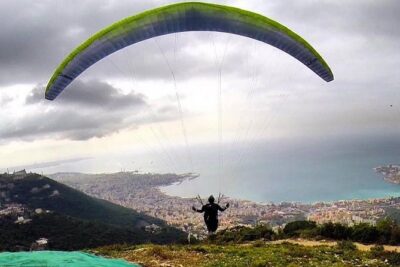
★ 5.0 · 361 reviews - Paragliding Trip Over Lebanon – Jounieh Bay
★ 5.0 · 257 reviews
Arrival in Beirut and a low-stress first night
Your trip begins at Beirut-Rafic Hariri International Airport. A driver takes you to your Beirut hotel, with the airport transfer described as taking roughly 15 minutes, followed by hotel arrival and settling in.
There is no scheduled sightseeing on the first day. That is a good choice. After a flight, you can check in, rest, and prepare for the first full outing instead of being pushed straight into an old-city walk or a mountain climb.
The same arrangement returns on Day 7. After checkout, a representative takes you to the airport two to three hours before departure. The transfer itself is listed at about 15 minutes, though you should still follow the suggested airport timing rather than treat that estimate as a guarantee.
Day 2: caves, Harissa views, and Byblos
The first touring day covers the coast north of Beirut and packs in several different types of sightseeing.
Jeita Grotto
You begin with Jeita Grotto, a major cave system formed in limestone over millions of years. The upper cave extends about 2,130 meters and contains stalactites, stalagmites, columns, curtains, and other mineral shapes. A lower gallery, about 60 meters below, includes an underground river and lake.
The scheduled visit lasts 90 minutes, with admission included. That is enough time for a useful introduction, though the cave system is large and the visit will feel more like a highlights stop than a full exploration.
A different side of Lebanon altogether:
- First Paragliding Club in Lebanon – Since 1992
★ 5.0 · 193 reviews - Anjar, Baalbek & Ksara Day Trip – With Lunch (4G on Board)
★ 4.5 · 181 reviews - Jeita Grotto – Harissa – Byblos Trip
★ 5.0 · 169 reviews - Byblos, Jeita Grotto & Harissa Day Trip -With Lunch (4G on Board)
★ 4.5 · 145 reviews
Harissa and the Téléferique
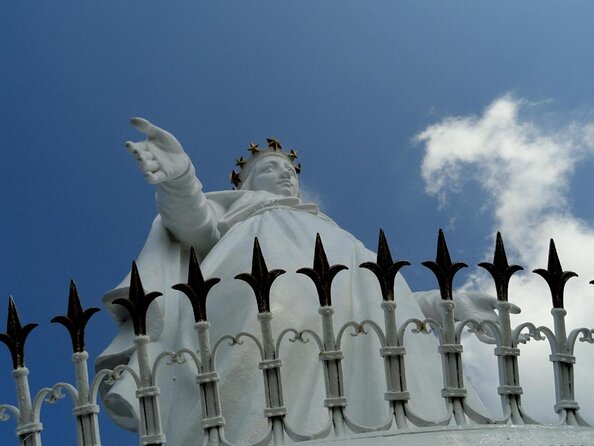
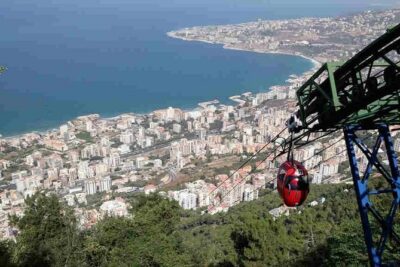
Next comes Harissa, home to the 15-ton bronze statue of Our Lady of Lebanon. The statue reaches 8.5 meters high and looks toward Beirut across Jounieh Bay. A nearby cathedral and several churches make the site important to several Christian communities, not just to visitors interested in the view.
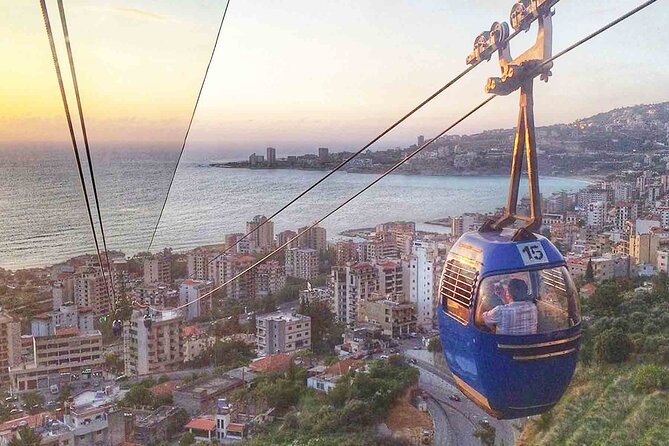
The Téléferique gondola carries you above the pine-covered slopes to Harissa at an altitude of about 650 meters. The ride lasts around 20 minutes and is included. It is one of the most memorable parts of the day because the bay and city open up below you.
You have about 30 minutes at the shrine and 15 minutes around the churches. That timing gives you the main view and a quick look at the religious center, but it will not suit anyone who wants a quiet pilgrimage visit or detailed architectural study.
Byblos, castle, souk, and port
The day ends in Byblos, one of the oldest Phoenician cities and a place closely tied to the spread of the Phoenician alphabet. Two hours are allotted for the town, followed by an hour at Byblos Castle.
The restored 12th-century Crusader castle sits inside the archaeological area. From the square keep, you can look across temple remains, Bronze Age dwellings, and the sea. The castle also contains a small museum and information panels, useful for putting the ruins into context.
Short stops at the old souk and ancient port round out the visit. The souk is best treated as a stroll through old stone lanes, with time for souvenirs or antiques if the group allows. The port is brief, only about 10 minutes, so do not expect a long waterfront pause.
This is a strong opening day because Jeita, Harissa, and Byblos feel very different. The tradeoff is the schedule. You get a wide sample, but you will need to stay aware of meeting times.
Day 3: Baalbek, Anjar, and Chateau Ksara
Day 3 reaches the Bekaa Valley and includes the tour’s most powerful ancient site.
The temples of Baalbek
Baalbek was known as Heliopolis during the Hellenistic and Roman periods. Its sanctuary was dedicated to the Romanized Heliopolitan triad of Jupiter, Venus, and Bacchus, with origins in an older Phoenician religious tradition.
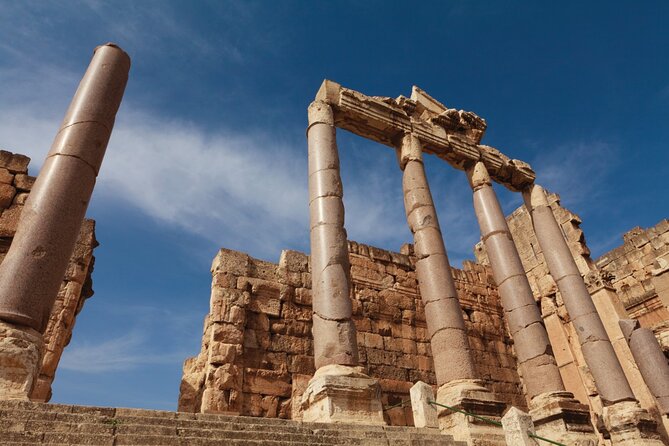
The complex is a huge Roman achievement. The Temple of Jupiter once had columns about 30 meters high, and three foundation stones rank among the heaviest blocks used in ancient construction. The Temple of Bacchus is especially well preserved, with detailed ornamentation dating from around the second century.
You have two hours at Baalbek, followed by scheduled time for the temple complex and individual temples. The supplied timing lists several overlapping entries for the temples, so the exact order may vary. In practical terms, plan on a substantial visit with walking across an open archaeological site.
The Temple of Venus has a very different shape, with a circular shrine on a horseshoe-shaped platform. The nearby Mosque of Sayyeda Khawla adds a later religious layer to the day. At the Stone of the Pregnant Woman, you see another massive Roman block, left near the quarry area and associated with the builders’ enormous plans.
Baalbek is worth the long drive from Beirut alone. Wear practical shoes and expect sun exposure, since the site is extensive and the schedule keeps moving.
Anjar’s Umayyad city
Anjar changes the subject from Roman imperial power to the Umayyad period. Founded by Caliph Walid I in the early eighth century, the city has an unusually regular plan, with palace buildings, a mosque, baths, arcades, and commercial areas.
The visit lasts about 90 minutes across the city and its ruins. Roman architectural elements appear in the construction, but the urban plan belongs to the Umayyad era. That makes Anjar a useful counterpoint to Baalbek, not just another pile of old stones.
Chateau Ksara
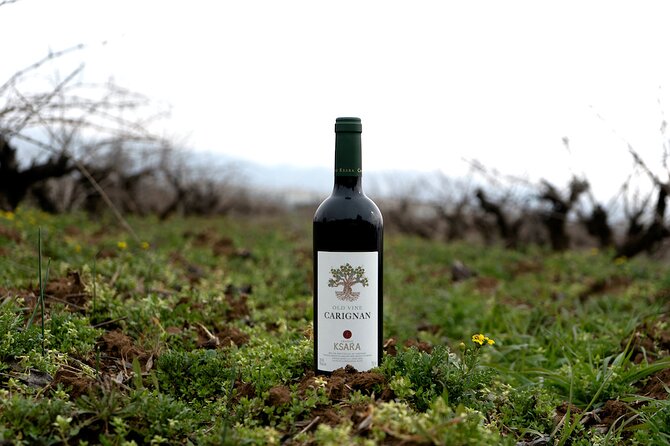
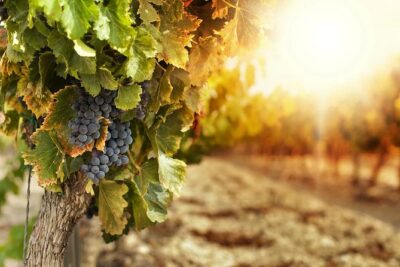
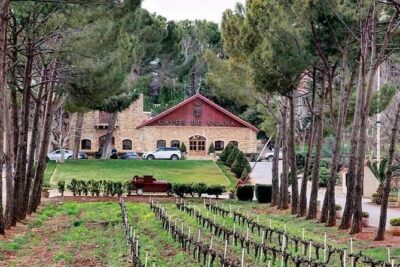
The final stop is Chateau Ksara, a winery founded by Jesuit priests in 1857. The company developed Lebanon’s first dry wine and produces about three million bottles a year, exporting to more than 40 countries.
A one-hour visit with admission included gives the day a welcome change of pace. The winery is not simply a tasting stop with no context. Its foundation connects wine production with Lebanon’s religious and agricultural past, and the Bekaa Valley setting helps explain why this region has long supported vineyards.
This is the fullest day in terms of major sites. It also may be the most tiring, with several temple visits, a valley crossing, and a winery stop. The included lunch helps, but you should not schedule an important evening plan in Beirut.
Day 4: cedars, Bcharre, and the Qadisha Valley
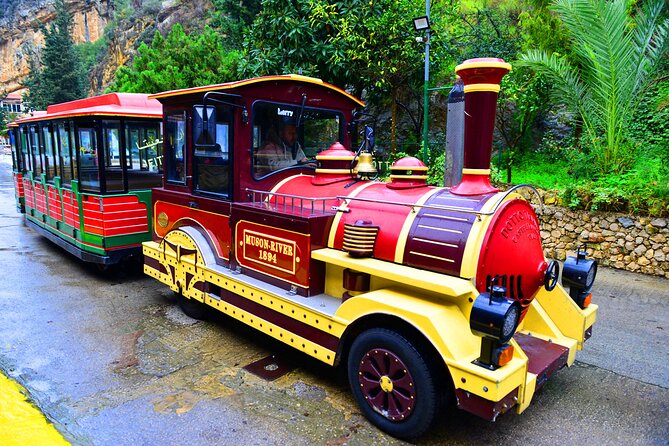
The mountain day shifts from monumental ruins to Lebanon’s Christian heritage and highland scenery.
Bcharre and the Gibran Museum
Bcharre is known as the home of the remaining original Cedars of God and as the birthplace of Kahlil Gibran, the Lebanese writer and artist. The town is also called the city of churches, with about 37 churches.
The Gibran Museum occupies the former Monastery of Mar Sarkis. Its collection includes 440 original paintings and drawings, along with Gibran’s furniture, studio belongings, private manuscripts, and tomb. The visit lasts about 30 minutes, enough for a focused look at his work but not a leisurely museum afternoon.
If Gibran interests you, this stop may feel short. Still, it gives the mountain day a strong cultural anchor before you head into the cedar forest.
The Cedars of God
The forest contains 375 trees and is one of the few remaining places where Lebanon’s famous cedar still grows. The cedar is the country’s national symbol and appears on the Lebanese flag. It was highly valued in ancient times as building material for important religious structures and is mentioned 103 times in the Bible.
You have about an hour here. The stop is less about covering distance than about seeing a living symbol of Lebanon. The trees are the reason to bring a camera, but the wider mountain scenery is also part of the appeal.
Deir Qozhaya and Qadisha Valley
Deir Qozhaya, the Monastery of Saint Anthony the Great, sits around 950 meters above sea level in the Qozhaya Valley. The monastery is linked to the early Christian hermit tradition, with origins placed by historians and scholars at the beginning of the fourth century. Some surviving traces date to the seventh century.
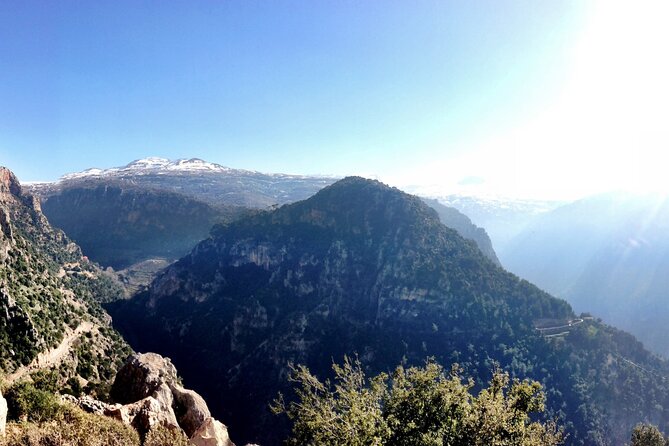
The visit lasts about an hour. The surrounding Qadisha Valley includes caves, monasteries, and cultivated terraces connected with early Christian settlement. It is a rugged setting, and the combination of cliffs, trees, religious buildings, and old paths gives this day a character that the coastal and Roman tours cannot match.
The practical warning is simple: mountain roads and uneven ground can make this a demanding day for anyone with limited mobility. The tour notes say most people can participate, but no detailed accessibility information is provided, so ask the provider before booking if you need specific assistance.
Day 5: Sidon, Maghdoucheh, and Tyre
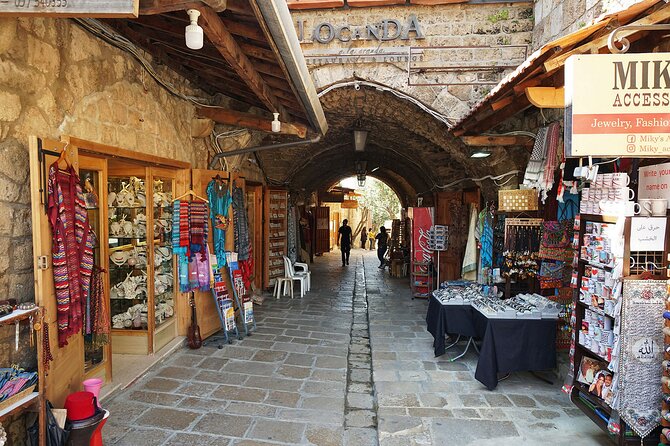
The southern outing follows Lebanon’s Phoenician coast and adds Crusader, Ottoman, Christian, Roman, and local craft traditions.
Sidon’s old city
Sidon was famous for purple dye made from murex sea snails and for glassware. The city dates back to the third millennium BC and grew into one of the major Phoenician ports.
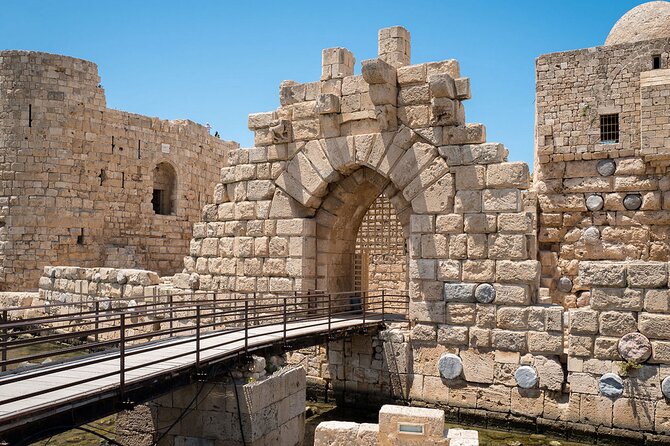
The Sidon Sea Castle sits on a small island connected to shore by a causeway. Crusaders built it in the 13th century, and the Mamluks destroyed much of it in 1291. Later restoration changed its appearance, but the remaining fortress gives you a clear sense of Sidon’s maritime defenses.
Khan al-Franj, built in the early 17th century, has a rectangular courtyard, covered galleries, and a central fountain. It was designed as a hotel for ambassadors and a center for trade between Lebanon and France. A 15-minute stop is enough to see the structure, but not enough to study every corner.
The Soap Museum occupies a former 17th-century soap factory. You learn how traditional olive-oil soap was made and see a demonstration of the process. The museum also explains hammam traditions and displays objects found during excavations, including pottery fragments and clay pipe heads.
Debbane Palace is reached through a narrow stairway in the souk. Built in the 18th century, it contains reception rooms, stained glass, mosaic tiles, and old stables. It is described as the last Ottoman-period house remaining in the city, making the short visit worthwhile.
Maghdoucheh and Our Lady of Mantara
At Maghdoucheh, the Basilica of Our Lady of Mantara honors the place where Mary is believed to have waited while Jesus visited Sidon. The shrine includes a tower with a Virgin and Child statue, a cathedral, a cemetery, and a sacred cave.
The visit lasts about 30 minutes and admission is free. It is a brief stop, but it adds another layer to a day already moving across several faiths and eras.
Tyre’s Roman remains
Tyre was another major Phoenician port, known for its purple dye and its connection with Elissar, the princess associated with the founding of Carthage. The city was later ruled by Egyptians, Greeks, Romans, Byzantines, Arabs, Crusaders, Mamluks, and Ottomans.
At the Al-Bass Archaeological Site, you see a monumental Roman arch, an ancient road, an aqueduct, a necropolis, and the remains of a large hippodrome. The cemetery contains hundreds of Roman and Byzantine sarcophagi, some with Greek inscriptions, names, occupations, frescoes, and scenes drawn from Homer.
The Tyre Hippodrome is one of the largest and best-preserved Roman examples of its type. The site has an hour scheduled, followed by another hour for the cemetery. That is useful because the area deserves more than a quick photo stop.
Tyre also has a seaside setting and a working fishing port. The remains of an ancient mole can still be seen, and some old structures lie in the water. The schedule gives you two hours for Tyre overall, so the archaeological areas take priority over a long beach visit.
Day 6: your free day in Beirut
After four demanding touring days, Day 6 is deliberately open. You can shop for souvenirs, explore Beirut at your own pace, or stay at the hotel and rest before your flight.
This free day is one of the package’s best design choices. A country-wide program can easily become a blur of ruins and bus windows. Time without a guide lets you decide what deserves a second look and gives you room for an easy lunch or a relaxed final evening.
No meals or activities are listed for this day, so budget separately. The package does not specify a Beirut city tour, museum tickets, or shopping arrangements. That is a limitation if you want structured help in the capital, but a benefit if you prefer independence.
Group size, meals, and daily comfort
The maximum group size is 15 people. That is small enough for a more personal guide experience than a large coach tour, while still keeping the price below that of a private itinerary.
The four day tours are presented as separate outings, which gives the program a flexible feel. One published comment especially valued being able to join the single-day tours on different days. Confirm the exact operating order with Beirut Daily Tours before arrival if you need a particular day free.
Lunch is included on all four touring days. The details do not specify menus, restaurants, or dietary arrangements, so ask ahead about special diets. Dinner is always your responsibility.
Pickup and drop-off are included at the hotel, and airport transfers are included at both ends. That removes much of the transport planning that can make a compact country feel complicated.
Who should book this Lebanon vacation?
I would choose this package if you are visiting Lebanon for the first time and want to see the country’s major sights without changing hotels. It suits people who value variety: ancient temples one day, cedar trees and monasteries the next, then Phoenician ports and Roman ruins.
It is also a good fit if you want some structure but dislike being escorted every minute. Four guided days provide the backbone, while the first evening, sixth day, and evenings after tours remain yours.
I would hesitate if you want slow travel. The schedule includes many stops, and some visits last only 15 or 30 minutes. Independent historians, serious hikers, and photographers may prefer a private program with longer stays at fewer sites.
The tour notes say most people can participate, but the Qadisha and Bcharre day may involve uneven surfaces and mountain terrain. Ask about mobility needs before paying.
Should you book it?
Book this $810 package if you want a broad, practical introduction to Lebanon with hotel stays, breakfasts, lunches, transfers, and small-group transport folded into one price. The strongest reasons are Baalbek, the cedar and Qadisha day, and the unusual range of stops covered from one Beirut base.
Skip it if you need a slow schedule or detailed private guiding at every site. For most first visits, though, the balance is appealing: a lot of Lebanon in seven days, with enough free time to keep the trip from feeling like one long checklist.
FAQ
How long is the Lebanon vacation package?
The package lasts approximately seven days and includes six nights in a Beirut hotel.
What is included in the $810 price?
The price includes hotel pickup and drop-off, round-trip airport transfers, six nights of accommodation, six breakfasts, four lunches, and four small-group tours.
How large are the tour groups?
The activity has a maximum group size of 15 people.
Which UNESCO World Heritage Sites are included?
The program includes Baalbek, Anjar, Qadisha Valley, Byblos, and Tyre. These are five of Lebanon’s six UNESCO World Heritage Sites.
Are dinners included?
No. Dinner and personal expenses are not included.
Is airport transportation provided?
Yes. Pickup is provided from Beirut-Rafic Hariri International Airport on arrival, and a representative transfers you back to the airport after checkout.
Newest Beirut reviews
- Wine Tasting Tour★ 5.0 · 2 reviews
- Journey Through Time: Half-Day Private Tour to Baalbek★ 5.0 · 3 reviews
- Lebanon’s Treasures: Jeita Grotto and Harissa Private Tour★ 5.0 · 2 reviews
- Traveling Spoon Lebanese Mezze Private Online Cooking Class★ 5.0 · 4 reviews
- Wine Tasting and Culture★ 5.0 · 3 reviews
- Small Group Tour to Baalbek, Anjar & Ksara with Hotel pickup★ 5.0 · 2 reviews
- Small Group Tours to Jeita Grotto and Byblos with tickets★ 5.0 · 3 reviews
- Small-Group Tour with Lunch to Baalbek, Anjar and Ksara★ 5.0 · 3 reviews
Beirut Tours, compared.
Guided Small-Group Tour to Baalbek, Anjar and Ksara with Lunch
Read our review →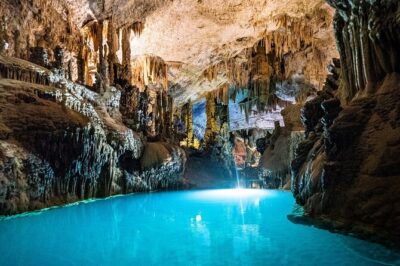
Guided Small-Group Tour to Jeita, Harissa, Byblos with Lunch
Read our review →
Anjar, Baalbek & Ksara Day Trip – With Lunch (4G on Board)
Read our review →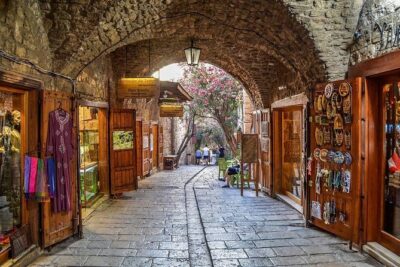
Byblos, Jeita Grotto & Harissa Day Trip -With Lunch (4G on Board)
Read our review →