
Review · SIDON & TYRE TOURS
Southern Lebanon Day Trip: Exploring Sidon, Maghdouche and Tyre
Ancient ports, castles, and souks fill this long day. From Beirut, this 8-hour southern Lebanon tour gives you a practical way to reach Sidon, Maghdouche, and Tyre without renting a car or sorting out the route yourself. You get hotel pickup, an air-conditioned vehicle, a tour leader, and short explanations at each stop.
I like the mix of places: Sidon brings Ottoman-era lanes and old crafts, while Tyre delivers major Roman remains. I also like the small-group limit of 15 people, and one guest had such a good experience with Ahmed that the guide’s driving and personal attention became a highlight. The main drawback is the pace. With six stops packed into one day, you will see important sites, but you will not have much time for lingering.
In This Review
- Key points to know before booking
- Why this southern Lebanon route works
- Sidon Sea Castle, a fortress at the water’s edge
- Khan al-Franj and Sidon’s world of trade
- The Soap Museum, where craft becomes history
- Sidon’s souks, the most atmospheric stop
- Maghdouche and the shrine of Our Lady of Mantara
- Tyre’s Al-Bass site and the Roman world
- What the guide and group size mean
- Is $50 a fair price?
- Who should book this day trip?
- Should you book it?
- FAQ
- Where does the Southern Lebanon day trip start?
- How long does the tour last?
- Which places does the tour visit?
- Is transportation included?
- Are meals included?
- Are entrance tickets included?
- How many people can join the tour?
- Is the tour suitable for most people?
- Can I cancel for a refund?
Key points to know before booking
- Sidon gives you five different experiences in one morning: a Crusader castle, a merchant khan, a soap workshop, a historic souk, and the city’s old commercial quarters.
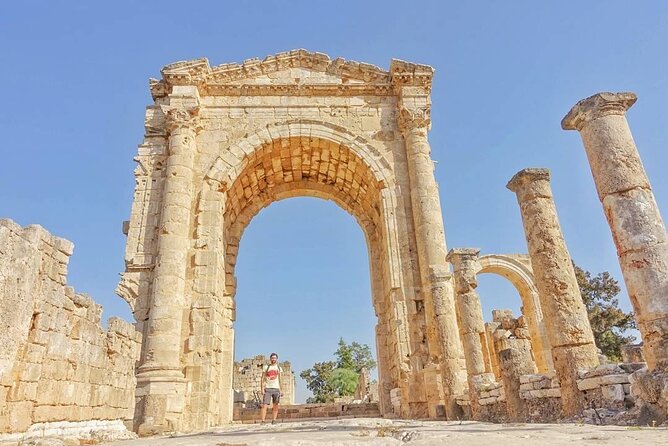
- Tyre’s Al-Bass site is the main archaeological event: allow the full hour to appreciate its Roman hippodrome, necropolis, causeway, aqueduct, and triumphal arch.
- Maghdouche adds a religious and local dimension: the shrine of Our Lady of Mantara includes a church, tower, cemetery, and a sacred cave.
- The $50 price covers the useful basics: hotel pickup and drop-off, transport, a tour leader, and site explanations, but not meals or admission tickets.
- A small group can improve the day: the advertised maximum is 15 people, though one booking became a private-style outing because demand was low.
- Book with timing in mind: the start is 8:00 a.m., and changes or cancellations must be made at least 24 hours ahead for a full refund.
Why this southern Lebanon route works
This trip connects three places that feel quite different. Sidon is the best stop for old-city atmosphere and everyday commerce. Maghdouche is brief but meaningful, especially if you enjoy churches, shrines, and local religious traditions. Tyre is the grand finish, with Roman remains spread across a large archaeological area.
I like this route because it does not treat southern Lebanon as one single attraction. You get a look at the coast, historic trade, religious life, and ancient city planning in the same day. That variety makes the $50 fare easier to justify than a simple point-to-point transfer.
The transportation matters here. Renting a car would give you more control, but it would also leave you handling directions, parking, timing, and the connection between several sites. With hotel pickup and drop-off included, you can focus on the places rather than the road.
Still, keep your expectations realistic. The advertised duration is about eight hours, and the listed visit times add up quickly. The schedule allows 30 minutes at the Sea Castle, 15 minutes at Khan al-Franj, 30 minutes at the Soap Museum, 30 minutes in the souks, 15 minutes at Mantara, and one hour at Al-Bass. Those are useful introductions, not slow, open-ended visits.
Other days along the southern coast:
- Small-Group Adventure Tour to Sidon Tyre & Maghdouche-Day Trip
★ 5.0 · 45 reviews - Sidon, Tyre & Maghdouche Day Trip – With Lunch (4G on Board)
★ 4.5 · 44 reviews - Guided Small-Group Tour to Sidon, Tyre & Maghdouche with Lunch
★ 5.0 · 41 reviews
Sidon Sea Castle, a fortress at the water’s edge
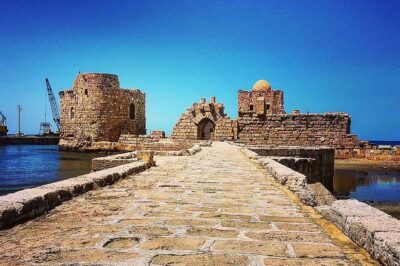
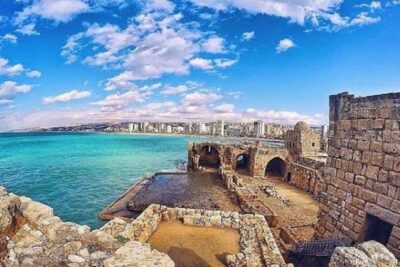
The day begins in Sidon at the Crusaders Sea Castle, built in the 13th century on a small island joined to shore by a causeway. Its position gives you an immediate sense of Sidon as a port city, with the fortress sitting between the historic town and the sea.
The castle was built as a stronghold connected with the Crusader presence in the Holy Land. The Mamluks largely destroyed it in 1291, and Fakhr el-Dine Maan II later restored it in the early 17th century. That layered past is part of the appeal: what you see is not a perfectly preserved medieval fortress, but a surviving shell shaped by several periods.
You have about 30 minutes here, and that is enough for a look around and photographs from the causeway. It is not enough for a long architectural study. Admission is not included, so carry some money for entry. The tour description does not give the admission price, so you should not count it as covered by the $50 fee.
I would treat the Sea Castle as a strong opening scene rather than the day’s deepest historical stop. The old prints described in the site information show a much more decorated fortress than the remains you see today. That contrast helps you understand how much of the original appearance has been lost.
Khan al-Franj and Sidon’s world of trade
Khan al-Franj is a short visit, only 15 minutes, but it gives you a useful picture of how Sidon once handled commerce and diplomacy. Emir Fakhreddine II built it at the beginning of the 17th century as a hotel for ambassadors and a center for commercial exchange between Lebanon and France.
The building follows the classic khan pattern: a large rectangular courtyard with a central fountain, surrounded by covered galleries. I like this stop because the layout is easy to grasp even during a quick visit. You can see how a caravan-style commercial building could also serve as a meeting place for diplomats, merchants, writers, and religious figures.
The khan later became associated with literature, religion, history, industry, and diplomacy. That makes it more than a pretty courtyard. It reflects Sidon’s role as a place where goods and ideas moved between the coast and the wider region.
Admission is free, which helps the tour’s value. The short stop also makes sense in the larger schedule, though you may wish for more time if you enjoy historic buildings and architectural details.
The Soap Museum, where craft becomes history
At the Soap Museum, the tour shifts from military and commercial history to a working craft. The building began as a soap workshop operated by the Hammoud family in the 17th century. Parts of the structure may date as far back as the 13th century, and the museum includes remains found during excavation.
The museum explains traditional Levantine soap production, including the use of olive oil. You can see a demonstration of how the soap is made and learn about the customs of the hammam, or bathhouse. That practical focus makes this one of Sidon’s more engaging stops for anyone who prefers ordinary life and local skills to grand monuments.
There is also a historical section with clay pipe heads dated from the 17th to 19th centuries and fragments of pottery. These objects add context to the building itself, showing that the site has had several chapters before becoming a museum.
Plan on 30 minutes. Admission is not included, so budget separately for the ticket. The stop should appeal to you if you want something hands-on and specific. If museums are not your priority, the demonstration still gives the morning some variety after the fortress and khan.
A few more trips out of Beirut worth a look
- Anjar, Baalbek & Ksara Day Trip – With Lunch (4G on Board)
★ 4.5 · 181 reviews - Byblos, Jeita Grotto & Harissa Day Trip -With Lunch (4G on Board)
★ 4.5 · 145 reviews - Private Tour: Anjar, Baalbek and Ksara Day Trip from Beirut
★ 5.0 · 20 reviews - Beirut, Beiteddine & DeirElQamar Day Trip-With Lunch(4G on Board)
★ 4.5 · 12 reviews
Sidon’s souks, the most atmospheric stop
The Sidon souks are a maze of narrow lanes filled with small kiosks, shops, cafés, and tradespeople. The listed examples include butchers, grocers, shoemakers, tailors, jewelers, and street merchants. This is where the city feels most connected to daily life.
You have about 30 minutes to walk through the market. I would use that time for a slow loop rather than trying to shop seriously. The lanes are part of the experience, and the appeal is in the mix of businesses and old passageways rather than one headline monument.
The souk is also the best place in the itinerary to notice how historic buildings continue to serve practical purposes. Sidon’s old commercial center is not simply preserved for display. It remains a place for retail and craft work, which gives the visit a more grounded feel.
Admission is free, but food is not included anywhere on the tour. Since the day lasts about eight hours, you should plan for your own meal or snacks. The supplied details do not specify a meal stop, so do not assume lunch is arranged.
Maghdouche and the shrine of Our Lady of Mantara
After Sidon, the route continues to Maghdouche for a 15-minute visit to the Basilica of Our Lady of Mantara, also called Our Lady of Awaiting. The shrine is a Melkite Greek Catholic site built around a sacred cave believed to be the place where the Virgin Mary rested while waiting for Jesus.
The complex includes a tower topped by a statue of the Virgin and Child, a cathedral, a cemetery, and the cave. A young shepherd reportedly discovered the shrine on September 8, 1721. That date and the story of the discovery give the site a strong local character.
This is a brief stop, so you should see it as a pause in the route rather than a full church visit. Admission is free. The setting adds a religious dimension to a day otherwise weighted toward forts, markets, and archaeology.
If you want detailed time for prayer, quiet reflection, or close study of the church, 15 minutes may feel short. If you simply want to understand why Maghdouche matters and see the main parts of the shrine, the stop works well.
Tyre’s Al-Bass site and the Roman world
Tyre is the most substantial archaeological stop, with one hour at the Al-Bass Archaeological Site. This is where the tour reaches its historical high point. The area formed the main entrance to ancient Tyre and includes a wide monumental causeway, a Roman triumphal arch from the 2nd century AD, a necropolis, an aqueduct, and a large hippodrome.
The Roman hippodrome is the centerpiece. It is described as one of the largest in the Roman world and the best-preserved example of its kind. Even with limited time, the scale helps you picture the crowds and public spectacles that once filled this space.
The necropolis contains several hundred well-preserved sarcophagi. An intact Roman road adds another useful detail, because it lets you see how people moved through the ancient city rather than viewing isolated ruins scattered across a field.
I would save your best questions for this stop. The included tour leader provides brief explanations at each site, and Tyre has enough remains to reward a clear explanation of how the areas fit together. One guest specifically appreciated being walked through Tyre and Sidon, not simply dropped at the entrance.
Admission to Al-Bass is not included. The tour information does not provide the ticket cost, so treat it as an extra expense. You should also keep your camera ready, but give yourself time to understand the site. The one-hour allocation is generous compared with the other stops, yet still short if you want to inspect every sarcophagus or spend time at each structure.
What the guide and group size mean
The tour includes a leader who drives or travels with you, provides brief explanations, and manages the day’s movement. One account singled out Ahmed for combining careful driving with engaging explanations. Another described a very helpful and professional guide who adjusted the visit toward personal interests when the group was especially small.
That flexibility is worth noting, but it should not be treated as guaranteed private touring. The stated maximum is 15 people. A small group may give you more opportunity to ask questions and walk at a comfortable pace, while a full group could make the short stops feel more structured.
Pickup and drop-off at your hotel in Beirut are included. The meeting time is 8:00 a.m., so you should be ready early and expect a full day away from your base. An air-conditioned vehicle is also included, an important comfort point when you are moving between several sites.
The tour is listed as suitable for most people, but the supplied details do not give a specific accessibility assessment. If you have mobility needs, ask the provider before booking, especially because the route includes a historic castle, souk lanes, and broad archaeological grounds.
Is $50 a fair price?
At $50 per person, this is a strong value if you want transport and a guided route through three southern destinations. Hotel pickup and return alone remove much of the effort involved in arranging the day. You also receive the vehicle, tour leader, and site explanations.
The price does not include meals or admission tickets. That means the final cost will be higher than $50, though the base fare remains modest for an eight-hour outing. Because no admission prices are supplied, you should ask the provider or check current rates before setting your budget.
The value is highest for first-time visitors to the region who want an efficient overview. It is less compelling for someone who already has transport and wants to spend half a day at one archaeological site. The route is broad rather than slow, and you are paying for convenience as much as for guiding.
Free cancellation is available if you cancel at least 24 hours before the local start time. Cancellations or changes within 24 hours are not refunded or accepted, so avoid booking until your schedule is firm.
Who should book this day trip?
I would recommend this tour if you want to see southern Lebanon from Beirut without driving. It suits you especially well if your interests include Roman archaeology, old markets, religious sites, and coastal history rather than one single theme.
It also fits a short visit to Lebanon. You can cover Sidon, Maghdouche, and Tyre in one day, then return to Beirut without arranging several separate outings. The combination of a small advertised group and hotel service makes the plan simple.
You may want another option if you dislike early starts, short visits, or extra admission fees. History enthusiasts could prefer a slower private itinerary, particularly in Tyre. Families and mixed-interest groups, however, may appreciate the variety and the fact that no one part of the day dominates for too long.
Should you book it?
Book this southern Lebanon day trip if you want a well-priced introduction to Sidon and Tyre with Maghdouche added for cultural range. The strongest parts are the Sidon souks, the Soap Museum, and the Al-Bass ruins, while the guide’s personal attention can make a major difference when the group is small.
Go in knowing that eight hours is a tight frame. Bring money for meals and entrance tickets, expect a brisk schedule, and ask about current conditions before departure. If those limits suit you, the route offers a lot of history and local character for the price.
FAQ
Where does the Southern Lebanon day trip start?
The tour departs from Beirut, with hotel pickup offered. The stated start time is 8:00 a.m.
How long does the tour last?
The experience lasts approximately eight hours.
Which places does the tour visit?
The route includes Sidon, Maghdouche, and Tyre. Stops include the Sea Castle, Khan al-Franj, the Soap Museum, Sidon’s souks, the Basilica of Our Lady of Mantara, and Tyre’s Al-Bass Archaeological Site.
Is transportation included?
Yes. Hotel pickup and drop-off are included, along with transport in an air-conditioned vehicle.
Are meals included?
No. Meals are not included in the tour price.
Are entrance tickets included?
No. Admission is not included at the Sea Castle, Soap Museum, or Al-Bass Archaeological Site. Khan al-Franj, Sidon’s souks, and the Basilica of Our Lady of Mantara are listed as free.
How many people can join the tour?
The maximum group size is 15 people.
Is the tour suitable for most people?
The tour information states that most people can participate. It does not provide detailed accessibility information for each site, so you should contact the provider if you have specific mobility requirements.
Can I cancel for a refund?
Yes. You can receive a full refund if you cancel at least 24 hours before the experience start time. Cancellations or changes made less than 24 hours before departure are not accepted, and the amount paid is not refunded.
Newest Beirut reviews
- Wine Tasting Tour★ 5.0 · 2 reviews
- Journey Through Time: Half-Day Private Tour to Baalbek★ 5.0 · 3 reviews
- Lebanon’s Treasures: Jeita Grotto and Harissa Private Tour★ 5.0 · 2 reviews
- Traveling Spoon Lebanese Mezze Private Online Cooking Class★ 5.0 · 4 reviews
- Wine Tasting and Culture★ 5.0 · 3 reviews
- Small Group Tour to Baalbek, Anjar & Ksara with Hotel pickup★ 5.0 · 2 reviews
- Small Group Tours to Jeita Grotto and Byblos with tickets★ 5.0 · 3 reviews
- Small-Group Tour with Lunch to Baalbek, Anjar and Ksara★ 5.0 · 3 reviews
Sidon & Tyre Tours, compared.
Small-Group Adventure Tour to Sidon Tyre & Maghdouche-Day Trip
Read our review →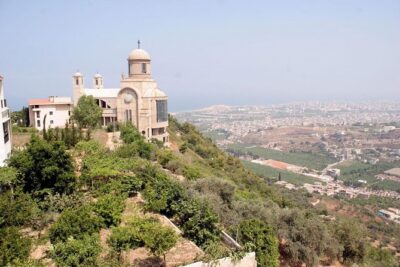
Sidon, Tyre & Maghdouche Day Trip – With Lunch (4G on Board)
Read our review →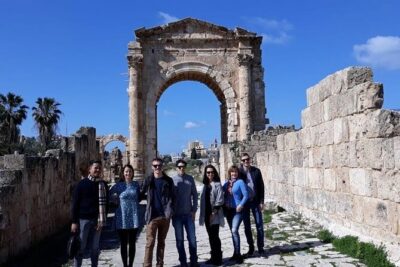
Guided Small-Group Tour to Sidon, Tyre & Maghdouche with Lunch
Read our review →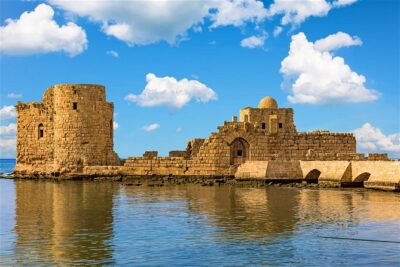
Small Group Tour to Sidon, Tyre & Maghdouche with lunch
Read our review →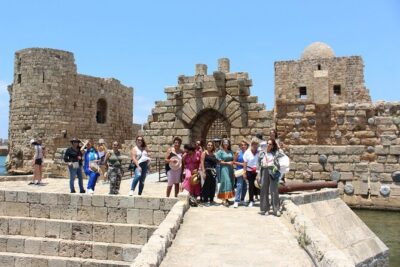
Lebanon tour Sidon & Tyre ruins with pick-up, guide,lunch+entries
Read our review →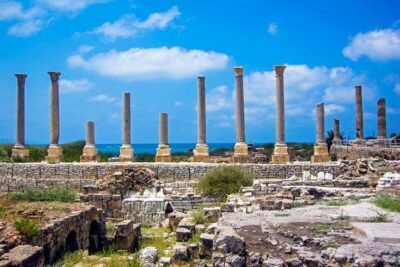
Lebanon Unveiled: Exclusive Private Tours to Sidon & Tyre
Read our review →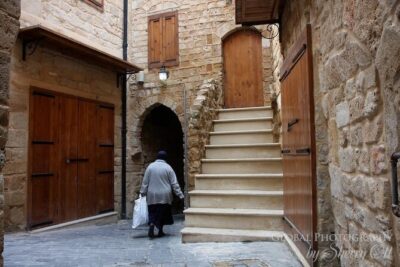
Browse the lists this tour appears in