
Review · BEITEDDINE & DEIR EL QAMAR TOURS
Small Group Tours to Beirut, Beiteddine & Deir el Qamar with lunch and all fees
Beirut gives way to mountain villages fast. This full-day trip combines Beirut’s major sights with the Chouf’s Beiteddine Palace and Deir el Qamar, giving you city views, Ottoman-era architecture, religious landmarks, and Lebanese food in one well-packed day. I especially like the small maximum of 15 people and the fact that hotel pickup, transport, lunch, a tour leader, and entrance fees are included.
I also like the route’s range. You begin beside the Mediterranean at Pigeon Rocks, then move through central Beirut before heading into the mountains. The main caution is time: most Beirut stops last only 10 minutes, so this is better for seeing the city’s key places than for museums, long walks, or unhurried café time.
In This Review
- Key points to know before booking
- What the $99 price really covers
- Pigeon Rocks and the Mediterranean opening
- Zaitunay Bay and Beirut’s modern waterfront
- Beirut’s war memory at the Holiday Inn
- Downtown Beirut, from the Blue Mosque to Roman baths
- Beiteddine Palace, the tour’s main interior visit
- Deir el Qamar, a village shaped by many faiths
- Food, transport, and the rhythm of the day
- Who should book this day out?
- Final decision: a useful one-day introduction to Lebanon
- FAQ
- How long does the tour last?
- What time does the tour begin?
- Is hotel pickup included?
- What type of transport is used?
- What is the maximum group size?
- Is lunch included?
- Are entrance fees included?
- What is the cancellation policy?
Key points to know before booking
- Pigeon Rocks comes early: Morning light can be excellent for photographs, especially around Raouche.
- The group is limited to 15: That is small enough for a more personal guide experience without the cost of a private tour.
- Beiteddine Palace gets the longest visit: You have about 90 minutes there, with admission included.
- Deir el Qamar adds real variety: The village includes a mosque, church, old civic center, and a long record of religious coexistence.
- Lunch and all site fees are covered: The $99 price is easier to judge because several usual extras are already paid.
- Natasha has earned specific praise: One detailed comment highlights her clear explanations, professionalism, and coverage of Beirut’s main sights.
What the $99 price really covers
At $99 per person, this is not simply a sightseeing drive. The package includes hotel pickup and drop-off, an air-conditioned minivan, a tour leader, lunch, and admission to the paid sites. That matters in Lebanon, where arranging separate rides between Beirut, Beiteddine, and Deir el Qamar could take more planning than the price first suggests.
The tour lasts about eight hours and starts at 8:00 am. You are paying for a full day on the road, not just a short city tour. If you want a relaxed morning in Beirut followed by a separate mountain visit, this schedule may feel tight. If you have limited time in Lebanon, I like the way it links several places that would be awkward to combine on your own.
The small-group limit is another part of the value. With no more than 15 people, you should have a better chance to hear the guide and ask questions than on a large coach. It is not a private outing, so the exact pace still depends on the group, but the format offers a sensible middle ground.
Lunch is included, though the supplied details do not specify the restaurant, menu, or dietary arrangements. If you have special food needs, ask before booking. The same practical rule applies to pickup: it is offered, but you should confirm the exact hotel and timing when making your reservation.
More trips through the Chouf palaces:
- Guided small group to Cedars Reserve & Beiteddine w/lunch+entries
★ 5.0 · 12 reviews - Beirut, Beiteddine & DeirElQamar Day Trip-With Lunch(4G on Board)
★ 4.5 · 12 reviews - Cedars Shouf & Beiteddine w/pick-up, guide, entries+lunch
★ 4.7 · 12 reviews
Pigeon Rocks and the Mediterranean opening
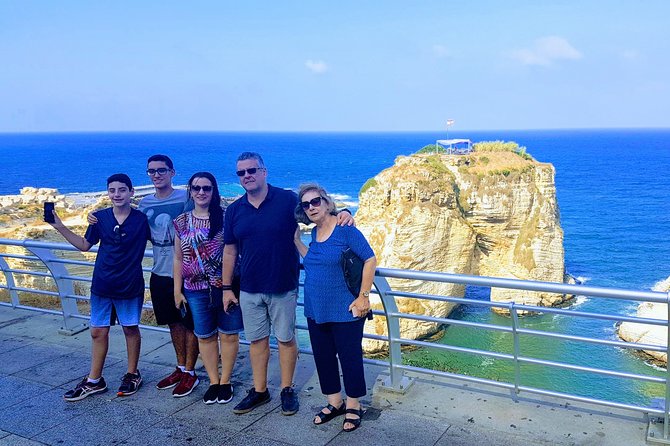
The day begins at Pigeon Rocks in Raouche, Beirut’s western tip. Two huge rock formations rise from the sea like watchmen at the edge of the city. You get about 10 minutes here, with no admission fee.
That is enough for a quick look and photographs, especially since the stop comes early. One useful detail from the tour feedback is the praise for seeing Pigeon Rocks in soft morning light. For photography, that early timing may be one of the best choices in the schedule.
The nearby Al Manara Corniche stretches from Ramlet al Bayda toward the Saint George marina. Palm trees line the promenade, with views across the Mediterranean and back toward the summits of Mount Lebanon. The route gives you a quick sense of Beirut’s coastal setting before the city-center stops begin.
The drawback is simple: do not expect a long seaside walk. Pigeon Rocks is a viewpoint stop, not a beach outing or a leisurely Corniche stroll. Wear shoes that are comfortable for short periods of standing and moving between sites, but you will not need equipment for a hike.
Zaitunay Bay and Beirut’s modern waterfront
Zaitunay Bay offers a sharp contrast to Raouche. This newer waterfront area has shops and restaurants, with a polished leisure-focused feel. The stop lasts about 10 minutes and costs nothing to enter.
I see this as a visual transition rather than a major sightseeing visit. You get a glimpse of Beirut’s newer waterfront development, then move on before the day loses momentum. If you enjoy architecture, city planning, or comparing old and new Beirut, the contrast is useful.
Still, 10 minutes is too brief for shopping or a meal here. Lunch comes later as part of the tour, so treat Zaitunay Bay as a quick orientation stop rather than free time.
Beirut’s war memory at the Holiday Inn
The abandoned Holiday Inn is one of the most striking sights on the route because it carries the physical marks of Lebanon’s civil war. Built between 1971 and 1974 during Beirut’s economic boom, the hotel operated until the war began in 1975.
It later became part of the Battle of the Hotels, a long conflict in which fighters battled for control of luxury hotels in the city. The damaged building remains abandoned, a stark reminder of how quickly Beirut’s fortunes changed.
The supplied timing does not give this stop a separate duration, so expect to view it as part of the city drive rather than enter the building. That limitation is important. You will receive context from the tour leader, but this is not a guided interior visit. Its value comes from seeing a preserved war landmark in the city itself, not from a polished museum presentation.
A few more trips out of Beirut worth a look
- Guided Small-Group Tour to Baalbek, Anjar and Ksara with Lunch
★ 5.0 · 511 reviews - Guided Small-Group Tour to Jeita, Harissa, Byblos with Lunch
★ 5.0 · 361 reviews - Anjar, Baalbek & Ksara Day Trip – With Lunch (4G on Board)
★ 4.5 · 181 reviews - Byblos, Jeita Grotto & Harissa Day Trip -With Lunch (4G on Board)
★ 4.5 · 145 reviews
Downtown Beirut, from the Blue Mosque to Roman baths
The central Beirut section moves quickly, but it includes several important places.
The Mohammad Al-Amin Mosque, often called the Blue Mosque, is Lebanon’s largest mosque. Opened in 2008, it is known for its light-blue tiled domes, tall arches, and four minarets that reach about 65 meters. The 10-minute stop lets you take in the scale and exterior details near Martyrs’ Square.
Next comes the Greek Orthodox Cathedral of Saint George, the oldest church in Beirut. The site is linked to an earlier Christian temple dating to the mid-sixth century and to the city’s famous ancient law school. You get another 10-minute visit, so listen closely when the guide explains what you are seeing.
Martyrs’ Square carries a more difficult story. Its name recalls the executions of Lebanese nationalists by the Ottoman authorities on May 6, 1916. Historically known as Al Burj or Place des Cannons, the square is one of the city’s key public spaces. The brief stop gives you an introduction, but the place deserves more time if you want to study its memorials and changing urban form.
Place de l’Étoile is the polished center of downtown Beirut. The Lebanese Parliament, cathedrals, a museum, cafés, and restaurants surround the square. Its most recognizable feature is the four-faced 1930 Rolex clock. Again, the tour allows about 10 minutes, enough for photographs and a guide’s overview.
Beirut Souks adds a commercial note. The district includes more than 200 shops, 25 restaurants and cafés, an entertainment center, and a cinema complex. It is described as the city center’s largest shopping and leisure area, but the short visit means you are unlikely to shop in any serious way.
The Roman Berytus baths provide the ancient counterpoint. Discovered in 1968 and 1969 and renovated in the 1990s, the baths once formed four major complexes. The first was created in the early first century under Augustus, and the 551 earthquake destroyed the site. Today, one of the bath areas is also used for artistic performances and concerts.
Taken together, these downtown stops explain why the itinerary feels full. You move from Islamic architecture to Orthodox Christianity, Ottoman-era memory, modern retail, and Roman Beirut within a few hours. The tradeoff is depth. I would choose this route if you want a strong first look at the city, not if you want to sit inside each monument for a long visit.
Beiteddine Palace, the tour’s main interior visit
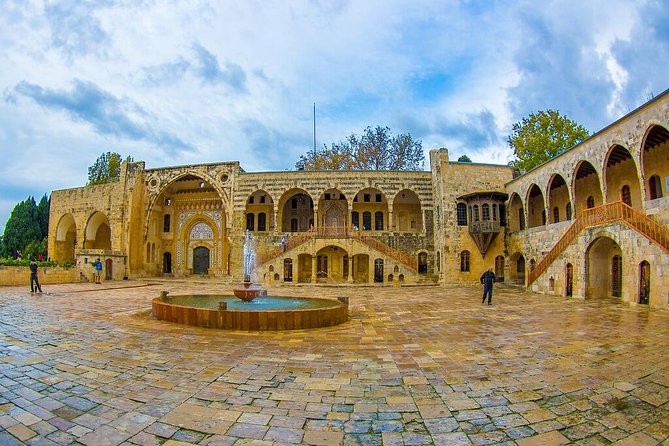
Beiteddine Palace is the day’s centerpiece, with about 90 minutes and admission included. The name means House of Faith, and Emir Bashir Chehab II built the palace between 1788 and 1818.
The palace’s later roles help explain its layered character. After 1840, it served as an Ottoman government building. During the French Mandate, it became a local administrative office. In 1943, it was declared the president’s official summer residence. It also suffered heavy damage during the Lebanese Civil War.
Parts of the palace are open to the public, while other areas remain connected to the president’s summer residence. The complex also houses the Beiteddine Palace Museum and hosts the annual Beiteddine Festival. That combination gives the visit more weight than a quick photo stop. You are seeing a palace that has served political, administrative, cultural, and residential roles across several periods.
The 90-minute allowance is generous compared with the Beirut stops. You can expect time for the architecture, museum areas, and photographs without being rushed from one doorway to the next. One detailed comment specifically praises the palace as a beautiful place for photographs and describes the feeling of being transported back in time. That is a fair reason to value this stop.
The palace is also where the tour’s mountain setting becomes most clear. You leave Beirut’s dense urban center for the Chouf region, where the journey itself adds a change of pace. Since transport is by air-conditioned minivan, you can make the longer transfer without arranging a separate car.
Deir el Qamar, a village shaped by many faiths
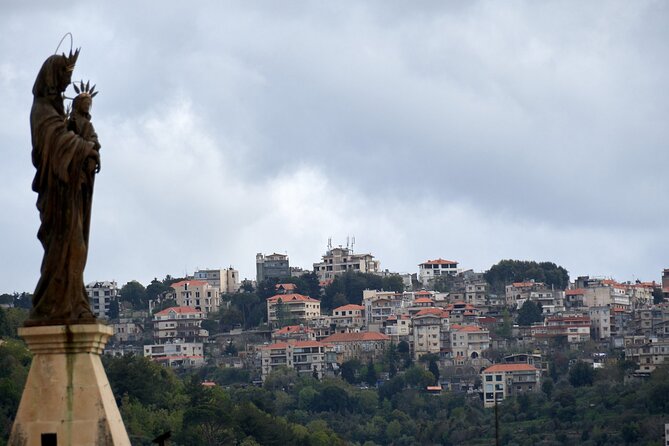
Deir el Qamar lies about five kilometers from Beiteddine Palace in the Chouf District. Its name means Monastery of the Moon. The village was Lebanon’s first to have a municipality, established in 1864, and it has been associated with artists, writers, and politicians.
What makes Deir el Qamar especially worthwhile is its religious mix. People from different faiths lived here, and the village had a mosque, a synagogue, and Christian churches. The route does not treat the town as a single monument. Instead, it gives you several short windows into the community’s past.
The municipality stop lasts about 30 minutes. The town was destroyed and set on fire during the 1860 conflict between Druze and Christians, then rebuilt with help from a French contingent sent by Napoleon III. That history gives the old streets and civic center a serious layer beneath their attractive appearance.
Fakhreddine’s Mosque is the oldest mosque in Mount Lebanon. Built in 1493 and restored in the sixteenth century by Fakhreddine I, it is recognized by its octagonal minaret. The 15-minute stop is short, but the mosque helps show that Deir el Qamar’s identity has never been limited to one religious tradition.
The Church of Saidet et Tallé, or Our Lady of the Hill, dates to the fifteenth century and is one of the village’s major religious sites. It was built by Monk Nicolas Smisaati over the remains of an older Phoenician temple dedicated to Astarte. That earlier structure was later destroyed by an earthquake in 859.
The church also carries a local legend about a light seen on the hill, a story tied to the building of a mosque or church depending on the symbol found at the site. The tour’s 15-minute visit cannot cover every detail, but it gives the guide a chance to connect the church to both older pagan worship and later Christian tradition.
Deir el Qamar is the part of the day most likely to reward careful listening. The stops are brief, yet the village brings together municipal history, conflict, rebuilding, Islamic architecture, Christian worship, and older sacred traditions. I would not expect a long independent stroll, but the guided format makes the short visit more meaningful.
Food, transport, and the rhythm of the day
The air-conditioned minivan is a practical choice for this route. Beirut’s city stops are spread across the waterfront and downtown, while Beiteddine and Deir el Qamar require a trip into the Chouf. Hotel pickup and drop-off remove the need to find separate transport at the beginning and end of the day.
The start time is 8:00 am, which works in favor of the coastal viewpoints. It also helps fit the palace and village into an eight-hour schedule. In exchange, you give up a slow morning. I would keep the day free of other fixed plans, since the itinerary includes many stops and the timing can be affected by road conditions or the pace of the group.
Lunch is included, along with all stated admission fees. That makes the price easier to compare with a self-arranged day, where transport, food, and palace entry would be separate costs. The details do not identify the meal location or menu, so confirm dietary needs ahead of time rather than assuming the meal will suit every preference.
The tour is mobile-ticket based, and confirmation is provided at booking. Most people can participate according to the supplied information, but no further accessibility details are given. If you need specific arrangements, contact Beirut Daily Tours before reserving.
Who should book this day out?
I would choose this experience if you have one day for Beirut and the Chouf and want an organized introduction to both. It suits first-time visitors who prefer a guide to explain the city’s religious sites and war landmarks, then handle the drive to the palace and village.
It also works well for people who value variety. In eight hours, you see the sea, modern waterfront development, a damaged civil-war hotel, mosques, churches, a Roman archaeological site, a palace, and a mountain village. Few individual stops receive a long visit, but the full picture is broad.
The tour is less suitable if you dislike early starts, short photo stops, or group pacing. History fans who want long museum sessions may find the Beirut portion too brisk. A private tour would offer more control, but likely at a higher cost.
Guide quality matters on a route like this. Natasha is specifically praised for being informative and professional, with clear explanations of the major attractions. Since much of the value comes from context rather than lengthy site visits, a strong tour leader can make a real difference.
Final decision: a useful one-day introduction to Lebanon
I would book this tour if you want a practical first look at Beirut plus two of the Chouf’s most important historic places. The strongest points are the small group, included lunch and fees, hotel transport, the long Beiteddine Palace visit, and the chance to see Deir el Qamar’s unusual mix of religious and civic history.
I would skip it only if you want a slow, highly personal day. The schedule is busy, and 10 minutes at several Beirut sights is enough to orient you, not enough to explore them fully. At $99, though, the combination of transport, guide, lunch, and admission makes it a solid value for a visitor who wants broad coverage in one day.
FAQ
How long does the tour last?
The tour lasts approximately eight hours.
What time does the tour begin?
The tour begins at 8:00 am.
Is hotel pickup included?
Yes. Hotel pickup and drop-off are included.
What type of transport is used?
Transport is provided in an air-conditioned minivan.
What is the maximum group size?
The tour accepts a maximum of 15 participants.
Is lunch included?
Yes. Lunch is included in the tour price.
Are entrance fees included?
Yes. Admission and tickets to the listed sites are included. Beiteddine Palace specifically includes admission.
What is the cancellation policy?
You can cancel up to 24 hours before the start time for a full refund. Cancellations or changes made less than 24 hours before the start time are not accepted for a refund.
Newest Beirut reviews
- Wine Tasting Tour★ 5.0 · 2 reviews
- Journey Through Time: Half-Day Private Tour to Baalbek★ 5.0 · 3 reviews
- Lebanon’s Treasures: Jeita Grotto and Harissa Private Tour★ 5.0 · 2 reviews
- Traveling Spoon Lebanese Mezze Private Online Cooking Class★ 5.0 · 4 reviews
- Wine Tasting and Culture★ 5.0 · 3 reviews
- Small Group Tour to Baalbek, Anjar & Ksara with Hotel pickup★ 5.0 · 2 reviews
- Small Group Tours to Jeita Grotto and Byblos with tickets★ 5.0 · 3 reviews
- Small-Group Tour with Lunch to Baalbek, Anjar and Ksara★ 5.0 · 3 reviews
Beiteddine & Deir el Qamar Tours, compared.
Cedars Shouf & Beiteddine w/pick-up, guide, entries+lunch
Read our review →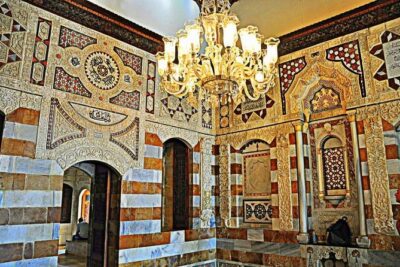
Beirut, Beiteddine & DeirElQamar Day Trip-With Lunch(4G on Board)
Read our review →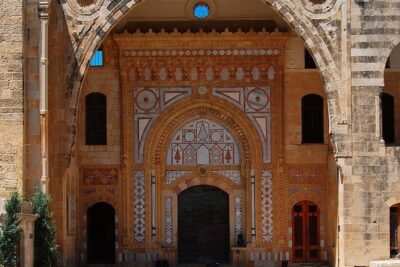
Guided small group to Cedars Reserve & Beiteddine w/lunch+entries
Read our review →
Deir el Qamar – Beiteddine Palace – Chouf Cedars From Beirut
Read our review →
Deir Al-Qamar, Beiteddine Palace and Barouk Cedars Tour
Read our review →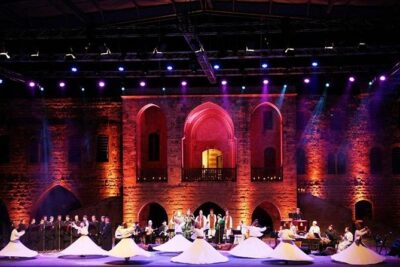
PRIVATE tour to Beirut history museum, Beiteddine & Deir elQamar
Read our review →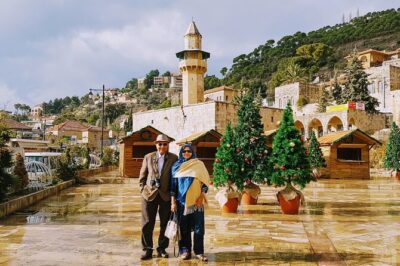
Private Trip to Beiteddine, Deir el Qamar & Maaser el Chouf Cedars
Read our review →
Chouf Charm: Private Journey Through Lebanon’s Historic Heartland
Read our review →Browse the lists this tour appears in