
Review · SIDON & TYRE TOURS
Private Guided Tour to Sidon, Tyre and Maghdouche from Beirut
Ancient ports, living streets, and one full day. This private excursion links Sidon and Tyre, two of Lebanon’s most important coastal cities, with a stop at the Our Lady of Mantara shrine in Maghdouche. You travel by air-conditioned vehicle with hotel pickup and drop-off, which removes much of the stress of getting around southern Lebanon.
I especially like the small private format, since you can ask questions and set the pace with your own driver and guide. I also like the range of sights, from a Crusader fortress and old souks to Roman roads and a huge hippodrome. The main drawback is that the day is packed, and the $100 price per person does not include entrance fees or lunch.
In This Review
- Six things to know before booking
- Why this southern Lebanon day trip works
- Sidon: Phoenician roots and a working port
- The Sea Castle: Sidon’s best-known landmark
- Khan al-Franj and the Sidon souks
- Maghdouche and the Our Lady of Mantara shrine
- Tyre: where the ancient world becomes visible
- Al-Bass: Roman grandeur beyond the postcard
- Transport, timing, and the real value of $100
- Who should book this tour?
- Should you book it?
- FAQ
- Where does the tour begin?
- Is hotel pickup and drop-off included?
- How long does the tour last?
- Is this a private activity?
- What transportation is provided?
- Are entrance fees included?
- Is lunch included?
- Can I cancel for a full refund?
Six things to know before booking
- Sidon mixes major sights with ordinary city life, including the Sea Castle, Khan al-Franj, the soap-making tradition, and narrow commercial souks.
- Tyre is the archaeological high point, with a Roman triumphal arch, necropolis, aqueduct, road, and one of the ancient world’s largest hippodromes.
- Maghdouche adds a religious and local dimension, with a shrine connected to the tradition of Mary waiting for Jesus.
- Private transport matters in Lebanon, especially when you want to cover two southern cities in one day without handling the roads yourself.
- The schedule runs about eight hours, beginning at 9:00 a.m., so expect a full day rather than a relaxed seaside outing.
- Bring extra money for entry tickets and lunch, since both are outside the tour price.
Why this southern Lebanon day trip works
This is a strong choice if you want to see more than Beirut but have limited time in Lebanon. Sidon and Tyre are far enough apart that combining them independently takes planning, local transport, and patience. Here, the company handles the driving while you concentrate on the sights.
The route also has a useful rhythm. Sidon gives you a port city, a Crusader castle, a khan, and a souk. Maghdouche offers a short, quieter stop. Tyre then supplies the grand archaeological finish.
You should keep your expectations realistic. Eight hours is enough to see the main places, but not enough for long museum visits, an extended beach break, or a slow exploration of every alley. This is a sightseeing day with several stops, not a leisurely coastal retreat.
The private setup is the biggest practical advantage. Only your party joins the activity, and transportation is provided from your Beirut hotel. If you are traveling with family or friends, group discounts may improve the value further. You also avoid spending your limited holiday time negotiating routes or finding parking.
The tour has received a 4.6 rating from nine posted ratings, with especially warm comments about the comfortable vehicle, capable drivers, clear explanations, and food during the day. Guide names praised in the feedback include Hassane, Kamil, and Kassim, though you should not assume one of them will be assigned to you.
Other days along the southern coast:
- Small-Group Adventure Tour to Sidon Tyre & Maghdouche-Day Trip
★ 5.0 · 45 reviews - Sidon, Tyre & Maghdouche Day Trip – With Lunch (4G on Board)
★ 4.5 · 44 reviews - Guided Small-Group Tour to Sidon, Tyre & Maghdouche with Lunch
★ 5.0 · 41 reviews
Sidon: Phoenician roots and a working port
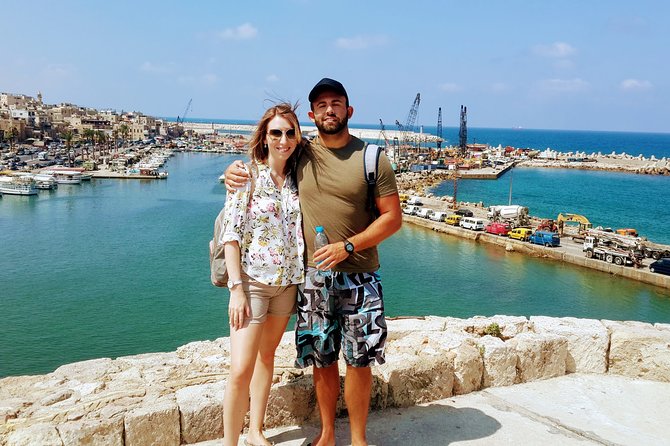
The first major stop is Sidon, one of the oldest Phoenician cities. Its foundations reach back to the third millennium BC, and it grew prosperous through trade, glassmaking, and the production of purple dye from murex sea snails.
That dye is one of the best details to keep in mind as you walk around. Tyrian purple is more closely associated with Tyre, but the wider Phoenician coast shared related skills and trade networks. The color was costly and linked with power, giving you a small but memorable way to connect ancient commerce with the port cities you are seeing.
Sidon also appears in the New Testament, where Jesus visited the region. Later centuries brought Crusader, Mamluk, Ottoman, and other influences. The city was destroyed and rebuilt more than once, so what you see is not one neatly preserved ancient settlement. It is a layered place where old stone sits beside daily business.
The stop lasts about two hours in total. That should give you a useful introduction, though the time is divided among several locations.
The Sea Castle: Sidon’s best-known landmark
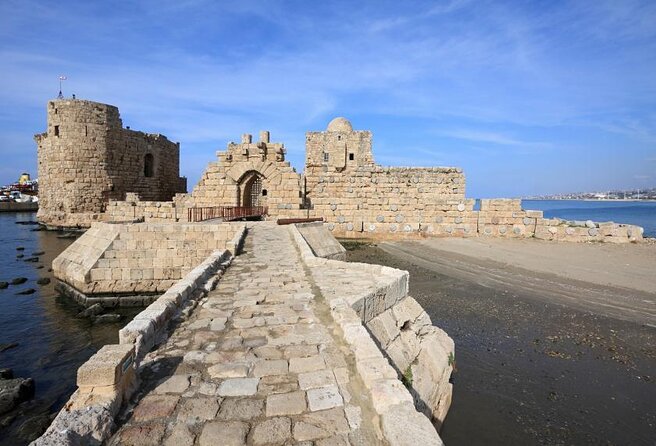
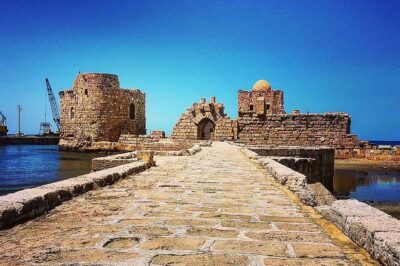
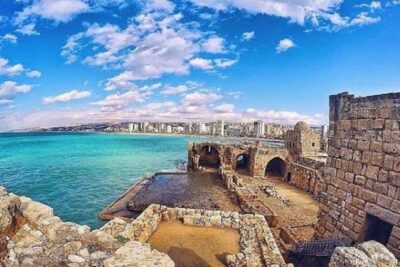
The Crusaders built the Sea Castle in the thirteenth century on a small island just off Sidon’s port. A causeway connects it to the mainland, making the approach easy and giving the fortress a memorable position over the water.
The castle served as a stronghold connected with the Crusader presence in the Holy Land. The Mamluks badly damaged it in 1291, and Fakhr el-Dine Maan II later restored it in the early seventeenth century.
Do not expect a complete fortress with its original decorative details. Much of the old beauty shown in historic prints has disappeared, and the remaining structure is comparatively plain. Still, the setting does much of the work. From the causeway and surviving walls, you can look back toward Sidon’s waterfront and understand why control of this small point mattered.
You have roughly 30 minutes here. That is enough for photographs, a short walk, and an explanation of the site. It is not a long archaeological visit. Entrance is not included, so confirm the current fee before setting out.
Khan al-Franj and the Sidon souks
Khan al-Franj is a fine change of pace after the castle. Built in the early seventeenth century by Emir Fakhreddine II, it served as a hotel for ambassadors and a place where Lebanese and French commercial interests met.
The building follows a classic khan plan: a large rectangular courtyard with a central fountain and covered galleries around the edges. Its original role grew into something broader, with links to literature, religion, diplomacy, industry, and education.
You get about 15 minutes here, so look up at the courtyard and galleries rather than expecting a long indoor visit. This is a compact stop, but it helps explain how trade and politics shaped Sidon after the Crusader period.
The souks provide a more active view of the city. Their narrow lanes hold small shops, kiosks, cafés, food sellers, butchers, grocers, tailors, shoemakers, and jewelers. The setting is more useful than a polished shopping center because you can see the commercial life of the old city continuing around you.
Only about 15 minutes is scheduled for the souks. I would use that time to follow the guide, notice the building details, and buy something only if you already know what you want. If you enjoy browsing, you may wish the schedule allowed longer here.
A stop at the Soap Museum is also associated with the Sidon portion of this experience. It connects local craft with the city’s trading past and gives you a closer look at traditional soap-making. Since the timing can vary, ask at the start of the day whether it is included in your exact route.
A few more trips out of Beirut worth a look
- Guided Small-Group Tour to Baalbek, Anjar and Ksara with Lunch
★ 5.0 · 511 reviews - Guided Small-Group Tour to Jeita, Harissa, Byblos with Lunch
★ 5.0 · 361 reviews - Paragliding Trip Over Lebanon – Jounieh Bay
★ 5.0 · 257 reviews - First Paragliding Club in Lebanon – Since 1992
★ 5.0 · 193 reviews
Maghdouche and the Our Lady of Mantara shrine
On the return route, the tour stops in Maghdouche for about 20 minutes at the Basilica of Our Lady of Mantara. The site is also called Our Lady of Awaiting.
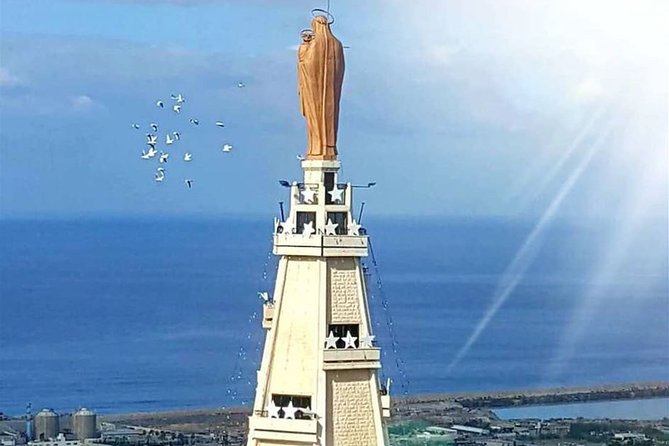
The shrine is a Melkite Greek Catholic religious complex with a tower topped by a statue of the Virgin and Child, a cathedral, a cemetery, and a sacred cave. Local tradition holds that the cave is where Mary rested while waiting for Jesus.
The site was discovered in 1721 by a young shepherd. You do not need to share the religious tradition to appreciate the stop. It offers a different view of Lebanon from the forts and ruins, showing how pilgrimage, local belief, and community memory remain part of the country’s cultural life.
This is a short visit, not a full church tour. Dress and behave respectfully, particularly if services or prayer are taking place. Because the stop is brief, you will likely see the principal features rather than explore the whole complex.
Tyre: where the ancient world becomes visible
Tyre is the destination I would most look forward to on this route. The ancient Phoenician port was founded around 2750 BC and later came under Egyptian rule before flourishing under King Hiram.
Its name is tied to purple dye made from murex sea snails, a product once prized across the Mediterranean. The city is also linked with Elissar, the Phoenician princess traditionally associated with the founding of Carthage.
Tyre’s importance continued through the rule of Assyrians, Neo-Babylonians, Greeks, Seleucids, Romans, Byzantines, Arabs, Crusaders, Mamluks, and Ottomans. You can see why the city mattered when you consider its location beside the sea and its long role in trade.
The modern town also has beaches and a seaside setting, but this tour is mainly concerned with the ancient remains. Two archaeological areas, Al-Bass and Al-Mina, reflect Tyre’s long past. The schedule gives the city about two hours, including roughly an hour at Al-Bass.
That is enough for the major sights, but do not plan on combining the ruins with a substantial beach visit. You will have to choose between focused archaeology and extra free time if the day’s timing changes.
Al-Bass: Roman grandeur beyond the postcard
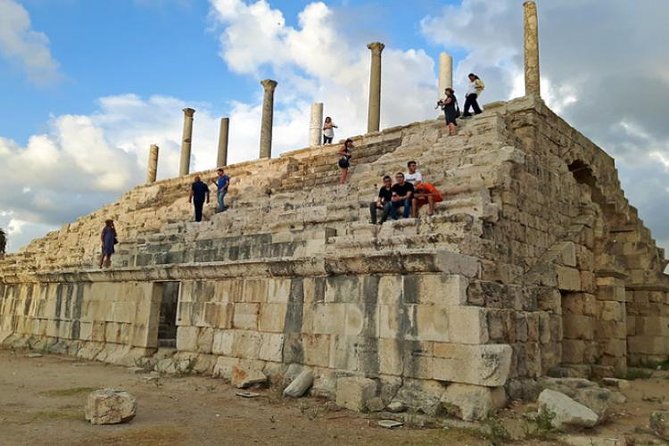
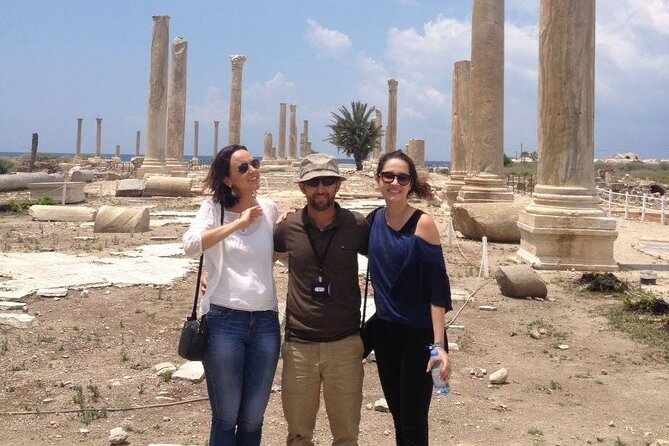
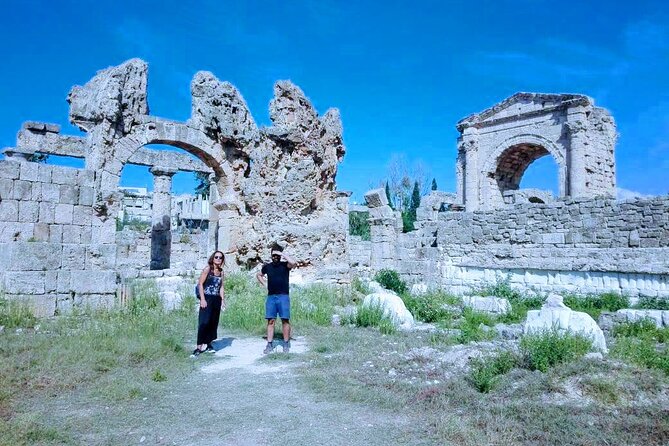
Al-Bass is the most substantial archaeological stop on the tour. It was once the principal entrance to ancient Tyre and contains a broad monumental causeway, a necropolis, a Roman triumphal arch, an aqueduct, an ancient road, and a large hippodrome.
The necropolis contains hundreds of well-preserved sarcophagi. Even if you are not a specialist in Roman archaeology, the scale and variety of the remains make the site easy to appreciate. The intact road gives you a direct sense of how people moved through the ancient city, while the aqueduct points to the engineering needed to support urban life.
The hippodrome is the star. It is described as one of the largest in the Roman world and is considered the largest and best-preserved example of a Roman hippodrome. Its size is easier to grasp on foot than in a photograph.
You have about one hour here. Wear comfortable shoes and be ready for open-air walking. There is little shelter mentioned in the tour details, so weather can affect how pleasant the stop feels. Entrance fees are not included.
The Roman remains also balance the earlier Sidon stops. Sidon is about the port, the Crusader period, trade, and local streets. Al-Bass gives you monumental Roman planning on a much larger scale.
Transport, timing, and the real value of $100
At $100 per person, the tour is not simply a ticket to a few ruins. You are paying for private transportation, hotel pickup and drop-off, an air-conditioned vehicle, a tour leader, and a professional guide.
That can be good value if you want to cover both Sidon and Tyre in one day. The price becomes more attractive when shared by a small group, especially if group discounts apply. You also gain the convenience of a fixed route and a driver familiar with the journey.
The price is less attractive if you are mainly interested in wandering one old city at your own pace. The schedule moves quickly, and you will still need to pay for site admissions and lunch. Ask for a clear estimate of those extra costs before departure.
The day begins at 9:00 a.m. Confirmation is provided when you book, and mobile tickets make it easy to keep the booking details with you. Free cancellation is available if you cancel at least 24 hours before the start time. Changes or cancellations inside that window are not accepted for a refund.
The most encouraging practical detail is the consistent praise for the drivers and guides. The vehicle is described as comfortable, and the guide service has been praised for good conversation, local context, and polite, trustworthy handling. One day included breakfast at a pleasant stop and a good lunch, but meals are not part of the official inclusions, so treat those as possibilities rather than promises.
Who should book this tour?
I would choose this experience if you are staying in Beirut and want a well-organized southern Lebanon day without arranging several separate transfers. It suits first-time visitors, couples, families, and small groups who value a private vehicle and a guide’s explanations.
It is also a good match for anyone interested in Phoenician trade, Roman engineering, Crusader architecture, religious traditions, or ordinary market life. The variety keeps the day from becoming a string of similar ruins.
I would hesitate if you dislike long sightseeing days, want extensive free time, or plan to spend hours at the beach. The route is ambitious, and each stop receives a limited amount of time.
Should you book it?
Book it if your priority is seeing Sidon, Tyre, and Maghdouche in one manageable day from Beirut. The private transport, air conditioning, hotel service, and guide support justify the price for many visitors, especially when divided among a group.
Before paying, confirm the exact entrance fees, lunch arrangements, and whether the Soap Museum is on your day’s route. If you are comfortable with a full schedule and want both major Roman ruins and living Lebanese cities, this is one of the more useful day trips from Beirut.
FAQ
Where does the tour begin?
The tour begins with pickup in Beirut at 9:00 a.m.
Is hotel pickup and drop-off included?
Yes. The tour includes hotel pickup and drop-off.
How long does the tour last?
The experience lasts approximately eight hours.
Is this a private activity?
Yes. Only your group participates in the private tour.
What transportation is provided?
You travel in a comfortable, air-conditioned vehicle with private transportation included.
Are entrance fees included?
No. Entrance fees for places such as the Crusaders Sea Castle and Al-Bass Archaeological Site are not included.
Is lunch included?
No. Lunch is not included in the tour price.
Can I cancel for a full refund?
Yes, if you cancel at least 24 hours before the experience begins. Cancellations or changes made less than 24 hours before the start time are not accepted for a refund.
Newest Beirut reviews
- Wine Tasting Tour★ 5.0 · 2 reviews
- Journey Through Time: Half-Day Private Tour to Baalbek★ 5.0 · 3 reviews
- Lebanon’s Treasures: Jeita Grotto and Harissa Private Tour★ 5.0 · 2 reviews
- Traveling Spoon Lebanese Mezze Private Online Cooking Class★ 5.0 · 4 reviews
- Wine Tasting and Culture★ 5.0 · 3 reviews
- Small Group Tour to Baalbek, Anjar & Ksara with Hotel pickup★ 5.0 · 2 reviews
- Small Group Tours to Jeita Grotto and Byblos with tickets★ 5.0 · 3 reviews
- Small-Group Tour with Lunch to Baalbek, Anjar and Ksara★ 5.0 · 3 reviews
Sidon & Tyre Tours, compared.
Small-Group Adventure Tour to Sidon Tyre & Maghdouche-Day Trip
Read our review →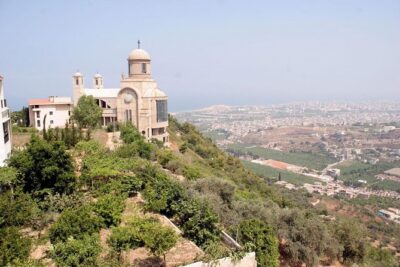
Sidon, Tyre & Maghdouche Day Trip – With Lunch (4G on Board)
Read our review →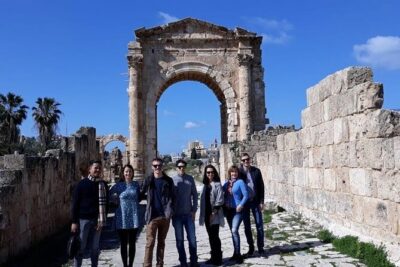
Guided Small-Group Tour to Sidon, Tyre & Maghdouche with Lunch
Read our review →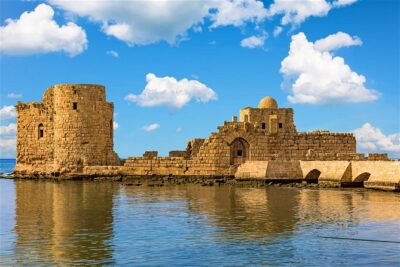
Small Group Tour to Sidon, Tyre & Maghdouche with lunch
Read our review →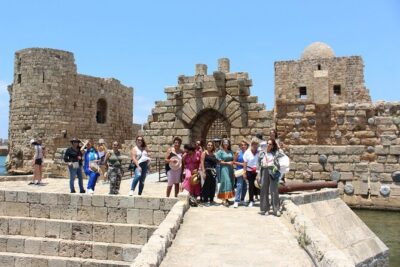
Lebanon tour Sidon & Tyre ruins with pick-up, guide,lunch+entries
Read our review →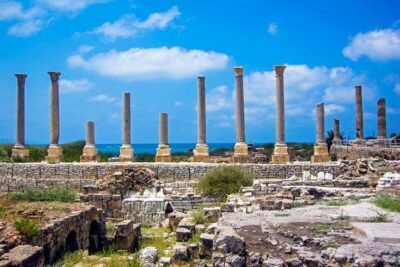
Lebanon Unveiled: Exclusive Private Tours to Sidon & Tyre
Read our review →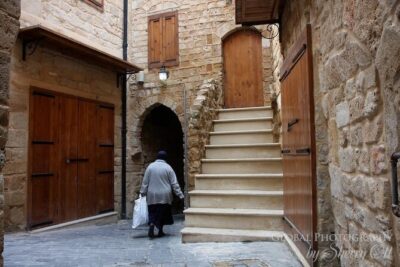
Browse the lists this tour appears in