
Review · CEDARS & QADISHA VALLEY TOURS
Unlocking the Wonders of Lebanon: Journey Through Qadisha Valley
Ancient faith meets mountain air here. This nine-hour private excursion from Beirut takes you into the UNESCO-listed Qadisha Valley, where cave churches, monasteries, and cultivated terraces fill a rugged mountain setting. I like the comfort of door-to-door transport, and I like the way the day combines nature, religion, and Lebanese culture instead of focusing on just one sight.
I also appreciate the personal service. A private driver and tour leader give your group a more relaxed day than a large coach can offer, and one previous booking specifically praised Hassane, the guide, for making the monastery and cedar trees the highlights. The main drawback is simple: entrance fees and lunch are not included, so your $75 price does not cover every expense.
In This Review
- Key Points Before You Book
- Why Qadisha Valley Deserves a Full Day
- Leaving Beirut at 8:30 am
- Bcharre, the Town of Churches and Gibran
- Inside the Gibran Museum
- The Cedars of God and Lebanon’s National Symbol
- Deir Qozhaya and the Monastic Tradition
- What the Private Format Adds
- Is $75 a Fair Price?
- Who Will Like This Day Most?
- Booking and Cancellation Advice
- Should You Book the Qadisha Valley Tour?
- FAQ
- Where does the Qadisha Valley tour begin?
- How long does the tour last?
- Is this a private tour?
- What transportation is included?
- Is lunch included?
- Are entrance fees included?
- How much time is scheduled at each main stop?
- Can I cancel for a full refund?
Key Points Before You Book
- Qadisha Valley brings together monasteries, cave churches, and old farming terraces in one of Lebanon’s most important Christian sites.
- Bcharre is the birthplace of Kahlil Gibran, with a museum holding original drawings, paintings, manuscripts, and personal belongings.
- The Cedars of God preserve 375 cedar trees, among the last remnants of Lebanon’s ancient cedar forests.
- Deir Qozhaya reaches back to the fourth century, with surviving traces from the seventh century.
- Private round-trip transport from your hotel removes the stress of driving mountain roads and coordinating several separate visits.
- The $75 price is strongest for small groups, since the vehicle, driver, tour leader, and hotel transfers are included.
Why Qadisha Valley Deserves a Full Day
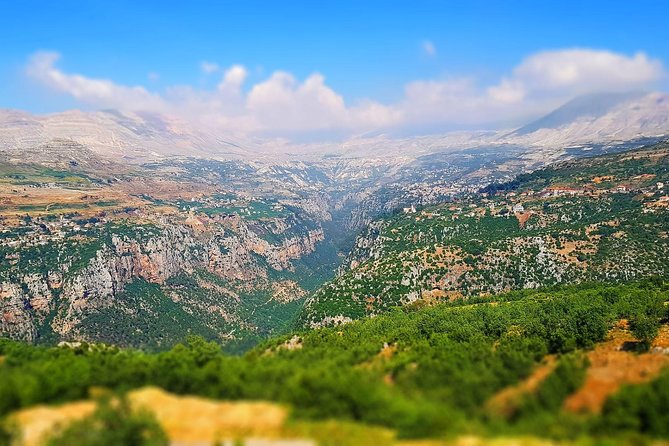
The Qadisha Valley is not simply a viewpoint or a single monument. It is a broad area of caves, monasteries, terraces, and mountain settlements connected with the earliest Christian hermits in Lebanon.
That matters because the valley’s interest comes from the relationship between nature and human life. Monks lived in caves and remote religious houses, while families cultivated terraces in difficult mountain country. You are not just looking at old stone buildings. You are seeing the setting that made this kind of secluded religious life possible.
The valley is also a UNESCO World Heritage Site, which gives you a useful sense of its importance. Many monasteries are very old, and the area is among the most significant early Christian settlement sites in the world. The tour does not promise a long hike through every corner of Qadisha, so you should think of this as a scenic and cultural overview by private vehicle, with selected stops.
That format works well if you want to see several major places in one day. It is less suitable if you hope to spend hours walking remote trails or studying every monastery in detail.
Other days in the cedar country and the Qadisha:
- Guided Small-Group Tour to Qadisha, Bcharee & Cedars with Lunch
★ 5.0 · 39 reviews - Cedars of Lebanon, Qozhaya, & Bcharre – With Lunch (4G on Board)
★ 4.5 · 34 reviews - Cedars, Bsharre & Kozhaya Day Tour
★ 5.0 · 15 reviews
Leaving Beirut at 8:30 am
The day begins at 8:30 am, with pickup from your hotel or another agreed door-to-door location. The air-conditioned vehicle is one of the tour’s practical strengths. Lebanon’s mountain roads can be tiring when you are also trying to navigate, find parking, and keep to a schedule.
Here, you can focus on the scenery and let the driver handle the transport. Since this is a private activity, only your group participates. That gives you more privacy and usually makes it easier to set the pace within the day’s fixed structure.
The tour lasts about nine hours, so you should expect most of the day to be devoted to the mountains. Wear comfortable shoes, even though the supplied details do not describe a demanding hike. Monasteries, forest paths, and uneven outdoor areas are more enjoyable when you are not wearing city footwear.
Lunch is not included. You should plan for that expense and ask the tour provider about the day’s meal arrangements before departure, since the information supplied does not specify a restaurant or a fixed lunch stop.
Bcharre, the Town of Churches and Gibran
Bcharre gives the tour a human face. The town is known as the birthplace of Kahlil Gibran, the Lebanese-American writer, philosopher, and artist whose work made him one of Lebanon’s best-known cultural figures.
Bcharre is also sometimes called the city of churches because it contains about 37 churches. That detail helps explain the town’s strong connection to the wider Qadisha region. Religion here is not limited to remote monasteries. It is part of the town’s built environment and identity.
The planned visit to Bcharre lasts about 30 minutes and has no separate admission charge. That is enough time to get your bearings and understand the town’s importance, but it is not a long walking tour. If you want to explore every church or spend time browsing local streets, you may find the schedule brief.
Bcharre also has Lebanon’s oldest skiing area, the Cedars Ski Resort, and the country’s first ski lift, built in 1953. The tour is not presented as a ski outing, but this detail adds another layer to the town. Bcharre is tied to old religious traditions, literary culture, and modern mountain recreation.
Inside the Gibran Museum
The Gibran Museum occupies the former Monastery of Mar Sarkis. Its location is fitting: you move from the town associated with Gibran into a former religious building devoted to his artistic and personal life.
The museum was founded in 1935 and holds 440 original paintings and drawings. It also contains his tomb, furniture and belongings from his New York studio, and private manuscripts. These items make the visit more personal than a simple display of book covers or biographical panels.
You should allow about 30 minutes here. That is enough for a focused introduction, though art lovers may wish they had longer. The entrance fee is not included, so keep some money available for admission.
I see the museum as an important part of the day because it prevents the Qadisha visit from becoming only a religious or natural attraction. You get a direct connection to a major Lebanese cultural figure, and the museum’s former monastery setting ties Gibran’s modern artistic life to the older spiritual character of the region.
A few more trips out of Beirut worth a look
- Guided Small-Group Tour to Baalbek, Anjar and Ksara with Lunch
★ 5.0 · 511 reviews - Guided Small-Group Tour to Jeita, Harissa, Byblos with Lunch
★ 5.0 · 361 reviews - Paragliding Trip Over Lebanon – Jounieh Bay
★ 5.0 · 257 reviews - First Paragliding Club in Lebanon – Since 1992
★ 5.0 · 193 reviews
The Cedars of God and Lebanon’s National Symbol
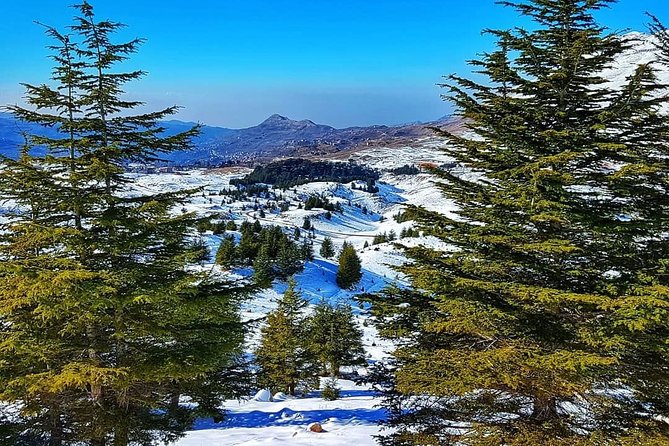
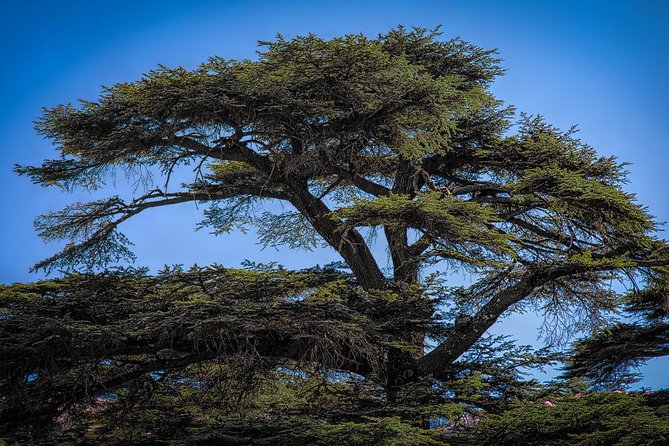
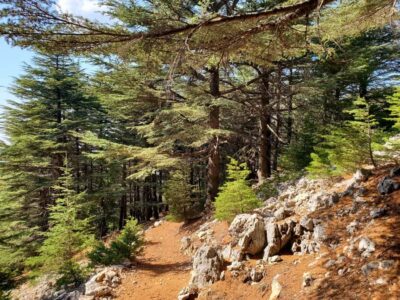
The Cedars of God is likely to be one of the most memorable stops. The forest contains 375 cedar trees and preserves one of the last remaining sections of Lebanon’s ancient cedar forests.
The cedar is not just another tree in the mountains. It is the symbol of Lebanon and appears on the national flag. Ancient peoples prized the wood as a building material, especially for major religious structures. The cedar is also cited 103 times in the Bible, which gives this forest unusual religious and cultural weight.
The visit lasts about 45 minutes, with no admission fee listed. That makes it a good value stop within the day, especially because the meaning of the forest goes well beyond its size. You are seeing a rare surviving group of trees linked to the identity of the whole country.
Do not expect an endless forest. The information provided describes 375 trees as the remaining group, not a vast woodland. The appeal is quality, age, symbolism, and rarity. Take time to notice the trees themselves and the mountain setting rather than rushing through for a quick photograph.
The forest also gives the day a welcome change of pace. After the town and museum, you can spend time outdoors among one of Lebanon’s strongest national symbols.
Deir Qozhaya and the Monastic Tradition
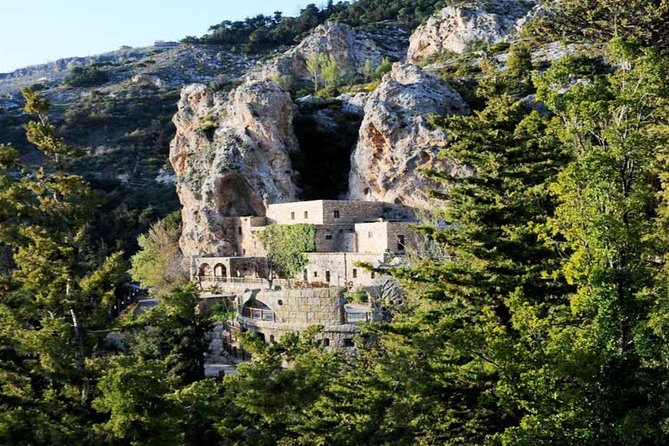
Deir Qozhaya, also called the Monastery of Saint Anthony the Great, sits at about 950 meters above sea level in the Valley of Qozhaya. The surrounding hills are covered with pine and oak trees, while fruit trees grow along the valley.
This is the tour’s most direct encounter with monastic history. Historians and scholars believe the monastery was first built and occupied by hermits at the beginning of the fourth century. It was looted, burned, and destroyed several times, yet traces dating to the seventh century remain.
The visit lasts about 30 minutes and has no listed admission charge. That makes it an efficient stop, but again, the timing is an introduction rather than an exhaustive historical study. I would pay close attention to the building, the setting, and the evidence of repeated rebuilding. The story is not only about age. It is about survival.
Deir Qozhaya is connected with the wider Qadisha Valley, which joins the Valley of Qannubin to form the larger Qadisha area. That connection helps you understand why the tour visits several separate locations. Each one shows a different part of the same religious tradition: isolated hermits, organized monasteries, working valleys, and communities that continued around them.
If the monastery and cedar trees are your top priorities, this is the portion of the day that deserves your full attention. A previous booking singled out both as incredible sights, and the praise makes sense. They offer the clearest blend of place, history, and atmosphere.
What the Private Format Adds
The private format is more than a marketing label. It means your group does not have to share the vehicle or tour schedule with strangers. For a long mountain day, that can make a real difference.
You receive comfortable private transportation, an air-conditioned vehicle, hotel pickup and drop-off, and a tour leader. The driver handles the road while the tour leader helps connect the stops. The available feedback specifically praises the personal service associated with Hassane, so you may wish to request him if the provider can accommodate that request.
The tour also offers group discounts, though the exact discount is not supplied. For two people, $150 total buys a full day of transport and guided touring. For a larger private group, the per-person value may improve, particularly because door-to-door service is included.
The tradeoff is that you are paying for convenience, not a fully inclusive package. Lunch and entrance fees are extra. The tour description also does not state the vehicle size, the exact pickup area, or the amount of time spent driving between stops. Ask those questions if your group has special needs or wants more time at one particular site.
Is $75 a Fair Price?
At $75 per person, this tour offers solid value if you want several major northern Lebanon sights without arranging transport yourself. The day includes a private vehicle, air conditioning, a tour leader, and pickup and drop-off. Those services are especially useful when the route includes mountain towns, forests, monasteries, and a UNESCO site.
The value is less clear if you are already renting a car and are comfortable driving. In that case, you may prefer to control the schedule and decide how long to spend in Bcharre, the museum, or Deir Qozhaya. You would still need to cover fuel, parking, admission, and the practical work of planning the route.
The separate entrance fees are the main financial detail to remember. The Gibran Museum specifically charges an admission fee not covered by the tour. The other listed stops have no admission charge, but you should still carry funds for the museum and lunch.
For a private experience with a small group, I consider the price reasonable. The strongest value comes from combining convenience with access to places that are spread through the Qadisha and Bcharre area.
Who Will Like This Day Most?
I would recommend this tour to you if you want a broad introduction to Lebanon’s mountain culture in one day. It suits people interested in early Christianity, monasteries, Lebanese national symbols, literature, and scenic highland towns.
It is also a good choice if you do not want the responsibility of self-driving. The private transfer makes the day easier, and the nine-hour schedule covers a lot without requiring you to build the route yourself.
Families and mixed-interest groups may find the combination useful. One person can focus on the cedar forest, another on Gibran, and another on the monasteries. The private setup also avoids the fixed social rhythm of a large group.
I would hesitate if your main goal is strenuous hiking, extended photography, or detailed art study. The listed stops are short, with 30 minutes at Bcharre, 30 minutes at the museum, 45 minutes at the cedars, and 30 minutes at Deir Qozhaya. This is a well-packed overview, not a slow specialist tour.
Most travelers can participate, according to the supplied information. Still, confirm any mobility concerns before booking because the details do not explain walking surfaces, steps, or vehicle access at each site.
Booking and Cancellation Advice
Confirmation is provided at booking, and the activity is private for your group. Pickup begins at 8:30 am, and hotel pickup and drop-off are included.
You can cancel for a full refund if you do so at least 24 hours before the start time. Cancellations or changes made less than 24 hours before the experience are not accepted for a refund, with cut-off times based on local time.
Should You Book the Qadisha Valley Tour?
Book it if you want an easy, private way to connect four very different pieces of Lebanon: the Christian heritage of Qadisha, the town of Bcharre, Kahlil Gibran’s art, and the surviving Cedars of God.
The tour’s best features are the private transport, the strong range of sights, and the chance to visit Deir Qozhaya and the cedar forest in the same day. The main cautions are the extra cost of lunch and museum admission, plus the fairly short stop times.
For a first visit to northern Lebanon from Beirut, I would choose this experience over trying to self-drive the same route without preparation. Bring comfortable shoes, budget for the extras, and ask about lunch and the exact vehicle details before you go. If you do, the $75 price can buy a very useful and memorable day in Lebanon’s mountain heart.
FAQ
Where does the Qadisha Valley tour begin?
The tour begins with hotel pickup or door-to-door pickup in Beirut. The stated start time is 8:30 am.
How long does the tour last?
The experience lasts approximately nine hours.
Is this a private tour?
Yes. Only your group participates in the activity.
What transportation is included?
The tour includes comfortable private transportation in an air-conditioned vehicle, plus hotel pickup and drop-off.
Is lunch included?
No. Lunch is not included in the tour price.
Are entrance fees included?
No. Entrance fees are excluded. The Gibran Museum specifically has an admission fee that is not included, while the listed visits to Bcharre, the Cedars of God, and Deir Qozhaya have no admission charge shown.
How much time is scheduled at each main stop?
The schedule allows about 30 minutes in Bcharre, 30 minutes at the Gibran Museum, 45 minutes at the Cedars of God, and 30 minutes at Deir Qozhaya.
Can I cancel for a full refund?
Yes. You can receive a full refund if you cancel at least 24 hours before the experience start time. Changes or cancellations made less than 24 hours before the start time are not accepted for a refund.
Newest Beirut reviews
- Wine Tasting Tour★ 5.0 · 2 reviews
- Journey Through Time: Half-Day Private Tour to Baalbek★ 5.0 · 3 reviews
- Lebanon’s Treasures: Jeita Grotto and Harissa Private Tour★ 5.0 · 2 reviews
- Traveling Spoon Lebanese Mezze Private Online Cooking Class★ 5.0 · 4 reviews
- Wine Tasting and Culture★ 5.0 · 3 reviews
- Small Group Tour to Baalbek, Anjar & Ksara with Hotel pickup★ 5.0 · 2 reviews
- Small Group Tours to Jeita Grotto and Byblos with tickets★ 5.0 · 3 reviews
- Small-Group Tour with Lunch to Baalbek, Anjar and Ksara★ 5.0 · 3 reviews
Cedars & Qadisha Valley Tours, compared.
Guided Small-Group Tour to Qadisha, Bcharee & Cedars with Lunch
Read our review →
Cedars of Lebanon, Qozhaya, & Bcharre – With Lunch (4G on Board)
Read our review →
Cedars Shouf & Beiteddine w/pick-up, guide, entries+lunch
Read our review →
Guided small group to Cedars Reserve & Beiteddine w/lunch+entries
Read our review →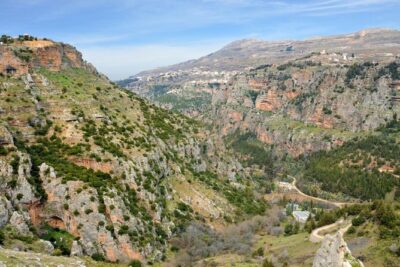
Small-Group Tour with Lunch to Qadisha Valley, Bcharre and Cedars
Read our review →
Guided Full-Day Private Trip to Cedars, Baalbek and Chateau Ksara
Read our review →
Deir el Qamar – Beiteddine Palace – Chouf Cedars From Beirut
Read our review →Browse the lists this tour appears in