
Review · BEITEDDINE & DEIR EL QAMAR TOURS
Private Trip to Beiteddine Palace, Deir elQamar and Mousa Castle
Mountain history awaits beyond Beirut. This private eight-hour trip takes you into the Chouf countryside for three very different sights: Beiteddine Palace, the handmade fantasy of Moussa Castle, and the historic town of Deir el Qamar. I like the easy hotel pickup and the freedom of a private vehicle, and I also like how the day brings together palace art, religious history, and local oddity rather than repeating one type of attraction.
The main drawback is cost control. At $75 per person, the tour can be good value for a private day with a guide and air-conditioned transport, but palace and castle admission fees, as well as lunch, are extra. You should also allow for changing mountain conditions. A previous outing could not reach the Chouf Cedars because of snow.
In This Review
- Key points to know before booking
- From Beirut to the Chouf Mountains
- Beiteddine Palace and the world of Emir Bashir
- Moussa Castle, a personal dream in stone
- Deir el Qamar, the Monastery of the Moon
- Fakhreddine’s Mosque and its old minaret
- Saydet El Talle and layers of belief
- The guides can shape the whole day
- Is $75 per person good value?
- Practical advice for a smoother outing
- Who should book this Chouf day?
- Should you book it?
- FAQ
- What is included in the tour price?
- Are admission tickets included?
- Is lunch included?
- What time does the tour start?
- How long does the experience last?
- Is this a private activity?
- Can I cancel for a full refund?
Key points to know before booking
- Beiteddine Palace is the day’s main historical stop, with mosaics, museum rooms, and a long political past.
- Moussa Castle tells a highly personal story, built by Moussa Al Maamari from a dream he first formed at age 14.
- Deir el Qamar offers several traditions in one small town, including a mosque, Christian churches, and a history of Jewish presence.
- The tour is private, so only your own group takes part and the pace may be easier to manage than on a large coach.
- Albert and Ziad are names worth asking about, since both have been praised for guiding, driving, and explaining Lebanese history and culture.
- Admission tickets and lunch are not included, so the advertised price is not the final cost of the day.
From Beirut to the Chouf Mountains
The tour begins at 9:00 a.m. with hotel pickup in Beirut. From there, you leave the city for the Chouf, a mountain district southeast of the capital. The drive is part of the appeal. Instead of spending a full day among Beirut’s urban sights, you get a change of air, scenery, and pace.
Your vehicle is private, air-conditioned, and included in the tour price. That matters in Lebanon, where a day linking several mountain sites can be awkward to arrange independently. You do not need to negotiate separate taxis or work out how to move between Beiteddine, Moussa Castle, and Deir el Qamar.
The day lasts about eight hours, so it is a full outing rather than a quick half-day escape. I would treat the schedule as a framework, not a race. The listed stops add up to three and a half hours, leaving time for road travel, orientation, and movement between sites.
A private trip also gives you some say in the rhythm. You can ask for more explanation at a historic monument or keep moving if a stop is not holding your attention. The trade-off is that the quality of the day depends heavily on the guide assigned to your group. Albert has been praised for explaining Lebanese history at Beiteddine, while Ziad has been praised for his cultural knowledge and for combining the roles of guide and driver.
More trips through the Chouf palaces:
- Beirut, Beiteddine & DeirElQamar Day Trip-With Lunch(4G on Board)
★ 4.5 · 12 reviews - Guided small group to Cedars Reserve & Beiteddine w/lunch+entries
★ 5.0 · 12 reviews - Cedars Shouf & Beiteddine w/pick-up, guide, entries+lunch
★ 4.7 · 12 reviews
Beiteddine Palace and the world of Emir Bashir
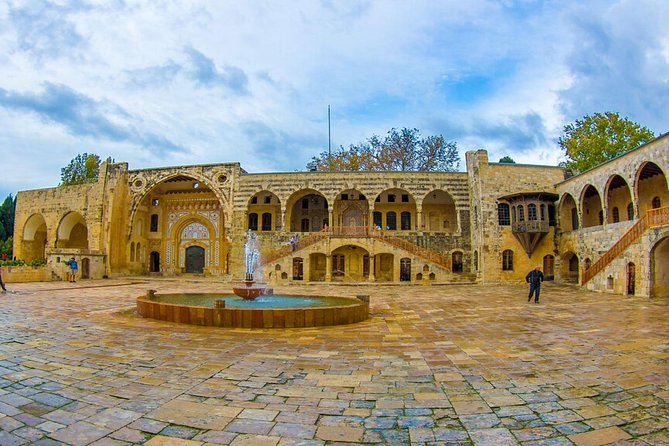
Beiteddine Palace receives about 90 minutes, making it the central stop. The name means House of Faith, and the palace was built between 1788 and 1818 by Emir Bashir Chehab II, who later ruled the Mount Lebanon Emirate.
That long construction period helps explain why this is more than a simple country residence. The palace reflects the power and ambition of a ruler who wanted a grand seat in the mountains. The complex later changed roles under Ottoman rule, when it served as a government building, and during the French Mandate, when it became a local administrative office.
In 1943, Beiteddine was declared the official summer residence of the president of Lebanon. Parts of the palace remain connected to that role, while other sections are open to the public as a museum and historic site. This split is worth knowing in advance. You will not necessarily see every room or corner of the complex.
The palace was badly damaged during the Lebanese Civil War. Its survival, restoration, and continued public use give the visit a modern political layer. You are not just looking at old walls. You are seeing a place that has passed through Ottoman administration, French rule, Lebanese independence, and civil conflict.
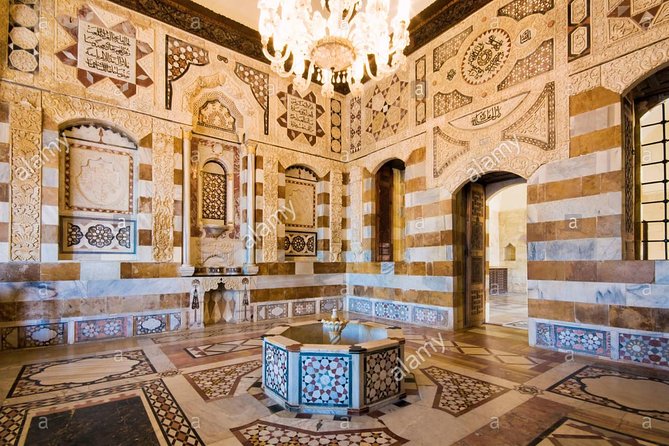
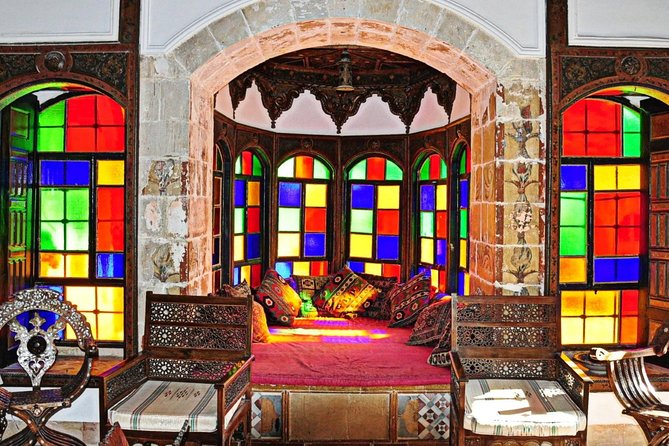
Give the mosaics proper attention. The previous tour experience singled them out as a highlight, and they provide some of the most visually memorable detail in the visit. I would not rush through the museum rooms simply to stay on schedule. Ask your guide to explain which sections are open, what has been restored, and how the palace functioned in the period of Emir Bashir.
Admission is not included. The tour description does not provide a ticket price, so check the current fee before you go. Since Beiteddine is the principal historical attraction of the day, the extra entrance cost should be part of your budget from the start.
Moussa Castle, a personal dream in stone
Moussa Castle offers a sharp change of mood after Beiteddine. Instead of a ruler’s palace built over decades, you see the work of one man pursuing a private dream.
The castle was built by Moussa Al Maamari, born on July 27, 1931. The story begins when he was 14 years old and wanted to impress a local girl he loved. That early idea eventually became a castle on the hill between Deir el Qamar and Beiteddine.
You get about an hour here. That is enough time to take in the unusual construction and the beliefs and ideas that Moussa placed into the stones. The attraction is not presented as an ancient fortress. Its value comes from the human story behind it, the persistence of its builder, and the sheer strangeness of finding such a personal project along the mountain road.
I like this stop because it keeps the day from becoming a sequence of formal monuments. Beiteddine represents political power. Moussa Castle represents imagination, determination, and a very long personal project. Those two places make a useful pair.
The admission fee is extra. If your group is more interested in established historical buildings than eccentric modern creations, you may find the castle less compelling than Beiteddine. I would still keep it on the schedule because it gives the day a different voice.
Deir el Qamar, the Monastery of the Moon
Deir el Qamar is about five kilometres from Beiteddine Palace. Its name means Monastery of the Moon, and the village once served as the capital of the Emirate of Mount Lebanon.
The town is also important for its civic history. It was the first village in Lebanon to have a municipality, established in 1864. It became the birthplace of artists, writers, and politicians, and its religious buildings reflect a long period in which people from different faiths lived in the same community.
The tour allows 30 minutes for the town itself, followed by separate short visits to Fakhreddine’s Mosque and Saydet El Talle Church. Half an hour is not enough for a slow, wandering exploration of every lane, so I would use this portion with a clear aim. Look at the central historic area, listen carefully to the guide, and save questions for the religious sites.
Deir el Qamar also carries painful history. In 1860, the town was destroyed during conflict between Druze and Christians and was set ablaze. Napoleon III sent a French contingent to help rebuild it. That fact gives the village a sobering dimension. Its attractive streets and monuments are tied to both coexistence and communal violence.
The town once had a mosque, a synagogue, and Christian churches. The surviving religious mix makes Deir el Qamar especially useful for understanding Lebanon beyond simple labels. You can see how a small mountain community became a meeting place for several traditions, even as its past includes periods of deep division.
Admission to the Deir el Qamar stop is free. The bigger cost here is time. If you want a long café break, shopping, or a detailed walk through the town, an eight-hour private tour with several stops may feel tight.
A few more trips out of Beirut worth a look
- Guided Small-Group Tour to Baalbek, Anjar and Ksara with Lunch
★ 5.0 · 511 reviews - Guided Small-Group Tour to Jeita, Harissa, Byblos with Lunch
★ 5.0 · 361 reviews - Paragliding Trip Over Lebanon – Jounieh Bay
★ 5.0 · 257 reviews - First Paragliding Club in Lebanon – Since 1992
★ 5.0 · 193 reviews
Fakhreddine’s Mosque and its old minaret
The visit to Fakhreddine’s Mosque lasts about 15 minutes. That sounds brief, but the site is small and focused.
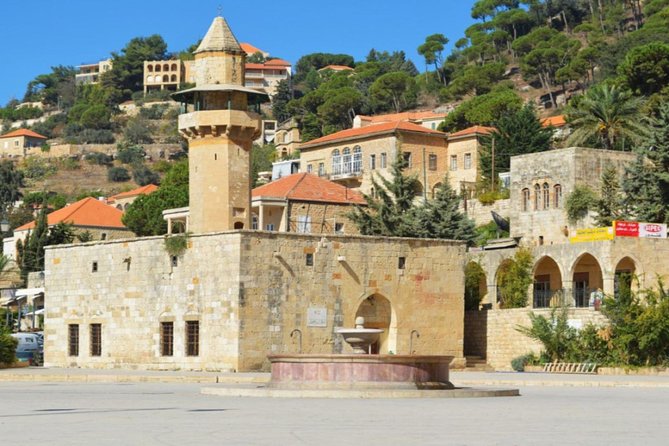
The mosque was built in 1493 and restored in the sixteenth century by Fakhreddine I. Its octagonal minaret is a distinctive feature, and the building is described as the oldest mosque in Mount Lebanon.
This stop adds an important piece to the story of Deir el Qamar. The town is often associated with Christian churches and the history of the Mount Lebanon Emirate, but the mosque makes its Islamic heritage visible. A short visit can be worthwhile if your guide explains how the mosque fits into the wider history of the town.
Do not expect a long independent visit. Fifteen minutes is enough for a look and a brief explanation, not for a detailed architectural study. The attraction is free, which makes it an easy inclusion in the day.
Saydet El Talle and layers of belief
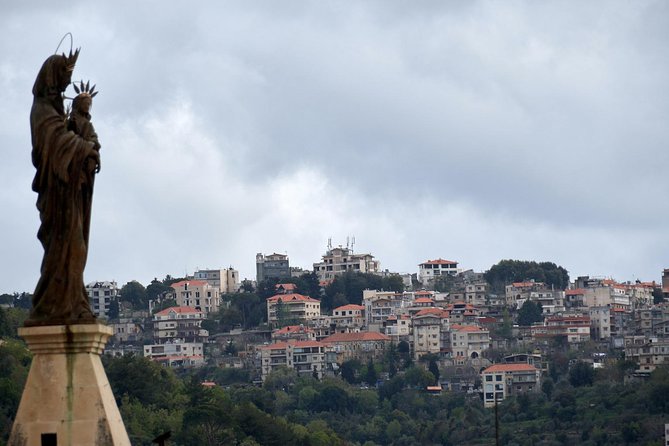
Saydet El Talle Church, also known as Our Lady of the Hill, receives another 15 minutes. The church dates to the fifteenth century and is one of Deir el Qamar’s major religious and historic sites.
The site is said to have been built over the ruins of an old Phoenician temple dedicated to Astarte. An earlier church was destroyed by an earthquake in 859, and Monk Nicolas Smisaati later built a church on the site.
The traditions surrounding the hill show how older beliefs, Christian devotion, and local legend overlap. One story tells of a Druze emir in Baakline who saw a light coming from the hill. He ordered his soldiers to dig there and gave instructions based on whether they found an Islamic or Christian symbol. The story links the site to the building of both a mosque and a church.
You will need to let your guide provide the full context, since the visit is short. I would focus less on trying to inspect every detail and more on understanding why this hill matters to several religious traditions.
The church visit is free. As with the mosque, the short stop works best when the guide is good at explaining connections rather than simply naming dates.
The guides can shape the whole day
A private tour offers comfort and control, but the guide is the person who turns a list of monuments into a meaningful day. Albert has been specifically praised for being informative about Lebanese history and for guiding visitors through Beiteddine. Ziad has been praised for his culture, historical knowledge, driving, and personal manner.
I would ask the operator if either guide is available when booking, but I would not assume a particular guide can be guaranteed. The supplied information confirms the names and positive impressions, not a fixed guide assignment.
This distinction matters at sites such as Moussa Castle and Saydet El Talle. Without context, you can look at a building and move on. With a strong guide, you can understand why a ruler built a palace, why a village had several houses of worship, and how war and reconstruction shaped the region.
The private format also lets you ask direct questions about Lebanon’s religious communities, Ottoman rule, the French Mandate, the civil war, and the history of Mount Lebanon. I like that freedom more than a large group where the guide must keep every explanation short.
Is $75 per person good value?
The price is $75 per person. That includes hotel pickup and drop-off, private transportation, an air-conditioned vehicle, and a professional guide. For a full day outside Beirut, those inclusions give the price a reasonable base.
The final cost is higher because palace and castle admission tickets are not included, and lunch is also on your own. You should ask for the current ticket prices before confirming your budget. The tour description does not state the cost of either entrance.
Value depends on group size. For one person or a couple, $75 each may feel less attractive once tickets and lunch are added. For a family or small group, the private vehicle and guide may compare well with arranging several separate rides and paying for a guide independently.
I would choose this trip for convenience and interpretation, not because it is the cheapest way to see the Chouf. The private format saves planning time and makes the route simple. It also gives you a better chance to ask questions and adjust the pace.
Practical advice for a smoother outing
Wear shoes suitable for walking around historic buildings and village streets. The tour involves several sites, and even short stops may include uneven surfaces or steps, though the information provided does not give specific accessibility details.
Start with a realistic time plan. Beiteddine deserves the longest look, while the mosque and church are brief orientation stops. If you want more time in Deir el Qamar, tell the guide early and ask how that would affect the other visits.
Pack or plan for lunch, since it is not included. The schedule is long enough that you should not leave food planning until the last minute.
Keep the weather in mind. Mountain conditions can affect nearby plans. A previous outing could not visit the Chouf Cedars because of snow, although the guide made an extra scenic stop instead. That is a useful reminder that the Chouf is not just a fixed collection of sights. Roads and mountain access can change with the season.
Free cancellation is available if you cancel at least 24 hours before the 9:00 a.m. start. Changes or cancellations made inside that window are not accepted for a refund.
Who should book this Chouf day?
I would recommend the tour to you if you want a private day trip from Beirut with a guide, rather than a self-drive outing. It suits anyone interested in Lebanese political history, religious coexistence, traditional architecture, and unusual personal stories.
Families and small groups may especially like the private vehicle. You can stay together, avoid changing transport, and ask for explanations suited to your interests.
History-focused visitors should make Beiteddine the priority. If you are more drawn to village life and religious heritage, Deir el Qamar may become your favorite part. If you enjoy unusual attractions, Moussa Castle supplies the day’s most unexpected stop.
I would hesitate only if you want a slow, unstructured mountain day or if you dislike paying extra for admissions and lunch. The schedule links several places, so it is active and organized rather than leisurely.
Should you book it?
Book this private Chouf tour if you want to cover Beiteddine Palace, Moussa Castle, and Deir el Qamar in one day without arranging transport yourself. The strongest reasons are the private format, hotel pickup, air-conditioned vehicle, and the chance to have a guide explain Lebanon’s complicated past at the actual sites.
Before booking, confirm the entrance fees, lunch plan, pickup details, and guide availability. Ask about Albert or Ziad if their style sounds right for you, but do not assume either one is guaranteed. If those practical points work, $75 per person is a fair starting price for a full mountain excursion, especially for a small group that values comfort and personal explanations.
FAQ
What is included in the tour price?
The price includes hotel pickup and drop-off, private transportation, a professional guide, and an air-conditioned vehicle.
Are admission tickets included?
No. Admission tickets for Beiteddine Palace and Moussa Castle are not included in the tour price. Deir el Qamar, Fakhreddine’s Mosque, and Saydet El Talle Church are listed as free.
Is lunch included?
No. Lunch is not included, so you should plan and budget for it separately.
What time does the tour start?
The tour starts at 9:00 a.m.
How long does the experience last?
The tour lasts approximately eight hours.
Is this a private activity?
Yes. Only your own group participates in the private tour.
Can I cancel for a full refund?
Yes, if you cancel at least 24 hours before the experience starts. Cancellations or changes made less than 24 hours before the 9:00 a.m. start are not accepted for a refund.
Newest Beirut reviews
- Wine Tasting Tour★ 5.0 · 2 reviews
- Journey Through Time: Half-Day Private Tour to Baalbek★ 5.0 · 3 reviews
- Lebanon’s Treasures: Jeita Grotto and Harissa Private Tour★ 5.0 · 2 reviews
- Traveling Spoon Lebanese Mezze Private Online Cooking Class★ 5.0 · 4 reviews
- Wine Tasting and Culture★ 5.0 · 3 reviews
- Small Group Tour to Baalbek, Anjar & Ksara with Hotel pickup★ 5.0 · 2 reviews
- Small Group Tours to Jeita Grotto and Byblos with tickets★ 5.0 · 3 reviews
- Small-Group Tour with Lunch to Baalbek, Anjar and Ksara★ 5.0 · 3 reviews
Beiteddine & Deir el Qamar Tours, compared.
Cedars Shouf & Beiteddine w/pick-up, guide, entries+lunch
Read our review →
Beirut, Beiteddine & DeirElQamar Day Trip-With Lunch(4G on Board)
Read our review →
Guided small group to Cedars Reserve & Beiteddine w/lunch+entries
Read our review →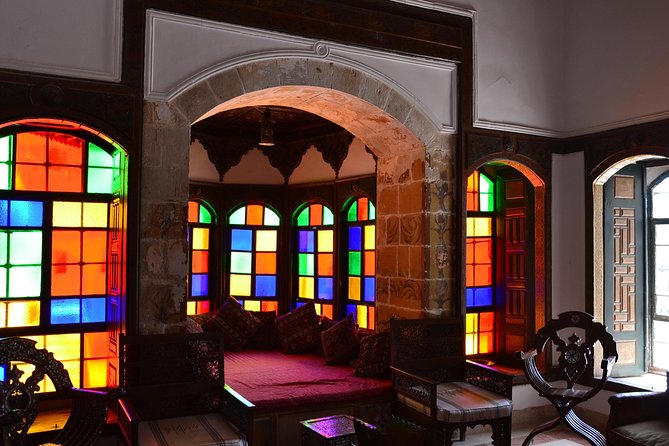
Deir el Qamar – Beiteddine Palace – Chouf Cedars From Beirut
Read our review →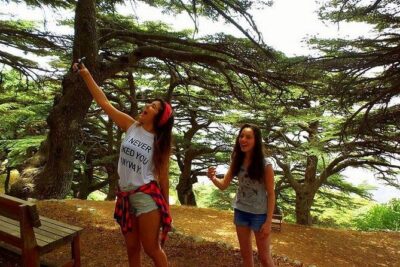
Deir Al-Qamar, Beiteddine Palace and Barouk Cedars Tour
Read our review →
PRIVATE tour to Beirut history museum, Beiteddine & Deir elQamar
Read our review →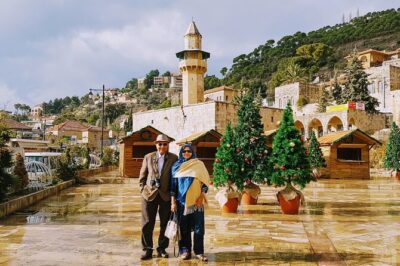
Private Trip to Beiteddine, Deir el Qamar & Maaser el Chouf Cedars
Read our review →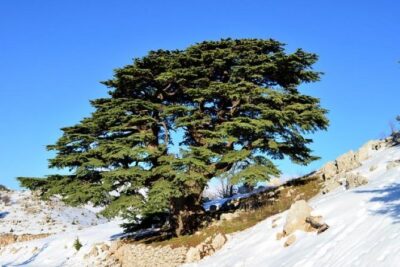
Chouf Charm: Private Journey Through Lebanon’s Historic Heartland
Read our review →Browse the lists this tour appears in