
Review · BEITEDDINE & DEIR EL QAMAR TOURS
Guided Half-Day Private Trip to Beiteddine Palace and Deir el Qamar
The mountains tell Lebanon’s story. This six-hour private trip from Beirut pairs the ornate Beiteddine Palace with the compact, multi-faith village of Deir El Qamar, making it a fine way to see the Chouf without arranging transport yourself. I like the front-door hotel pickup and the chance to explore with a guide focused only on your group.
I also like the unusual mix of sites: Lebanon’s oldest mosque in Mount Lebanon, a 15th-century church, and a palace shaped by Ottoman, French, and Lebanese history. The main consideration is cost. At $100 per person, the tour offers private transport and guiding, but palace admission and lunch are extra, so the final bill will be higher.
In This Review
- Six useful things to know before you go
- Why this Chouf excursion works from Beirut
- Entering Beiteddine Palace after 19th-century rule
- Deir El Qamar, Lebanon’s old village of shared faiths
- Fakhreddine’s Mosque and its octagonal minaret
- Saydet Al Talle Church and a local legend
- Private transportation, timing, and comfort
- Is $100 per person good value?
- Who should choose this half-day tour?
- Should you book Beiteddine and Deir El Qamar?
- FAQ
- How long does the private tour last?
- Is hotel pickup included?
- Is the tour private?
- Are entrance fees included?
- How much time is planned at Beiteddine Palace?
- Can I cancel for a full refund?
Six useful things to know before you go
- Beiteddine Palace takes about 90 minutes: This is the main historical stop, with palace rooms, museum displays, and a complicated political past.
- Deir El Qamar is only five kilometers away: The short transfer lets you see several important sites without spending the day in a vehicle.
- The visit crosses religious traditions: You’ll see Fakhreddine’s Mosque and Saydet Al Talle Church in the same village.
- Hotel pickup and drop-off are included: The service is designed for anyone staying in Beirut who wants an easy day beyond the capital.
- Lunch and entrance fees are not included: Budget for both before comparing the price with a shared group excursion.
- The private format suits curious families and small groups: You can ask questions, adjust the pace within reason, and avoid being tied to strangers.
Why this Chouf excursion works from Beirut
Beirut is Lebanon’s main base for sightseeing, but some of the country’s most important old towns and mountain sites lie outside the city. This trip gives you a practical route into the Chouf District, where Beiteddine and Deir El Qamar sit close together.
The schedule lasts about six hours. That is long enough to reach the two main destinations, visit four planned stops, and return to Beirut without turning the day into an exhausting full-day circuit. You get private, air-conditioned transportation, a tour leader, and a professional guide.
I see the private format as the main reason to choose this outing. On a shared tour, a short visit to a church or mosque can become a rushed photo stop. Here, you can ask about Lebanon’s political past, religious communities, architecture, or the legends tied to the sites. The experience is still timed, but the undivided attention gives it more value than a simple driver transfer.
The available feedback gives particular praise to Albert, described as a positive and trustworthy driver who can explain local culture and history and help with restaurant suggestions. That is useful because a good driver can make a mountain outing feel calm and organized. Still, guide assignments can vary, so you should not assume Albert will lead every departure.
More trips through the Chouf palaces:
- Guided small group to Cedars Reserve & Beiteddine w/lunch+entries
★ 5.0 · 12 reviews - Beirut, Beiteddine & DeirElQamar Day Trip-With Lunch(4G on Board)
★ 4.5 · 12 reviews - Cedars Shouf & Beiteddine w/pick-up, guide, entries+lunch
★ 4.7 · 12 reviews
Entering Beiteddine Palace after 19th-century rule
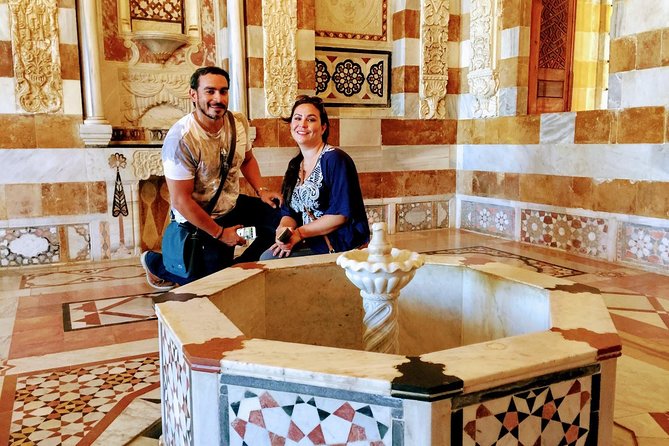
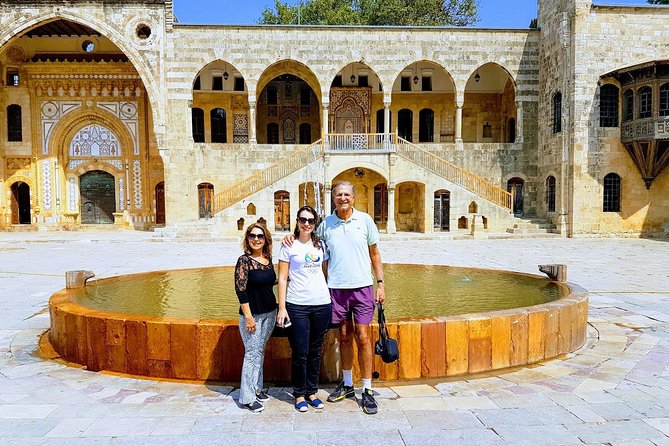
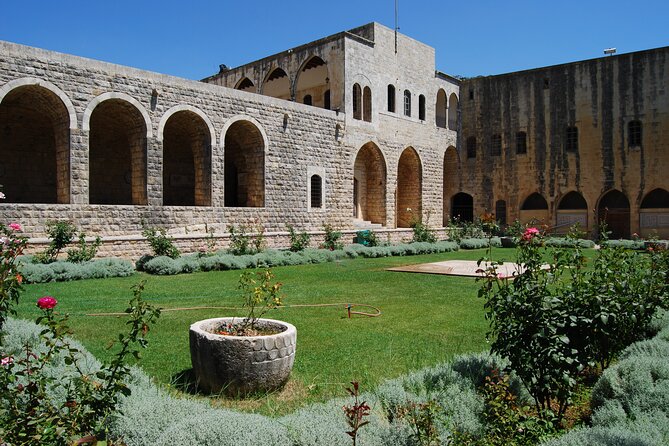
Beiteddine Palace is the centerpiece of the day. Its name means House of Faith, and Emir Bashir Chehab II built it between 1788 and 1818. That long construction period helps explain why the complex feels less like a single residence and more like a carefully developed seat of power.
You have about 90 minutes here. That is a sensible amount of time for a guided visit, though anyone fascinated by architecture or political history may wish for longer. The palace contains the Beiteddine Palace Museum, and parts of the complex are open to the public while other areas remain connected to its role as the president’s summer residence.
The palace has passed through several chapters. After 1840, the Ottomans used it as a government building. During the French Mandate, it became a local administrative office. In 1943, it was declared the official summer residence of Lebanon’s president.
That history makes the site more interesting than a pretty old building. You are looking at a place that moved from emirate residence to Ottoman administration, then to French colonial office and modern state property. Ask your guide to connect those changes to Lebanon’s wider political story, since the meaning of the palace depends as much on its past use as on its design.
The building was heavily damaged during the Lebanese Civil War. Knowing that before you arrive changes how you see the restored and preserved sections. This is not a perfectly untouched palace frozen in time. It is a surviving national site that has carried damage, repairs, and changing government roles.
The palace also hosts the annual Beiteddine Festival. If your visit happens near festival activity, the setting may feel different from a quiet museum visit. The supplied details do not promise festival access or performances, so treat that as background rather than part of the tour.
Admission is not included. That is a small but important cost detail. You should confirm the current entrance fee before booking, since the advertised $100 price covers the private service but not every expense during the day.
Deir El Qamar, Lebanon’s old village of shared faiths
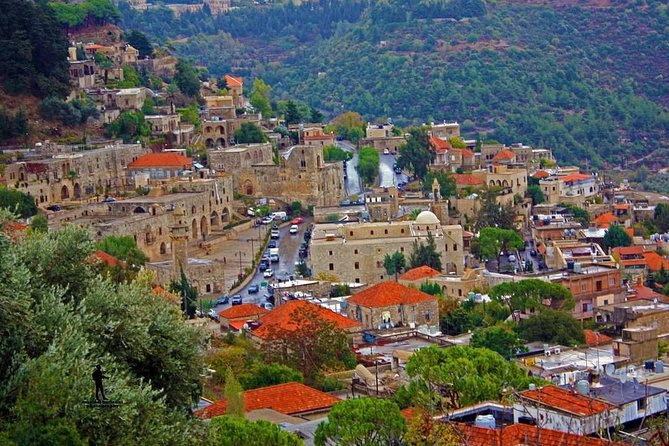
After Beiteddine, the drive to Deir El Qamar is short, about five kilometers. The village name means Monastery of the Moon, and its compact center brings together a remarkable range of religious and civic history.
The scheduled village visit lasts about 30 minutes, followed by separate visits to Fakhreddine’s Mosque and Saydet Al Talle Church. In practice, you should think of Deir El Qamar as a connected group of stops rather than four completely separate attractions.
The village had Lebanon’s first municipality, established in 1864. It was also home to people from different religious backgrounds, with a mosque, synagogue, and Christian churches once sharing the town. That mix gives Deir El Qamar a special place in Lebanon’s story, though the tour details do not promise a visit to the former synagogue.
Deir El Qamar was destroyed by fire during the 1860 civil war between Druze and Christians. Napoleon III sent a French contingent to help rebuild it. The destruction and rebuilding are essential to understanding the town. Its old streets are not only picturesque; they also reflect a difficult period of communal conflict and outside intervention.
You may find that the village visit feels more personal than the palace. The palace presents national power through grand architecture. Deir El Qamar shows how religious communities, municipal government, and local memory fit into a smaller setting.
The planned time is brief, so keep your expectations realistic. This is an introduction, not a slow village walk with time for every lane, shop, or café. If you want to linger, the private format may allow some flexibility, but the full six-hour schedule still limits how much extra time is available.
Fakhreddine’s Mosque and its octagonal minaret
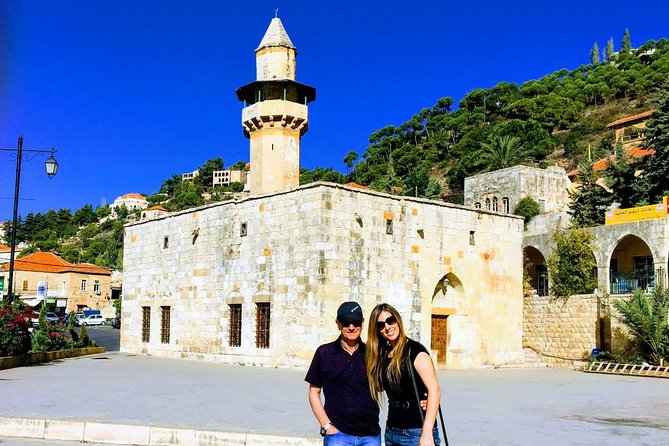
Fakhreddine’s Mosque receives about 15 minutes, and that short stop is worth taking seriously. Built in 1493 and restored in the 16th century by Fakhreddine I, it is identified as the oldest mosque in Mount Lebanon.
The mosque’s octagonal minaret gives it a distinctive profile. It also adds an important Muslim chapter to a village often discussed through its Christian churches and Druze associations. Seeing both religious sites in one short visit is one of the strongest features of the excursion.
Fifteen minutes will not allow a long architectural study. Instead, use the time to look closely at the minaret, hear the mosque’s place in Deir El Qamar’s history, and ask your guide about the restoration under Fakhreddine I.
The stop is free according to the tour details. Even so, access to religious buildings can depend on local conditions, so follow your guide’s instructions and dress and behave respectfully. The provided information does not specify interior access, so you should not assume that the visit includes a full indoor tour.
A few more trips out of Beirut worth a look
- Byblos Half-Day & st.Charbel great guide/all-in+breakfast
★ 5.0 · 15 reviews - Half-Day Private Trip to Jeita Grotto and Harissa
★ 5.0 · 11 reviews - All-in Half-Day Jounieh Teleferique JeitaGrotto guide + breakfast
★ 5.0 · 9 reviews - Half-Day Private Tour to Baalbek & Chateau Ksara
★ 5.0 · 8 reviews
Saydet Al Talle Church and a local legend
The Church of Saidet et Tallé, also known as Our Lady of the Hill, dates to the 15th century. It is one of Deir El Qamar’s major religious and historic places, and its story reaches back beyond the current Christian building.
Monk Nicolas Smisaati built a church on the site over the ruins of an older Phoenician temple dedicated to Astarte. An earthquake destroyed that earlier structure in 859. The layered story gives the church unusual depth: Phoenician worship, earthquake damage, and later Christian building all meet at one location.
A local legend adds another layer. A Druze emir in Baakline reportedly saw a light coming from the hill at Deir El Qamar. He sent soldiers to investigate and instructed them to build a mosque if they found an Islamic symbol, or a church if they found a Christian one. The story connects the church and mosque in a memorable way, although it belongs to local tradition rather than a simple historical record.
The visit is scheduled for about 15 minutes and admission is free. That is enough for an introduction, but not a long period of quiet reflection or detailed study. If religious art and old church architecture matter to you, ask questions early in the visit so the short stop does not pass too quickly.
Together, the mosque and church give the tour its strongest human point. You are not just checking off two old buildings. You are seeing how one Lebanese village carries several faith traditions within a shared historic setting.
Private transportation, timing, and comfort
The tour includes pickup and drop-off at any hotel accommodation in Beirut. That removes one of the less pleasant parts of a mountain outing: finding an independent taxi, negotiating a long fare, or working out how to return after visiting rural sites.
Transportation is provided in a comfortable, air-conditioned private vehicle. The details do not identify the vehicle model or seating capacity, but the private arrangement means only your group participates. This is especially helpful for couples, families, or friends who want to talk freely and set a pace that suits everyone.
The six-hour length is a good middle ground. You get more than a quick escape from Beirut, but the day does not include so many stops that every site becomes a blur. The trade-off is that each Deir El Qamar stop is short, with only 15 minutes at the mosque and 15 minutes at the church.
I would use the drive time to ask about modern Lebanon as well as old monuments. The driver praised in the available feedback, Albert, is specifically noted for cultural background and restaurant recommendations. That sort of local help can be useful when deciding where to eat later, though lunch itself is not part of the tour.
Is $100 per person good value?
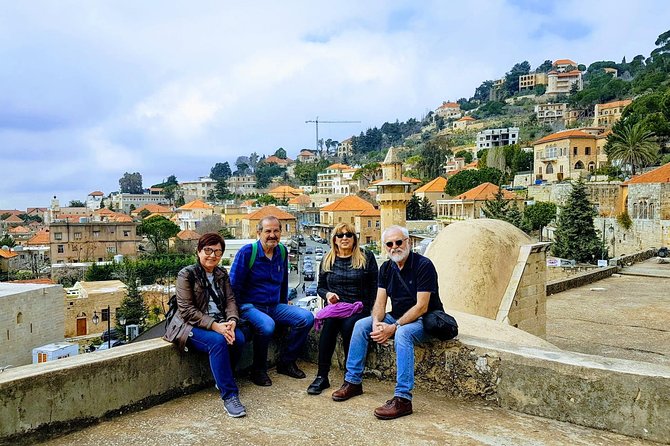
At $100 per person, this is not the cheapest way to reach Beiteddine and Deir El Qamar. It can still be good value if you are traveling with a small group and place a high price on private transport, hotel service, and a guide who can respond to your questions.
The price includes:
- Hotel pickup and drop-off in Beirut
- Private transportation
- An air-conditioned vehicle
- A tour leader
- A professional guide
You must pay separately for lunch and entrance fees. The palace is the key paid attraction, while the Deir El Qamar stops are listed as free. Add those costs before judging the final value.
For one person or a couple on a tight budget, public transport or a shared excursion could cost less, though the provided information does not give a comparison price. For a family or group, the private rate may make more sense because you are buying a vehicle and guide for your own party rather than paying for a generic transfer.
The strongest value is convenience. You can leave your Beirut hotel, visit two major Chouf destinations, and return without organizing several transport legs yourself. The weakest value is the limited time at some sites if you prefer slow visits.
Who should choose this half-day tour?
I would recommend it to you if you are staying in Beirut and want a clear introduction to Mount Lebanon’s history without planning a complicated day trip. It suits first-time visitors, small groups, families, and anyone who prefers a private guide to a large coach.
It is also a good fit if religious and cultural history interests you. The mosque and church are not token additions. They explain why Deir El Qamar matters and give the outing a wider focus than palace architecture alone.
You may want a different plan if you hope to spend hours wandering village streets, visiting every museum, or exploring the wider Chouf, including the cedar reserve. This tour focuses on Beiteddine and Deir El Qamar. The supplied schedule does not include the cedar reserve or other mountain sites.
The 90-minute palace visit and short village stops also favor people who like a structured route. If you need a very slow pace, tell the operator when booking and ask what flexibility is possible within the six-hour window.
Free cancellation is available if you cancel at least 24 hours before the start time. Changes or cancellations made less than 24 hours ahead are not accepted for a refund, with cut-off times based on local time.
Should you book Beiteddine and Deir El Qamar?
Book this tour if you want an easy private day from Beirut with strong historical variety. The combination of a presidential palace, a rebuilt old village, Lebanon’s oldest mosque in Mount Lebanon, and a 15th-century church gives you a useful view of the country’s past in just six hours.
I would book it especially for a group that values comfort and conversation. Ask about the palace admission fee, lunch arrangements, and the assigned guide before confirming. If you want more time in Deir El Qamar, raise that point early, since the planned visits are short.
Skip it if your main goal is a low-cost outing or a long, unhurried village walk. For everyone else, the private transport, hotel service, and religiously varied route make this a practical way to move beyond Beirut and see a more layered side of Lebanon.
FAQ
How long does the private tour last?
The tour lasts approximately six hours, including the visits to Beiteddine Palace and Deir El Qamar.
Is hotel pickup included?
Yes. Pickup and drop-off are provided from any hotel accommodation in Beirut.
Is the tour private?
Yes. Only your group participates in the activity.
Are entrance fees included?
No. Entrance fees are not included in the tour price. Lunch is also separate.
How much time is planned at Beiteddine Palace?
The planned visit to Beiteddine Palace lasts about one hour and 30 minutes.
Can I cancel for a full refund?
Yes, if you cancel at least 24 hours before the experience start time. Cancellations or changes made less than 24 hours before the start time are not refunded.
Newest Beirut reviews
- Wine Tasting Tour★ 5.0 · 2 reviews
- Lebanon’s Treasures: Jeita Grotto and Harissa Private Tour★ 5.0 · 2 reviews
- Journey Through Time: Half-Day Private Tour to Baalbek★ 5.0 · 3 reviews
- Traveling Spoon Lebanese Mezze Private Online Cooking Class★ 5.0 · 4 reviews
- Wine Tasting and Culture★ 5.0 · 3 reviews
- Small Group Tour to Baalbek, Anjar & Ksara with Hotel pickup★ 5.0 · 2 reviews
- Small Group Tours to Jeita Grotto and Byblos with tickets★ 5.0 · 3 reviews
- Small-Group Tour with Lunch to Baalbek, Anjar and Ksara★ 5.0 · 3 reviews
Beiteddine & Deir el Qamar Tours, compared.
Cedars Shouf & Beiteddine w/pick-up, guide, entries+lunch
Read our review →
Beirut, Beiteddine & DeirElQamar Day Trip-With Lunch(4G on Board)
Read our review →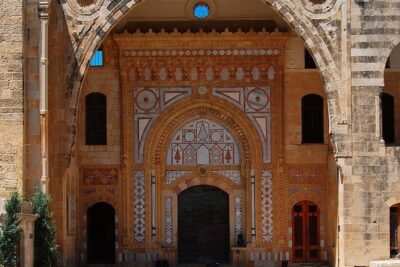
Guided small group to Cedars Reserve & Beiteddine w/lunch+entries
Read our review →
Deir el Qamar – Beiteddine Palace – Chouf Cedars From Beirut
Read our review →
Deir Al-Qamar, Beiteddine Palace and Barouk Cedars Tour
Read our review →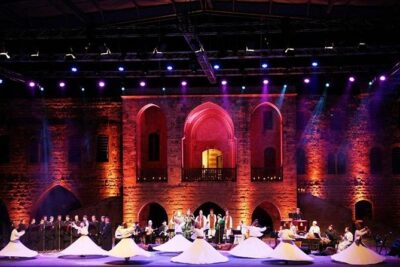
PRIVATE tour to Beirut history museum, Beiteddine & Deir elQamar
Read our review →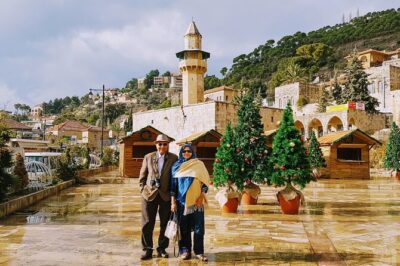
Private Trip to Beiteddine, Deir el Qamar & Maaser el Chouf Cedars
Read our review →
Chouf Charm: Private Journey Through Lebanon’s Historic Heartland
Read our review →Browse the lists this tour appears in